
How Many Hairs Are on a Human Head? Ranges and Variables
Roughly 100,000 scalp hairs is a useful reference figure for most adults. For one particular scalp, the answer depends on what was counted, where density was sampled, and how scalp area was measured. A professionally interpreted density measurement tells you more than hair color or photographs.
How many hairs are on a human head?
Published references give different ranges, as the table shows.
| Reference | Reported number | What the figure describes |
|---|---|---|
| Johns Hopkins Medicine | About 100,000 | General approximation for scalp hair |
| StatPearls, Anatomy, Hair | 80,000 to 120,000 | Terminal scalp hairs in most healthy men and women |
| Harvard BioNumbers | 90,000 to 150,000 | Older compiled range |
The StatPearls anatomy reference specifies terminal hairs, the longer and generally thicker hairs that give a scalp its ordinary coverage. The Harvard BioNumbers entry collects older estimates through Rainer Flindt's 2006 Amazing Numbers in Biology.
If you see 100,000 in one article and 150,000 in another, the figures come from different kinds of source material. What matters is what each number counts, and whether it's an approximate total or a measurement from a sample area.
What counts as one hair: shafts, follicles, and follicular units
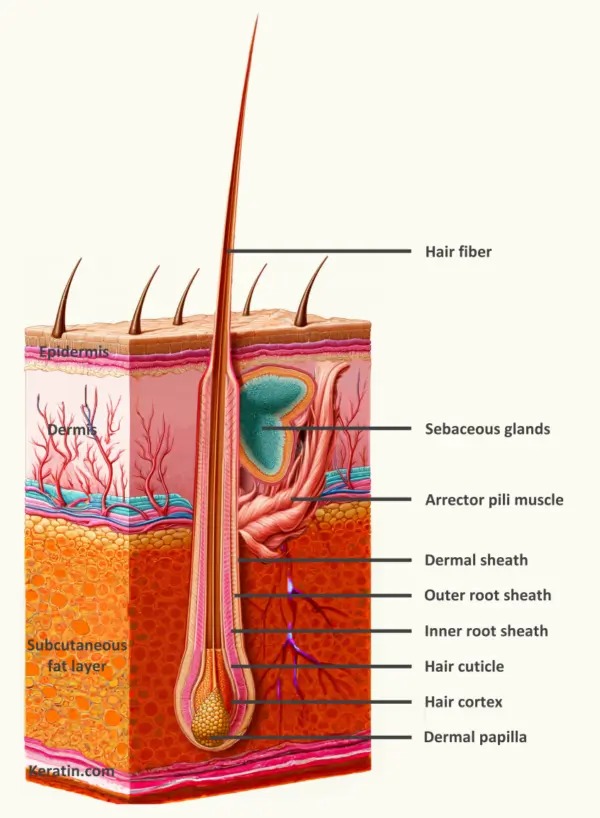
Researchers can count hair shafts, follicles, or follicular units; each one counts something different.
| Object | What it is | How it relates to a hair count |
|---|---|---|
| Hair shaft | The strand extending from the skin | One visible strand counts as one hair |
| Hair follicle | A structure in the skin that produces hair | The structure behind each strand |
| Follicular unit | A group of follicles that emerge together | One unit can hold one, two, three, or more hairs |
Picture a small scalp patch with 75 follicular units and 150 hairs. That works if the units average two hairs apiece.
A 1999 study by Jimenez and Ruifernández examined the occipital donor region, at the back of the scalp, in 50 patients. The researchers reported 65 to 85 follicular units per square centimeter and 124 to 200 hairs per square centimeter. Same skin, two different counts.
Because that sample came from the back of the head, a whole-scalp estimate still needs a measure of the larger surface.
Researchers also separate terminal hairs from fine vellus hairs. A method that counts only one category of visible shafts gives a different result from one that examines follicles in the skin.
How scientists estimate a whole-head hair count

Counting every strand would take enormous effort. Instead, you can build an estimate from two measurements: the surface area of the hair-bearing scalp and the average number of hairs growing in each square centimeter.
The formula:
Estimated number of hairs = scalp area × average hair density
For an illustrative scalp:
500 cm² × 200 hairs/cm² = 100,000 hairs
The square-centimeter units cancel, leaving a count of hairs. The calculation assumes 200 hairs/cm² is the mean density across all 500 cm².
In a 2026 study, Patel and Patel measured scalp surface area in 25 adults aged 18 to 55. The mean was 492.36 cm² (standard deviation 30.97 cm²), and observed measurements ranged from 447.29 to 592.52 cm².
The example's 200 hairs/cm² falls within the occipital range reported by Jimenez and Ruifernández, and its 500 cm² area is close to the mean from Patel and Patel’s 2026 scalp-area study.
Arithmetic like this can look precise even when every input is a guess.
A calculation in r/theydidthemath tackled the combined surface area of scalp hair, illustrating how heavily the result depends on assumptions.
A quick search tells me that the average human hair is anywhere from 50 to 100 microns. We'll assume that each strand of hair stays at a constant thickness throughout, and we'll take the average of 75 microns.
A look at worldpopulationreview.com gives me an rough figure of 25 cm (rounded up for ease of computation) as the average length of hair. That's combining the data for men's and women's hair.
Using a surface area calculator, that gives me a value of 1.2 cm² (rounded down) for each hair.
Another quick search tells me that humans in general have anywhere from 100k to 200k hairs on their head. So taking an average of 150k, that gives us a total surface area of 180,000 cm², or 18 m².
Wikipedia tells me that on average, an adult human has 1.5 to 2.0 m² of skin.
So yes, the total surface area of the hair on a human's head could be an order of magnitude greater than the surface area of their skin.
(I am half asleep as I type this, so I'm pretty sure I made a mistake somewhere. I gladly welcome any corrections.)
The commenter was right to ask for corrections. Treat a strand as a cylinder with a 75-micron diameter and a 25-centimeter length, and its lateral surface area comes to approximately 0.59 cm². That's well below the figure used in the calculation, which another participant challenged in the discussion.
Why hair counts vary across people and across the scalp
Hair density changes from one spot on the scalp to another. A measurement near the temples can differ from one at the crown or the back of the head.
A histopathology study of 60 deceased Thai adults examined 240 scalp biopsy specimens across four regions. The temporoparietal area had the lowest mean total-hair count in that sample.
Population samples add another source of variation. A 2018 US trichoscopy study measured local hair density in 166 participants, grouped by the researchers' own demographic descriptions.
| Study group | Participants | Regional means ± SD (hairs/cm²) |
|---|---|---|
| Self-identified Hispanic | 99 | 169 ± 31 to 178 ± 33 |
| African descent | 44 | 148 ± 25 to 160 ± 27 |
| Caucasian | 23 | 214 ± 28 to 230 ± 33 |
These are local sample means with standard deviations from specific scalp sites. They can't predict an individual's count from ancestry, and they say nothing about hair quality or health.
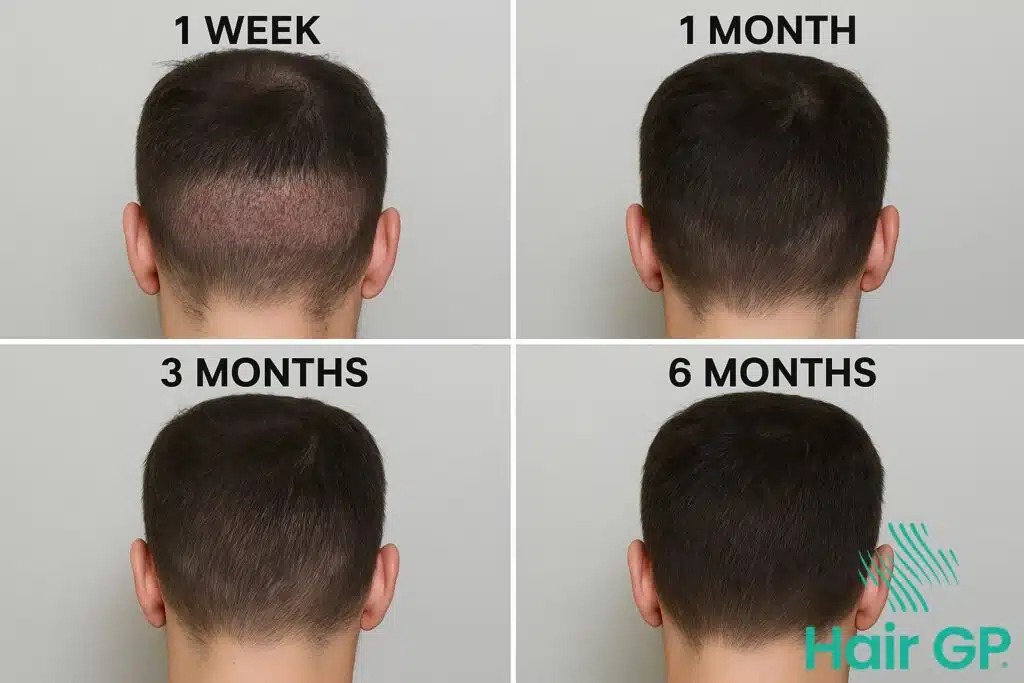
Scalp size matters too. At the same average density, a larger hair-bearing surface holds more strands. The area and the density you use have to cover the same part of the scalp.
Hair also changes over time, so the number of visible hairs keeps moving.
Does hair color tell you how many hairs you have?
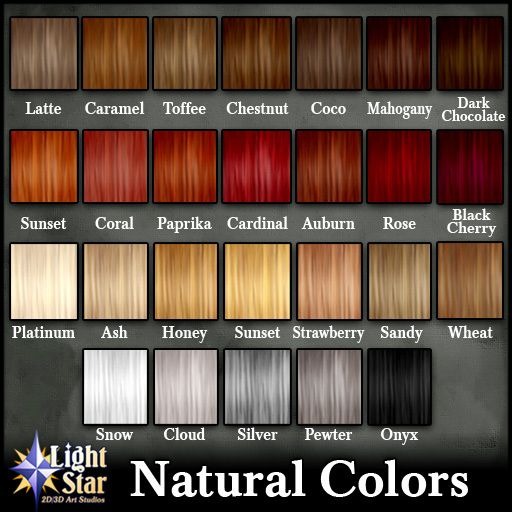
No. Harvard BioNumbers reproduces historical estimates by hair color: blond 150,000, brown 110,000, black 100,000, and red 90,000. Rainer Flindt's 2006 compilation traces the figures to older references from 1964, 1967, and 1979. Other published summaries disagree about color-based totals, so these numbers can't predict your count.
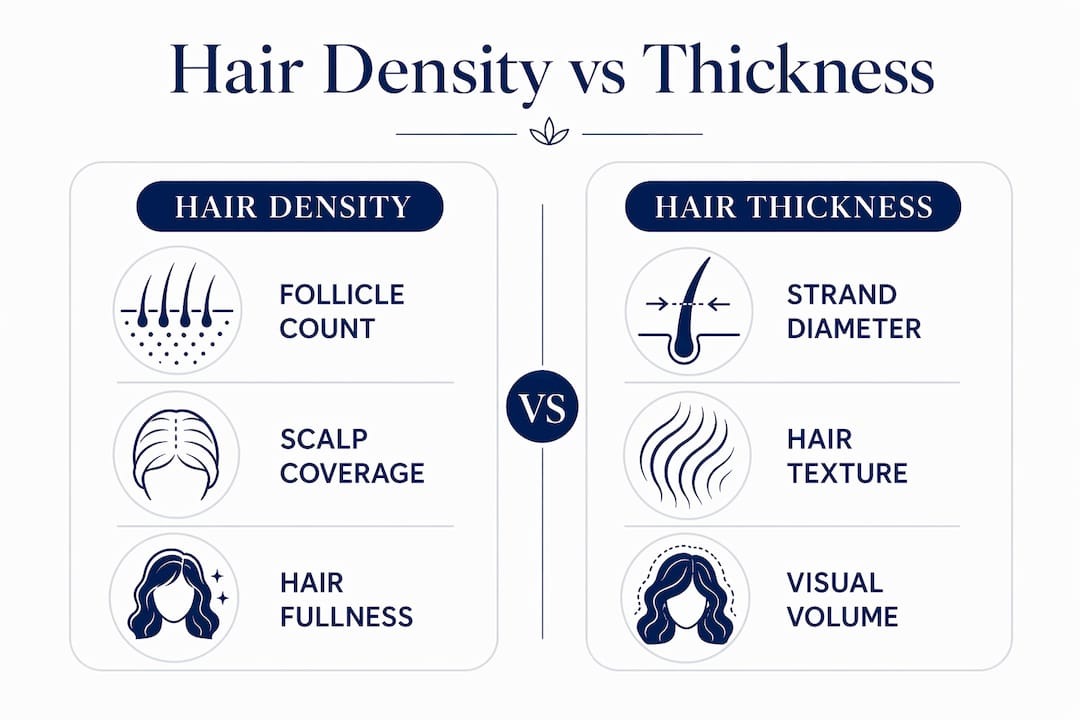
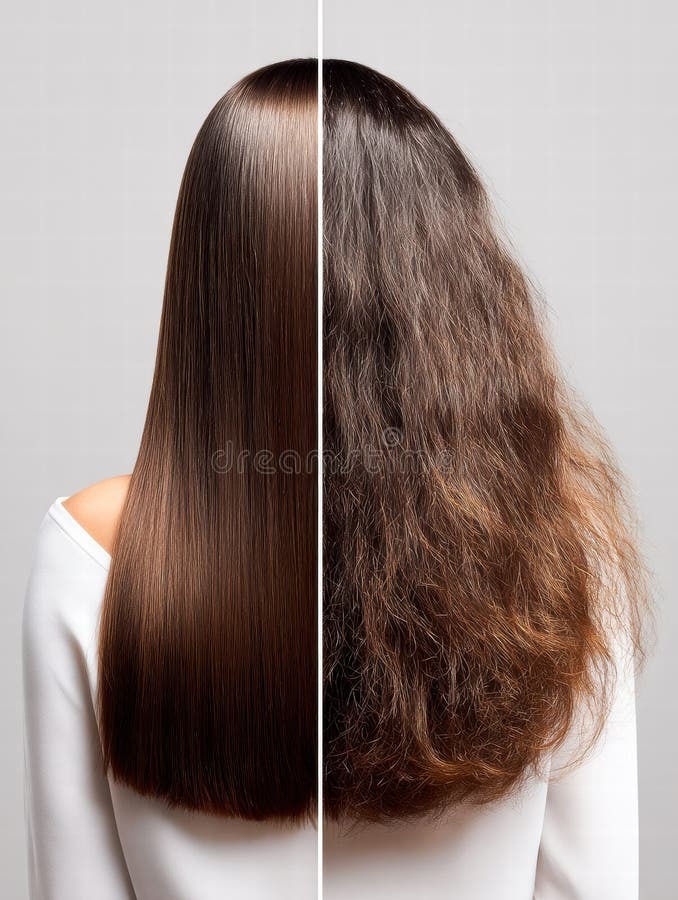
Apparent fullness depends on strand diameter, curl, length, and styling as well. A study of 109 men found that perceived thinning was related to shaft characteristics as well as hair density.
Can you count the hairs on your own head?
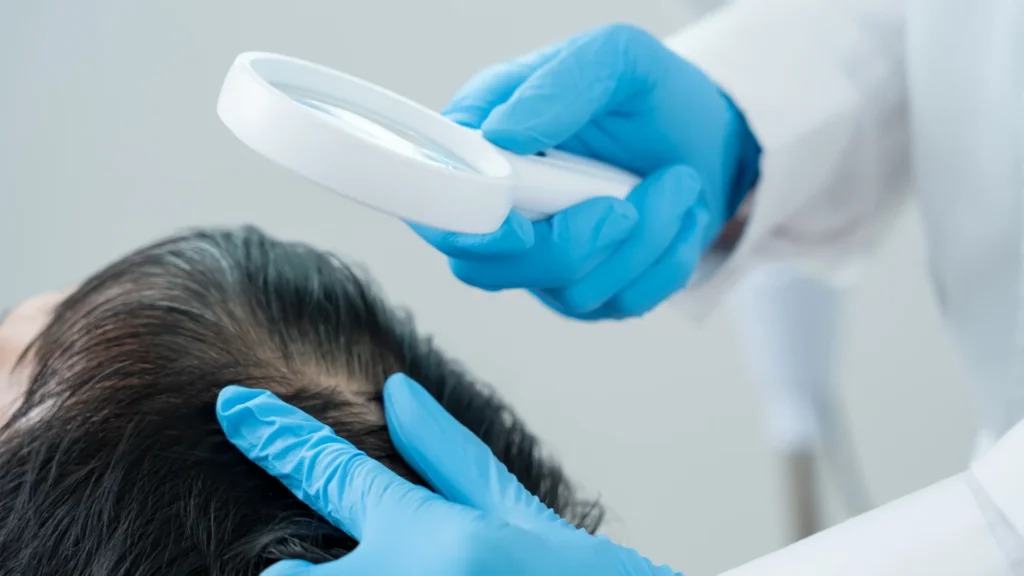
Not strand by strand. A professional can measure hair density in set areas of the scalp, but an exact count of every hair on the whole head is a much bigger task. Strand count and thickness also affect the estimated weight of head hair.
Methods differ in what they record and how they sample.
| Method | What it provides | Important limitation |
|---|---|---|
| Standardized photographs | Visual comparison of hair appearance over time | Lighting, positioning, styling, and shaft characteristics change the image |
| Trichoscopy | Magnified observations and local density measurements | Samples one area of scalp |
| Phototrichogram | Image-based measurement of hairs within a selected field | Visibility and image conditions affect the count |
| Unit-area trichogram | Hair measurements from a set sample area | More involved than ordinary photography, and limited to the sampled site |
In a 1993 comparison of 12 Caucasian participants, a phototrichogram counted 181 hairs/cm² for total density, against 237 with a unit-area trichogram. The lower photographic count did not differ significantly from the non-vellus-hair count measured by the other method. The researchers also found that light-colored hair was harder to evaluate in photographs.
In 2026, another research group tested how well specified scalp-area and image-counting approaches agreed. Its crown-area comparison reported an intraclass correlation of 0.75 and concordance of 0.74, and a separate set of 50 participant photographs was used for hair-count analysis.
One r/HaircareScience user tracks their hair with ponytail measurements and braid photos:
I hope my reply is accepted here? Hard to back up a topic about hair measuring with Scientific sources. 😅
I measure the ponytail circumfrence at the nappe of my neck, and the middle of the head. I always make sure to measure 3 times, to account for wrong measurements.I also take a Photo of my hair in a braid. I store Them in an album on my phone. Then I Can zoom in so the neck is the same width/size in all of Them, and both see and measure the progress over time.
Lastly, I split my hair in 3 sections (top, middle, bottom), and take pictures with each layer Down) I Only do that once Per year, but that Way, I Can evaluate where my hair needs the most attention, and if the thickness seem to be moving Down.
Measuring three times and keeping the photo scale constant makes the record comparable. Ponytail circumference and braid photos still track appearance, which shifts with how the hair is gathered and with the physical properties of the strands.
To compare density over time, use the same professional method, the same scalp region, and a stable protocol.
What the total number of hairs cannot tell you
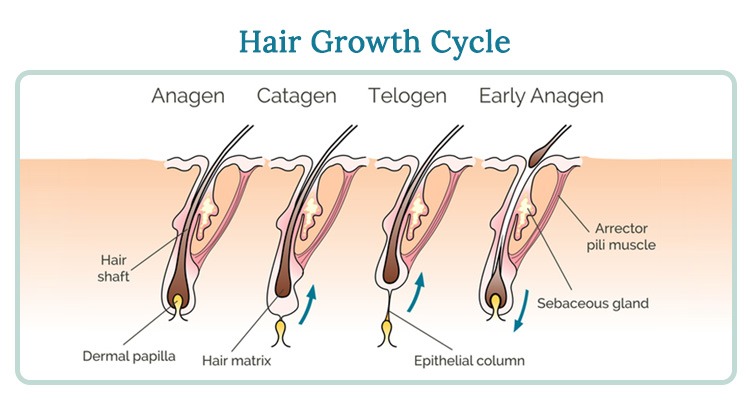
A hair count describes the scalp at one moment. Hairs in a brush or shower are strands shed over a period.
StatPearls gives roughly 100 shed hairs per day as a general reference. Dividing 100,000 hairs by 100 per day produces 1,000 days, but that math assumes a fixed stock with no replacement. Follicles keep cycling through anagen (growing), catagen (transitional), and telogen (resting) phases, and they keep producing hairs.
A single shedding count or a comparison with the population average can't diagnose hair loss. If shedding changes, or you notice thinning or bald patches, a clinician can assess your case.