
Women's Health Education: Find the Right Guide for Your Question
Choose the menstrual-cycle guide for timing and tracking, the period hunger-and-calorie guide for appetite or energy use, or the introitus guide for the vaginal opening. This focused women's health collection covers three educational questions. For symptoms, diagnosis, treatment, or another health topic, use a broader authoritative resource or qualified clinical care.
Choose the guide that matches your question
A question about your period can concern dates, appetite, or an unfamiliar anatomical term. Each calls for a different explanation.
| Your question | What the guide covers | Choose this guide |
|---|---|---|
| When does my cycle begin, and how should I track it? | Menstrual phases, period timing, cycle length, and basic tracking | How to track your menstrual cycle |
| Does being hungrier around my period mean I burn more calories? | Appetite, food intake, resting metabolism, and the phases compared in research | Whether you burn more calories during your period |
| What does vaginal introitus mean? | The vaginal opening and its relationship to nearby anatomy | The meaning of vaginal introitus |
Cycle phases, period timing, and what to track
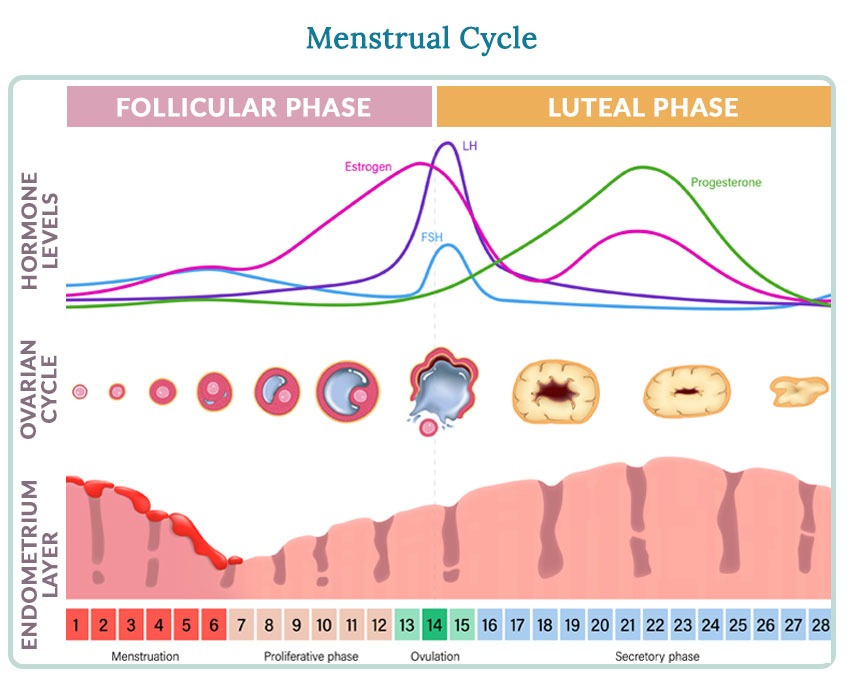
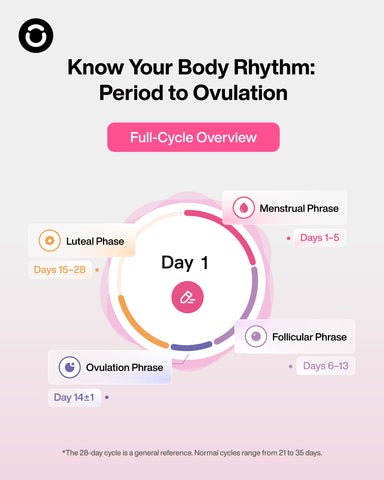
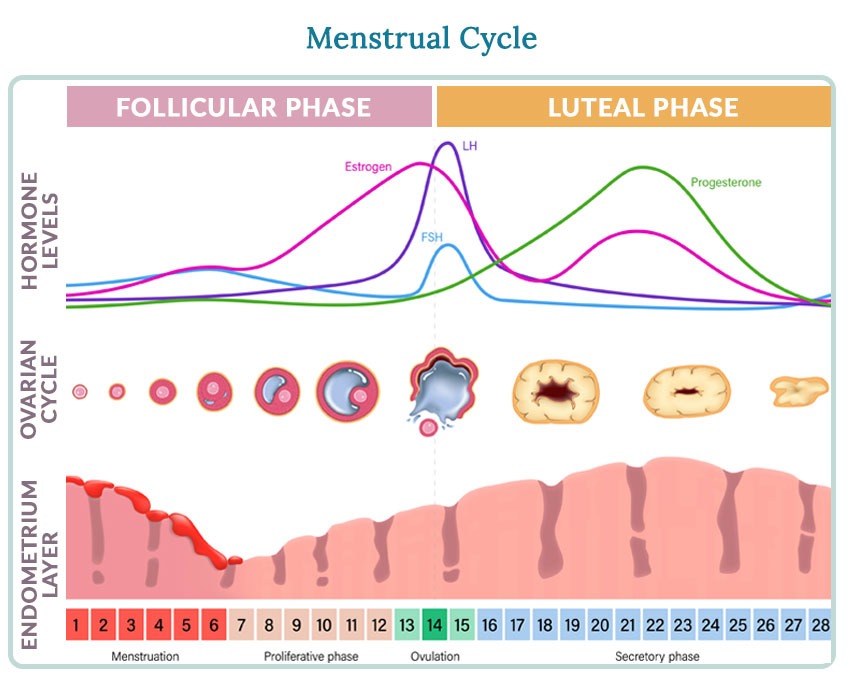
A menstrual cycle runs from the first day of one period to the first day of the next. The period itself is the bleeding portion of a longer cycle that includes hormonal changes across several phases.
A 28-day cycle is a familiar example. The Office on Women's Health describes regular adult cycles as commonly ranging from 24 to 38 days. That range is general adult context, not a diagnosis; patterns can differ during adolescence and the menopause transition.
For a useful record of your own cycle, note the dates when periods begin and any symptoms you want to remember. The interval between successive starts gives you the cycle length. Spotting before heavier bleeding can complicate what a tracker labels as a period start.
In Clue's period-tracking mode, the app calculates when a period ends from the bleeding days entered; users cannot manually mark its end. Clue records spotting separately, a convention specific to that product.
Can a period-tracking app confirm when I ovulate?No. An ordinary period-tracking calendar prediction estimates timing; it does not confirm ovulation or serve as a contraceptive method by itself.
Hunger and calorie burn are different questions
Feeling hungrier before or during a period does not measure how much energy your body expends. Studies of menstrual phases examine several different outcomes, each answering a different question.
| Term | What it describes | What is measured or reported |
|---|---|---|
| Hunger or appetite | A person's desire to eat | Subjective experience |
| Energy intake | The amount of food or energy consumed | Food consumption |
| Resting metabolic rate (RMR) | Energy expended by the body at rest | Resting energy expenditure |
Before interpreting a calorie claim, check which outcome was studied and whether the comparison involved the luteal phase or the days of menstrual bleeding.
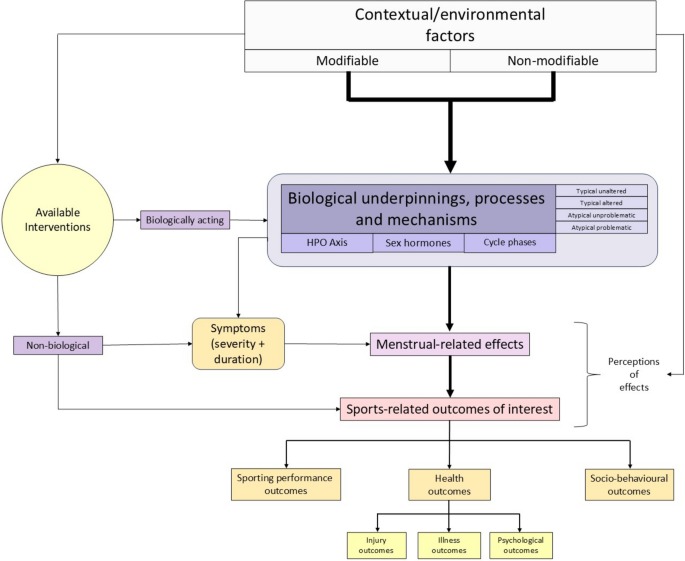
A 2026 systematic review of energy expenditure included seven studies examining resting or sleeping metabolism across menstrual phases. Of six studies comparing follicular with luteal phases, five reported higher values in the luteal phase; four studies reported statistically significant differences in their measured outcomes. Findings were small and methods varied between studies.
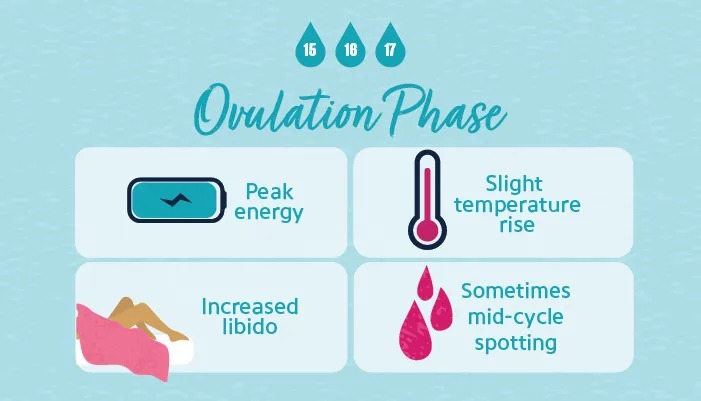
The luteal phase generally precedes menstrual bleeding. A difference measured in that phase does not establish extra calories burned on the days of a period.
A separate 2025 systematic review examined energy intake across menstrual phases. Its pooled analysis found higher average energy intake in the luteal phase than in the follicular phase, although the included studies varied in methods and results.
Group-level metabolic findings do not establish a personal daily calorie allowance.
What “vaginal introitus” means
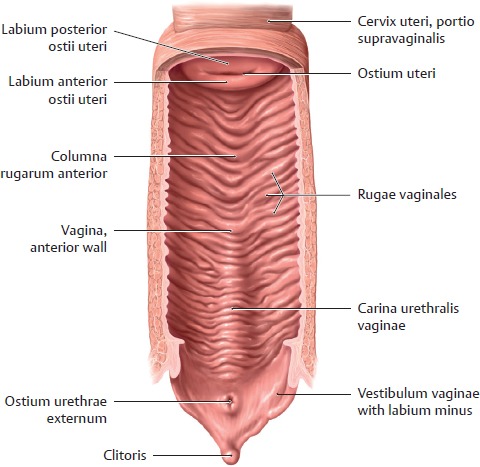
The vaginal introitus is the vaginal opening, where the internal vaginal canal opens into the external genital area called the vulva. The vulva includes surrounding labial structures, whose appearance varies, while the vagina is the internal canal. If you encounter introitus in patient education or medical paperwork, compare it with the terms vulva, vagina, and vaginal opening; a definition cannot explain pain, bleeding, or a new tissue change. The urethral opening, through which urine exits the body, is separate from the vaginal opening.
When your question needs a different resource
This collection does not cover contraception, pregnancy, menopause care, screening, infections, or medical treatment. Those topics require a broader source.
The Office on Women's Health A–Z topics covers a wide range of health subjects. MedlinePlus Women's Health, from the US National Library of Medicine, offers another route into medical explanations and related resources.
Choose the cycle, period-calorie, or anatomy guide for the corresponding educational question. If you need an assessment of pain, unexpected bleeding, or another clinical concern, or if your topic falls outside these three, use a broader authoritative health resource or a qualified healthcare professional.
Explore this topic
Do You Burn More Calories on Your Period? What the Evidence Says
Do you burn more calories during your period? Compare luteal-phase metabolism studies, premenstrual hunger, and what temporary scale changes mean.
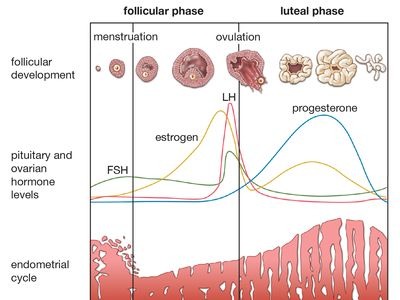
The Menstrual Cycle Explained: Phases, Timing, and How to Track It
Learn how menstrual phases overlap, count days between periods with a December example, and distinguish recorded dates from app predictions.
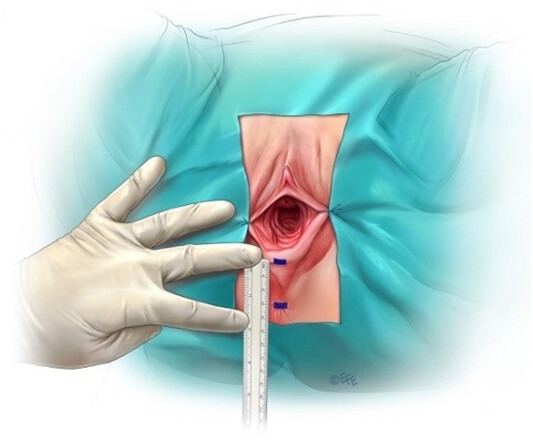
What Does Introitus Mean? Anatomy and Terminology Explained
In gynecology, introitus means the vaginal opening. Compare it with the vagina, vulva, vestibule, and urethral opening, then decode medical notes.