
The Menstrual Cycle Explained: Phases, Timing, and How to Track It
A menstrual cycle runs from the first day of one period to the first day of the following one. Use the dates you record to see your own pattern, and start by writing down the actual start date of your next period.
What is the menstrual cycle, and why does a period happen?
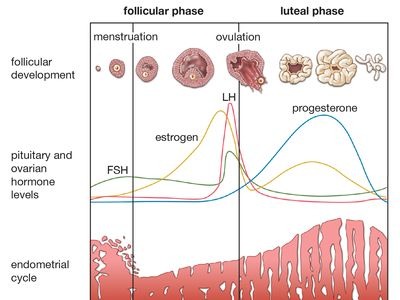
Hormonal changes across the ovaries and uterus give each phase of the cycle its pattern. The first day of bleeding marks day 1; the day before the next period ends the cycle.
During each cycle, an egg develops inside a follicle in an ovary. Hormones also prepare the uterus by changing its inner lining, called the endometrium. In an ovulatory cycle, the ovary releases the egg. That is ovulation, and some cycles happen without it. If you don't get pregnant, hormone levels fall and the lining sheds. The shedding is your period.
Menstrual blood and tissue leave the uterus through the cervix and vagina. Bleeding is the visible part, but much of the cycle happens on days with no bleeding at all.
The Office on Women's Health describes the cycle through its changing hormones and the interval between consecutive periods.
| Term | What it describes | How it relates to time |
|---|---|---|
| Menstrual period | Shedding of the uterine lining, accompanied by bleeding | Several bleeding days within a cycle |
| Menstrual cycle | The full sequence of ovarian and uterine changes | First day of one period through the day before the next |
| Ovulation | Release of an egg from an ovary | An event that can occur during the cycle |
If someone says their period lasted seven days, they're describing bleeding time. Their cycle runs from the first day of that period to the first day of the next.
What happens during the menstrual-cycle phases?
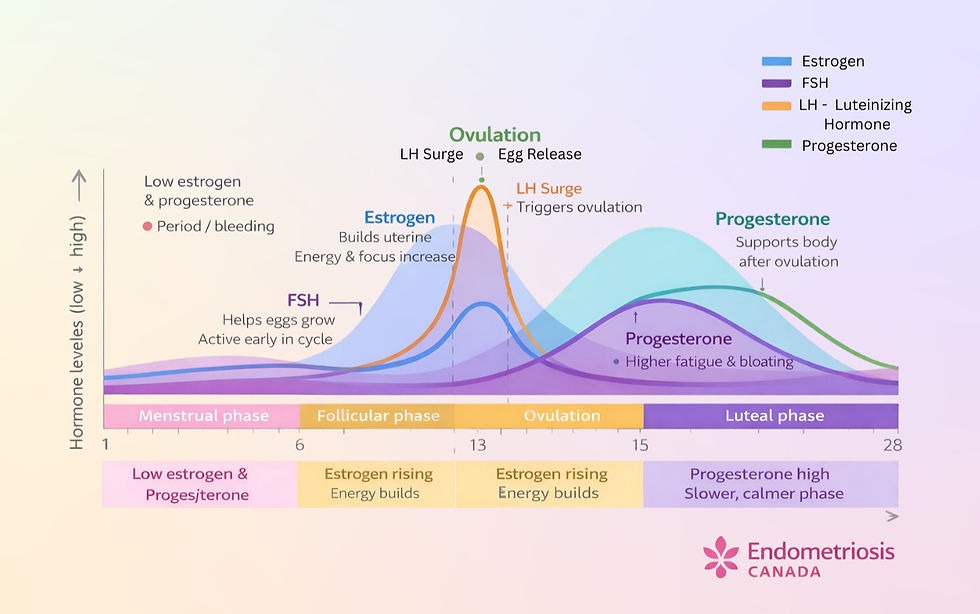
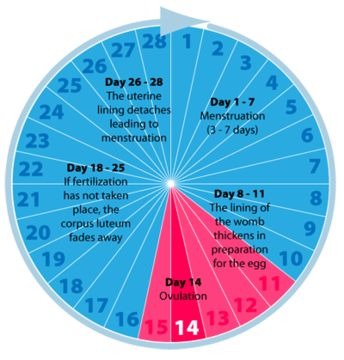
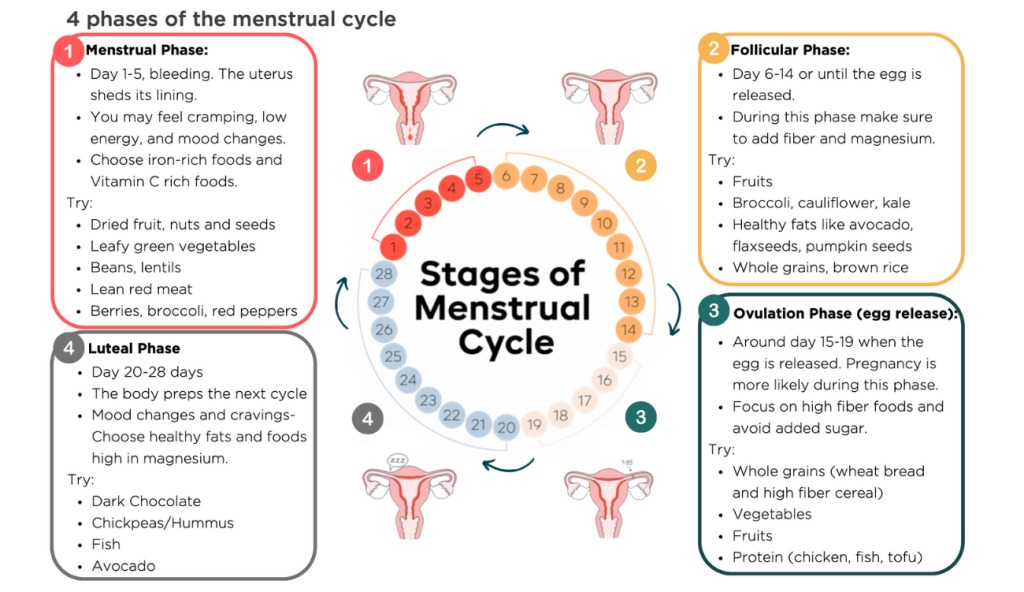
The cycle is often split into four stages: menstruation, the follicular phase, ovulation, and the luteal phase. The names help, but they describe overlapping events in different organs. If you came here for calories or appetite by phase, the period-calorie evidence review covers it.
The ovarian follicular phase starts on the first day of menstruation. So while the uterus sheds its lining, the ovaries are already starting a new phase.
The four commonly described stages
- Menstruation: Estrogen and progesterone fall, and the uterine lining sheds. Bleeding marks the beginning of a new cycle.
- Follicular phase: Follicle-stimulating hormone (FSH) helps ovarian follicles develop. Estrogen rises as they grow, and the uterine lining starts to build up again.
- Ovulation: A surge in luteinizing hormone (LH) sets off the release of the egg. Timing varies between cycles and between people.
- Luteal phase: The follicle that released the egg becomes a structure called the corpus luteum, which produces progesterone. Progesterone maintains the changes in the uterine lining.
The hypothalamus and pituitary gland in the brain send the hormonal signals; the pituitary releases FSH and LH, and the ovaries produce estrogen and progesterone. Together, these signals coordinate what happens in the ovaries and in the endometrium.
One cycle, two overlapping processes
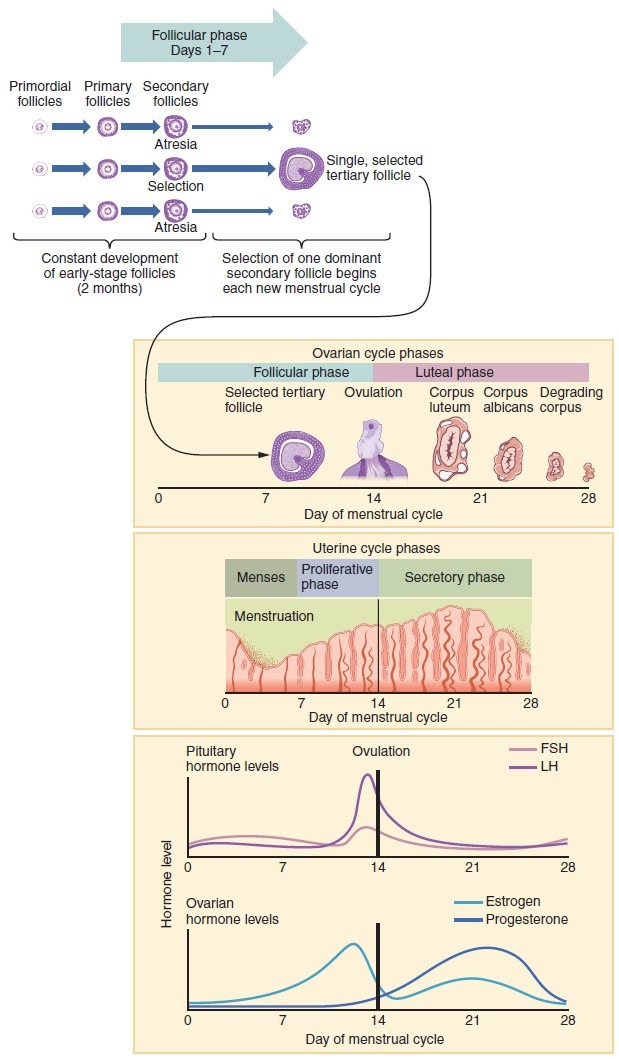
A 28-day cycle, used here only as an example, runs as two parallel sequences:
- Ovarian events: follicular development, ovulation around day 14 in this example, then luteal activity
- Uterine events: bleeding at the start, rebuilding of the lining, then progesterone-influenced changes before the next period
Bleeding happens during the early follicular phase, and the endometrium keeps changing after ovulation.
That's why medical sources often describe two main ovarian phases, follicular and luteal, while introductory diagrams show four stages. Cleveland Clinic's explanations of the menstrual cycle and follicular phase use this distinction.
The diagram places ovulation around day 14 and luteal activity from about day 15 to day 28.
What if I'm on cycle day 18?Day 18 only tells you how many days have passed since your period started. Whether you've ovulated depends on your cycle length, so the number alone won't tell you.
How long does a menstrual cycle normally last?
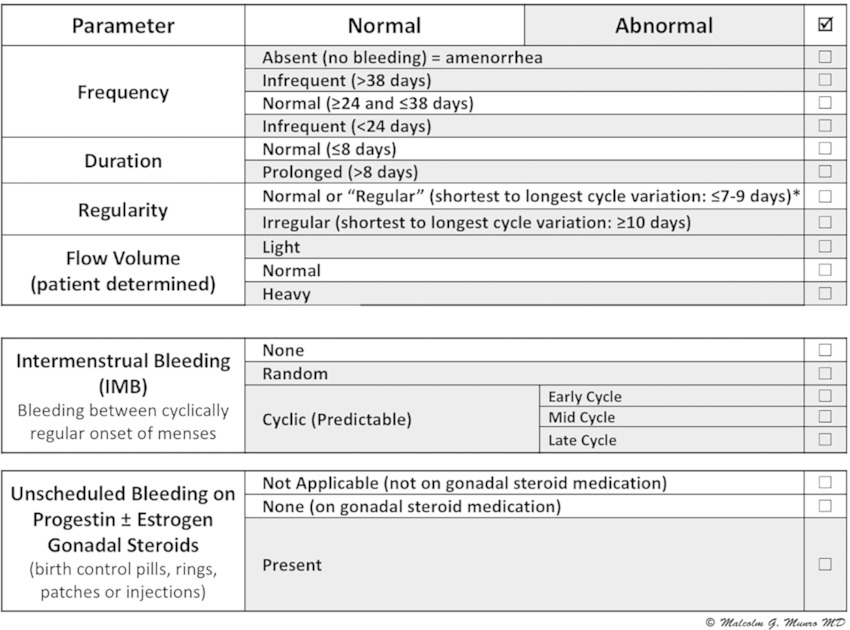
A 28-day cycle is popular because it makes diagrams easy to draw. Real cycles vary from person to person and from cycle to cycle, and US medical sources give somewhat different ranges for what's typical.
| Source and measurement | Duration | Meaning |
|---|---|---|
| US Office on Women's Health, adult menstrual cycle | 24 to 38 days | Usual range for regular cycles |
| American College of Obstetricians and Gynecologists (ACOG), adult menstrual cycle | 21 to 35 days | Common adult reference |
| ACOG, adolescent menstrual cycle | 21 to 45 days | Wider variation in the early years of menstruation |
| ACOG, menstrual bleeding duration | 2 to 7 days | Typical bleeding duration |
| Mayo Clinic, menstrual bleeding duration | Up to eight days | Another description of bleeding duration |
The adolescent range in ACOG's Your First Period is wider because cycles can take years after menarche, the first menstrual period, to settle into a consistent pattern.
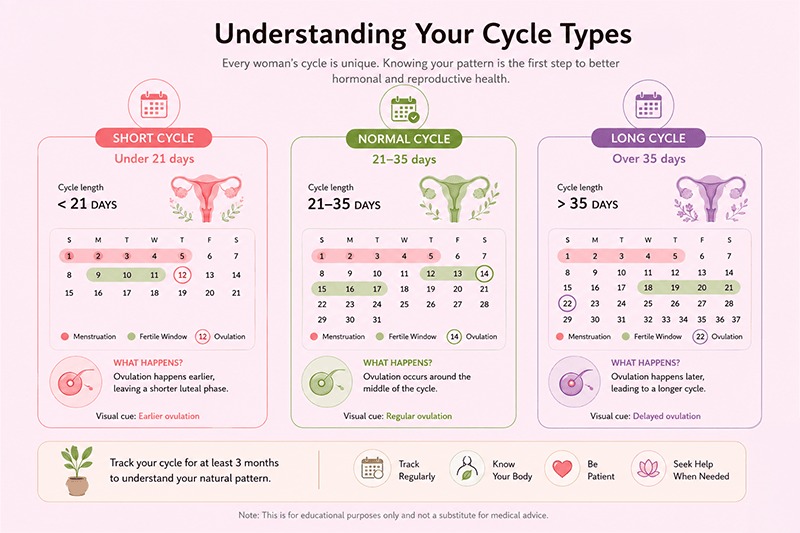
Compare each new interval with your earlier ones if your cycles usually run 31 to 33 days. Several months of dates show whether a change is new or part of your usual pattern.
In a 2019 study, Bull and colleagues analyzed 612,613 ovulatory cycles recorded by 124,648 Natural Cycles app users. The mean cycle length was 29.3 days.
Your life stage matters too. Cycles behave differently in adolescence and perimenopause, and pregnancy, breastfeeding, or hormonal contraception can change bleeding patterns.
Do the same phase dates apply if I bleed while taking hormonal birth control?Some hormonal birth control stops ovulation or causes withdrawal bleeding. The phase diagram above doesn't describe those cycles.
How do you count menstrual-cycle days?
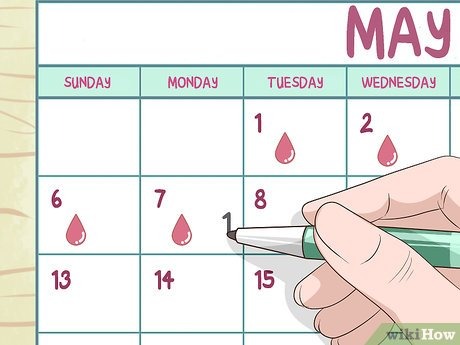
To get your cycle length, use two consecutive period-start dates. The first is day 1 of one cycle, and the second is day 1 of the next.
Say a period begins on December 1 and the next one begins on December 29.
Worked calendar example
December 1: Day 1 of your first cycle
December 28: Day 28 of your first cycle
December 29: Day 1 of your next cycle
Elapsed cycle length: 28 days
Both start dates fall in the same month, and the cycle is still 28 days.
To use your own dates, subtract the first start date from the next one, carrying over the month or year when needed. The second start date is day 1 of the new cycle.
What if bleeding begins with spotting?
Brown or pink spotting can show up before menstrual flow. Say you see light brown spotting on Monday and ordinary flow on Wednesday. If you track by when flow starts, log Monday as spotting and Wednesday as day 1 of the new period.
For cycle-day blood tests, the clinic that orders the test may define day 1 by its own protocol. Follow its instructions.
How do you track your period without confusing records and predictions?
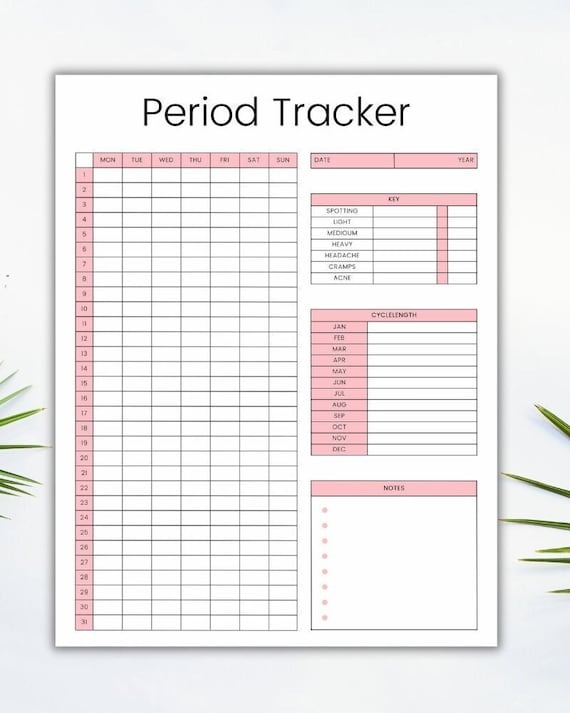
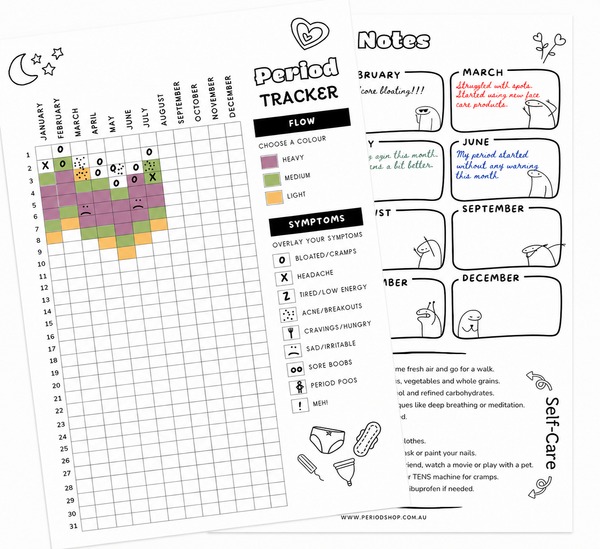
A good period log is small enough to keep up and detailed enough to show changes. Paper, a phone note, or a tracking app all work. Pick whichever fits your routine.
Record these as they happen:
- Period start: The date menstrual flow begins.
- Period end: The last day of bleeding.
- Bleeding pattern: A rough note on light, moderate, or heavy flow, plus any bleeding between periods.
- Symptoms and changes: Cramps, pain, or other changes worth comparing across months.
The Mayo Clinic guide to the menstrual cycle recommends recording start and end dates, flow, pain, and unusual changes.
A forgotten entry leaves a gap. An app may read that gap as an unusually long interval and show you a misleading history.
A commenter described the difficulty of reconstructing months of missing dates:
Nope. The trick is to tell yourself "I'm going to remember exactly when this period started so that I can track it in a special notebook that I will definitely start using this month and I'll fill in the past 6 months of data that I of course obviously remember."
The guilt of not starting that book is probably what I remember.
Log the date when bleeding starts, and you won't have to reconstruct it later.
Where you store this data matters, because it is sensitive health information. In June 2021, the Federal Trade Commission documented a settlement involving Flo Health and allegations about sharing sensitive health information with analytics providers despite privacy assurances. The case is a reason to check a tracking service's data practices. It doesn't tell you how any app behaves today.
Can a calendar tell you when you ovulate or when you're fertile?
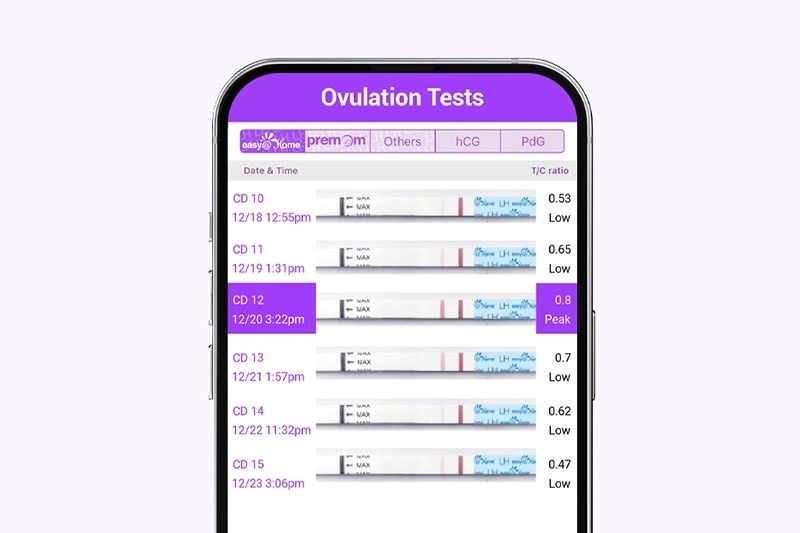
A calendar can estimate when ovulation might happen based on your recorded dates. Confirming when the egg was released takes more than a predicted date.
An LH surge comes before ovulation, and the length of your follicular phase shifts when the egg is released.
The fertile window is the run of days leading up to and including ovulation when sex can lead to pregnancy.
The 2019 Bull study found mean follicular and luteal phase lengths of 16.9 and 12.4 days in its ovulatory cycles.
A 2021 study by Worsfold and colleagues entered five simulated menstrual profiles into ten period-tracking apps, selected around 2020. The apps gave conflicting estimates of future periods and ovulation.
| Information | What it represents | What you can tell from it |
|---|---|---|
| Recorded period start | An event entered from observation | When bleeding was recorded to have begun |
| Predicted period or ovulation date | A model's estimate from the data it has | What the model expects |
| Physiological observations or testing | Signs or measurements such as LH testing, basal temperature, or cervical mucus | Extra information about timing, with each method having its own limits |
The CDC's US contraceptive practice recommendations cover structured fertility-awareness methods, which come with specific requirements and limitations. A general period calendar or date-only prediction doesn't tell you a safe day for unprotected sex.

If timing matters for conception or pregnancy prevention, use a method built for that purpose.
What symptoms and changes can happen during the cycle?
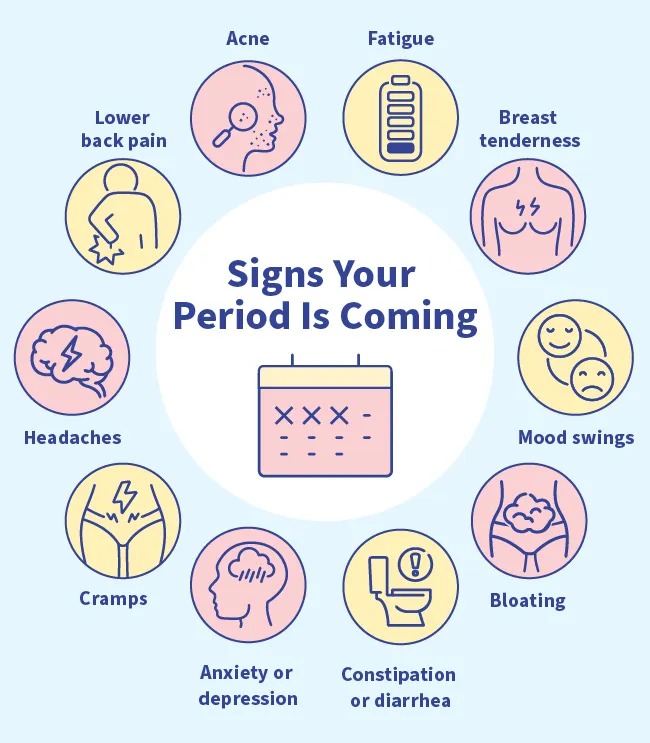
Cramping and changes in bleeding amount can come with your period. Some people notice changes in cervical mucus at other points in the cycle, and premenstrual symptoms can appear later, though they differ from person to person.
Symptoms alone don't confirm your hormone levels, whether you've ovulated, or which phase you're in, and no particular day dictates your mood or productivity. When a symptom changes, compare its timing with the dates in your log. The pattern is then easier to describe.
When should a change in your period or cycle be checked?
A cycle can vary without signaling a health problem. A sharp change from your usual pattern deserves attention, though, especially with heavy bleeding, pain, or other worrying symptoms.
The Office on Women's Health, Mayo Clinic, and ACOG describe situations that call for a medical assessment:
- Unusually heavy or prolonged bleeding: Bleeding that is very different from what you're used to or gets in the way of daily activities.
- Bleeding outside expected periods: Including repeated bleeding between periods or after sex.
- Severe or worsening pain: Especially pain that is new, disruptive, or comes with other worrying symptoms.
- A big change in timing: Periods becoming much less predictable or stopping unexpectedly.
- Possible pregnancy: A missed period or unusual bleeding calls for a pregnancy test and medical advice.
Seek emergency care for heavy bleeding accompanied by fainting, chest pain, severe shortness of breath, or other severe sudden symptoms. If pregnancy is possible, seek emergency care for sudden severe pelvic or abdominal pain, fainting, or other sudden symptoms that could indicate internal bleeding.
Not remembering your last period date also complicates pregnancy worries. As another commenter put it:
We’re supposed to remember when we had our last period!?
Seriously though, I never remember. Once I was so convinced I was late that I took a pregnancy test and got my period literally 90 minutes later.
When a change needs care, bring your recorded dates, a description of the bleeding, relevant symptoms, and how the pattern differs from your usual one to a doctor.