
Human Anatomy: Body Regions and Organ Systems
Start with a body region if you know where a structure is, or with its organ system if you know what it does. Use anatomical position to read the labels, then choose the specific question below. For personal symptoms, test results, or treatment decisions, seek appropriate clinical guidance.
You might recognize a shoulder blade without knowing its formal name, or recognize the function of breathing without knowing every structure involved. Anatomy gives you a way to place both kinds of information in context.
What is anatomy, and how is it different from physiology?
Anatomy studies the body's structures and their relationships. Physiology describes how those structures function, such as how the heart moves blood. The two perspectives often meet when explaining an organ. Body structure can also be described at different scales, from molecules and cells to organs and systems.
Start with a body region when you don't know the name
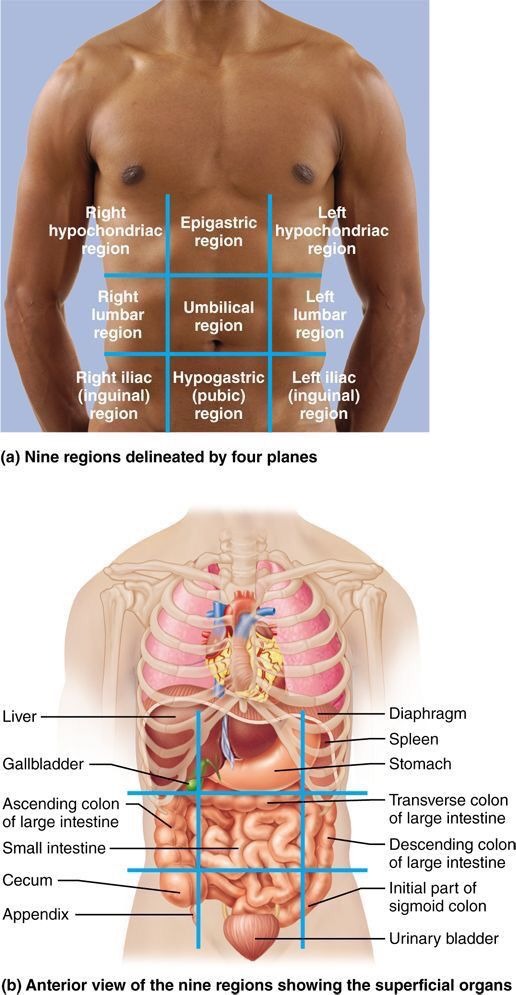
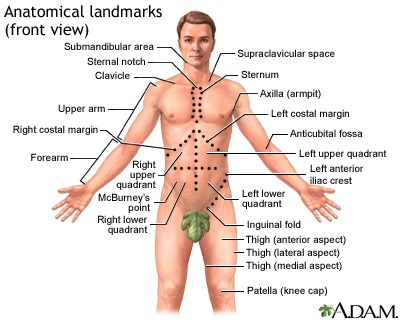
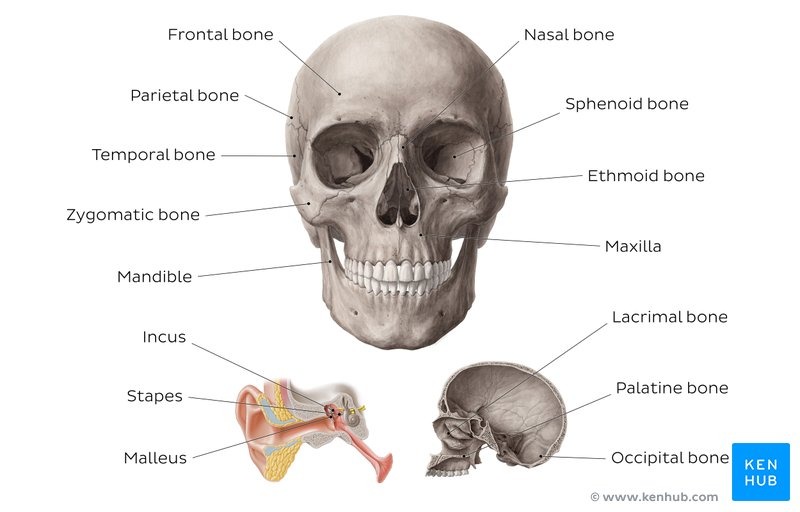
The head, neck, chest, abdomen, pelvis, back, arms, and legs are useful places to begin. Anatomists use precise regional names as well: the chest is the thorax, and the neck is the cervical region.
A front-and-back overview groups structures by their location:
- Head and neck: Facial structures, the skull, and the connection between head and torso.
- Chest and abdomen: The rib cage, heart, lungs, stomach, and surrounding structures.
- Pelvis: The lower trunk and structures contained in that region.
- Back and shoulders: The spine, shoulder blade, and neighboring muscle groups.
- Arms and legs: The bones, joints, muscles, and their connections.
Imagine pointing to the back of your shoulder. You may mean the scapula (shoulder blade), a nearby muscle, or the movement of the joint. The location narrows the area, and the structure determines the next question. Several organ systems can have structures within the same region.
Anatomists call these complementary approaches regional anatomy and systemic anatomy. Regional anatomy considers structures together in one part of the body; systemic anatomy follows structures belonging to a body system.
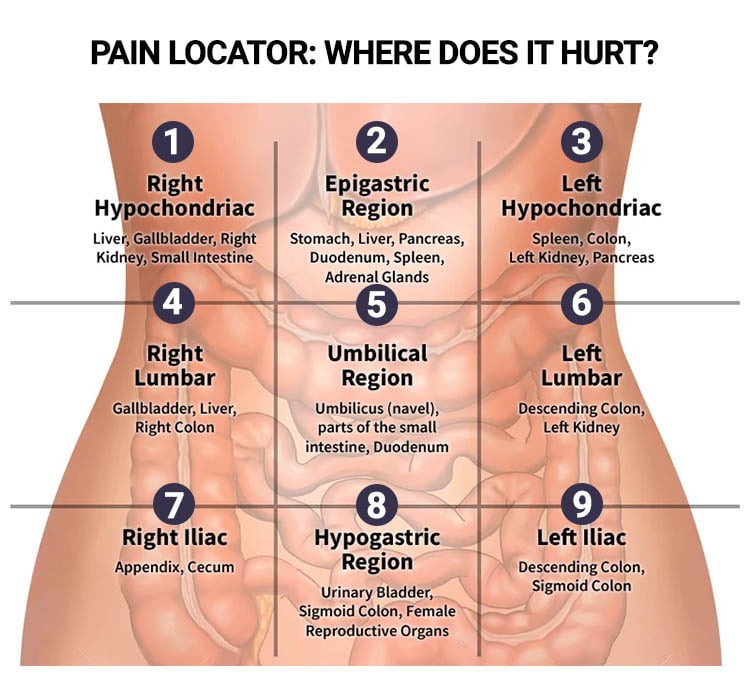
An anatomy learner described the difficulty of following a book that introduced unfamiliar abdominal structures before they could visualize the surrounding area:
I bought an anatomy book and I'm just slowly going through it but they seem to go straight into a large amount of details right of the bat. like now I'm studying cavities and they're talking about the abdomen and there are a lot of names like mesentaries and omental bursa which sound weird and the diagrams for them are wierd and I can't visualise them because the 3D app I'm using doesn't say anything about them. The book sometimes also keeps bringing up bone names even thought we haven't even started bones yet. Should I just watch a YouTube course and ignore the book?
That account mentions the abdomen, the omental bursa, and other unfamiliar terms. A wider regional view can establish the surrounding landmarks before the reader examines a small structure.
How to read left, right, front, back and other anatomy labels
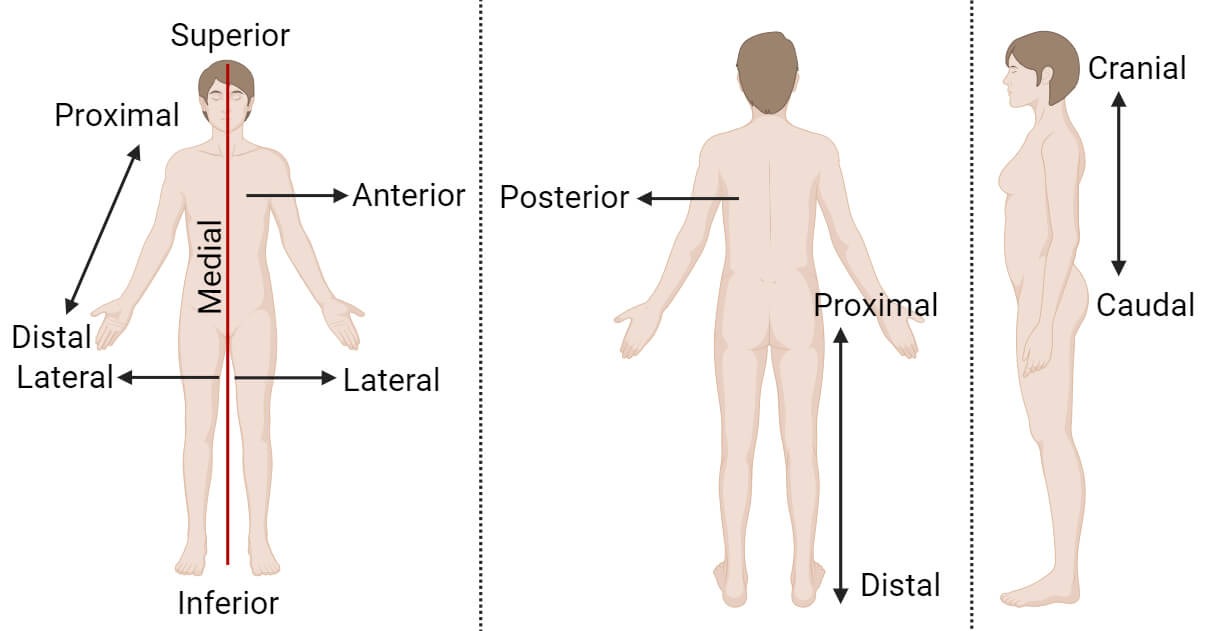
Anatomical directions refer to a standard position: a person standing upright, looking forward, with arms at their sides and palms facing forward. A label for the person's right side means the subject's right, even when you face the person in an illustration.
In a front view, the subject's right appears on the viewer's left.
| Directional terms | Meaning | Example |
|---|---|---|
| Anterior / posterior | Toward the front / toward the back | The chest is anterior to the back |
| Superior / inferior | Toward the head / toward the feet | The chest is superior to the abdomen |
| Medial / lateral | Toward / away from the midline | The nose is medial to the eyes |
| Proximal / distal | Nearer / farther from a limb's attachment | The elbow is proximal to the wrist |
| Superficial / deep | Closer to the surface / farther inside | Skin is superficial to muscle |
These terms follow the anatomical-position convention in OpenStax's anatomy terminology guide.
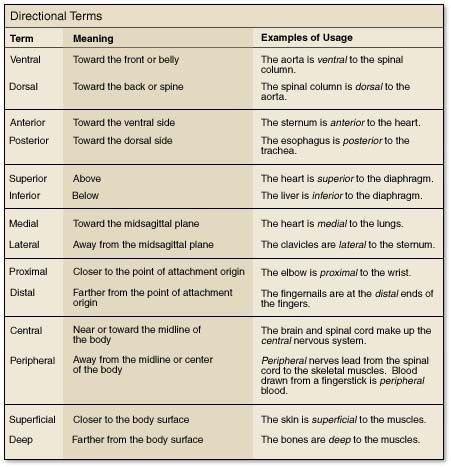
Directional descriptions retain that reference even when a person is lying down or the image is rotated. Before matching a label to a structure, identify the depicted view and the subject's left, right, and midline.
From cells to organs: the six levels of body organization
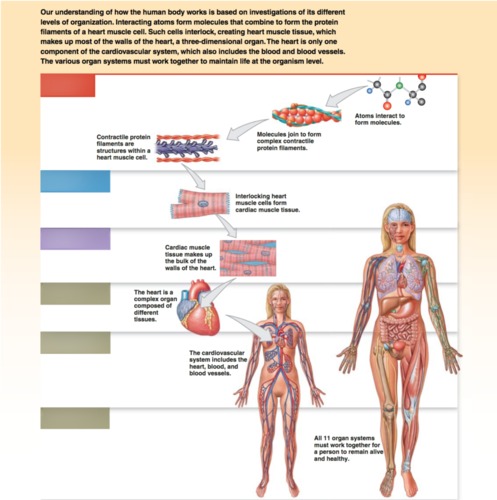
The same part of the body can be examined at different scales. OpenStax presents six levels of structural organization, illustrated here by the progression from a smooth muscle cell to the urinary system.
| Level | What it describes | Example |
|---|---|---|
| 1. Chemical | Atoms and molecules in living structures | Atoms and molecules |
| 2. Cellular | Individual living cells | Smooth muscle cell |
| 3. Tissue | Related cells organized together | Smooth muscle tissue |
| 4. Organ | A structure formed from multiple tissues | Urinary bladder |
| 5. Organ system | Organs contributing to a broader function | Urinary system |
| 6. Organismal | The complete living individual | Human organism |
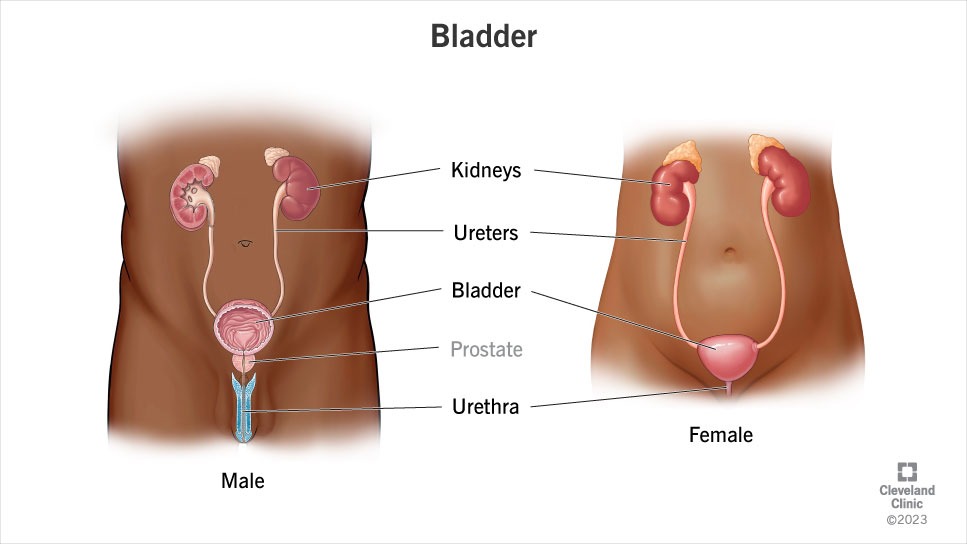
In this OpenStax organizational framework, the bladder is an organ made of several tissues. It belongs to the urinary system, which includes other organs contributing to fluid regulation and waste removal.
The major organ systems and why counts differ
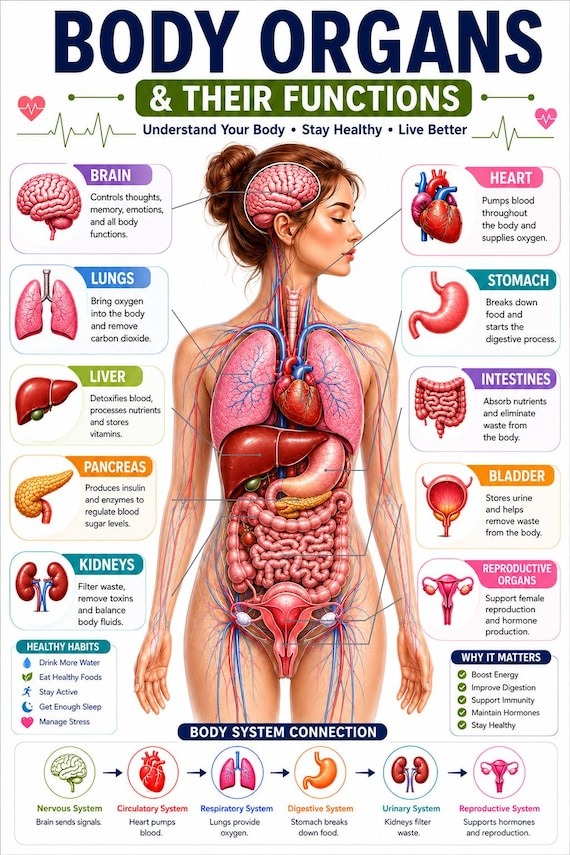
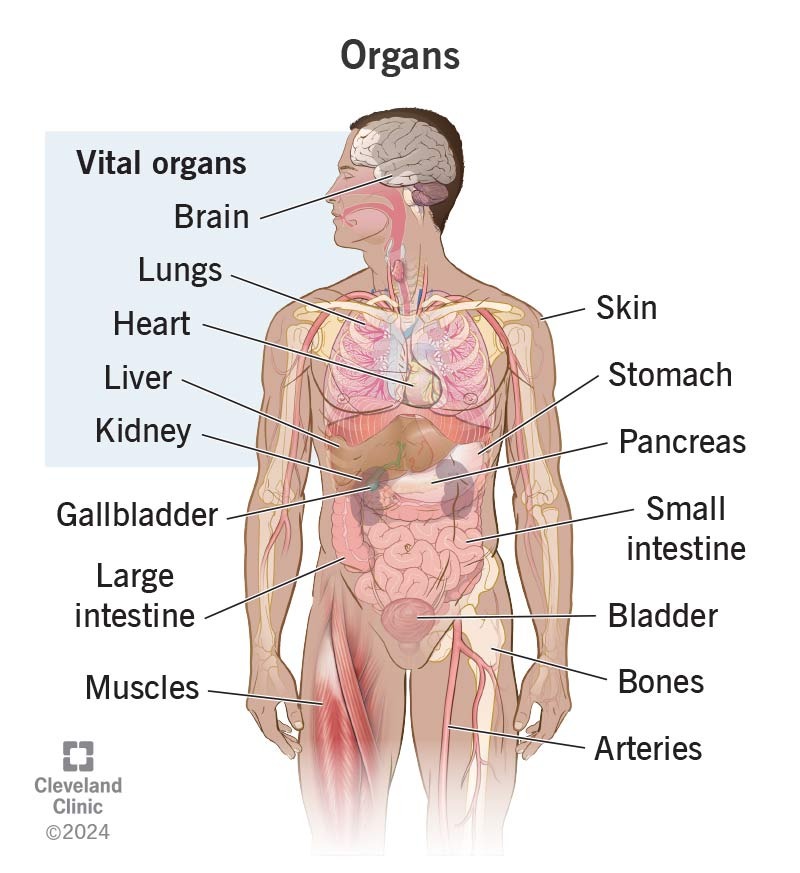
Organ systems group structures that contribute to broad functions. This table follows the eleven-system teaching convention in OpenStax; the same activity can involve more than one system.
| Organ system | Representative structures | Main role |
|---|---|---|
| Integumentary | Skin, hair, nails | Covering, protection, sensory functions |
| Skeletal | Bones, joints, cartilage | Support, protection, leverage |
| Muscular | Skeletal muscles, tendons | Movement, posture, heat production |
| Nervous | Brain, spinal cord, peripheral nerves | Signaling, sensation, motor control |
| Endocrine | Pituitary, thyroid, other endocrine glands | Hormone production and regulation |
| Cardiovascular | Heart and blood vessels | Blood circulation |
| Lymphatic | Lymphatic vessels, nodes, spleen | Fluid return and immune defense |
| Respiratory | Airways and lungs | Gas exchange |
| Digestive | Stomach, intestines, associated organs | Digestion and nutrient processing |
| Urinary | Kidneys and urinary bladder | Fluid regulation and waste removal |
| Reproductive | Ovaries, uterus, testes, other reproductive structures | Reproduction |
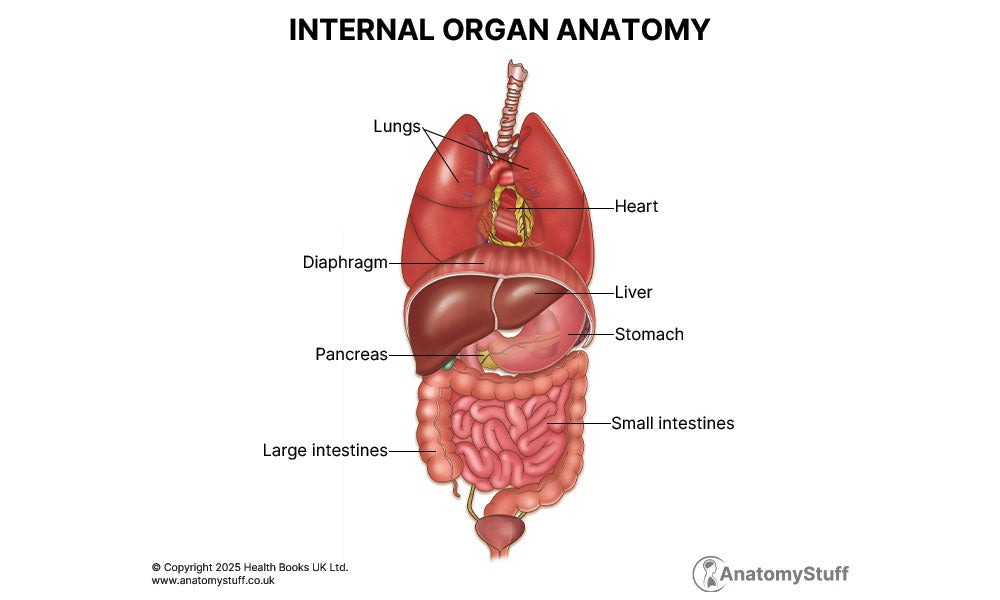
For a question about breathing, the respiratory system supplies a useful category. Shoulder movement involves the muscular and skeletal systems, with nervous control contributing to the action.
Why counts differ: Cleveland Clinic's human-body overview, updated June 10, 2026, describes classifications ranging from 10 to 12 systems and separately lists an exocrine system. The eleven-system table above uses OpenStax's convention consistently because sources may group related functions differently.
Why an anatomy diagram can be accurate but still confusing
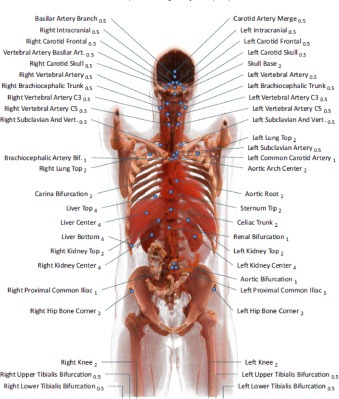
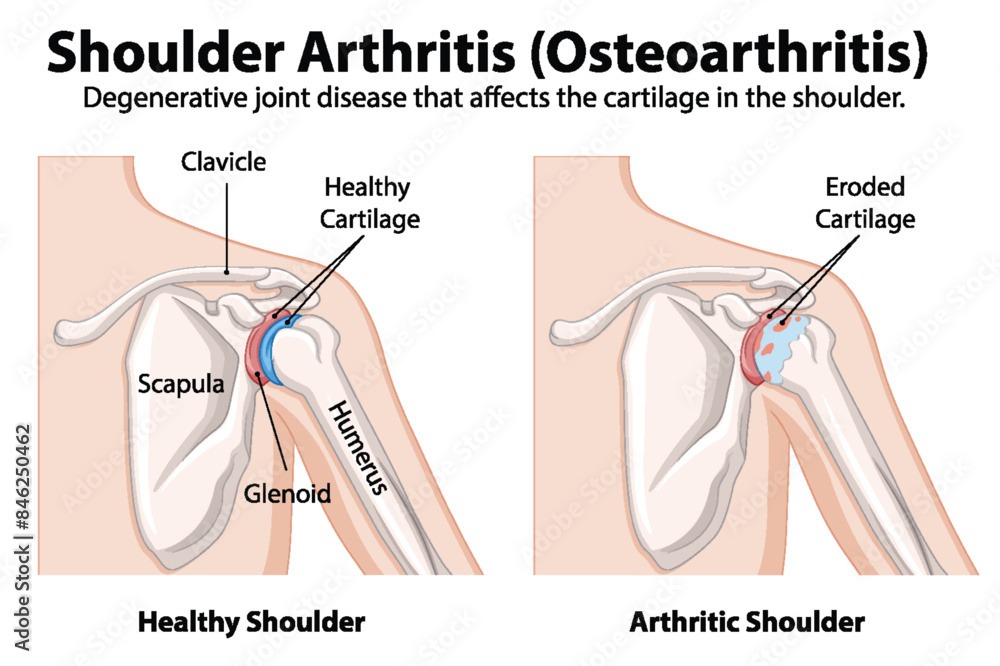
An anatomical drawing presents a selected view of a structure. An enlarged shoulder-muscle drawing may make an individual muscle easy to see while omitting landmarks that establish its position in the upper back. When both a broad posterior view and a close-up show the scapula, locate that landmark in each view to orient the labeled muscle.
A whole-region view and a close-up answer different visual questions:
| View | What it reveals | What may be difficult to judge |
|---|---|---|
| Whole-region drawing | Position relative to surrounding landmarks | Fine structural detail |
| Enlarged close-up | A structure's shape and label | Its place in the full region |
| 3D educational model | Spatial relationships from chosen angles | Features absent from the model or hidden by the view |
Studies involving medical students have compared 2D and 3D anatomy instruction, with differing results across study designs and outcomes. Those findings concern specialist learning settings; they offer no measured performance claim for this general anatomy guide.
One first-year medical student described difficulty understanding anatomy and identifying structures during cadaver lab sessions:
Hye guys , I’m a first year med student and next week I have an anatomy spot test coming up. Honestly I’m rlly struggling w this subject coz I Have NO idea how to study it it’s very overwhelming for me and especially when we have lab sessions I’m unable to identify anything on the cadaver . I’m not someone who can just read and memorize I need to kinda understand it first before memorizing but with anatomy I find even the understanding part difficult . I would seriously appreciate any advice you guys can give me for this subject coz I’m so demotivated. Usually I am someone who is excited to learn but I find myself drowning in anatomy .
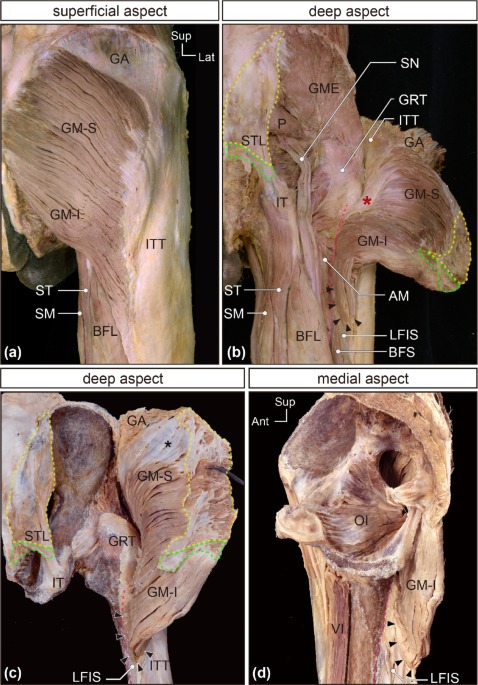
A printed label can be familiar while the same structure remains difficult to recognize from a different angle or in a specimen.
When comparing views of the same body area, follow these landmarks in order:
- Viewpoint: Identify front, back, or another angle.
- Region: Locate the larger area surrounding the target.
- Landmark: Find something recognizable nearby, such as the scapula in an upper-back drawing.
- Structure: Match the target label to that landmark in both views.
- Reference: Use the anatomical-position key when the side or direction is unclear.
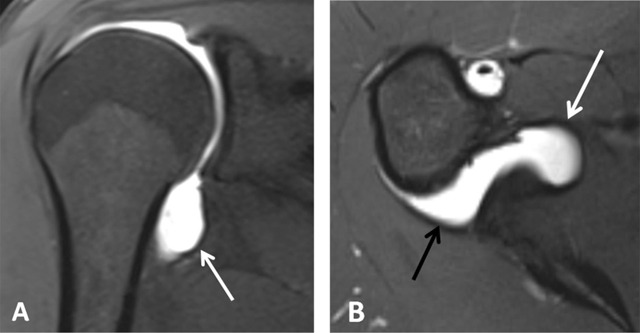
Illustrations simplify anatomical detail, and individual bodies vary. A drawing provides general structural orientation; identifying a personal abnormality requires appropriate clinical assessment.
Find the specific anatomy question you came for
Once the region or system is clear, the question is usually narrower: the name of a muscle, the convention behind a measurement, or the cause of a familiar bodily feature. The groups below form a reading index, organized by question type.
Muscles, bones, and movement
- Which muscles make up the posterior chain? Muscle groups along the back of the body and their roles in movement.
- How is shoulder width measured? The landmarks and conventions that determine a shoulder-width measurement.
- How many joints does the human body have? The definitions and counting methods behind different totals.
- Which muscles work during a shoulder press? The anatomy involved in raising weight overhead.
Face, hair, and visible structures
- How can you identify high and low cheekbones? Facial landmarks used to describe cheekbone position.
- What explains red hair with green eyes? Genetic inheritance and variation behind these traits.
- Why do we have armpit hair? The structures and proposed functions associated with underarm hair.
- How many hairs are on a human head? What counts estimate and why totals differ.
- How much does hair weigh? The measurements and assumptions involved in an estimate.
- How long is the human tongue? Which parts are measured and why methods matter.
Growth and development
- When do feet stop growing? Typical growth stages and later changes in foot size.
Internal processes and everyday physiology
- How strong is stomach acid? Acidity and its role in normal digestion.
- Why are tears salty? Tear composition and how it relates to function.
- Can you sneeze with your eyes open? The sneeze reflex and associated eye closure.
Genetics basics
- What does heterozygous mean? Alleles and inheritance in educational examples.
This collection includes physiology and genetics alongside anatomical subjects. For a broader collection of published educational references, the National Library of Medicine maintains the MedlinePlus anatomy directory.
Start with the body region if you know where a structure is, or with its organ system if you know what it does. Use anatomical position to interpret labels, then select the focused question that matches your interest. For personal symptoms, test results, or treatment decisions, seek appropriate clinical guidance.
Explore this topic

Red Hair and Green Eyes: How Rare Is This Combination?
How rare are red hair and green eyes? Compare 14 of 3,619 people in a Dutch study, examine other eye-color groups, and understand inheritance limits.
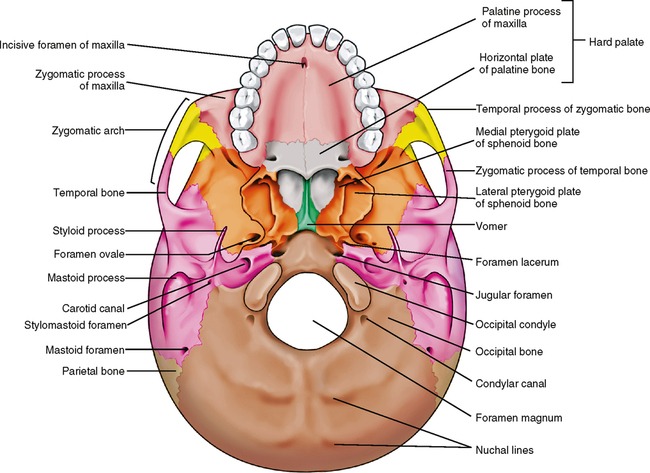
How to Tell if You Have High or Low Cheekbones
Find your cheekbone landmarks, compare height with projection and fullness, and use a simple mirror check. Learn why photos and shadows can mislead.
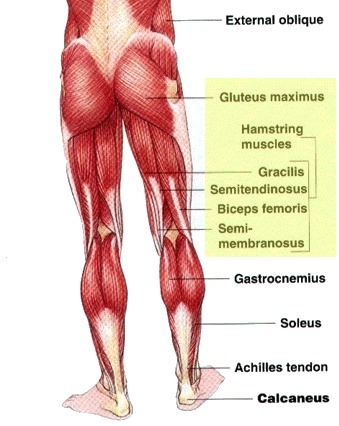
Posterior Chain Muscles: What They Are and What They Do
Learn which muscles form the posterior chain, what the glutes, hamstrings, spinal extensors and calves do, and how their roles change in common movements.
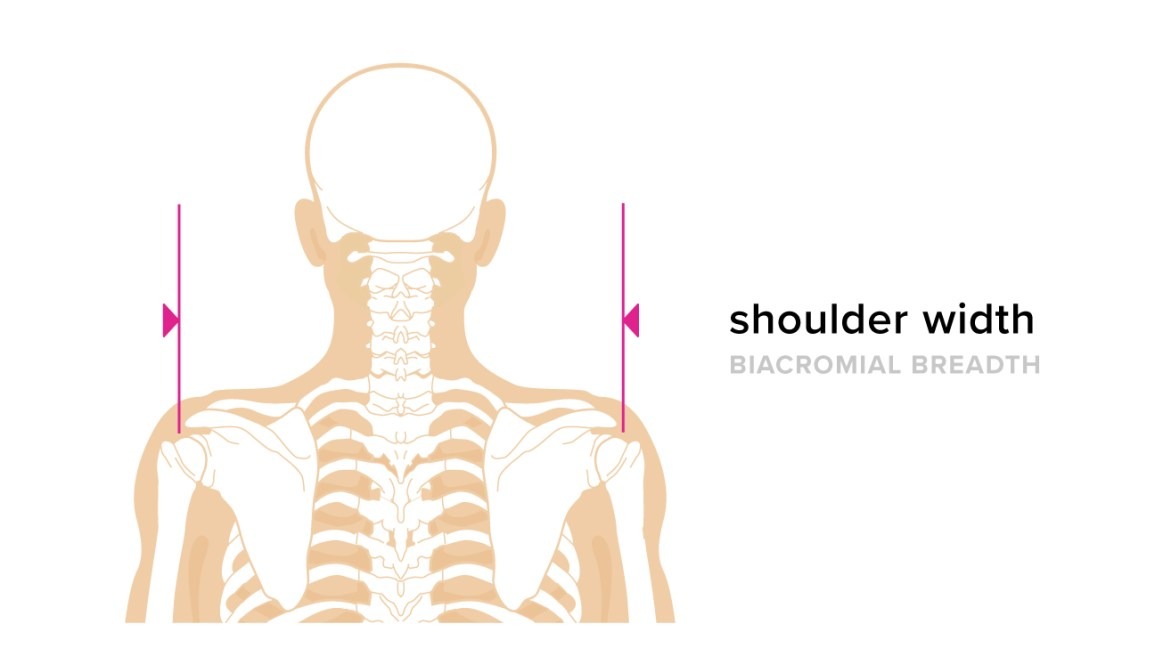
Average Shoulder Width for Men: What US Measurements Show
Historical US data put average male bone-to-bone shoulder breadth at 16.2 inches. See CDC percentiles, measuring instructions, and comparison limits.

Why Do We Have Armpit Hair? Functions, Sweat, and Body Odor
Why does armpit hair grow? Understand friction, sweat glands, body odor, and what a hair-removal study found before choosing whether to shave.
When Do Feet Stop Growing? Ages, Puberty, and Changes in Shoe Size
When do feet stop growing? Compare foot-length studies for girls and boys, learn why shoe size changes in adults, and measure both feet for a better fit.
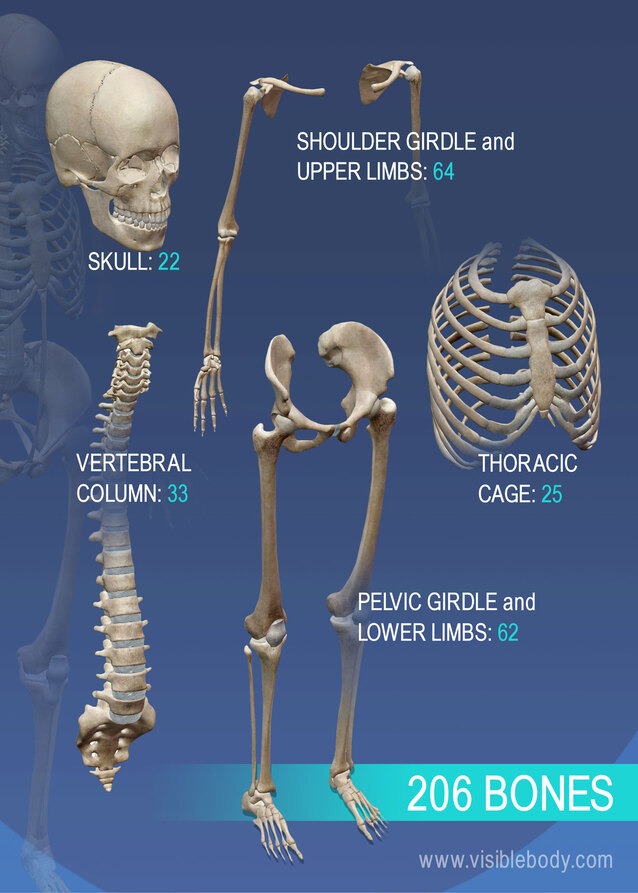
How Many Joints Are in the Human Body? Why Counts Differ
Compare published estimates of human joint counts and learn how skull sutures, wrist articulations, and growth plates change what gets counted.
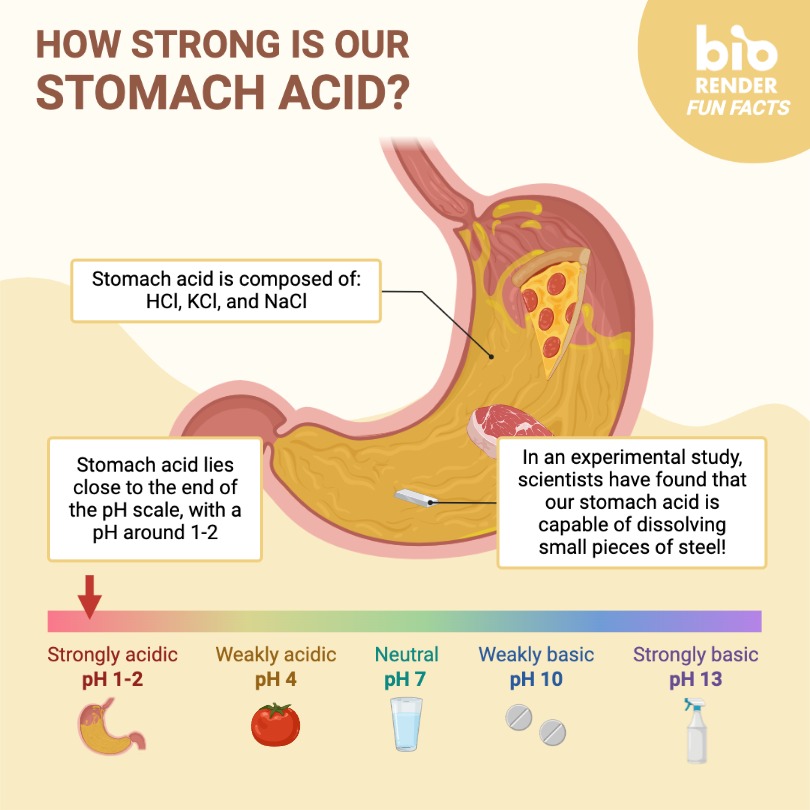
How Strong Is Stomach Acid?
See why fasting stomach contents are often pH 1 to 2, how food changes acidity, and what a blade-and-penny experiment reveals about metal corrosion.

Why Are Tears Salty? What Tear Salt Does for Your Eyes
Why do tears taste salty yet usually feel comfortable? Explore sodium, chloride, tear-film layers, and the difference between normal tears and added salt.
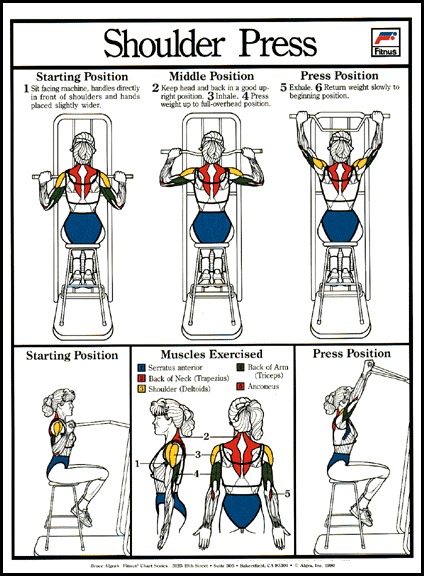
What Muscles Does the Shoulder Press Work?
See which muscles drive the shoulder press, how triceps and shoulder blades contribute, and what changes with dumbbells, barbells, or seated presses.
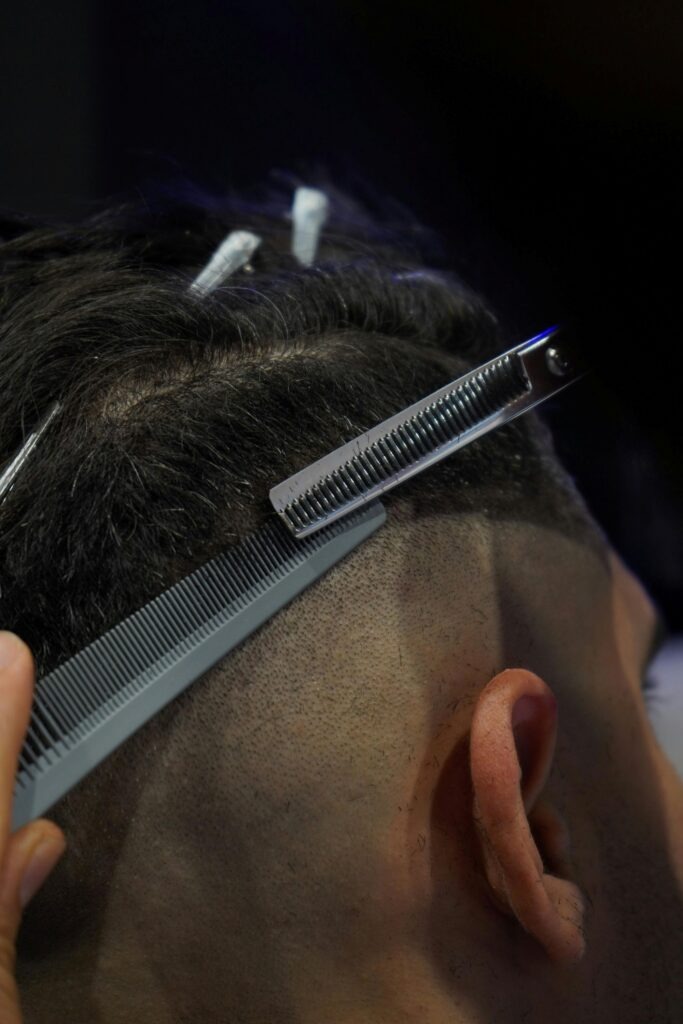
How Many Hairs Are on a Human Head? Ranges and Variables
A typical adult scalp has about 100,000 hairs. Compare published ranges, see how scalp area and density combine, and learn why individual estimates vary.
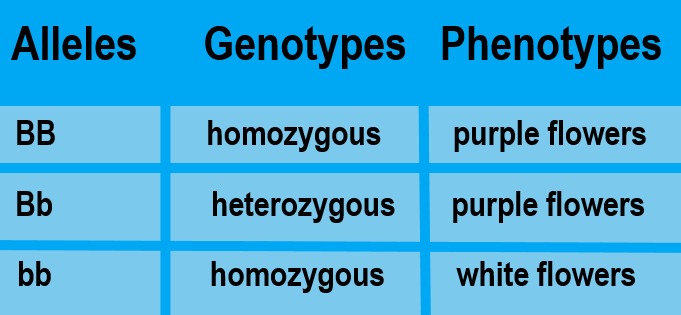
Heterozygous Examples: How to Read Alleles and Inheritance
See why Aa is heterozygous, compare pea flowers, snapdragons and AB blood type, and use a Punnett square to calculate genotype and phenotype ratios.

Can You Sneeze With Your Eyes Open?
Yes, you can sneeze with your eyes open. Learn why eyelids usually close, what keeps your eyes in place, and why the eye-popping myth gets it wrong.
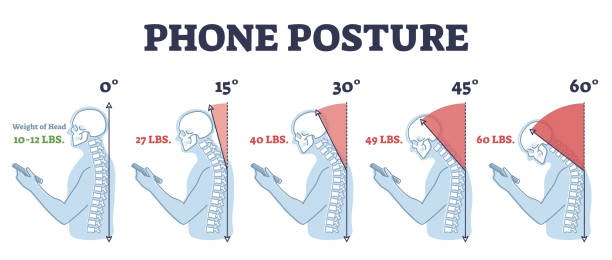
How Much Does Hair Weigh? What Changes the Number
How much does hair weigh? See a worked estimate and four comparisons, then learn how wet hair, extensions, and hairstyle tension change the picture.

How Long Is the Human Tongue? Measurements and Variation
How long is a human tongue? Compare the three-inch ballpark with research measurements and Guinness records, including the landmarks that explain each figure.