
How Many Joints Are in the Human Body? Why Counts Differ
Healthline puts the human joint count at roughly 250 to 350. Cleveland Clinic says around 350.
Sources differ because they count different things: fixed skull sutures or only movable joints, and the wrist as one joint or several. An exact number only makes sense alongside the source's counting rules and age group. Attribute the figure when you cite it.
How many joints are in the human body?
Healthline presents a range of estimates rather than an exact tally. Cleveland Clinic likewise gives an approximate adult count.
What about 360 joints? You'll also see that figure in educational material, but the linked explainers give approximations, not an itemized count.
Why do sources give different joint counts?

Sources disagree because they count different things; some include the fixed seams between skull bones. Others count only joints that move. Some treat the wrist as one joint, others split it into radiocarpal and intercarpal joints. Age and individual variation add more differences.
What qualifies as a joint, even if it does not move?
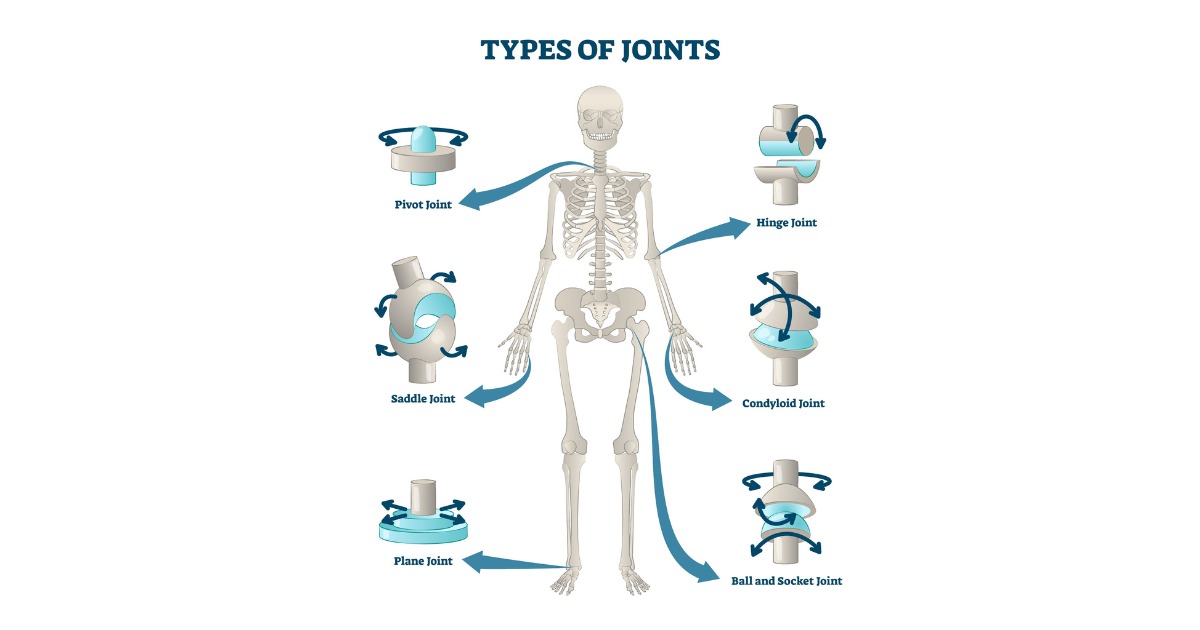
A joint, or articulation, is a place where adjacent bones, or bone and cartilage, come together. Some permit broad movement. Others mainly hold structures together, like the nearly immobile seams between skull bones. Muscles are a separate topic, and the posterior-chain anatomy guide explains that side.
Anatomists sort joints two ways: by structure (the connecting tissue, and whether there's a joint cavity) and by function (how much movement the joint allows). OpenStax Anatomy and Physiology explains both systems.
| Structural type | Defining feature | Example |
|---|---|---|
| Fibrous | Dense fibrous tissue connects the structures | Skull suture |
| Cartilaginous | Cartilage joins the structures | Intervertebral symphysis |
| Synovial | Articulating surfaces lie within a joint cavity | Knee or shoulder |
Skull sutures are fibrous and allow almost no movement. Functional terms describe movement: synarthrosis means little or none, amphiarthrosis means limited motion, and diarthrosis means freely movable. Some fibrous joints, called syndesmoses, allow limited movement.

A gomphosis is the fibrous joint between a tooth root and its bony socket in the jaw. The periodontal ligament holds the tooth in place.
Three places where counting gets tricky: skull, wrist, and kneecap
| Example | What anatomists identify | Counting question |
|---|---|---|
| Skull | Fibrous sutures between cranial bones | Do fixed joints count? |
| Wrist | Radiocarpal and intercarpal articulations | Is it one complex or several joints? |
| Kneecap | Patella articulating with the femur | Does a bone formed inside a tendon count? |
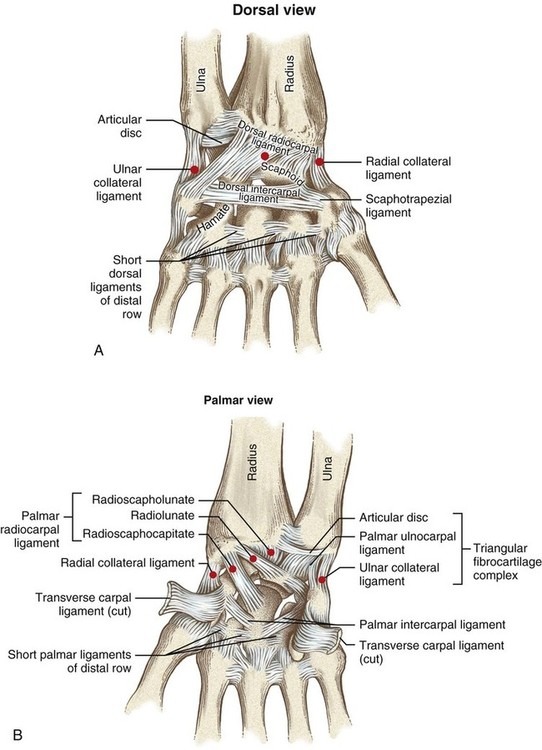
The wrist shows how the unit of counting changes. In everyday speech, "the wrist joint" names one region.
Detailed anatomy identifies the radiocarpal joint and the connections among the carpal bones. Sources treat the wrist as a single complex, as separate contact surfaces, or as individual intercarpal joints. There's no agreed number for the wrist alone.
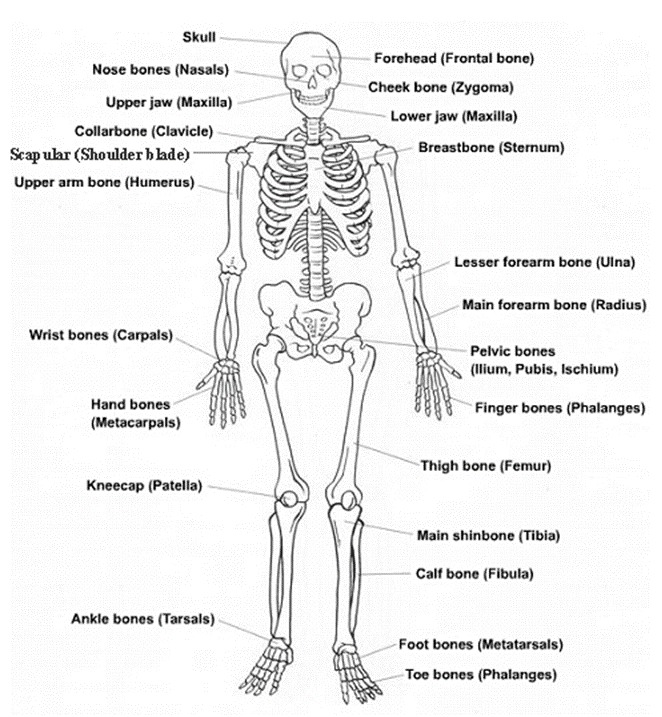
The patella raises a different issue. It's a sesamoid bone, formed within a tendon, and it meets the lower end of the femur. OpenStax describes that contact in its lower-limb anatomy chapter. Other sesamoid bones vary in presence and arrangement from person to person, so a stated inclusion rule matters here.
Does your joint count change from childhood to adulthood?
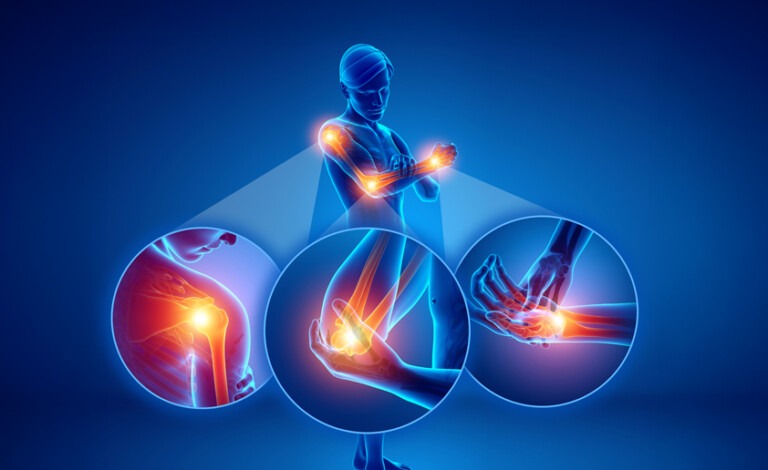
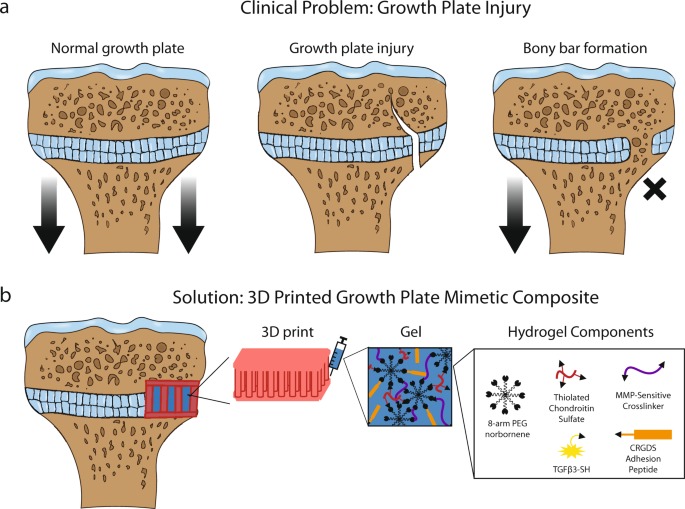
A developing skeleton has temporary cartilage connections that later become bony unions. An adult estimate and a newborn's skeleton describe different stages.
In a growing long bone, a layer of cartilage called the epiphyseal growth plate sits between the epiphysis (the end of the bone) and the diaphysis (the shaft). This temporary joint is a synchondrosis. As the skeleton matures, the cartilage turns to bone and the two regions fuse, forming a synostosis.
Skull sutures and fontanelles give the skull room to grow early on. In the pelvis, the ilium, ischium, and pubis start as separate parts and join as it matures.
The examples above don't produce a newborn-versus-adult total.
Why 206 bones doesn't mean 206 joints
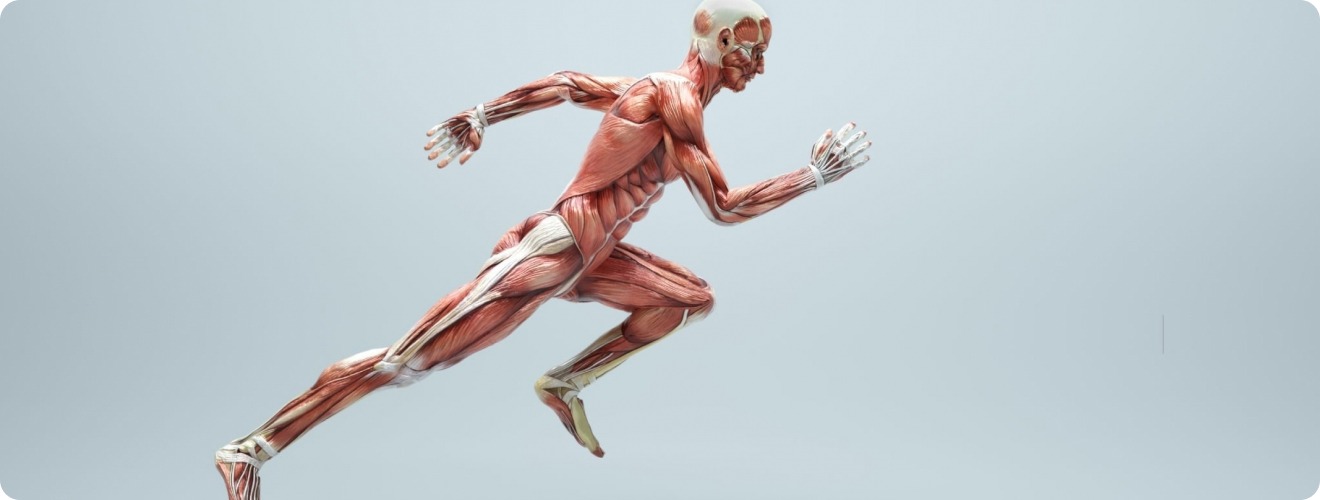
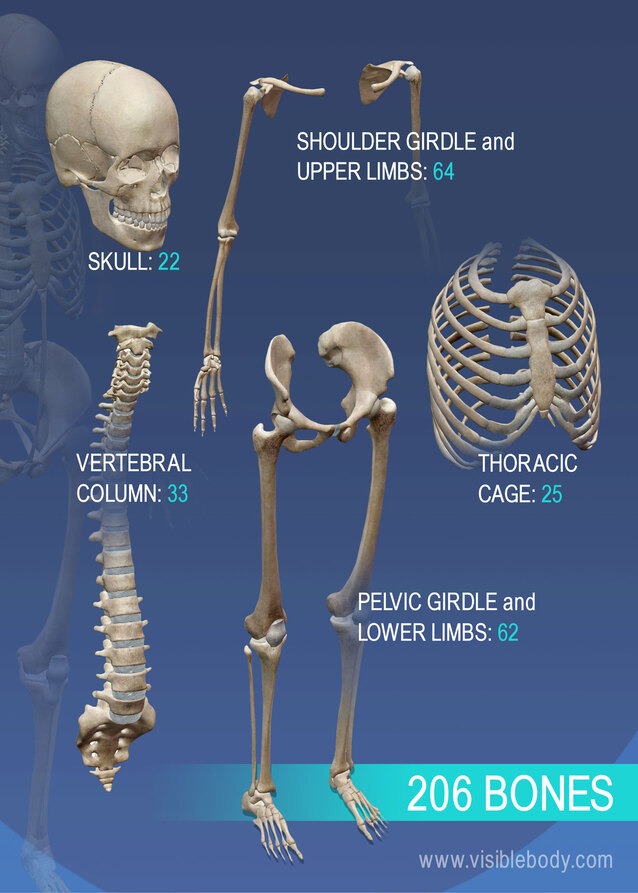
The familiar number 206 is the conventional adult bone count. Bones and joints don't map one to one. A bone can form several joints, and a joint complex can involve several bones, so you can't calculate one total from the other. The femur, for instance, forms several joints, including the one with the patella at the knee.
Neumann and Gest examined the 206-bone figure in their 2020 Clinical Anatomy paper, How Many Bones? Every Bone in My Body. They found historical tallies from 197 to 307 bones. The paper doesn't cover joints.
How to check a joint count you see online

Before you repeat a joint count, run four checks.
- Find the source. Note the publisher and whether it calls the figure an estimate, an approximation, or an exact list.
- Check what's included. Does the author count fixed sutures, cartilage joints, and synovial joints, or only movable ones?
- Check the unit. Is a region like the wrist treated as a single complex or split into individual joints?
- Check age and variation. An adult figure and a developing-skeleton figure cover different things. An exact total needs a full list that follows the stated rules.
A medically reviewed reference is fine for an approximate answer. Ask for the full list only when someone presents the number as exact.