
Posterior Chain Muscles: What They Are and What They Do
The posterior chain is a functional grouping of muscles along the back of the body, mainly the glutes, hamstrings, spinal extensors and calves. Understanding a movement means looking at the joints involved and the muscles that stabilize the trunk. For an exercise program or help with pain, use a dedicated training or clinical resource.
Which muscles make up the posterior chain?
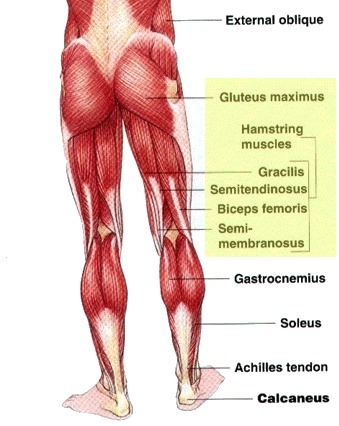
The glutes, hamstrings, spinal extensors, and calves span the back of the body from the lower back to the heels. Together they straighten your hips, control your spine and push you off the ground.
Posterior describes anatomical position. Chain describes muscles working together in related movement patterns.
| Muscle or group | Location | Main action | Familiar example |
|---|---|---|---|
| Gluteus maximus | Buttocks | Extends the hip | Rising from a bent-over position |
| Gluteus medius and minimus | Outer and deeper hip | Hip abduction and pelvic control | Maintaining pelvic position on one leg |
| Semitendinosus, semimembranosus and biceps femoris long head | Back of thigh | Hip extension and knee flexion | Hip hinge or leg curl |
| Biceps femoris short head | Back of thigh | Knee flexion | Bending the knee |
| Erector spinae | Along the spine | Spinal extension and stabilization | Controlling trunk position during a hinge |
| Gastrocnemius | Back of lower leg | Ankle plantarflexion; also crosses the knee | Rising onto your toes |
| Soleus | Deeper calf | Ankle plantarflexion | Pushing off during a step |
| Latissimus dorsi, trapezius and rhomboids | Back and shoulder region | Shoulder movement and scapular control | Pulling and rowing movements |
The first seven rows cover the lower-body posterior chain; the final row covers the upper back and shoulder muscles that broader definitions add.
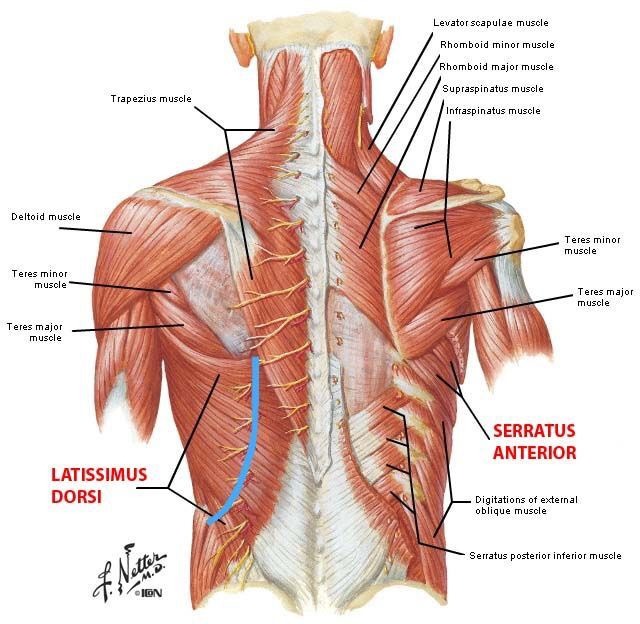
That is why fitness resources give different lists. Hospital for Special Surgery and the American Council on Exercise emphasize the lower body, while ISSA describes a more extensive posterior-body grouping.
The glutes: hip extension and pelvic control
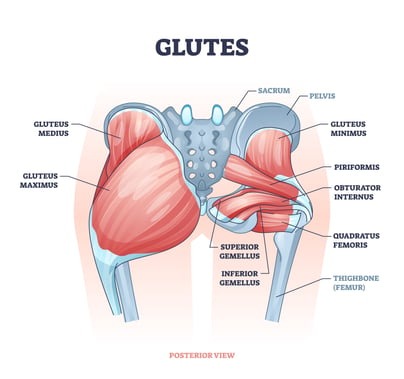
The gluteus maximus is a major hip extensor. When you pick up a package and stand back up, or rise from a chair, it adds force to straighten the hip, along with other hip extensors. It also pulls the thigh behind your body.
The gluteus medius and minimus do a different job. They move the thigh outward (hip abduction) and control the position of the pelvis, mostly when one leg carries your weight.
The glutes share the work with neighboring muscles. In his 2010 review of hip muscle actions, Donald Neumann describes the hamstrings and the posterior portion of adductor magnus extending the hip alongside gluteus maximus. How much each muscle adds changes with joint position and the fibers involved. The Kinesiology of the Hip review examines the actions of 21 muscles crossing the hip.
The hamstrings: one group, two joints
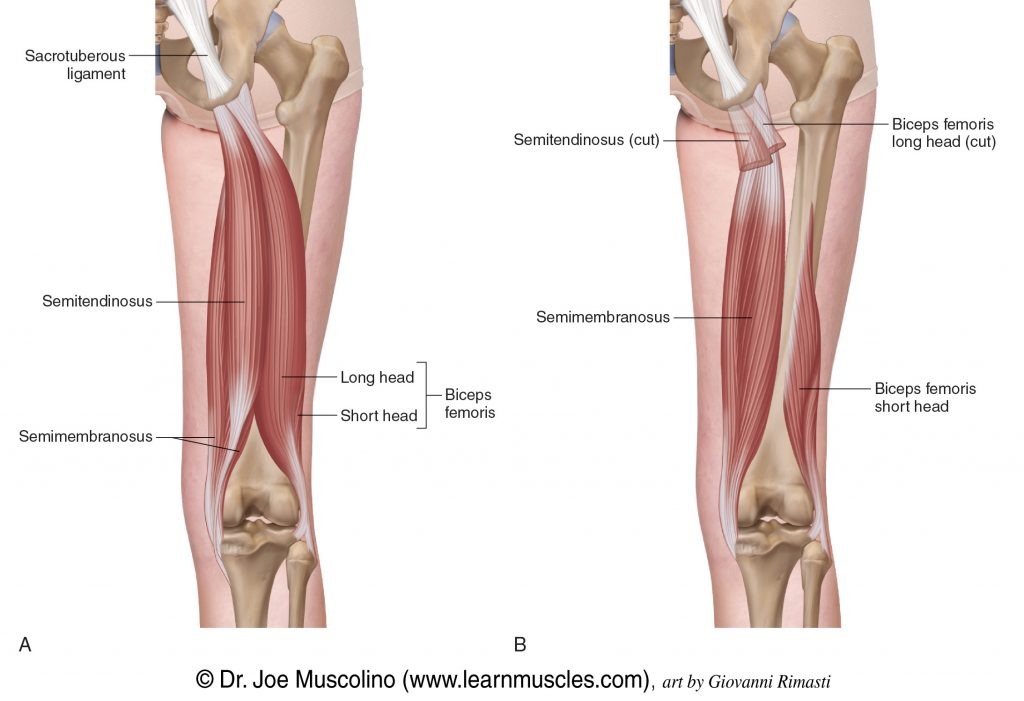
The hamstrings sit at the back of the thigh. Most of them extend the hip and bend the knee, so they work in movements that look quite different.
Three names cover most of the anatomy: semitendinosus, semimembranosus and biceps femoris. Biceps femoris has a long head and a short head.
The semitendinosus, semimembranosus and long head of biceps femoris cross both the hip and knee. They help extend the hip, as when you rise from a hip hinge, and flex the knee, as when you bring your heel toward the back of your thigh.
The short head of biceps femoris is the exception. It originates from the femur and does not cross the hip, so it flexes the knee without extending the hip. The NCBI Bookshelf review of hamstring anatomy explains these anatomical differences.
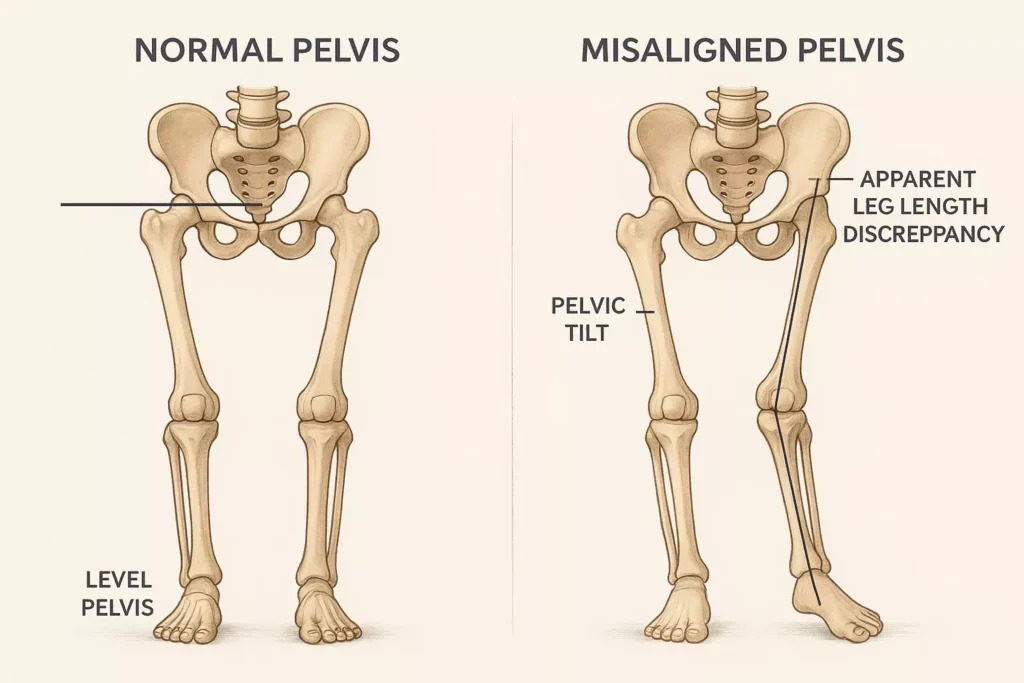
Two familiar exercises show the difference. A Romanian deadlift changes your hip angle a lot, and the hamstrings that cross the hip work in that movement. A leg curl focuses on bending the knee. Both use the hamstrings, but the joint action and mechanical demands differ.
Spinal extensors and upper-back muscles: movement versus support
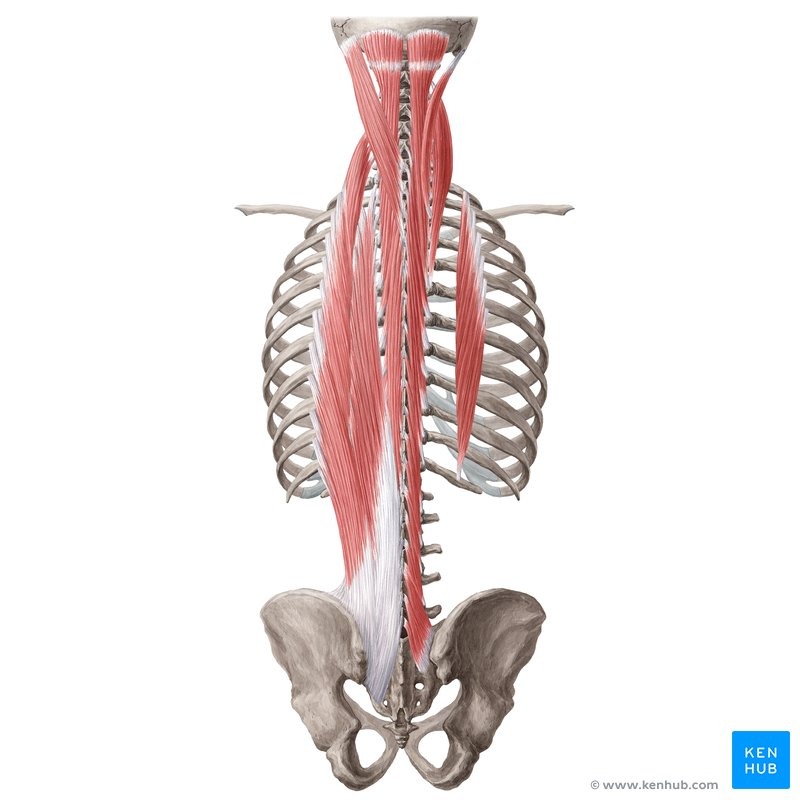
The erector spinae run along the spine and help extend it. They also stabilize the trunk when forces would bend it forward.
During a hip hinge, the angle at your hips changes while the muscles along your spine resist unwanted movement. Those muscles work even when your spine barely moves, because producing movement and resisting movement are separate jobs. That is why the spinal extensors feature so prominently in deadlift discussions: their work is large without turning the lift into repeated lumbar flexion and extension. Glutes, hamstrings, and trunk stabilizers play different roles in the farmer's-walk muscle breakdown.
Broader posterior-chain definitions add muscles with different jobs:
- Latissimus dorsi: moves the upper arm at the shoulder.
- Trapezius: moves and controls the scapula.
- Rhomboids: control and retract the scapula.
A row loads the upper back and shoulder girdle differently from the way a hinge loads the hips.
Calves: the ankle end of the posterior chain
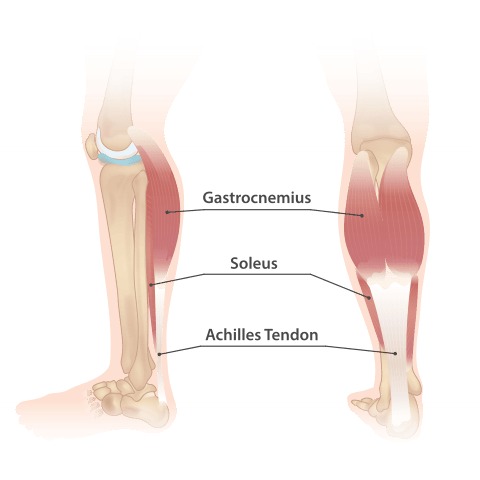
The calf portion of the posterior chain includes the gastrocnemius and the deeper soleus. Both perform plantarflexion, the ankle action that raises your heel or pushes you off during a step. Gastrocnemius also crosses the knee and assists knee flexion. Soleus does not cross that joint.
How the chain works together in real movement
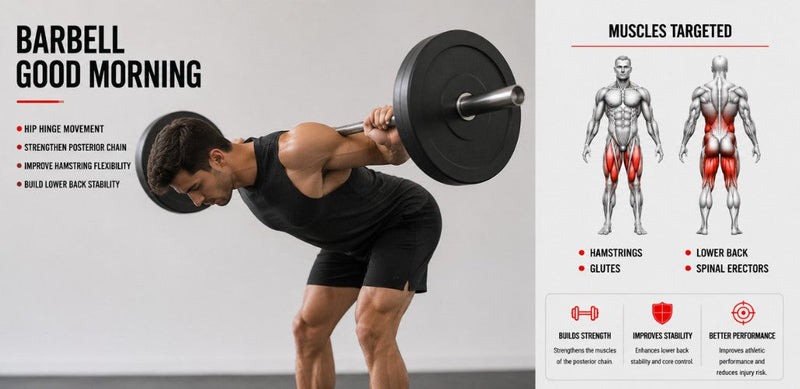
A compound movement uses muscles with different jobs. Some create the main joint motion, some add force, and some hold body segments in position.
The hip hinge is a good example. During the lowering phase of a Romanian deadlift, your hips flex as the torso leans forward. Returning upright takes hip extension from the gluteus maximus and the hamstrings that cross the hip. Spinal muscles control the trunk throughout.
| Movement | Major joint actions | Posterior-chain muscles involved | Other relevant muscles |
|---|---|---|---|
| Romanian deadlift or hip hinge | Hip flexion followed by extension | Glutes and hamstrings that cross the hip extend the hip, and spinal extensors stabilize | Other trunk and leg muscles |
| Squat or rising from a chair | Hip and knee extension | Glutes and other hip extensors | Quadriceps are major knee extensors |
| Walking step and push-off | Coordinated hip, knee and ankle movements | Calves plantarflex the ankle, and hip muscles act in different phases | Other leg muscles |
A conventional deadlift and a Romanian deadlift use overlapping muscle groups. Their knee and hip mechanics differ, which changes the demands on those groups.
A 2020 PLOS ONE systematic review of 19 electromyography studies examined deadlifts and their variations. Patterns of electrical muscle activity differed across exercises and testing methods. Some tested deadlift conditions showed substantial erector-spinae and quadriceps activity, and selected Romanian deadlift comparisons showed greater relative activity in particular hamstring muscles.
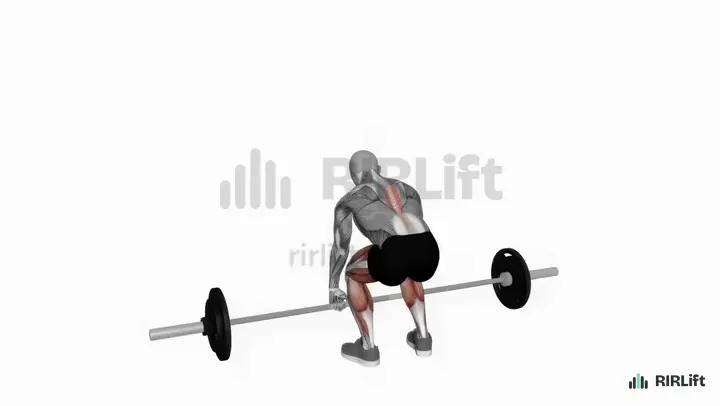
Knowing the anatomy is easier than coordinating it under load. One beginner described the difference between practicing a hip hinge without weight and attempting it with an empty barbell:
I started working out consistently about 3 months ago and recently started learning Romanian deadlifts because I realized I was missing the hip hinge movement. A trainer at my gym showed me the correct form.
When I practice the movement without weight, I have absolutely no problem with my form: hinge at the hips, slight knee bend, neutral back, shoulders not rounded, and I feel a light stretch in my hamstrings.
But when I use a barbell (even with no plates), my form falls apart. As I lower the bar, I start feeling it in my lower back instead of the hips hinge or hamstrings. My back starts arching, shoulders drop forward, and although my hamstrings shake a bit, I don’t really feel the stretch.
I can carry the empty bar without any issue, but during the RDL movement I lose the hinge.
Could the empty bar still be too heavy for me to maintain the hinge properly? Or could starting from the top position be messing me up?
Any tips or drills to fix this?
The anatomy above separates the hip action from the work of the trunk muscles.
Posterior versus anterior chain: why the labels overlap
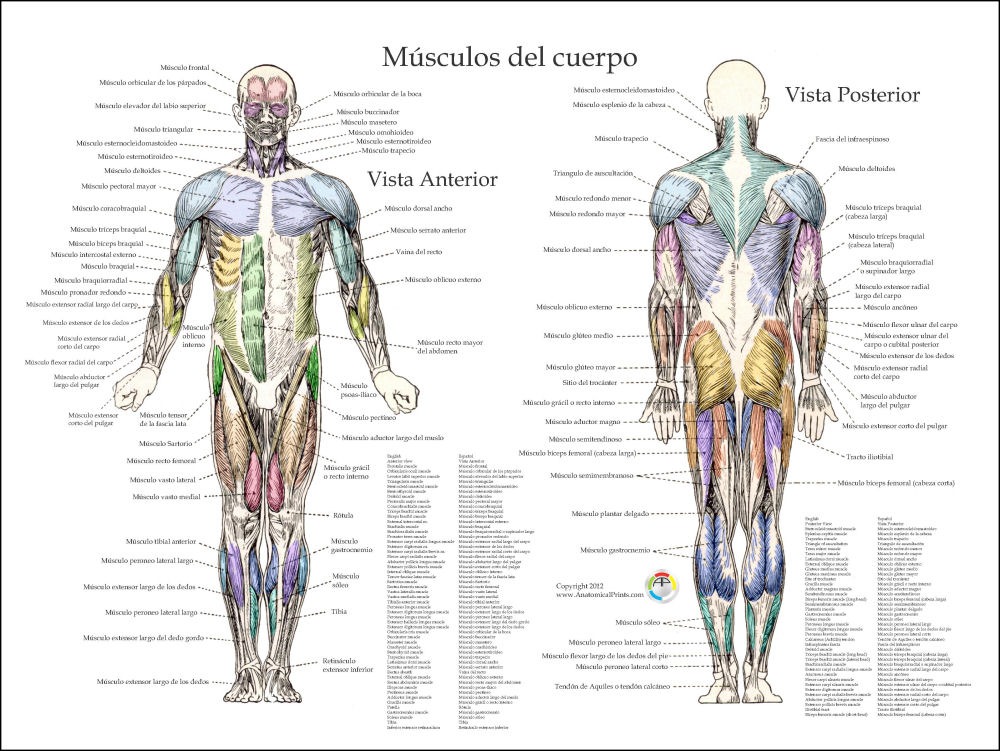
The anterior chain is a label for muscles on the front of the body, often including the quadriceps, hip flexors and abdominal muscles. The posterior chain is the grouping along the back.
A squat extends the knee, with a large quadriceps share, and extends the hip using the glutes and other muscles. A deadlift also uses muscles on both sides of the body. Calling one exercise quad-focused and another posterior-focused describes emphasis within that movement.
The labels cause confusion when a training sensation gets read as a muscular imbalance. A beginner in a women's fitness discussion worried about shifting too far toward posterior-chain work:
Hihi,
I see a lot of people talking about fixing imbalances resulting from over working the anterior muscles, specifically the quads. They focus more on posterior chain lifts, such as deadlifts and rows. I was wondering if I could cause imbalances in the other direction (loading the posterior chain) if my routine only consisted of DL, hipthrust, rows, and OHP?
I have stopped doing heavy squats because I would like to focus on waking up my sleepy glutes and my quads take over everytime. My goals are to work on my glute strength (both for athleticism and aesthetics) and back strength to improve my pullups.
I am a beginner and would appreciate any advice/ information!
Edited for clarity!
Quad dominant and sleepy glutes describe how the poster feels the exercises. They don't show whether a strength imbalance exists.
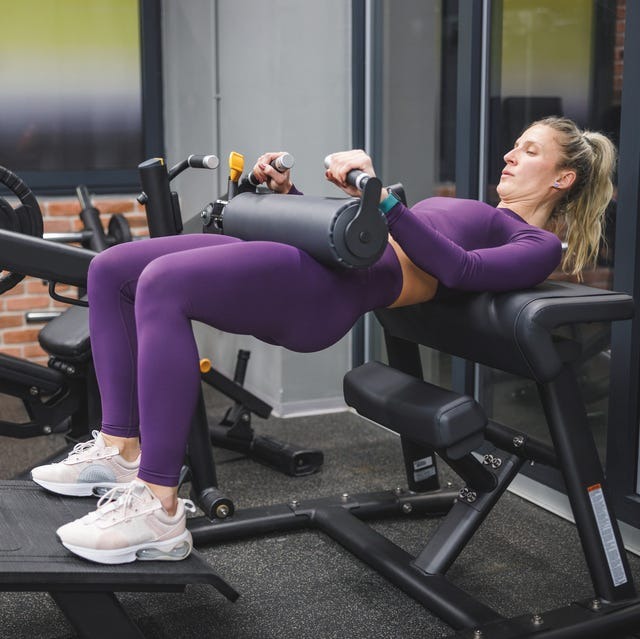
In a 2023 study, 34 untrained college-aged adults completed nine weeks of supervised hip-thrust or squat training, with 18 participants in the hip-thrust group and 16 in the squat group. The Frontiers in Physiology training study reported similar MRI-measured gluteal hypertrophy, while squats produced greater thigh-muscle growth and strength improvements favored the practiced exercise. A 2026 journal correction disclosed an equipment donation and retrospective trial registration, and the reported study results were unchanged.
Does soreness tell you which muscles worked?
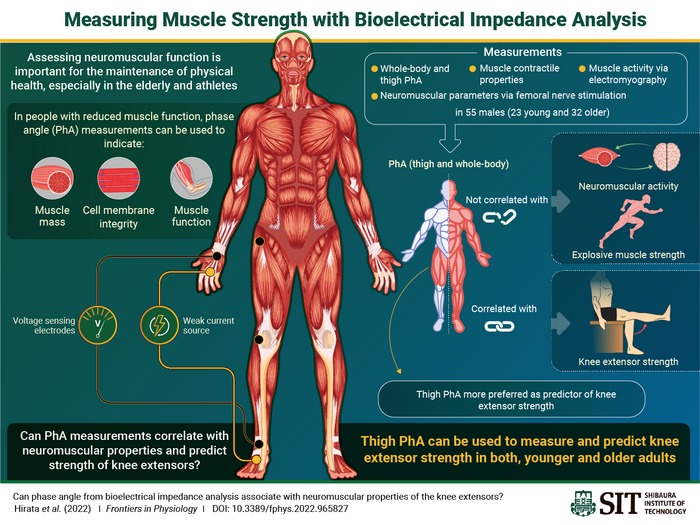
No. Soreness, a feeling of stretch, electrical muscle activity, strength, and changes in muscle size each measure something different.
After a Romanian deadlift, you may feel your hamstrings intensely. That sensation is your experience of the exercise. The anatomical explanation still depends on the movement and the muscles' joint actions.
Surface electromyography, or sEMG, measures electrical activity associated with muscle activation during a test. The 2020 deadlift review notes that recording methods and normalization procedures differ across studies, which affects comparisons.
The hip-thrust and squat study also examined early gluteal sEMG. Differences in those acute measurements did not consistently predict the later measured gluteal hypertrophy.
A simple way to read a posterior-chain movement
Use these four steps with an exercise demonstration or a labeled anatomical illustration.
- Identify the joint motion. Is the hip flexing or extending? Is the knee bending or straightening? Is the ankle pointing the foot downward? Several actions can occur together.
- Match the action to the muscles. Use the muscle table: hip extension points to the glutes and the hamstrings that cross the hip, knee flexion to the hamstrings, and ankle plantarflexion to the calf muscles.
- Notice what stays still. During a hinge, the spine holds steady while the hips move. The muscles that resist unwanted motion are working too.
- Read the whole exercise. A squat has large knee and hip movement. A Romanian deadlift is a hip hinge. A walking step combines actions at the hip, knee and ankle.