
Farmer's Walk: Muscles Worked, How to Do It, and What It Helps Train
A farmer's walk combines grip training, trunk stability, and walking under load in one movement. It is not a full-body program on its own, and it is not a rehabilitation plan. If your hands, the handle, or your walking form give out before the work you planned, change the weight or the handles. Start with a carry you can repeat with control, and stop before your technique breaks down.
Your hands hold the weights, your shoulders and trunk stabilize them, and your hips and legs keep you moving.
You take a weight in each hand and start walking; the challenge only becomes obvious once you start moving. Then your forearms start burning, your shoulders feel the load, and your legs seem perfectly willing to keep going. Which part did you train?
Which muscles does a farmer's walk work?
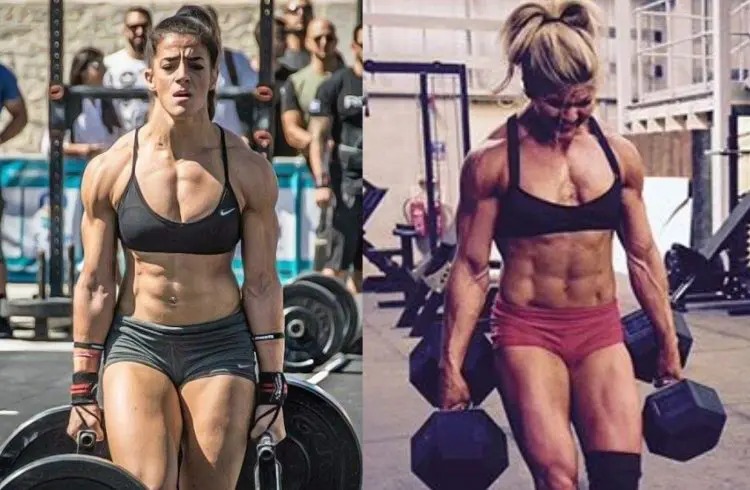
A farmer's walk works your grip and forearms, shoulder and upper-back stabilizers, trunk muscles, and lower body. Each group has its own job: the hands hold the weights, the trunk controls how they pull on your posture, and the legs move you forward. You'll find grip strength, glute stabilizers, and trunk muscles in the posterior-chain muscle overview.
The forearm flexors and smaller hand muscles hold the handles. Because that grip never lets up, your hands can give out while your legs still feel ready for another lap.
Your trapezius and other upper-back and shoulder stabilizers support the hanging weights and keep your shoulders in position. The weights pull down the whole way, so the demand is constant and you don't need to shrug on purpose.
Your rectus abdominis and obliques control the front and sides of your trunk. Along the back, the erector spinae group, including the longissimus, and the deeper multifidus resist unwanted bending and rotation as you walk.
Your glutes, quadriceps, hamstrings, and calves do the walking itself, and the gluteus medius also helps control your hips and pelvis. In Stastny and colleagues' 2015 study, researchers measured hip and thigh muscle activity in 16 resistance-trained men and found gluteus medius differences across strength-ratio subgroups.
What changes from pickup to putdown?
| Movement phase | Grip and forearms | Shoulders and upper back | Trunk | Hips and legs |
|---|---|---|---|---|
| Pickup | Secure the handles | Position and support the load | Stabilize the lift | Help raise the weights |
| Walking | Sustain the grip | Support hanging weights | Resist bending and rotation | Propel and stabilize |
| Turning | Keep control of the handles | Manage weight movement | Control trunk orientation | Redirect the steps |
| Putdown | Hold until the weights are supported | Control the weights' position | Stabilize the return | Control lowering and placement |
How to do a farmer's walk with control
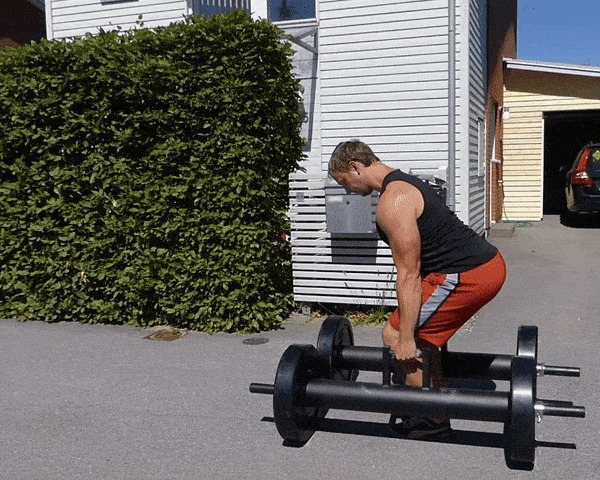
A controlled farmer's walk begins before the first step. You need a secure pickup, enough room to walk and turn, and a place to set the weights down.
Two similarly loaded dumbbells or kettlebells work well. Farmer handles also work, though pickup position, handle feel, and clearance differ.
- Prepare the route. Choose a clear, preferably level stretch of floor with room to turn and a spot to set the weights down without crowding people or objects.
- Pick up with control. Stand between or beside the weights, grip the handles, and use your hips and knees to stand. Don't jerk the weights off the floor.
- Stand tall. Let the weights hang near your sides. Keep your trunk steady and your shoulders relaxed, with no exaggerated chest-up arch and no shrug.
- Walk steadily. Take controlled steps and manage any swing in the weights. Keep your walking quality consistent from the first step to the last.
- Turn and finish. Change direction in controlled steps. At the end, lower the weights until they are supported before you let go.
The turn deserves attention. Two weights hanging beside your legs swing if you change direction abruptly, which makes the walk awkward even when the straight part felt easy.
In a 2014 biomechanics study, Winwood and colleagues examined six experienced strongman athletes and found differences between loaded and unloaded walking in gait and force measures. They were specialists, so the study shows what carrying demands, not a stride beginners should copy.
The Human Kinetics farmer's carry technique excerpt likewise treats gripping, lifting, walking, turning, and controlling the weights as parts of one exercise.
Rehearse the whole sequence with a manageable load. Control over a few steps doesn't make a much heavier carry safe, and you shouldn't carry through pain.
Why your grip may give out before your legs
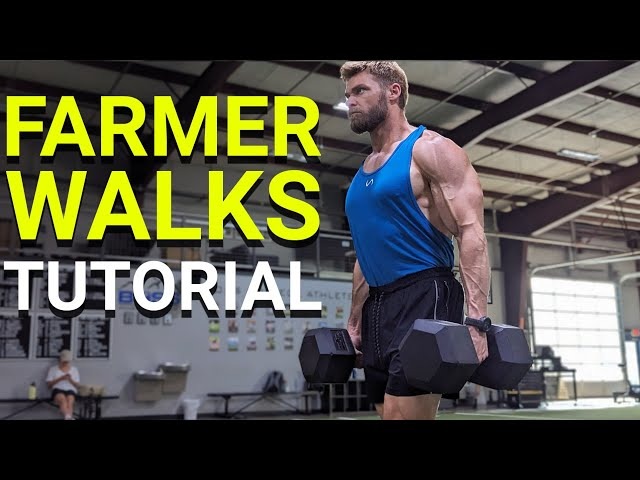
Your grip can end a farmer's walk while your legs and trunk still have plenty left. Every step requires you to keep the handles up, so your hands and forearms can tire before you reach the effort you wanted to train.
The handle matters too. Its shape, diameter, surface texture, and the pressure on your skin all change how it feels. A slipping handle and a handle that pinches a callus are different problems.
Before changing the weights, work out what ended the set.
| What happens first | What it tells you | What to do |
|---|---|---|
| Fingers and forearms tire while movement stays controlled | Grip is your limit | Decide whether your goal is grip training or a longer carry |
| Handles pinch, abrade, or slip | The handle and the way it contacts your hand are the problem | Try a different implement or handle |
| Steps change or the weights begin to swing | You are losing carrying control | Treat control as your limit |
For unassisted grip training, hold the handles without straps. That keeps the hand-strength challenge intact. Chalk improves contact between your hand and the handle. Straps assist your grip, so your hands limit the walk less, but they also reduce the unassisted grip demand.
If a handle pinches or slips, change the handle. For moving carries, avoid closed-loop or figure-eight straps, because they can stop you from releasing the weights safely.
Stop the carry if a handle causes sharp hand pain or tears your skin. Before another attempt, use a more comfortable handle or reduce the load.
After eight years, one experienced lifter came back to an old grip-training thread with a critical view of dumbbell carries:
Damn it's been 8 years since I posted this, been lifting for almost a decade now... So basically farmers walks with dumbbells were a huge waste of time, would not recommend them unless your gym has those farmer's walk implements used in strongman. What has actually helped with my grip is doing double overhand deadlifts and holding the last rep until you can't anymore (bonus points if using fat grips), heavy bicep curls and weighted pull-ups.
For grip training specifically, this lifter found double overhand deadlifts, heavy curls, and weighted pull-ups more useful than dumbbell carries.
What benefits are realistic, and what has research measured?
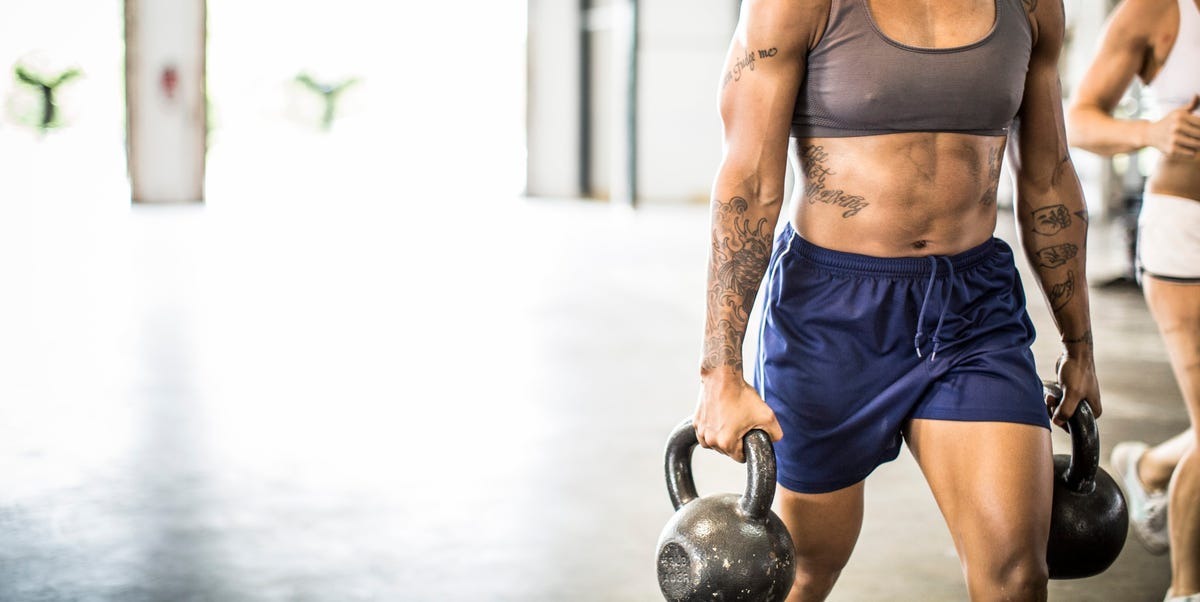
Farmer's walks give you sustained grip work, practice controlling your trunk under load, and a way to walk with resistance. A longer or more demanding carry can feel like conditioning work, with its difficulty shaped by weight, duration, and pace.
In Ellestad and colleagues' 2024 experiment, 18 college-age volunteers performed loaded carries and standing holds while researchers measured electrical activity in the rectus abdominis, external oblique, longissimus, and multifidus. Walking carries produced greater activation in the measured trunk muscles.
These are measurements from the tested exercise. They don't establish muscle growth, injury prevention, or rehabilitation outcomes.
A study of mixed strongman workouts measured acute physiological responses across several exercises, so it can't isolate a long-term cardiovascular effect of farmer's walks alone.
Farmer's walk vs suitcase carry vs farmer's hold
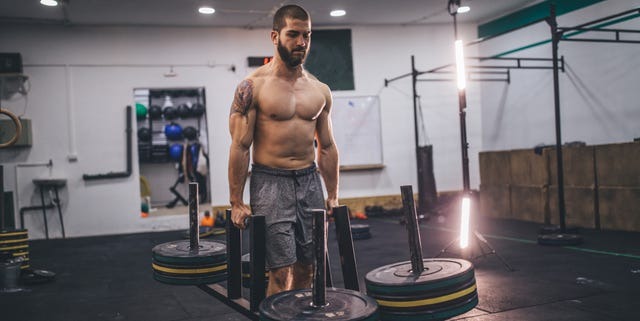
- Farmer's walk. A bilateral walk uses a weight in each hand while you walk, so it combines grip, loaded posture, and locomotion.
- Suitcase carry. This loads one side. In a six-participant experiment, McGill, Marshall, and Andersen compared weighted buckets carried in one hand with loads distributed between both hands, measuring modeled low-back loading. The study did not establish a universally safer choice.
- Farmer's hold. The weights hang while you stand still, which keeps the grip and postural work without walking. Acute trunk-activation studies have found differences between holds and moving carries.
Choose the two-sided walk for symmetrical loaded movement, the one-sided carry for an asymmetric task, and the hold for stationary support. Dumbbells, kettlebells, farmer handles, and trap bars also change pickup and clearance.
How heavy, how far, and when should you stop?
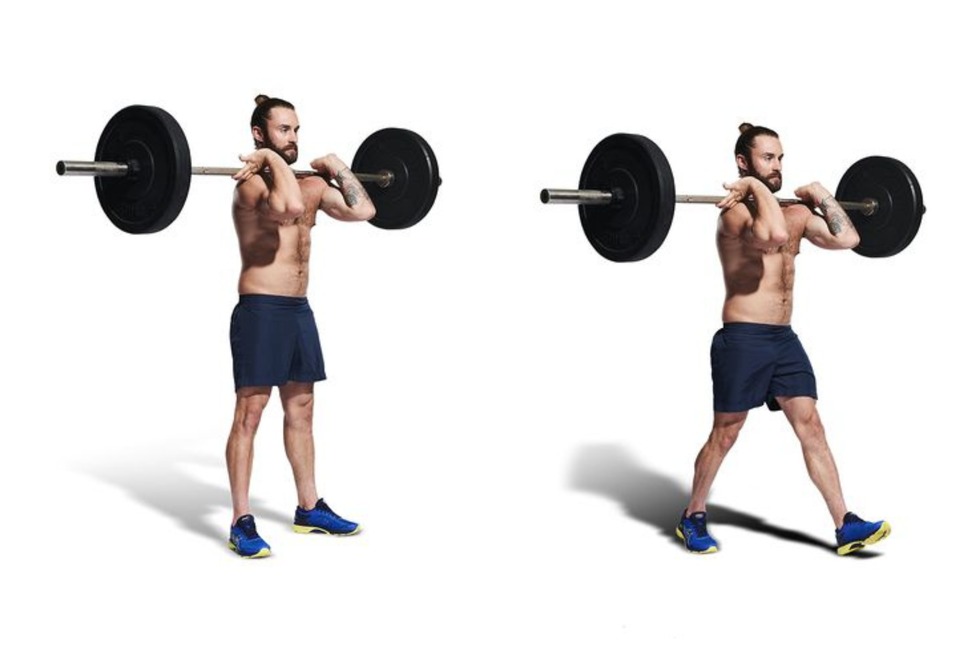
Use a weight and route you can complete with control from pickup to putdown. The heaviest weight you can lift off the floor can be far more than you can carry smoothly along a full route.
Load per hand, distance, duration, implement, and rest are separate training variables. Choose them by the purpose of the set: someone practicing sustained grip will pick different conditions from someone practicing a steady loaded walk.
Recognize the end of a useful set
Watch for these signs:
- The grip starts slipping. A handle you struggle to hold changes the safety and quality of the carry.
- The weights swing uncontrollably. They start dictating your movement.
- Your posture changes noticeably. Repeated leaning, twisting, or compensating means the set is deteriorating.
- Your steps become unstable.
- You cannot turn or lower the weights with control.
In a 2018 study of 51 recreationally active adults, Holmstrup and colleagues ended unilateral carrying trials when spinal alignment or gait deteriorated, or when participants became fatigued or could not complete the trial.
Keep a repeatable record
If you want to know whether your performance is changing, record the conditions of each carry:
| Record | What to enter |
|---|---|
| Carry type | Bilateral walk, suitcase carry, or hold |
| Implement | Dumbbells, kettlebells, or other handles |
| Load | Weight per hand, not the combined load |
| Work completed | Distance or duration |
| Ending condition | Grip fatigue, control change, or planned finish |
Compare attempts made under similar conditions. Once you can complete the route with stable movement, change one variable at a time. If you change the weight, handle, distance, and pace together, you can't tell what caused a different result.
Will farmer's walks help with real-life carrying?

Farmer's walks rehearse part of a familiar everyday task: carrying weight beside your body while you move. Grocery bags add complications. They often have narrow handles, uneven contents, awkward lengths, and a route that runs well beyond the space you'd use in a gym.
A post in a beginner fitness community captured that problem without any gym jargon:
This is lowkey embarrassing and stupid but recently, I have been living alone. Before that I lived with a relative that did a lot of heavy lifting but now it's been rough. When I buy groceries, since the store is near and I can't drive, I have to carry them and I'm always left so sore. It's so embarrassing because sometimes I need to buy more food in one run but I gotta buy a little less because everything is heavy.
I could always get a cart and stuff, but I genuinely want to know some exercises that help with this. I've started trying to do arm stuff lately with 4lb weights since that's the most I can do, but are there any ideal exercises that help with hauling along heavy plastic bags for 10 minutes?!
The problem has two parts: the bags themselves and the walk home. The four-pound weights and ten-minute route are this person's starting point.
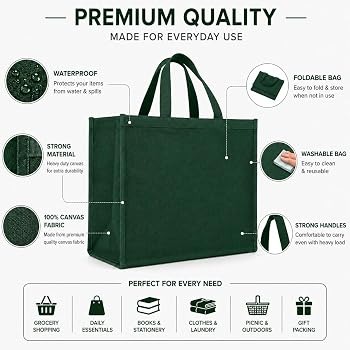
Two evenly loaded dumbbells hang comfortably beside your legs. Two shopping bags with thin handles, uneven weight, and shifting contents don't, even at the same combined weight.
For a real carrying task, look at the handles, how the bags balance, the shape of the load, and the route before focusing on weight alone. A backpack, more comfortable handles, or smaller shopping trips can change the task without heavier gym weights.