
What Muscles Does the Shoulder Press Work?
The front delts and triceps do most of the work in an overhead shoulder press. The front delts raise your upper arms, and the triceps straighten your elbows.
The side delts assist with the movement. The serratus anterior, trapezius, rotator cuff, and trunk muscles keep everything steady. The exact balance shifts with your pressing angle, your equipment, and whether you sit or stand.
Which muscles work during a shoulder press?
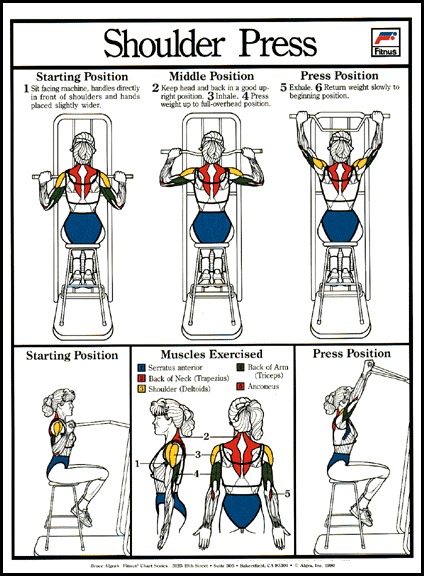
In a strict overhead press, the weight starts in front of your shoulders. The upper arms rise, the elbows extend, and the shoulder blades turn upward as the load travels overhead.
| Muscle | Action in the press | Functional role |
|---|---|---|
| Anterior deltoid (front delt) | Raises the upper arm in front of the body | Main mover |
| Middle deltoid (side delt) | Assists upper-arm elevation | Helper |
| Triceps brachii | Extends the elbow | Major pressing contributor |
| Serratus anterior | Helps rotate and position the shoulder blade upward | Shoulder-blade mover and controller |
| Trapezius | Coordinates shoulder-blade positioning and rotation | Shoulder-blade mover and stabilizer |
| Rotator cuff | Helps control and stabilize the humeral head | Joint stabilizer |
| Abdominals and spinal stabilizers | Control the torso under load | Trunk support |
| Pectoralis major | Assists, depending on the arm path | Variation-dependent helper |
| Posterior deltoid (rear delt) | Helps with control | Supporting role |
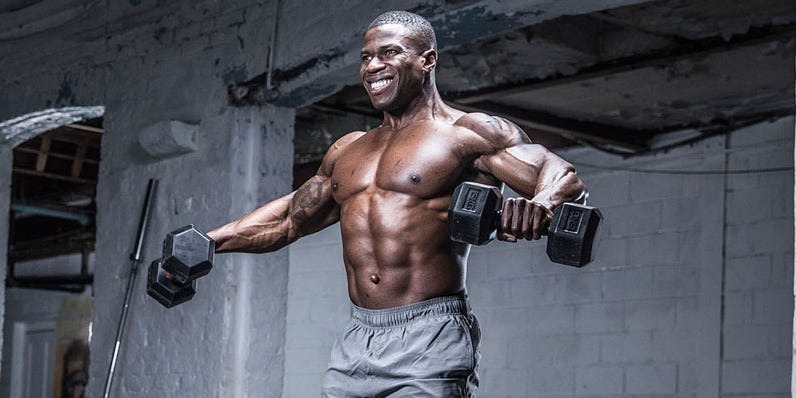
The role column is the quickest way to read a muscle diagram. Raising the upper arm, extending the elbow, moving the shoulder blade, and controlling the joint or trunk are separate jobs. The colored regions on a gym-machine chart show involvement only loosely, and the balance shifts with arm plane and pressing setup.
Front, side, and rear delts: which parts of the shoulder work?
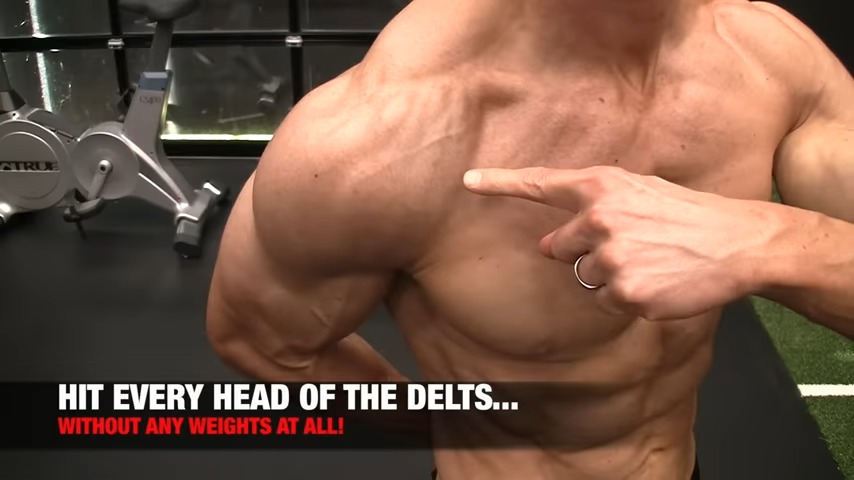
The front delt does the most work as the weight rises in front of your head. The middle (side) delt assists, depending on the pressing plane. Dumbbells let your upper arms travel farther out to the sides than a barbell does, which emphasizes the middle delt more.
The rear delt plays a supporting role in a conventional front press. A 2013 study of 15 healthy men recorded higher posterior-delt activity in some standing conditions than in seated ones. A separate experiment on eight competitive male bodybuilders found greater middle- and rear-delt activity in a behind-head barbell press than in a front barbell press. Both studies were small and tested a single session, so they don't show that behind-head pressing is worth doing.
Why the triceps, shoulder blades, and rotator cuff matter
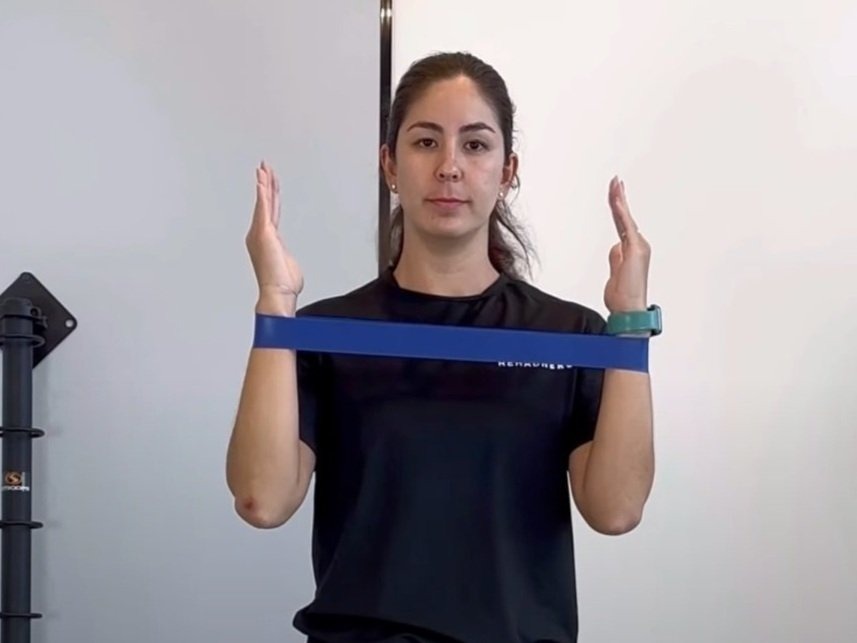
The triceps straighten your elbow as the load travels overhead. You feel your shoulders working, but the triceps carry a big share of every rep, especially near the top.
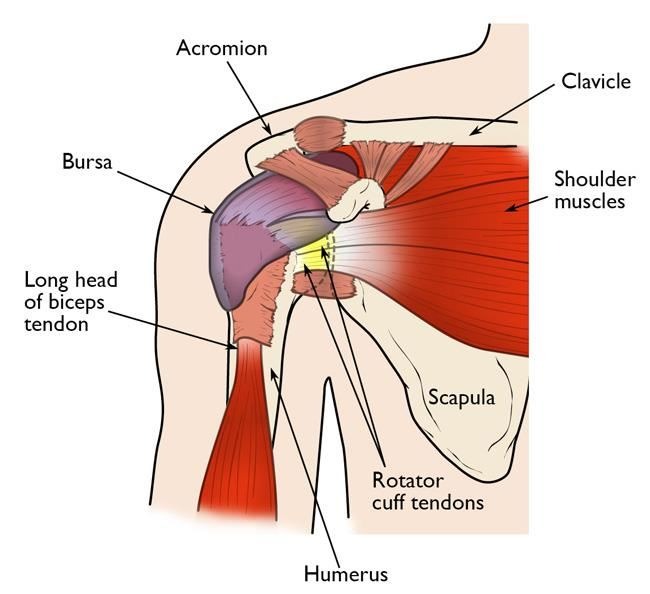
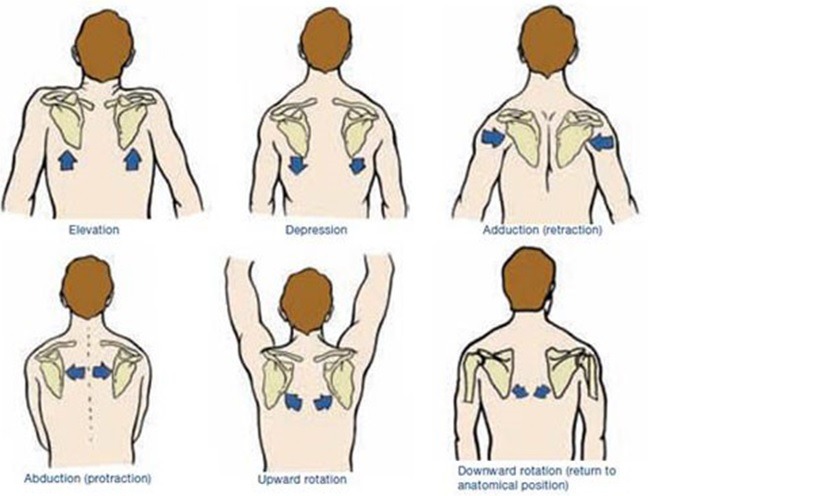
Your shoulder blade, or scapula, turns upward as the arm rises; the serratus anterior contributes to that rotation and holds the scapula against the rib cage. Parts of the trapezius work with it, each with its own job:
- Lower trapezius: contributes to upward rotation and scapular stabilization.
- Middle trapezius: contributes to medial scapular stability.
- Upper trapezius: contributes especially to clavicular elevation and retraction.
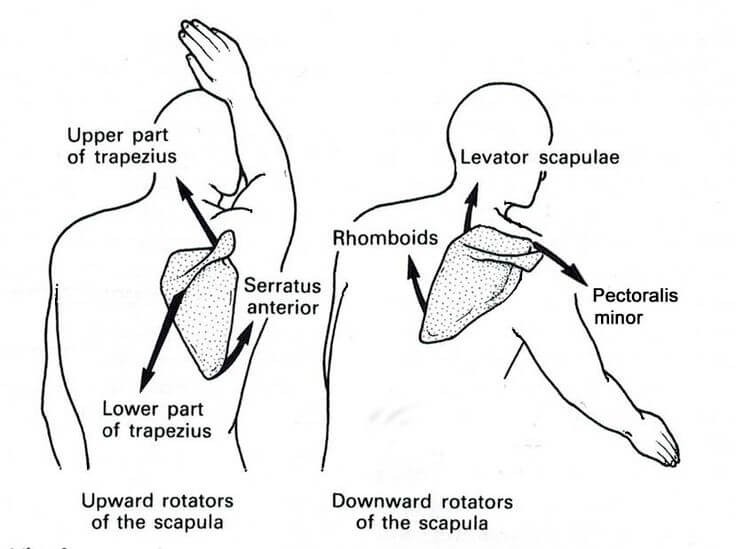
Together, the serratus and trapezius position the shoulder complex as your arm rises. The review by Phadke, Camargo, and Ludewig describes their functions during arm elevation.
Deeper in the shoulder joint, the rotator cuff controls the head of the humerus, the upper-arm bone. Its job is stability, while the deltoid does the main work of raising the arm.
Standing presses also use your abdominals, spine, and hip muscles to steady your body under the weight. Your glutes add to that support when you press on your feet.
How standing, seated, and equipment variations change the work
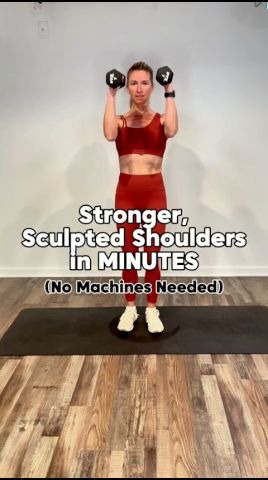
Every common shoulder-press variation involves shoulder movement and elbow extension. What changes is how your body is supported, how freely each hand moves, and the path of the load.
| Variation | What the setup changes | What to expect |
|---|---|---|
| Standing barbell | Both hands hold one connected bar | Whole-body balance and trunk support matter |
| Standing dumbbells | Each hand controls its own load | More freedom of arm path and more stabilization demand |
| Seated press | The seat, and sometimes a backrest, supports the body | Trunk demand and achievable load change |
| Machine press | The machine sets a guided path | Balance demands and available arm paths differ by design |
| Bottom-up kettlebell | The kettlebell's orientation adds a control challenge | Stabilizing-muscle activity differs in tested conditions |
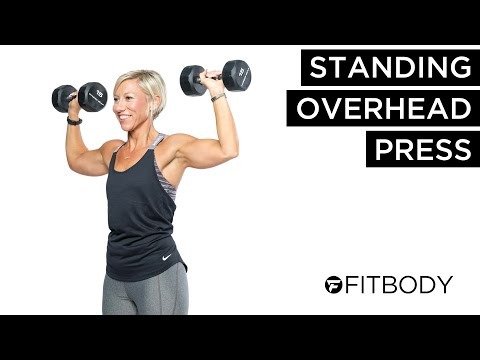
In a 2013 experiment involving 15 healthy men, the standing dumbbell press produced a one-repetition maximum about 7% lower than the standing barbell press and about 10% lower than the seated dumbbell press. The standing dumbbell condition also produced high deltoid electrical activity under the study's testing protocol.
The Saeterbakken and Fimland study measured strength and EMG at specific loads and positions. Its strength numbers show why a lighter maximum in one variation can still come with substantial muscle activity.
Equipment also shifts activity among individual shoulder-blade and shoulder muscles. In the 2024 study by Busch, Sarver, and Comstock, 28 male college baseball players pressed 25 lb (11.34 kg) with each piece of equipment. Bottom-up kettlebells produced higher serratus anterior EMG than conventional dumbbells or kettlebells. Dumbbells produced higher middle-deltoid EMG than bottom-up kettlebells and higher lower-trapezius EMG than conventional kettlebells.
A strict press uses no leg drive. A push press uses your legs to start the lift, which makes it a different exercise.
Does the shoulder press overlap with bench presses and rear-delt raises?
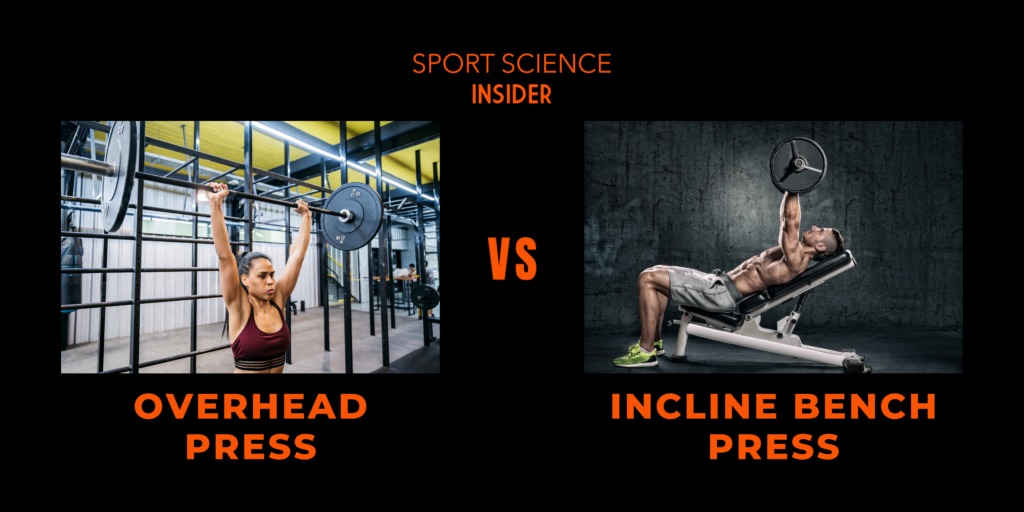
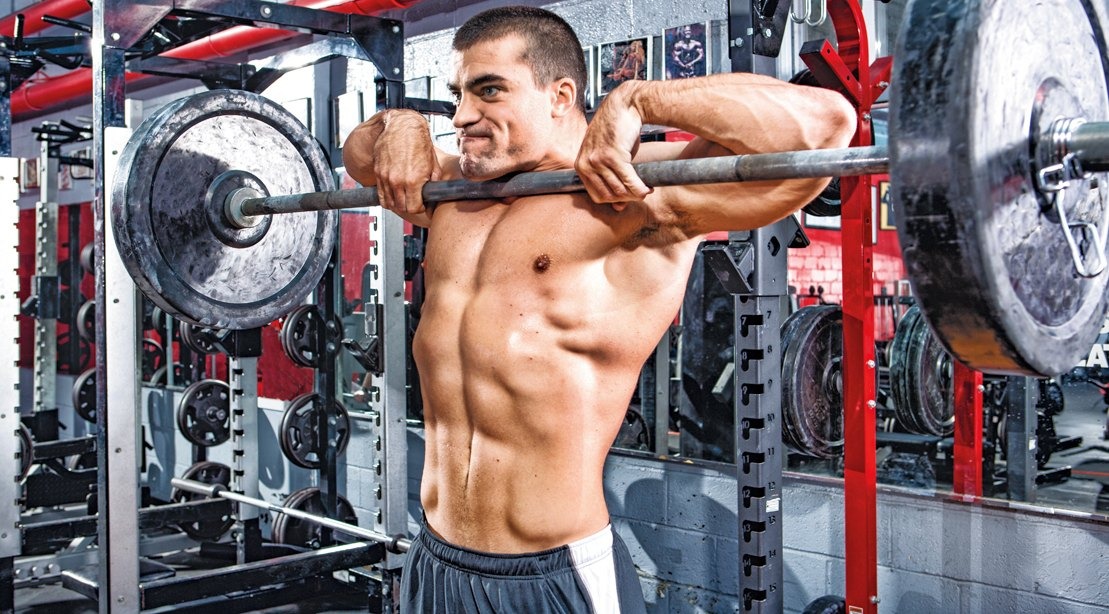
Bench pressing and overhead pressing both use the front delts and triceps. A bench press drives the load away from your chest. An overhead press raises it above your body while your shoulder blades rotate upward.
Shared muscles make exercise order matter. One lifter described a stronger bench alongside weaker shoulder presses:
Been noticing frequently that I have nothing left for shoulder pressing. The weight and reps I can do have both been decreasing as my bench has gotten stronger. My front delts are actually starting to look really good so I’m hesitant to skip the exercise entirely, but I sorta feel like it’s a bit redundant at this point. Considering adding front raises to my pull day instead of doing shoulder press on my push day, or skipping them altogether and hoping bench press will do enough for my front delts
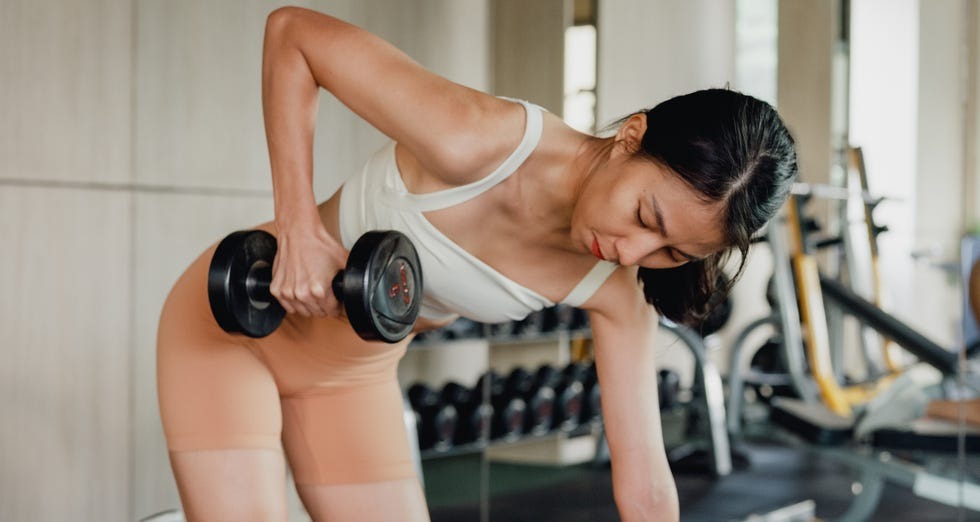
Rear-delt raises are a different case. They work the back of the shoulder through a movement pattern unlike a front-of-body overhead press. You can compare front, side, and rear delts in the rear-delt raise technique guide.
Why your arms might tire before your shoulders
Every shoulder-press rep demands force at both the shoulder and the elbow. Your triceps, shoulders, or upper arms tire as sets add up, especially when the movement is new.
A beginner in r/workout described difficulty repeating a machine-press set:
I started at the gym two weeks ago. I'm going twice a week. My goal is to improve arm strength. My arms are like a tiny baby's. I've never lifted weights until now.
The instructor gave me a quick run through of the machines and recommended a few machines.
But I went today and I just can't do the shoulder presses. I can do one set of 8 at 5kg but after that I can't even make it to five. My arms are literally exhausted. I'm aligning my elbows under my wrists.
What could I do to improve this? Is it just to continue trying?
Notice where the rep gets hard: while the upper arm rises, while the elbow finishes extending, or only after a few sets. Machine design, load, earlier exercises, and rest between sets all change that.
What EMG research tells us about shoulder pressing
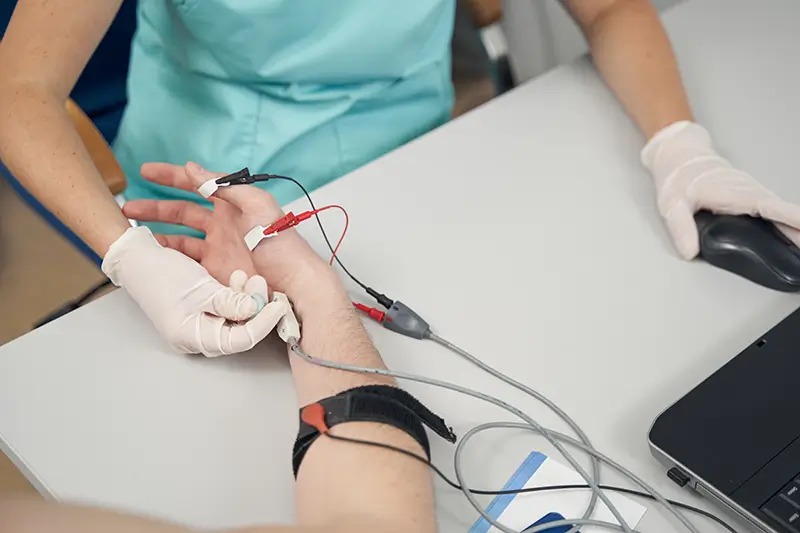
Electromyography (EMG) records the electrical activity of muscle during an exercise. It lets researchers compare conditions. Strength testing and long-term training studies answer different questions.
| Measurement | What researchers record | What the result can answer |
|---|---|---|
| Surface EMG | Electrical activity during a tested movement | Relative muscle activity under that protocol |
| One-repetition maximum (1RM) | Highest load lifted for one repetition in a specified test | Strength in that exercise configuration |
| Long-term training outcome | Change after repeated training, such as muscle size | Adaptation over the study period |
The pressing comparisons here measured muscle activity in a single session and, in some cases, maximal strength. None tracked long-term hypertrophy, so a higher EMG reading gives you no percentage advantage in muscle growth.
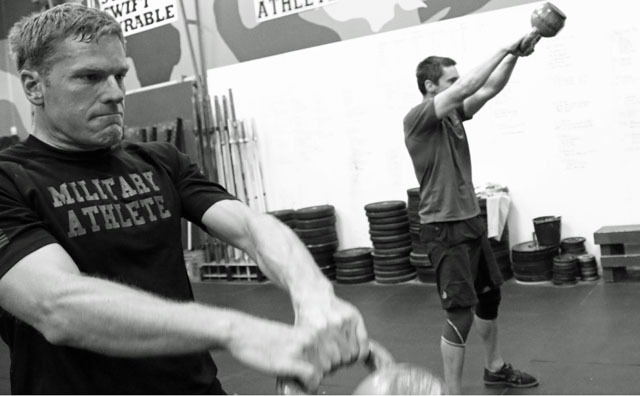
A preliminary 2022 study of 20 participants compared seated dumbbell and kettlebell pressing at 6 kg and 70% of one-repetition maximum. It reported no statistically significant equipment differences at matched loads across the analyzed muscles, although activity differed descriptively in places. The findings are detailed in the Błażkiewicz and Hadamus study.
Before you trust a claim that one press is better for a muscle, check three things:
- Participants: recreational lifters, competitive bodybuilders, or athletes from a specific sport.
- Tested movement: seated or standing, equipment, load, and arm path.
- Measured outcome: EMG, maximal strength, or a change after weeks of training.
How to check your own shoulder press
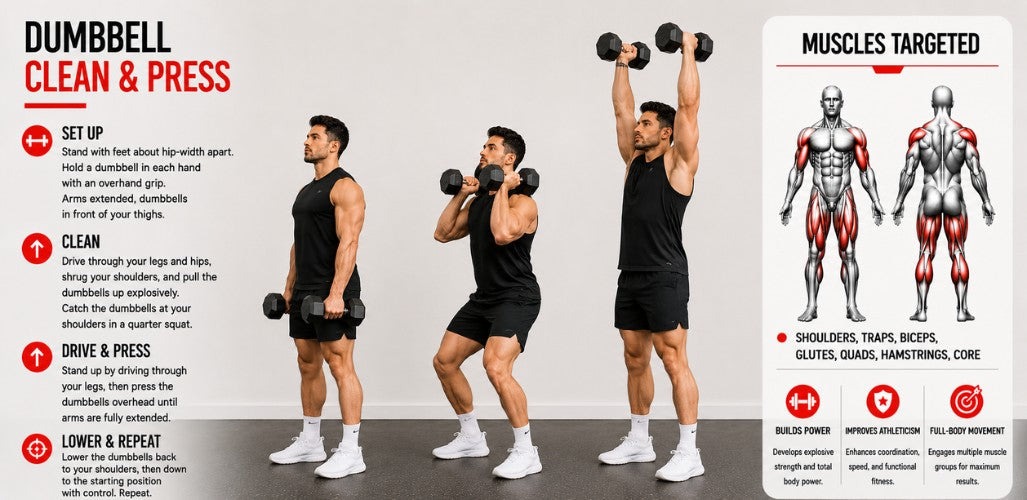
A strict press brings the load from in front of your shoulders to overhead as your upper arms rise and your elbows straighten. Use this short check when a diagram or study doesn't match what you feel:
- Identify your setup: standing, seated, machine, dumbbells, or barbell, and where your arms travel in relation to your head.
- Follow the movement: separate raising the upper arms from straightening the elbows and the upward rotation of the shoulder blades.
- Notice control: watch the load path, your torso position, and whether excessive low-back arching changes the motion.
- If it hurts: stop. See a qualified professional for persistent pain, marked restriction, or sudden, concerning symptoms.
If one arm travels differently from the other, a muscle chart can't tell you why.