
How to Do Rear Delt Raises: Form, Muscles, and Variations
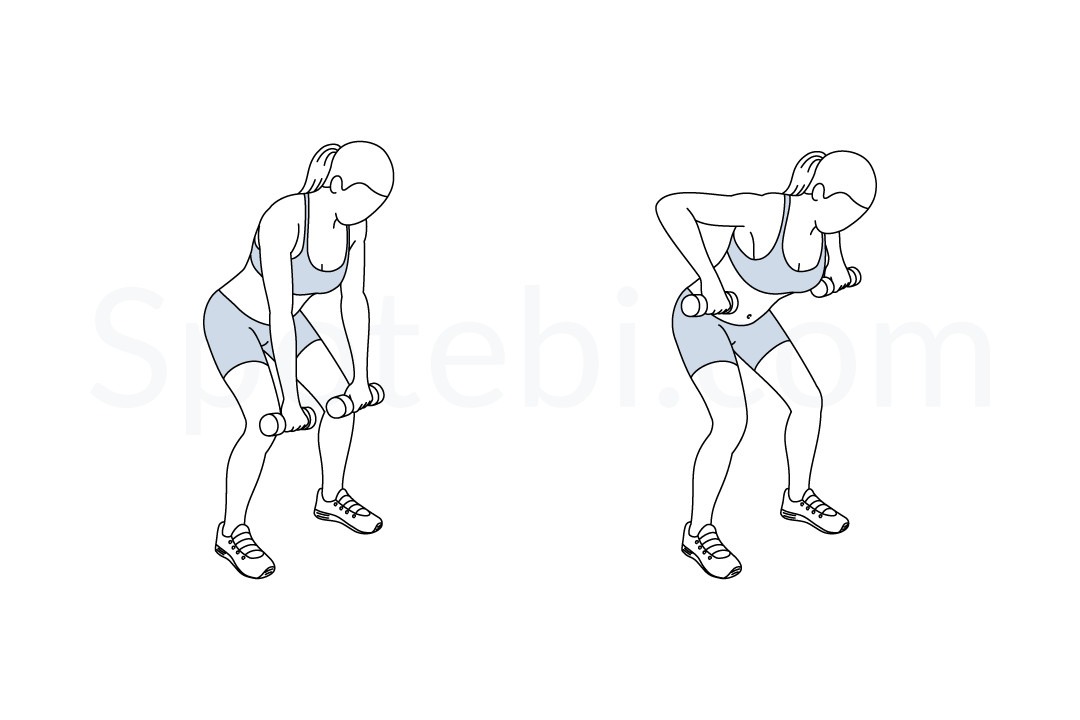
Move your arms out and back while your torso stays still. If your elbows bend and pull toward your ribs, you're rowing.
A light weight makes the movement easier to control. If the hip hinge feels awkward, use a chest-supported or machine version. Stop if it hurts.
What Is a Rear Delt Raise?
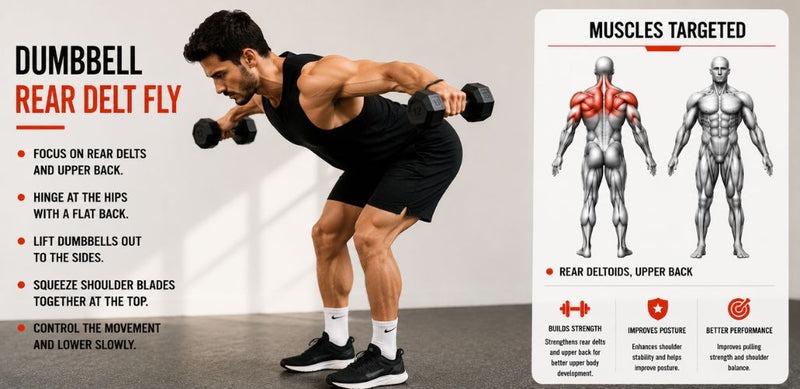
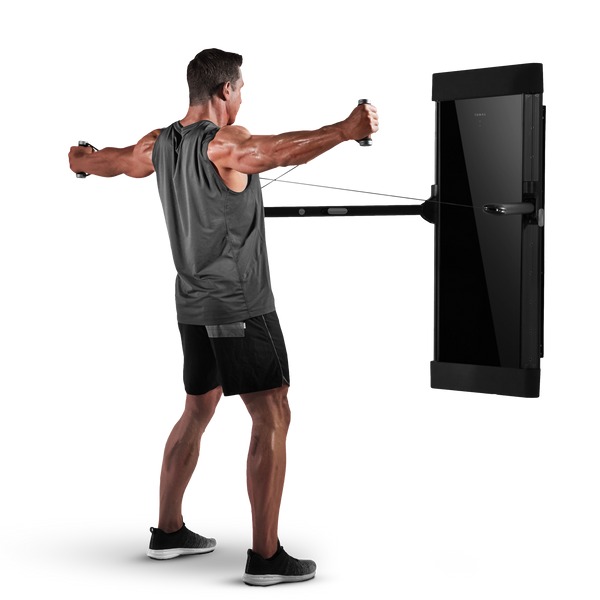
A rear delt raise (posterior delt raise or reverse fly) moves the upper arms outward while the torso leans forward or rests against a support. It works the posterior deltoid at the back of your shoulder, with help from other shoulder and upper-back muscles. An upright lateral raise puts more load on the middle deltoid; a rear delt row bends the elbows more as you pull. In a rear delt fly, the elbows stay slightly bent while the upper arms travel out to the sides.
How to Do a Bent-Over Dumbbell Rear Delt Raise
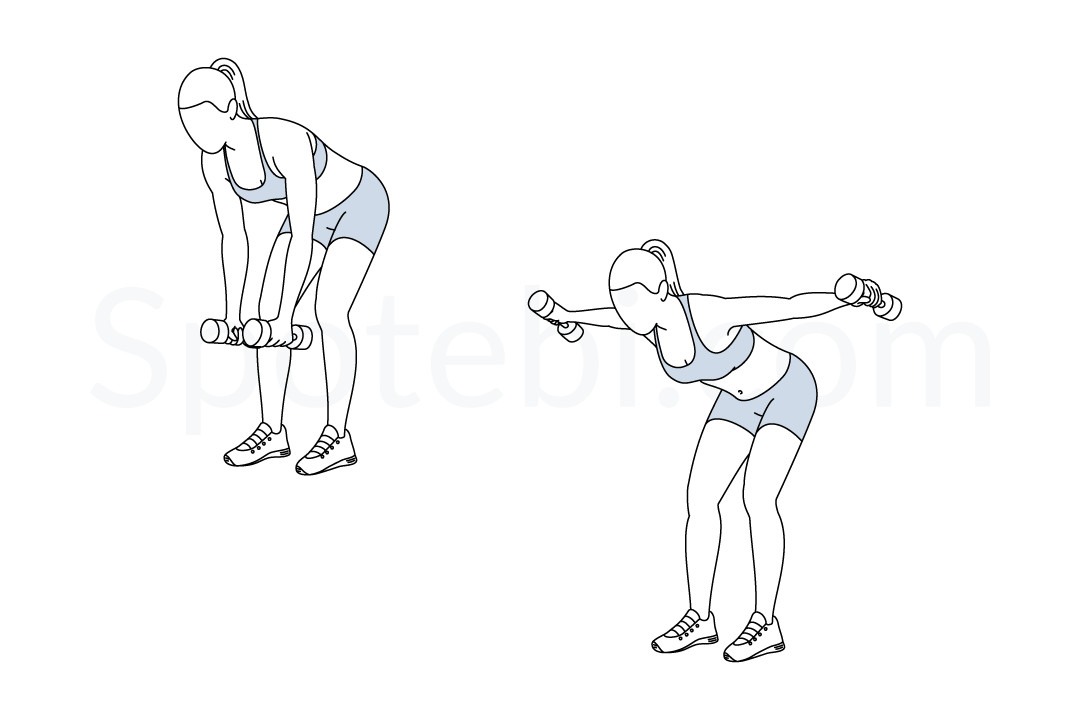
The bent-over dumbbell rear delt raise pairs a stable hip hinge with an outward arm movement. Your arms move. Your torso keeps the same angle. Light dumbbells are enough to learn it.
- Plant your feet. Stand with your feet comfortably apart, knees slightly bent, a dumbbell in each hand.
- Hinge at the hips. Lean forward until the dumbbells hang below your chest. Your torso doesn't need to be parallel to the floor.
- Set your elbows. Turn your palms toward each other and keep a slight bend in both elbows for the whole set.
- Raise your arms outward. Sweep the upper arms out to the sides in a broad arc, up to shoulder height. Your hands travel with your arms. Your elbows don't pull back toward your ribs.
- Lower slowly. Return along the same path without letting your torso rise or swing.
Do one slow rep and check yourself. From the side, your torso should look the same at the start and the top. From behind, your arms should spread outward. A range you can control matters more than matching the arm height in a photo.
What Muscles Do Rear Delt Raises Work?
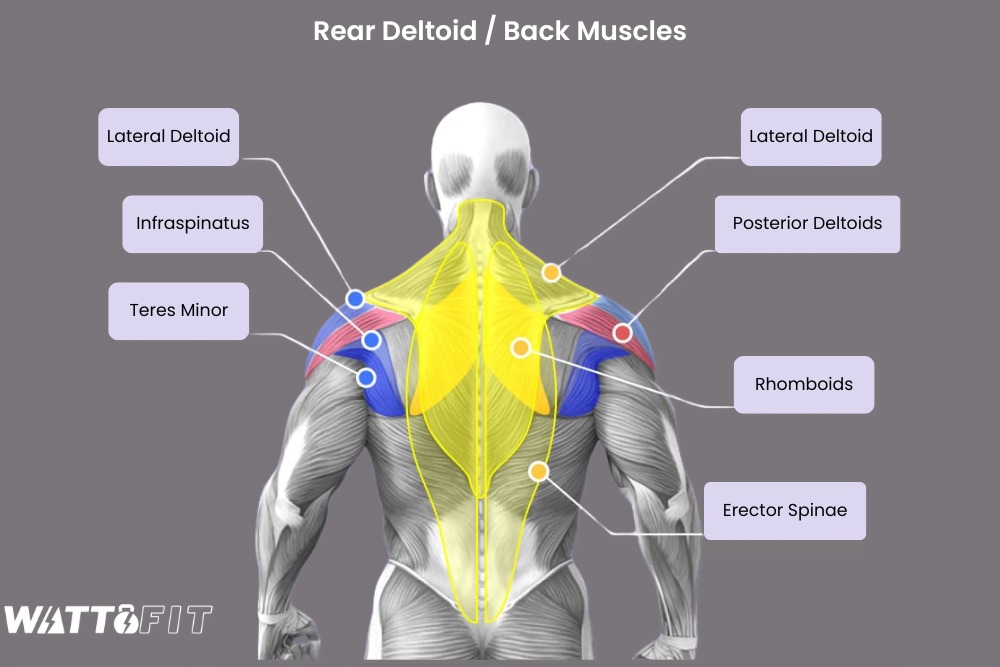
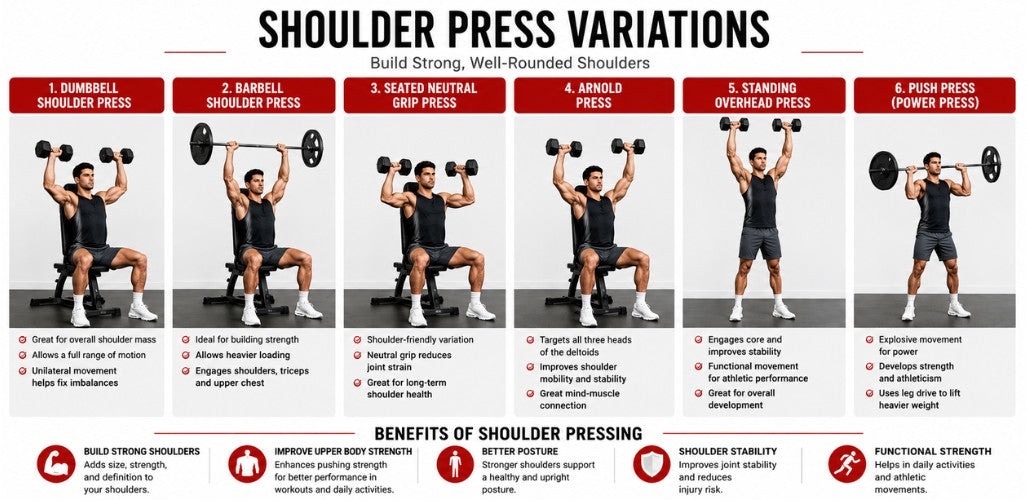
The posterior deltoid is the main muscle a rear delt raise works. It drives shoulder horizontal abduction, the motion of moving your upper arm outward and back relative to your torso. Presses work the shoulder differently; the shoulder-press muscle guide covers that movement.
The middle and lower trapezius and rhomboids move the shoulder blades. The infraspinatus and teres minor work around the shoulder, and the middle deltoid assists in some positions.
Expect some upper-back effort. The burn or pump you feel during a set is an unreliable measure of long-term muscle growth.
Why Dumbbell and Machine Rear Delt Raises Feel So Different
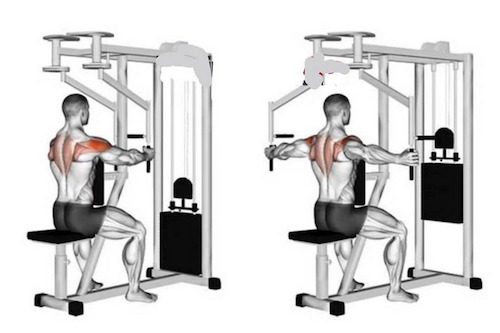
Machine stack settings and dumbbell weights differ a lot. A gymgoer who changed equipment described the surprise in r/workout:
Hello people
I have made the move from the peck deck rear delt fly to dumbell kneeling over.
I've noticed that all of a sudden I am super weak... I went from using 30kg on the machine to 2.5kg plates...
Am I doing something wrong here?
The reverse pec deck guides your arms along a fixed path. Its lever arrangement, handle positions and resistance mechanism decide how the stack load reaches your shoulders. The machine also usually supports your torso, so you spend less effort holding position.
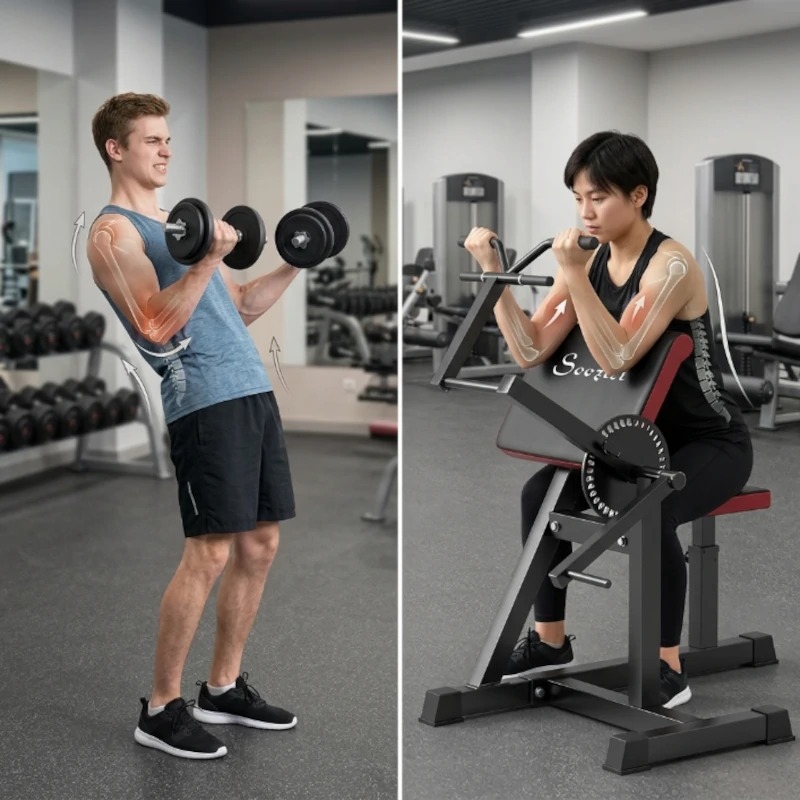
Dumbbells move freely through an arc. In a bent-over fly, you control each arm and hold your hip hinge at the same time. Because the mechanics and support differ, the two weight labels don't convert reliably. Even different reverse pec deck models feel different.
Log each setup separately: the machine setting for that machine, or the weight of each dumbbell. Compare progress only across sessions with the same equipment and a repeatable movement.
Common Rear Delt Raise Mistakes and How to Spot Them
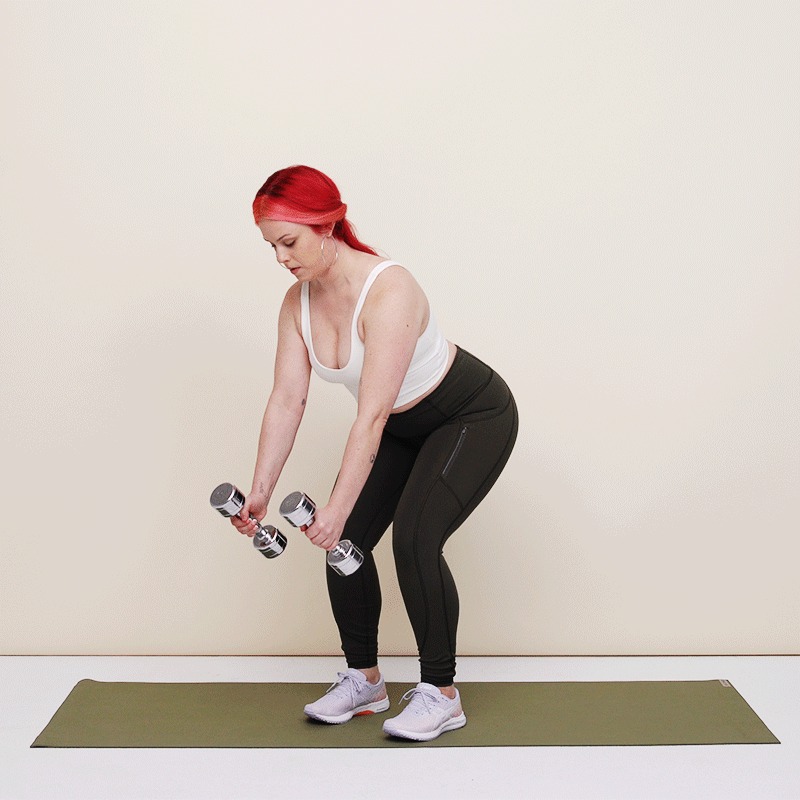
The clearest form errors show up in torso position, elbow bend, upper-arm direction and the lowering phase.
| What you see | Why it happens | Fix |
|---|---|---|
| Torso rises with the dumbbells | Your body helps lift the weight | Use less weight and hold the hip hinge steady |
| Elbows bend sharply toward the ribs | The fly turns into a row | Keep a slight elbow bend and move the upper arms outward |
| Shoulders shrug noticeably | Your upper trapezius takes over more of the work | Don't add a shrug to the arm movement |
| Dumbbells drop quickly | You lose control on the way down | Use a weight you can lower slowly |
| Arm range shrinks sharply late in the set | The weight or setup limits your execution | Keep the same range before adding weight |
Which Rear Delt Raise Variation Should You Use?
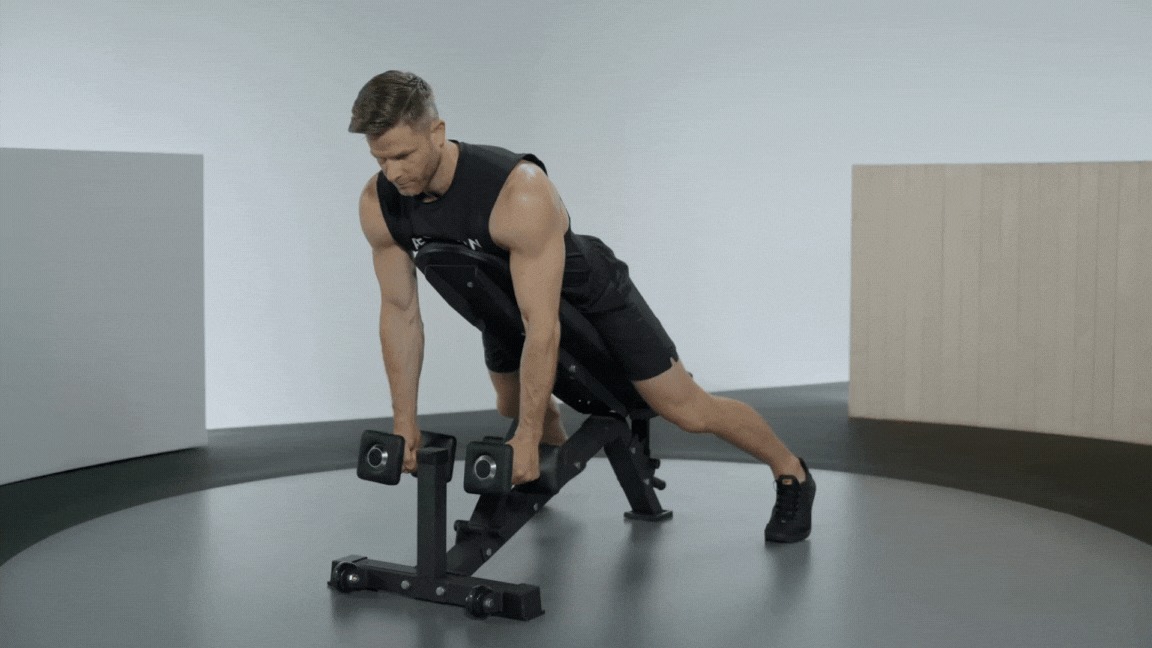
Your equipment and the torso support you need decide the choice. A bench, machine or cable station changes how much effort goes into holding your position and how the resistance acts on your arms.
| Variation | Equipment | Advantage | Trade-off | Useful when |
|---|---|---|---|---|
| Standing bent-over dumbbell fly | Dumbbells | Simple setup and free arm movement | Requires an unsupported hip hinge | You have basic weights and can hold the position |
| Seated bent-over dumbbell fly | Bench and dumbbells | Same seated starting position every time | Still requires bending forward | You prefer sitting |
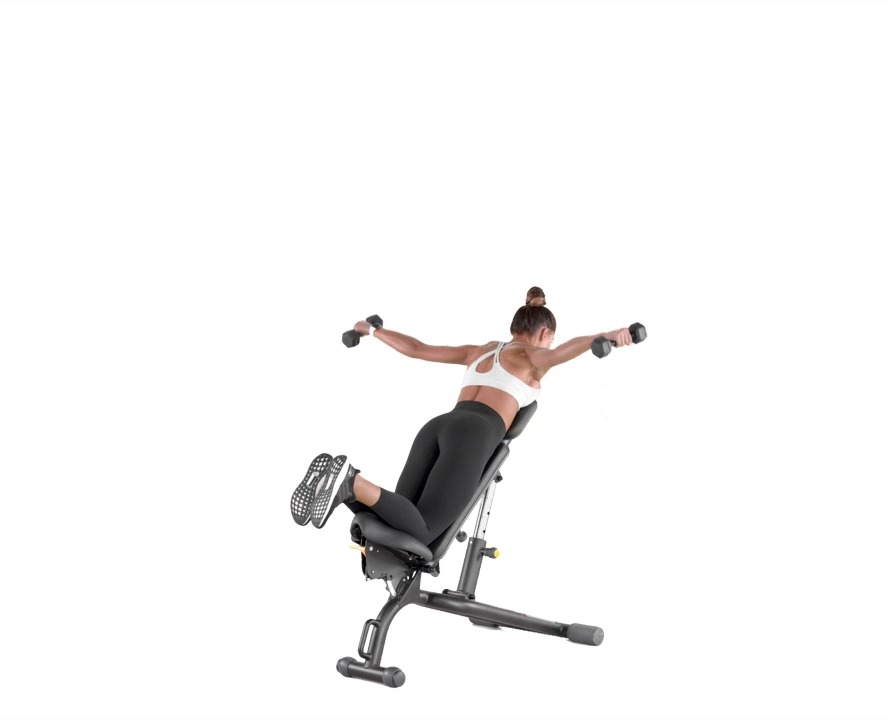
| Chest-supported incline reverse fly | Adjustable bench and dumbbells | Supports the torso | Needs the right bench angle and arm clearance | Holding your torso steady distracts from the arm movement |
| Reverse pec deck | Rear delt machine | Guided path with adjustable resistance | Handle geometry and fit vary | You prefer a supported machine |
| Cable reverse fly | Cable station | Adjustable cable position and resistance direction | Needs a suitable station and careful positioning | You have access to the right cable setup |
The American Council on Exercise's incline reverse fly uses a bench backrest angled to 45 to 60 degrees. The torso rests against the pad, with feet planted and arms hanging below the shoulders.
How Much Weight Should You Use for Rear Delt Raises?

Pick a weight that lets you repeat the same arm path and control both the lift and the return. The long arm position of a fly makes a small dumbbell surprisingly hard compared with the loads you use in rows or presses.
In r/formcheck, a person using 3 lb dumbbells wrote, “I tried to go up to 5 lbs” and lost arm height on the last one or two repetitions.
Healthline's standing bent-over lateral-raise example uses 10 to 12 repetitions and describes working toward two to three sets.
Add weight once you can finish your chosen repetitions with the same range and steady control. If the next dumbbell changes the movement, stay at your current weight or use a smaller increment if one is available.
Rear Delt Raises vs. Rows and Presses: Do You Need All Three?
That depends on what your routine already covers. Rear delt flies, rows and overhead presses load the shoulder through different motions.
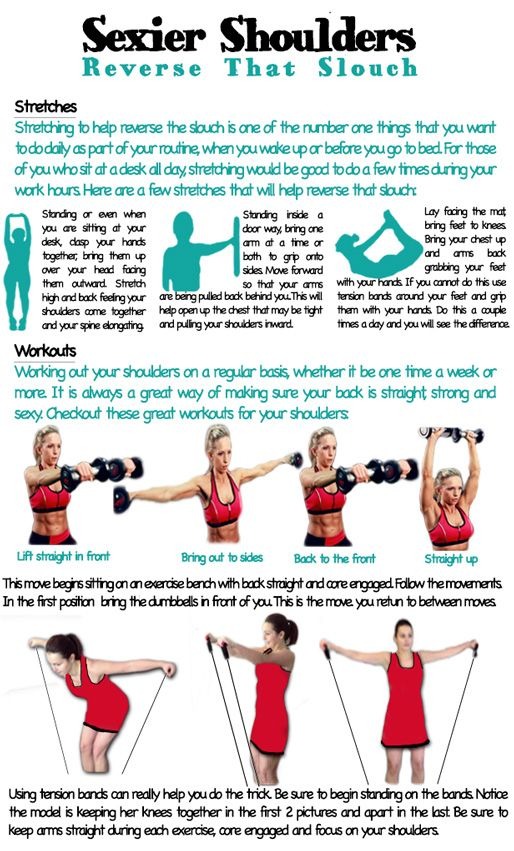
A fly moves the arms outward with little elbow bend. A rear delt row bends the elbows more as you pull. An overhead press drives the arms upward.
Where rows fit
Pulling exercises train the posterior deltoid too. A systematic review of deltoid activation covering 33 studies reported high posterior-deltoid EMG activity in certain pulling exercises, including pull-ups and suspension-device inverted rows. EMG measures electrical activity during the lift. It doesn't show which exercise builds the most muscle over time.
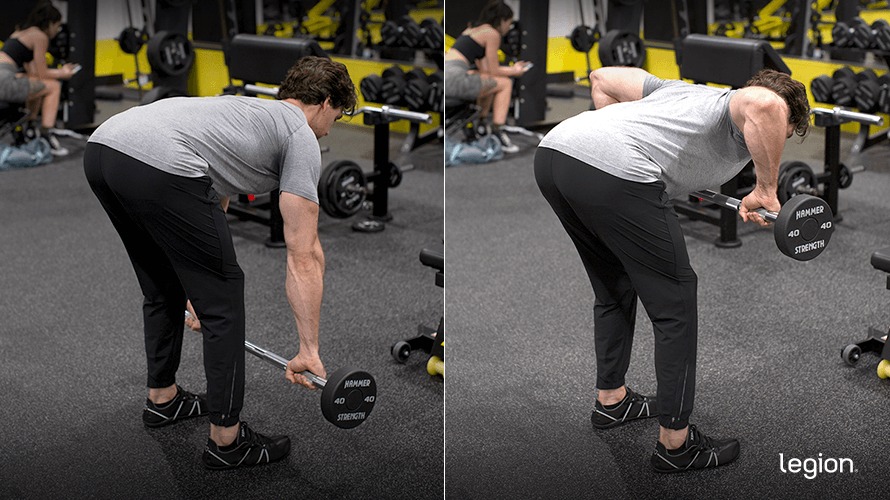
One contributor to r/naturalbodybuilding described years of trying different shoulder routines:
Ive been training on and off for since my teens and im 32 now. Ive experimented with all kinds of delttraining. It all started with ovh press and shrugs only when i was 15 and then around 28 i fell into the lateral raises only hype. I experimented with no ovh p and everything from 2-6 frequency lateral raises and rear delt flys with everything from 6-12 sets EACH per week and got crap growth and narrow shoulders. Heavy, low weight, cables, dumbells, machines.
I said fuck it ill half their volume and add in ovh press and voila, wide shoulders back in town later down the road.All this has made me question those lifts at all. I credit my delts to ovh press & high and wide rear delt rows, anyone else?
For the record im the total opposite of a SBD entusiast, im definetly more of a gymbro and dont do any barbell stuff at all.
The contributor reports better shoulder development after changing the training mix. Other people in the discussion described success with isolation work. In each case, several training variables changed alongside exercise choice.
Deciding whether to add raises

Look at the motions already in your routine. If you row and press but do little direct arm-out work, a rear delt fly adds it. If you already train that motion regularly, a few more versions need a specific purpose in your plan.
Do Grip and Shoulder-Blade Position Change Rear Delt Activation?
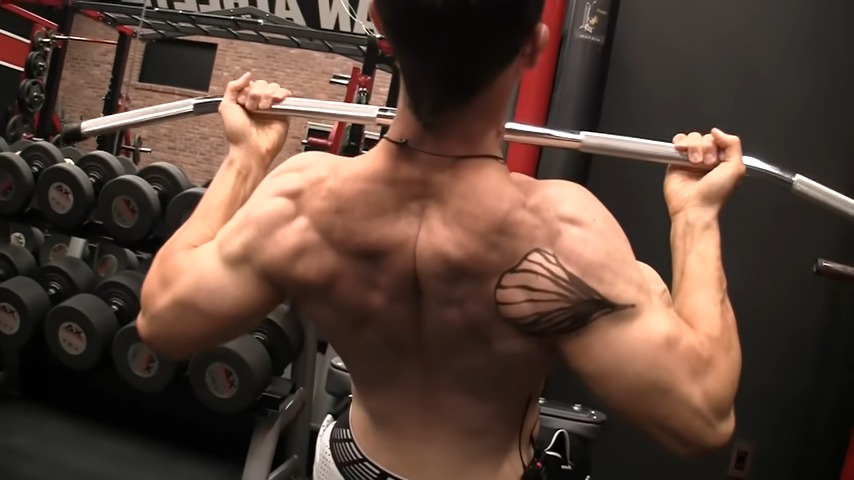
Hand position and shoulder-blade cues change how you perform a rear delt fly. Coaches cue them differently depending on whether the goal is focused posterior-deltoid work or a broader upper-back action.
The American Council on Exercise and Healthline both cue squeezing the shoulder blades together near the top of their reverse-fly instructions. Legion Athletics' dumbbell rear-delt-fly guide recommends less deliberate retraction for a rear-delt isolation emphasis. Those are differences in coaching emphasis, and normal shoulder-blade movement is part of the exercise either way.
What the grip experiment measured
In a 2013 posterior-shoulder activation study, 19 resistance-trained men performed reverse flyes on a machine with neutral and pronated grips. Average posterior-deltoid EMG was higher with the neutral grip (p = 0.046); infraspinatus EMG was also higher (p = 0.002).
The result covers muscle activity in that machine protocol, not long-term growth or dumbbell grips. On your own equipment, use a comfortable hand position that keeps your arm path steady, and don't force a particular grip.
When to Modify or Stop a Rear Delt Raise

Struggling to hold the setup and feeling pain call for different responses. A chest-supported incline fly reduces how much you have to hold your torso in place, but it's an exercise variation, not an injury treatment.
If a raise hurts, stop that version. If the pain lingers, or you have an existing shoulder injury, see a qualified clinician.