
What Muscles Do Skull Crushers Work? Form and Variations
Skull crushers work all three heads of your triceps. A manageable weight matters: stop the set if your elbow hurts or you lose control of the weight.
What muscles do skull crushers work?
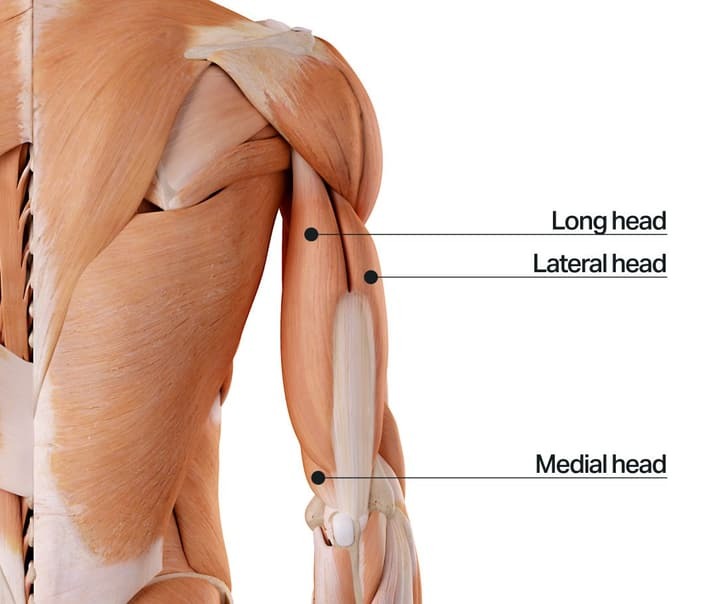
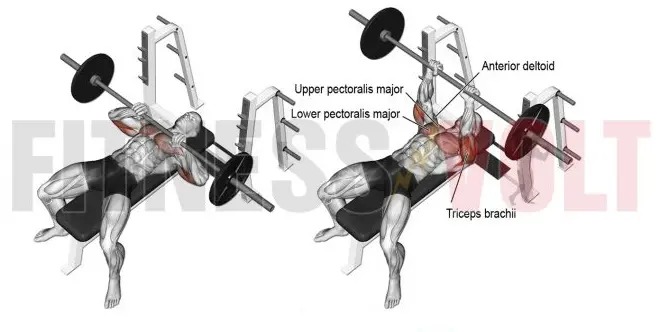
Skull crushers load the triceps brachii on the back of the upper arm. The exercise is also called a lying triceps extension: you lower a weight by bending your elbows, then straighten them against resistance with your triceps. For a full biceps and triceps comparison, see the biceps-versus-triceps guide.
All three triceps heads take part. The long head crosses your shoulder joint, while the lateral and medial heads also extend the elbow. Your shoulder muscles hold your upper arms in position, and your forearms and hands steady the weight.
| Muscle or structure | Job during a skull crusher |
|---|---|
| Triceps long head | Extends the elbow; also crosses the shoulder |
| Triceps lateral head | Contributes to elbow extension against the load |
| Triceps medial head | Contributes to elbow extension throughout the movement |
| Shoulder stabilizers | Hold your upper arms in position |
| Forearms and grip | Hold and steady the bar or dumbbells |
| Biceps and chest | Neither is a primary mover in the elbow-extension phase |
The NCBI triceps anatomy reference describes the three heads and their shared action at the elbow.
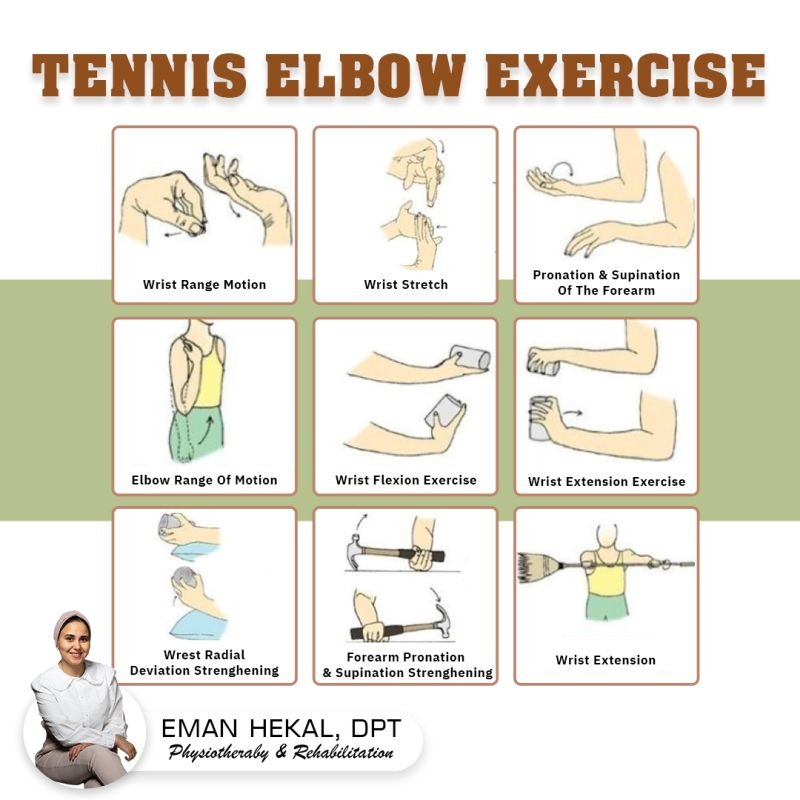
Watch what moves. In a skull crusher, the forearm swings around the elbow while the upper arm stays steady; a chest press moves the upper arm substantially at the shoulder as well. That visible difference is why the skull crusher belongs in triceps training.
How to do a controlled skull crusher
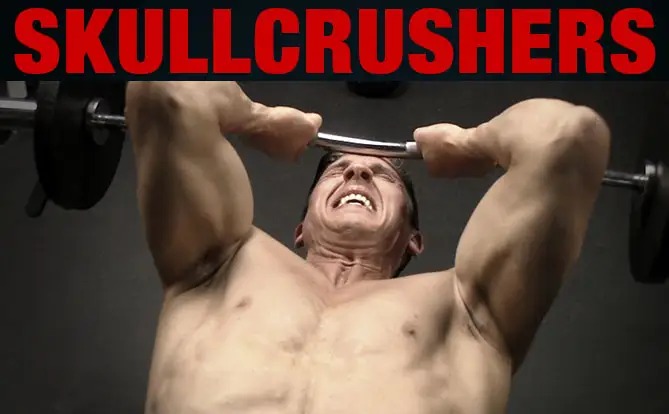
Set up so you can control the weight from the first rep to the last. A flat bench and a manageable barbell or EZ bar make a clear starting point for learning the lying version.
- Get into position. Lie on a stable bench with your feet supported. Hold the bar firmly with a full grip, wrists neutral and hands about shoulder-width apart. Bring the manageable weight to your chest, then press it above your face with your elbows extended and your upper arms near vertical.
- Lower by bending your elbows. Keep your upper arms in one position and lower the weight toward your forehead or just past the top of your head. Move slowly with steady wrists, and keep the weight clear of your face. Don't drop it, bounce it or swing your shoulders.
- Extend and finish. Straighten your elbows to return to the start. When the set ends, lower the weight to a secure resting position before you leave the bench. If you can't manage that finish alone, use a spotter or an easier setup.
These steps follow the basic mechanics in the American Council on Exercise lying barbell extension guide. Dumbbell and floor versions change how you grip, get into position and finish.
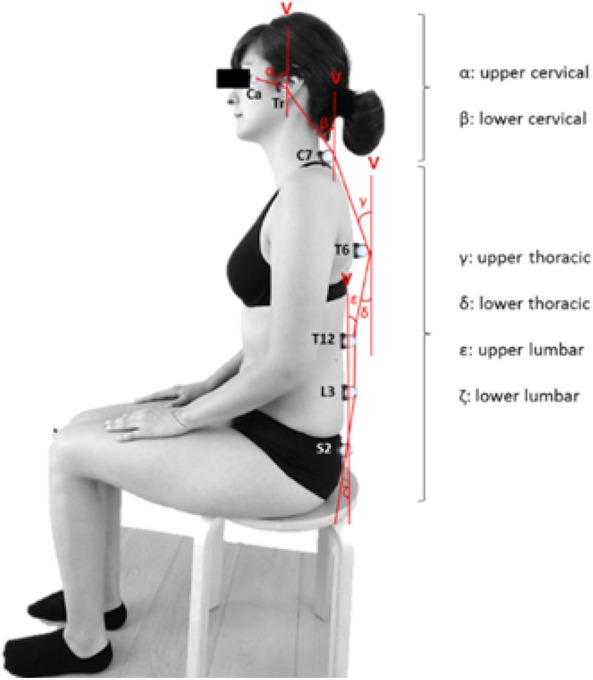
Film a side view to check three things: your grip and wrists stay firm, most of the movement happens at the elbow, and every rep follows the same path.
Lower to your forehead or behind your head?
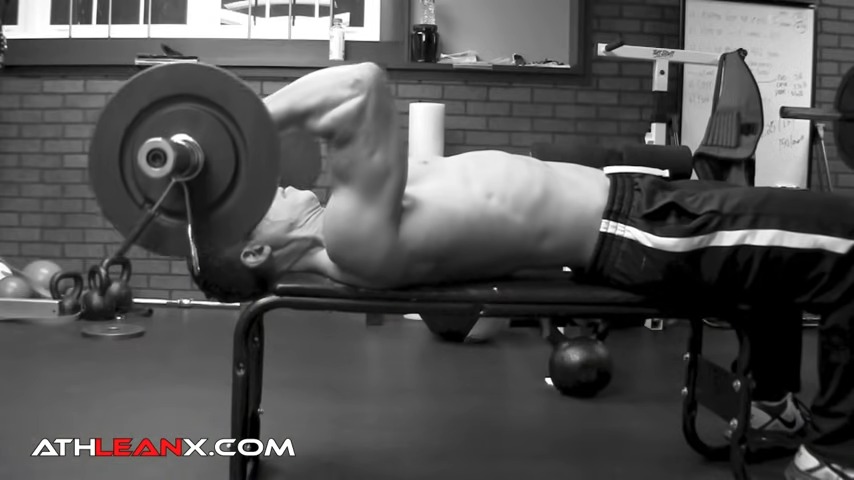
Exercise guides teach two bar paths: down to your forehead, or slightly past the top of your head. The second path tilts your upper arms back a little.
| Feature | Forehead path | Behind-head path |
|---|---|---|
| Where the weight goes | Near your forehead | A little past the top of your head |
| Upper-arm angle | Stays near vertical | Tilts back slightly, on purpose |
| Main movement | Elbow bends, then extends | Elbow bends, then extends |
| Common fault | Weight drifts toward your face | Upper arms swing backward during the rep |
Keep your upper arm still. Holding a fixed backward tilt on purpose is a recognized variation. If the angle keeps changing as you lower the bar, the movement starts to resemble a pullover and the elbow extension gets harder to isolate.
The American Council on Exercise allows either a forehead-near or a slightly behind-head finish in its lying barbell instructions. Other demonstrations emphasize different paths, which is why two coaches can show visibly different reps. The available evidence does not rank the two paths for safety or long-term growth.

Compare the two paths from the side, watching your shoulder, your elbow and the weight.
EZ bar, dumbbells, cables or floor: which variation fits?
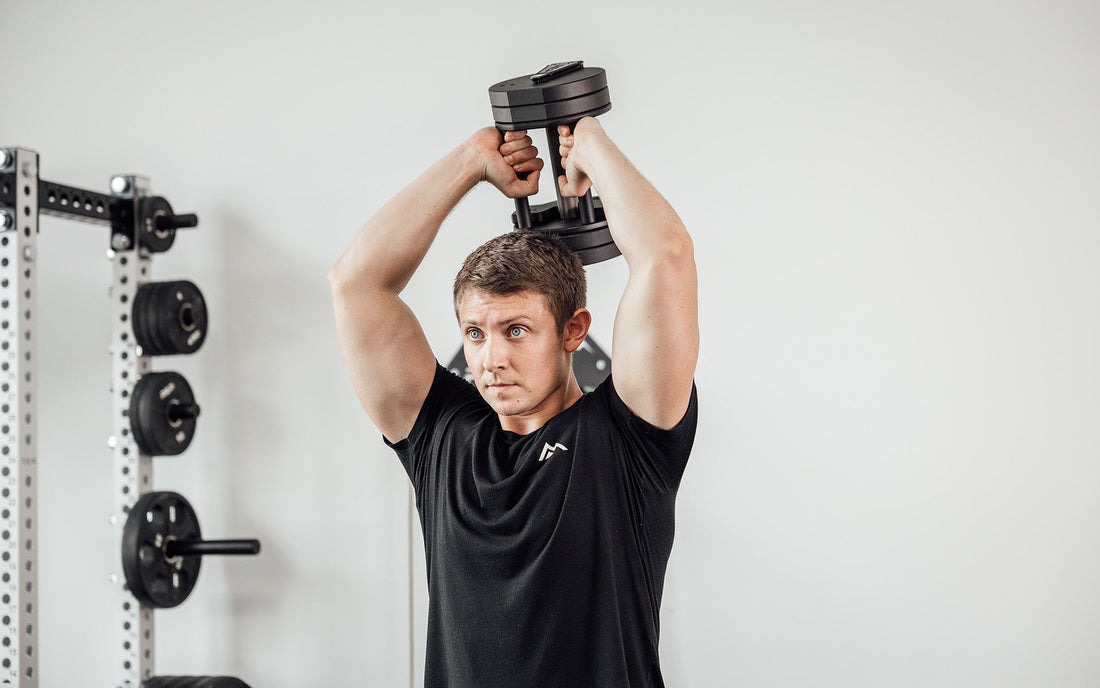
Your equipment decides how you grip the weight, how freely each arm moves and how much clearance you have. Pick the one that lets you hold on firmly and control every rep.
| Option | Good for | Downside |
|---|---|---|
| EZ curl bar | Angled grips and one shared load | The bar can tip if one arm loses control |
| Straight barbell | Familiar two-handed setup | The straight grip is less comfortable on some wrists |
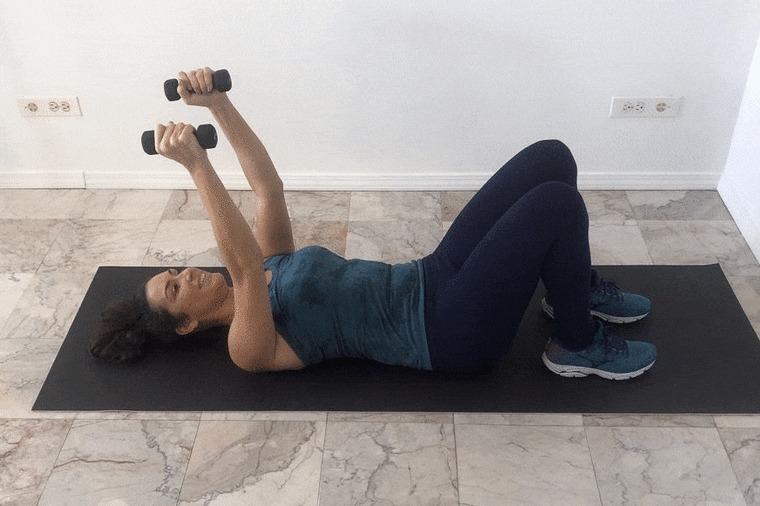
| Two dumbbells | Independent arm paths and flexible wrist position | Each weight needs its own stabilizing |
| One dumbbell, both hands | Works when you have one weight | Grip, balance and exit differ from paired dumbbells |
| Floor skull crusher | A lying extension without a bench | The floor limits clearance for behind-head lowering |
| Lying cable extension | Elbow extension against a cable line of resistance | Needs a cable set up for lying work |
| Standing cable pushdown or overhead extension | An alternative triceps exercise | Different body position and resistance path |
A home lifter with two dumbbells can pick independent grips. A gym lifter with an EZ bar shares one load between both hands. Equal combined weight can still feel different because stability and hand position change.
Changing equipment did not resolve elbow pain for an r/bodybuilding contributor:
I used to do them, then switched to using dumbbells which worked better on my muscles but eventually was destroying my elbows. I stopped for a while and did cable rope extensions (standing, overhead), today I decided to try out skull crushers again, mid-set I felt elbow pain. I'm probably not going to do them again and was wondering if anyone else has had elbow pain while doing that exercise or if there's something I should be doing to prevent elbow pain.
EDIT: I've used a straight bar, an EZ curl bar, and dumbbells. The dumbbells caused the most pain, the EZ bar caused the least but still caused some pain.
Thanks for all your input.
Elbow discomfort and other signs to stop
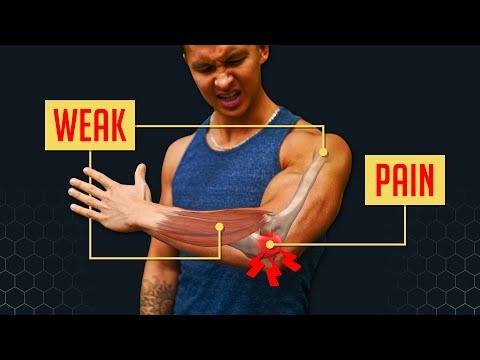
Stop the set if you feel sharp elbow pain, a catch in the joint, new numbness, or a sudden loss of control over the weight. Hard triceps effort and fatigue are normal. A painful joint or an uncontrolled bar means the set is over.
A tired arm that struggles on the last rep is a loading and control issue. Sudden unexplained weakness needs prompt medical assessment, particularly if it persists, affects one side unexpectedly or comes with new neurological symptoms. Sudden one-sided weakness with other stroke-like symptoms requires emergency care.
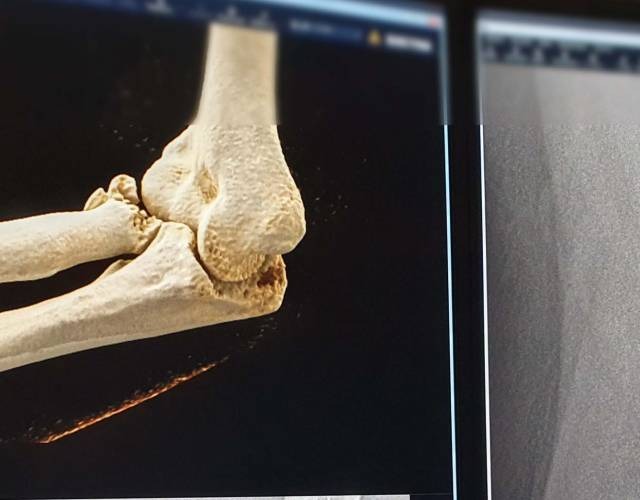
Persistent or recurring joint pain, swelling, catching or numbness needs a professional evaluation. A description of symptoms or an exercise video cannot tell whether the cause is training load, an earlier joint problem or something else. Don't keep testing a painful rep. If a lying extension keeps hurting, drop it and train your triceps another way.
Do skull crushers emphasize the triceps long head?
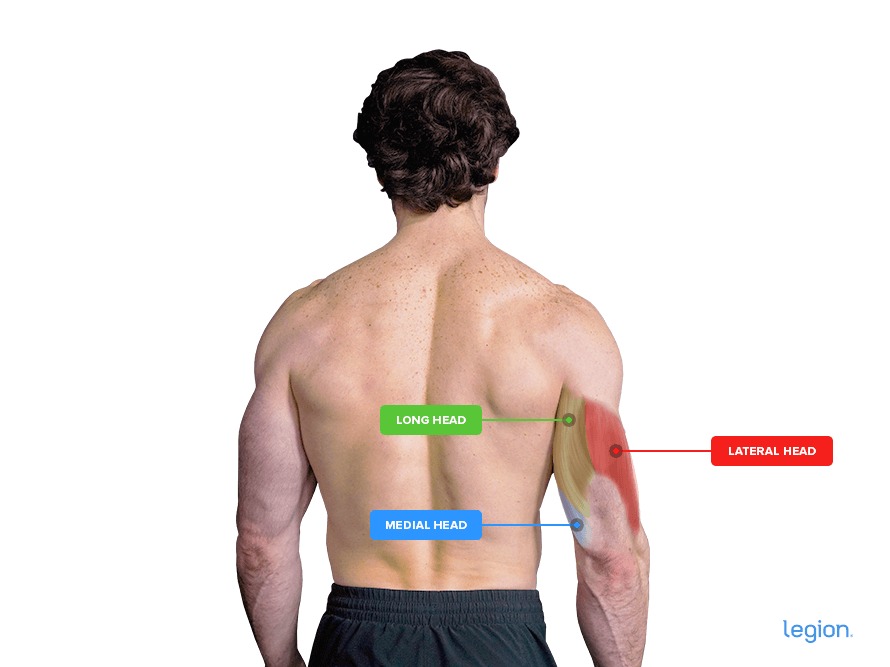
The long head works during skull crushers, and its position across the shoulder makes arm angle matter. Muscle activity in a single session and growth measured after a training program are different things, so keep them apart when you read claims about long-head emphasis.
In 2018, Alves et al. Recorded surface electromyography (EMG) in 21 resistance-trained men doing lying and overhead dumbbell elbow extensions. They measured the long and lateral heads and reported similar acute activity patterns. EMG captures electrical activity during exercise; it does not measure muscle growth over a training cycle.
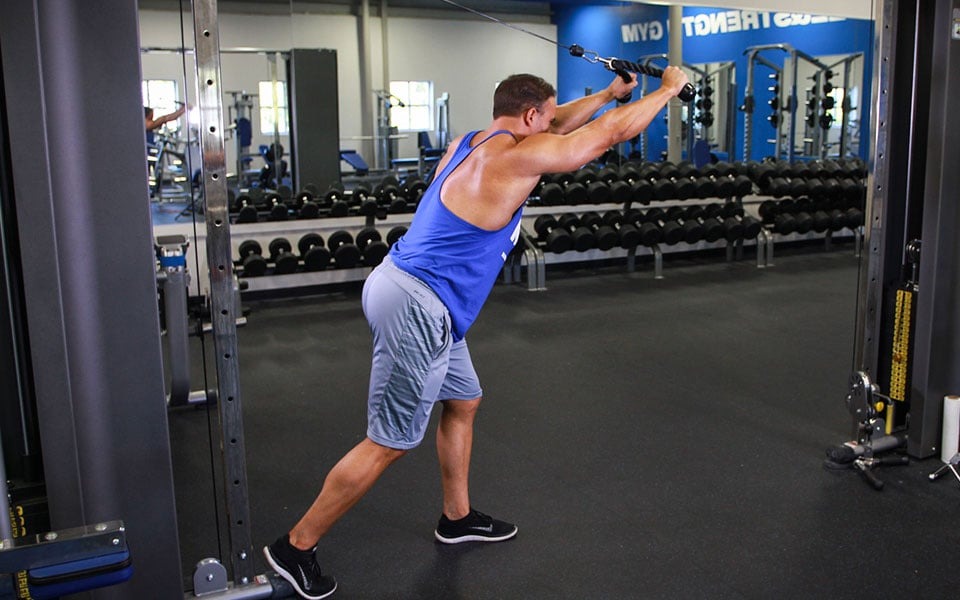
Maeo et al. Measured growth directly. In a 12-week study of 21 adults, they compared unilateral cable extensions with the arm overhead against the arm in a neutral position. Participants trained twice a week, five sets of ten repetitions at 70% of one-repetition maximum, progressing according to the study rules.
| MRI-measured muscle-volume change | Overhead cable extension | Neutral-arm cable extension |
|---|---|---|
| Long head | +28.5% | +19.6% |
| Lateral and medial heads combined | +14.6% | +10.5% |
| Whole triceps | +19.9% | +13.9% |
The Maeo and colleagues cable-extension study found greater average MRI-measured growth with the overhead cable extension on all three reported outcomes. It tested cable extensions, not skull crushers.
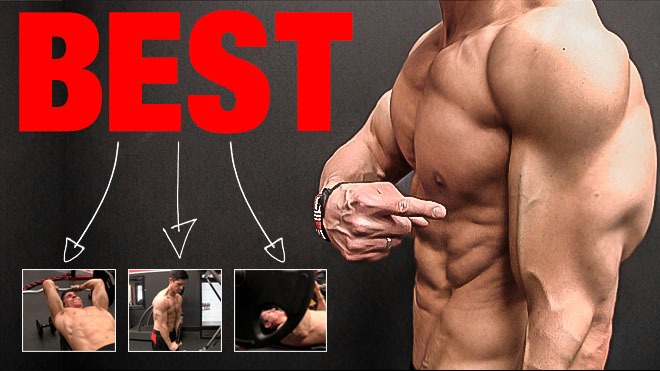
A smaller 2018 study of ten adults also examined how triceps-head behavior changes across shoulder-elevation angles.
How to progress without losing control
Add repetitions or weight only when your upper arms stay still and you finish each set under control, set after set. The American College of Sports Medicine's 2026 resistance-training position stand synthesized 137 systematic reviews involving more than 30,000 adults. It found that training to momentary muscular failure did not consistently improve outcomes, and it gives no universal skull-crusher prescription.