
Barley Nutrition: Hulled vs. Pearled and Cooked
Hulled barley is the whole-grain choice; pearled barley is the faster-cooking one. Neither is gluten-free. Cooked pearled barley has 123 calories and 3.8 g of fiber per 100 g, so compare dry with dry and cooked with cooked.
What nutrients does barley provide?
Most of the energy in barley comes from carbohydrates; it also supplies fiber, some protein and very little fat. The two distinctions to keep in view are hulled versus pearled and dry versus cooked.
The table shows what 100 g of each food contains. The cooked column is plain pearled barley boiled in water with nothing added. The figures come from USDA FoodData Central SR Legacy records 170283, 170284 and 170285.
| Nutrient per 100 g | Hulled barley, dry | Pearled barley, dry | Pearled barley, cooked |
|---|---|---|---|
| Calories | 354 kcal | 352 kcal | 123 kcal |
| Total carbohydrate | 73.50 g | 77.72 g | 28.22 g |
| Dietary fiber | 17.30 g | 15.60 g | 3.80 g |
| Protein | 12.50 g | 9.91 g | 2.26 g |
| Total fat | 2.30 g | 1.16 g | 0.44 g |
The two dry columns compare processing at the same weight. The cooked column holds absorbed water, so setting the first column against the third would mix the effect of processing with the effect of water.
Cooked pearled barley also supplies 8.6 micrograms of selenium, 2.06 mg of niacin and 0.26 mg of manganese per 100 g. Those amounts apply to the cooked pearled barley, not to dry hulled.
You can look up the source food descriptions and nutrient records at USDA FoodData Central.
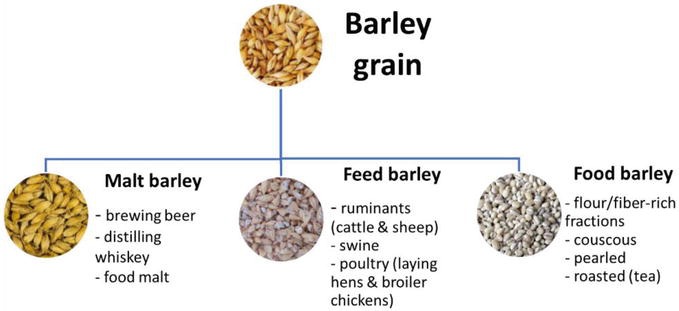
Hulled, hulless and pearled barley: what processing changes
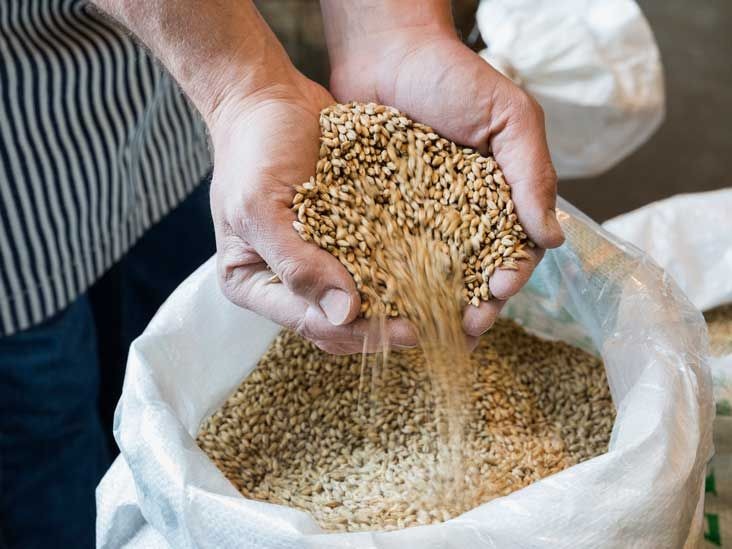
Hulled barley has had its tough, inedible outer hull removed but keeps its bran and germ; hulless barley has a loose hull that separates during harvest. Both can qualify as whole grain.
Pearled barley is polished, which strips off some or all of the bran. That makes it a refined grain, but it still gives you fiber: 15.6 g per 100 g dry, against 17.3 g for hulled.
Pearled barley cooks faster, while hulled and hulless barley keep the whole-grain parts. The Whole Grains Council explains the difference in processing.
One shopper grabbed the wrong bag and asked about it:
I accidentally bought a bag of pearled barley and while I fully intend on eating it in a 15 bean soup I was wondering if pearled barley is somehow less bad than white flour or white rice in terms of micronutrients and glicemic index. Anyone know?
Polishing costs pearled barley its whole-grain status, but it keeps substantial fiber.
Check the wording on the package: pot barley, quick barley and barley flakes can mean different degrees of processing.
Dry vs. cooked barley: why the numbers differ
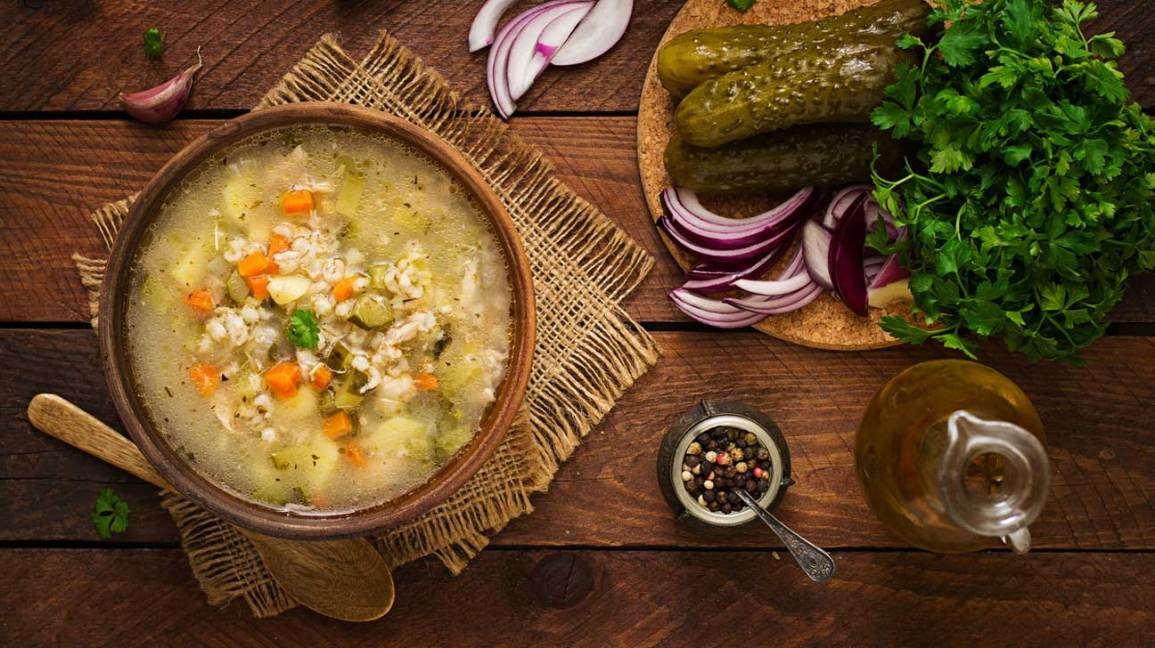
Dry pearled barley has 352 calories per 100 g; cooked has 123. Cooking adds water, so each gram of finished food holds less grain.
Cooked pearled barley is 68.8 g water per 100 g. That water explains the calorie gap by weight, and the dry grain's energy is still in the cooked food.
What is in one cup of cooked barley?
A reference cup of cooked pearled barley weighs 157 g. Multiply each per-100 g value by 1.57 and you get the amounts below.
| Nutrient | Per 100 g cooked | Per 157 g cooked |
|---|---|---|
| Calories | 123 kcal | 193 kcal |
| Total carbohydrate | 28.22 g | 44.3 g |
| Dietary fiber | 3.80 g | 6.0 g |
| Protein | 2.26 g | About 3.5 g |
| Total fat | 0.44 g | 0.7 g |
For example, 123 × 1.57 = 193.11 kcal, rounded to 193; 3.80 × 1.57 = 5.966 g of fiber, rounded to 6.0 g.
Verywell Fit uses 157 g as its reference cooked cup. A cup from your own pot can weigh more or less, because preparation and water retention change the finished weight.
If you weigh your own portion, multiply the per-100 g value by the weight divided by 100. A 200 g portion uses a multiplier of 2.
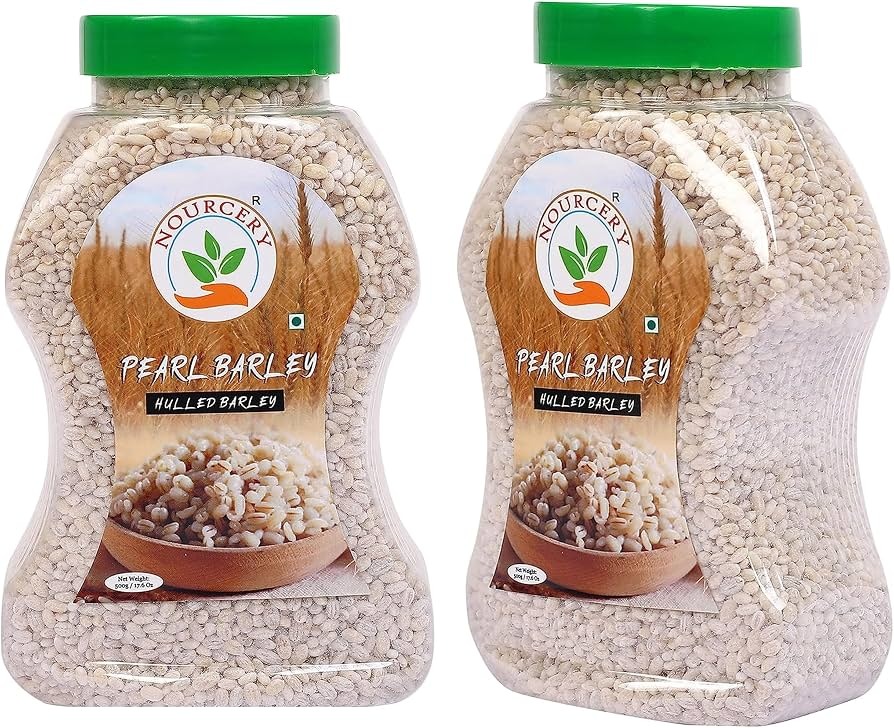
Water uptake can also turn a soup into something much thicker, as one cook found:
Totally agree with everything! I made a 12 quart saucepan full of beef and barley soup and put one cup of barley in it which I cooked separately in beef broth. That was the last time I saw any broth in that soup. That one cup sucked up all 10 or 12 quarts of liquid.
I ate mine like stoop and my family ate it like soup by adding beef broth till there was some liquid left. Every time.. It still tasted great
Cooking time and texture
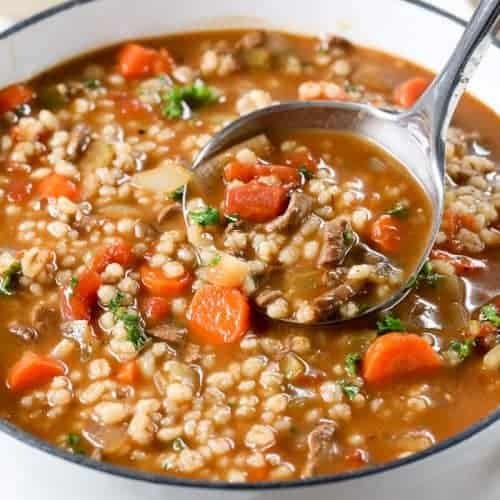
Grain form and cooking conditions decide how chewy barley is and how much liquid stays in a soup. A home cook who enjoyed barley in canned soup was disappointed by how it turned out at home:
My partner and I recently had barley for the first time in a canned soup and loved it. So I bought pearl barley to use in my own stews and soups and after my first attempt at a turkey and barley soup, it’s got a good amount of chew to it. It’s not BAD by any means, but we were both expecting it to be softer, like it was in the canned soup!
I cooked it in a homemade turkey/chicken stock for around 35 minutes, maybe 40. I am using pearl barley.
Fiber, beta-glucan and what the research supports
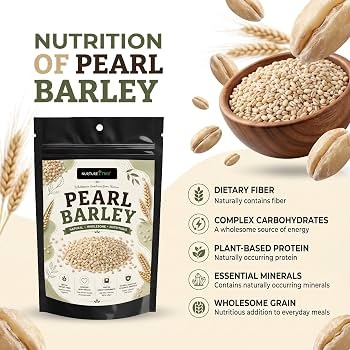
Barley contains dietary fiber, including soluble beta-glucan, which has been tested in controlled trials for its effects on blood lipids and glucose. Total fiber in a serving and the beta-glucan dose in a study are different measures. A 157 g cooked cup of pearled barley has 6 g of total fiber, and that figure says nothing about its beta-glucan.
A 2016 meta-analysis in the European Journal of Clinical Nutrition pooled 14 randomized trials with 615 participants. The trials lasted a median of about four weeks, with median daily barley beta-glucan doses around 6.5 g in the LDL cholesterol analysis and 6.9 g in the non-HDL analysis. Against control diets, LDL cholesterol was 0.25 mmol/L lower and non-HDL cholesterol 0.31 mmol/L lower.
ApoB showed no statistically significant effect, and non-HDL results varied widely between studies (I² = 98%, a measure of between-study variation).
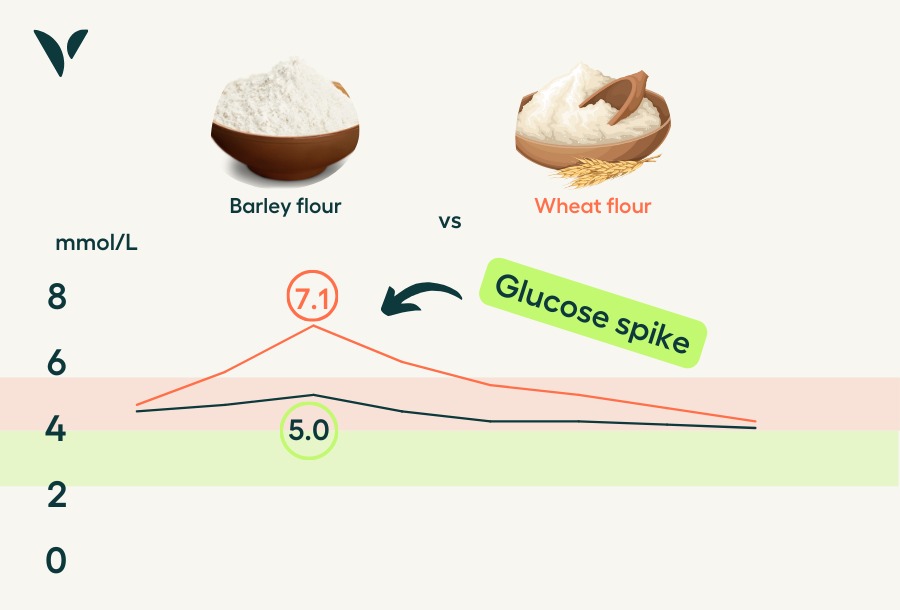
A 2026 Nutrition Reviews meta-analysis covered glucose outcomes in 31 controlled trials with 34 intervention arms. Post-meal glucose was lower at 30, 60 and 120 minutes, with pooled differences of −10.48, −12.38 and −6.95 mg/dL, respectively. The 180-minute result was not statistically significant, and neither were the longer-term results for fasting glucose and HbA1c.
The studies tested specific food forms, doses and durations. To judge a health claim about barley, look for the beta-glucan dose and the outcome that was measured.
Who needs to avoid barley?
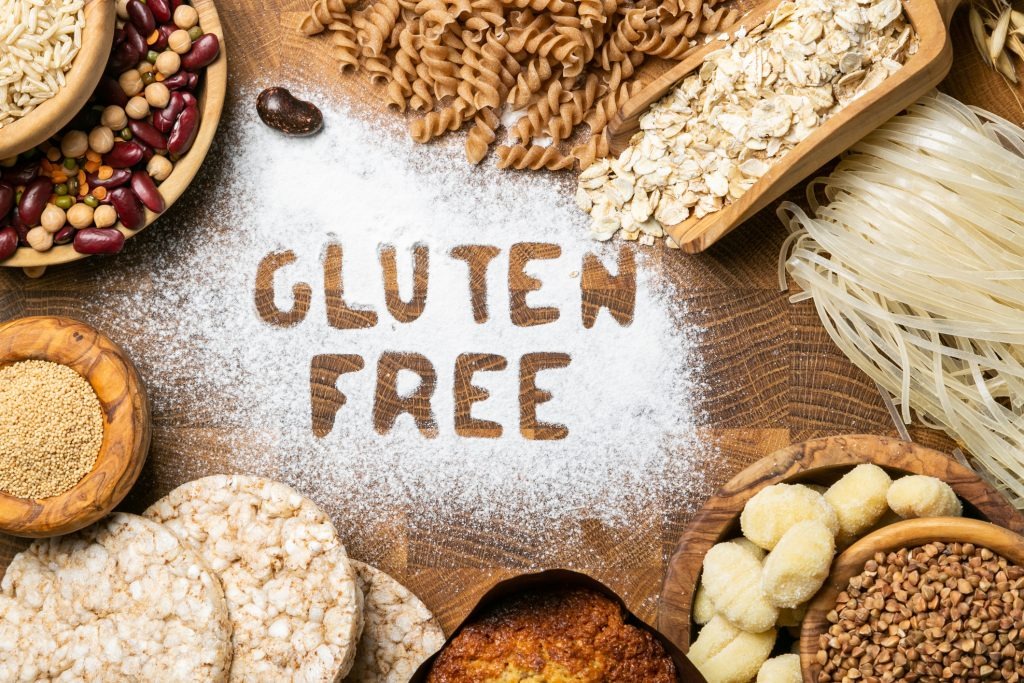
Barley contains gluten in every form: hulled, hulless or pearled. If you follow a strict gluten-free diet, skip it. The Celiac Disease Foundation lists barley and barley malt as gluten sources, and a wheat-free label doesn't make a food safe. For packaged food, read the ingredient list for barley and malt derivatives.
How to choose barley and compare it with other grains
The right form depends on what you need most.
| Your priority | Relevant choice | Why it fits |
|---|---|---|
| Whole-grain status | Hulled or hulless barley | Bran and germ are retained |
| Quicker cooking | Pearled barley | Polishing generally reduces cooking time |
| Strict gluten avoidance | No barley form | Barley contains gluten |
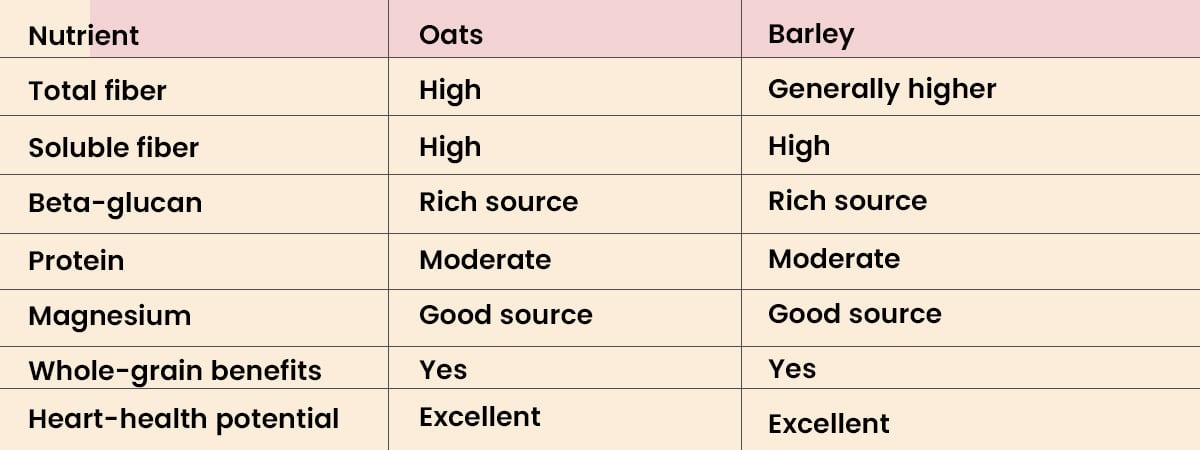
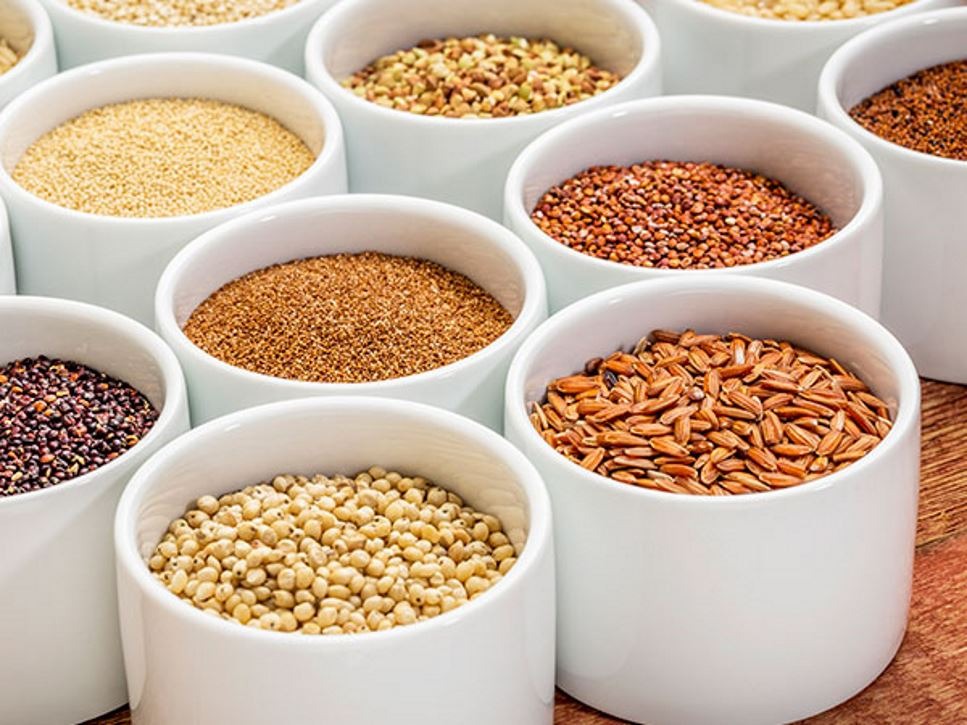
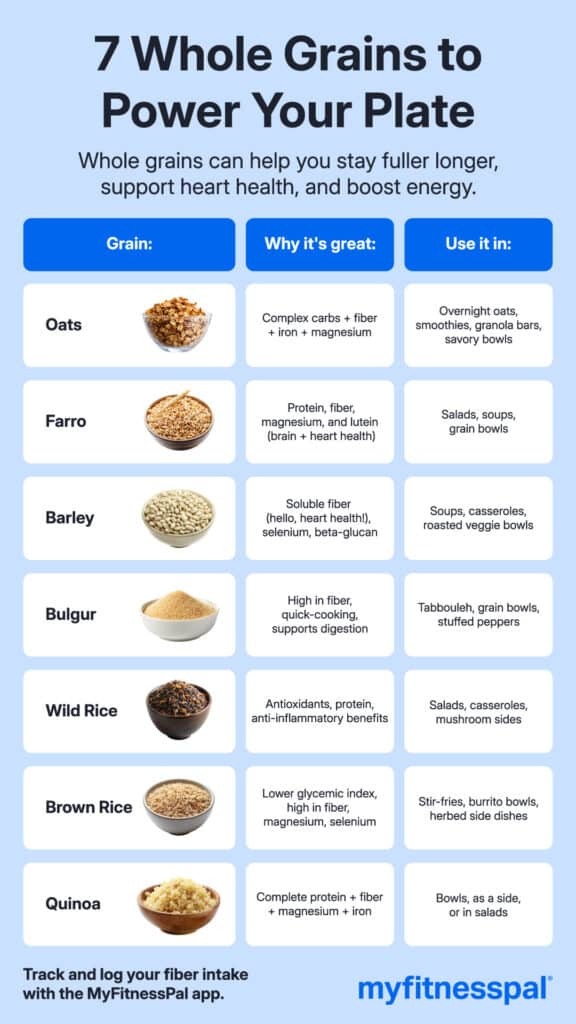
To compare barley with oats, rice or quinoa, use 100 g cooked against 100 g cooked, so the numbers reflect the foods and not the water. For oats and soluble fiber, see the oat nutrition analysis.
Carbohydrate can decide the matter for some meals: a 157 g cup of cooked pearled barley has 44.3 g.