
Breastfeeding While Working: A Practical Plan for Real Workdays
Returning to work doesn't necessarily end breastfeeding. A workable plan follows the actual workday: practice bottle feeding with the caregiver before the first shift, pump about as often as the baby feeds, and handle milk and pump parts safely.
Going back to work changes how you breastfeed; you can nurse before leaving, pump during your shift, and nurse again after pickup. Or you might work irregular hours, have a baby who won't take a bottle, or find that the only private room is several minutes from your work area.
Two schedules matter here: yours and your baby's.
Start with the workday you actually have
Your paid hours are only part of the time you're away from your baby. Drop-off, commuting, switching locations and pickup all add to it. Take an eight-hour shift with a 40-minute commute each way: you're apart for more than nine hours. That total decides which feeds you share and which need another plan.
The CDC's guidance on returning to work recommends preparing to pump, talking through work arrangements and coordinating feeds with your caregiver.
Fill in the table below using your baby's usual feeding pattern.
| Part of the day | What to write down | My workday |
|---|---|---|
| Feeds together | Your last feed before you leave and the first one after you're back | ________ |
| Time apart | Drop-off, commute, shift, pickup and the trip home | ________ |
| Work demands | Meetings, shift requirements and possible pumping windows | ________ |
| Pumping space | Where it is, how private it is, how long it takes to reach | ________ |
| Milk delivery | Who takes the milk to the caregiver and where it's stored | ________ |
| Backup contact | Who steps in if a break runs late or childcare changes | ________ |

A filled-in row might read: "Pumping space: unused office on floor 2, 6-minute walk, lock works."
A fixed office schedule may leave predictable gaps. A healthcare or retail shift is far less orderly. On days you work from home, childcare and pumping may change again.
Mark what you already know, then flag what's still open. Maybe the room exists, but you don't know how far it is from your workstation. Maybe daycare accepts pumped milk, but nobody has arranged how the bottles get there.
Help your baby and caregiver practice the handoff
A baby who nurses easily at home may need time to accept pumped milk from someone else. A practice run lets you and your caregiver learn the routine before a full day apart.
CDC guidance says to try a bottle once breastfeeding is established, and to have another adult offer it. Try a different bottle or nipple if your baby struggles.
Set up a trial that mimics the real time apart, with your caregiver leading it. Ask them to note:
- Time offered: When did the feed start?
- Amount: How much went into the bottle, and how much did the baby take?
- Baby's response: Did the baby accept, resist or stop partway?
- Leftovers: How much was left, and what happened to it?
- Open questions: What needs sorting out before the next time apart?

If your baby nurses well at home but refuses the bottle on the first trial, the handoff needs more work. Try again.
Build a pumping rhythm that can flex with your job
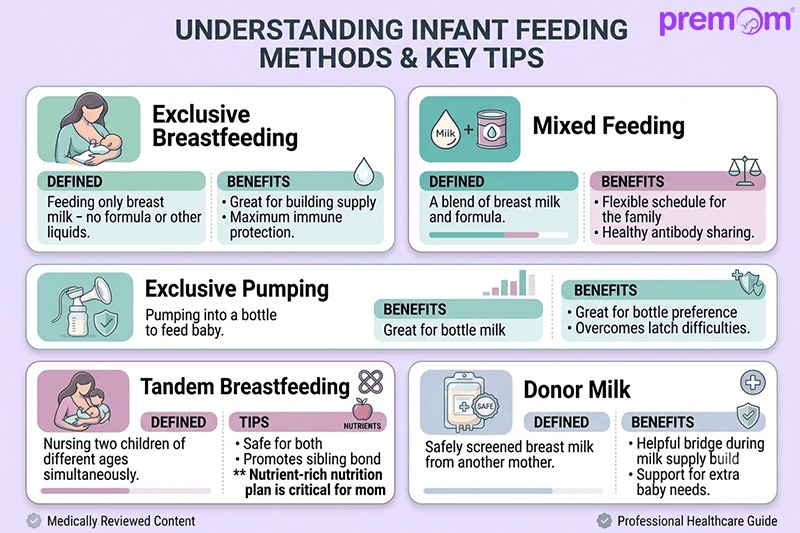
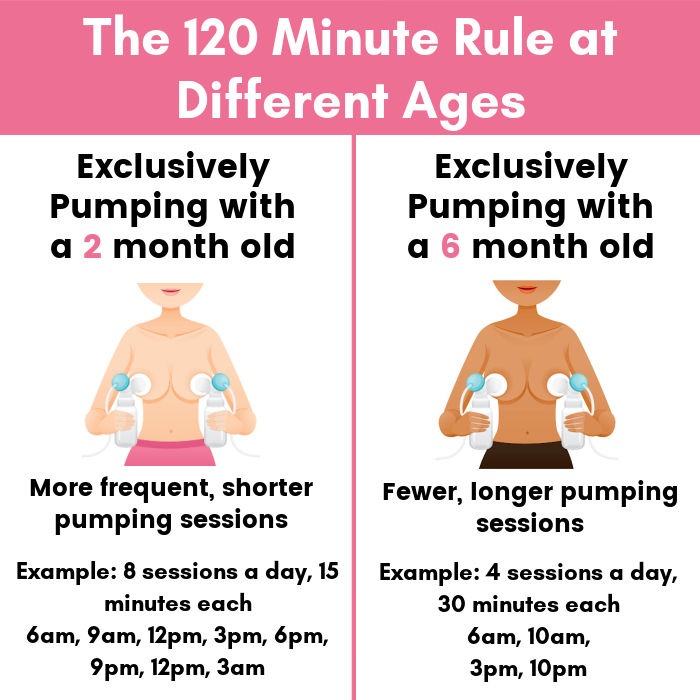
When you're apart from your baby, the CDC advises pumping roughly as often as your baby drinks breast milk, so your baby's usual feeding pattern is the starting point. Your comfort and your work setting shape how that plays out.
Cleveland Clinic published this sample nursing and pumping day in February 2026:
| Time | Example activity | Situation |
|---|---|---|
| 7:00 a.m. | Nurse | Before work |
| 10:00 a.m. | Pump | At work |
| 1:00 p.m. | Pump | At work |
| 4:00 p.m. | Pump | At work |
| 7:00 p.m. | Nurse | After pickup |
This is one possible day. Adjust the times and the number of sessions to your baby's feeding, your job and your comfort.
The same Cleveland Clinic example allows about 30 to 40 minutes for a full pumping session, including setup and cleanup, with roughly 20 minutes of active pumping. A session takes more of your workday than the pumping itself.
That gap matters when the pumping room is across the building or interruptions are common. A calendar slot sized for 20 minutes of pumping leaves no time to walk to the room, set up and clean up.
On a variable shift, block tentative pumping times in your calendar and decide in advance where a block could move if a meeting runs over. A wearable pump can suit some tasks, but fit and milk output may differ from other setups.
You don't need a large freezer stash to go back to work. Some families get by with enough pumped milk for the next childcare day; others want a bigger buffer.
One low-output session is frustrating, but it doesn't signal a lasting supply problem.
Arrange breaks and a private space at work

In the US, most nursing employees covered by the federal Fair Labor Standards Act (FLSA) have protections for reasonable pumping breaks when needed and a private space to pump during the first year after childbirth.
Under the PUMP Act, that space must be shielded from view, free from intrusion and somewhere other than a bathroom. Exceptions to coverage exist. Break pay and extra protections depend on your situation and on state law, and state protections may go beyond the federal rules.
Tell your employer roughly when you'll need to pump, and expect that to change as your baby's feeding changes. Ask where you can pump, how the space stays private, how interruptions get handled and who covers for you if your duties can't pause.
A refrigerator or nearby sink makes things easier. Federal law doesn't generally require an employer to provide a refrigerator. For employees covered by these FLSA protections, though, the employer must let you bring a personal pump and an insulated cooler or food container and give you a place to store them during work.

U.S. Department of Labor Fact Sheet #73A says a permanent, dedicated lactation room isn't always required. A temporary space meets the requirements if it is functional, private and available when you need it.
Breaks aren't automatically paid just because they're pumping breaks. Pay can be owed if you keep working during the break or if paid-break requirements apply.
For the federal baseline and ways to resolve a rights concern, see the U.S. Department of Labor's Pump at Work resources. DOL guidance also covers rooms so far away or so unavailable that employees can't practically take the breaks they need.
Store and transport milk safely
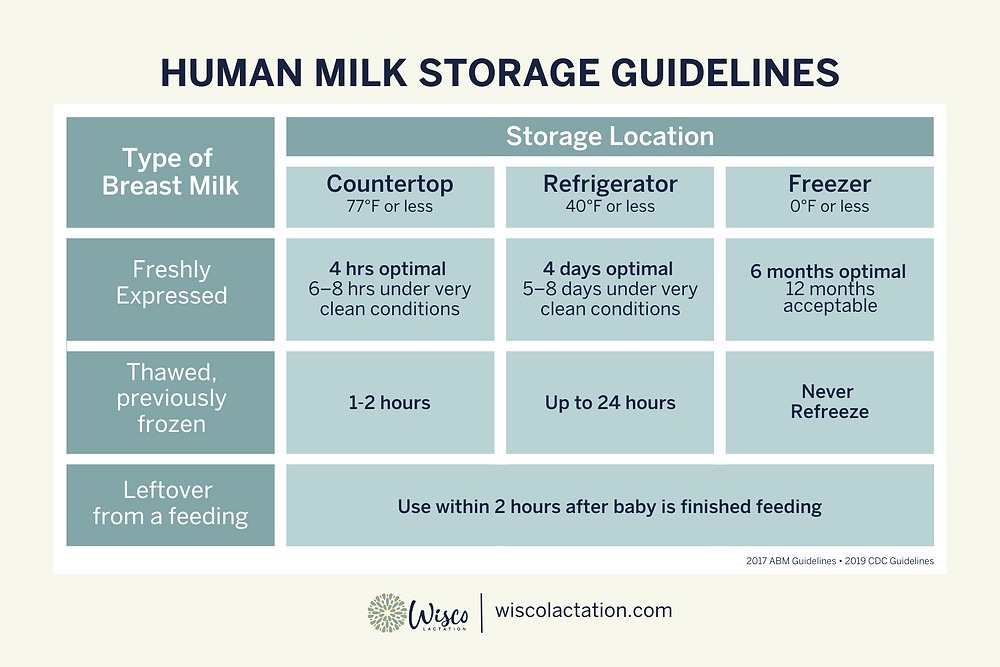
How long milk stays safe depends on its condition and on what happened to it after you pumped. Fresh, frozen, thawed and leftover milk each follow different rules. This page covers pumping at work, milk handling and feeding. For broader physiology, see the breastfeeding science overview.
These are the CDC's standard storage times for generally healthy, full-term infants. Babies born prematurely or with medical vulnerabilities may need individual instructions from their healthcare team.
| Milk condition | Storage or handling situation | CDC guidance |
|---|---|---|
| Freshly expressed | Room temperature of 77°F (25°C) or cooler | Up to 4 hours |
| Freshly expressed | Refrigerator at 40°F (4°C) or colder | Up to 4 days |
| Frozen | Freezer at 0°F (-18°C) or colder | About 6 months is best; up to 12 months is acceptable |
| During transport | Insulated cooler with frozen ice packs | Up to 24 hours |
| Thawed in refrigerator | After the milk is completely thawed | Use within 24 hours |
| Completely thawed | After thawing | Do not refreeze |
| Warmed or brought to room temperature | After reaching that state | Use within 2 hours |
| Left in a bottle after feeding | After the baby finishes feeding | Use within 2 hours, then discard |
The 24-hour cooler allowance applies only to an insulated cooler with frozen ice packs. If your setup doesn't meet those conditions, the allowance doesn't apply.
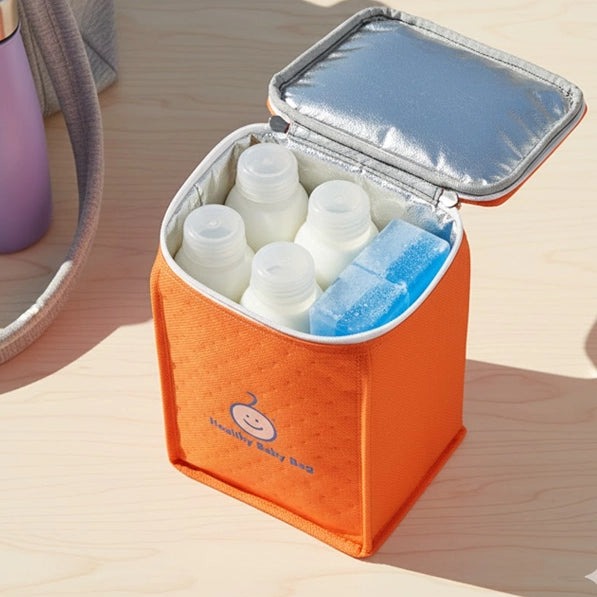
The CDC's breast milk storage and preparation guide also recommends freezing milk in smaller portions to reduce waste. Portions of 2 to 4 ounces, or about one feed, are a storage technique and don't set how much your baby must drink.
When freezing, leave about one inch of space at the top of the container because milk expands.
Label each container with the pumping date and, if your childcare provider requires it, the baby's name. At home, put the milk in the fridge or freezer right away, or use it within the times above.
Clean pump parts safely, including when there is no sink

The CDC recommends cleaning every pump part that touches breast milk after each use. After pumping, put the milk away first.
Then wash your hands, take apart the parts that touched milk, and wash them following CDC guidance and the manufacturer's instructions, using clean washing supplies. Let the parts dry completely in a clean spot before storing them covered. Sanitizing adds protection on top of cleaning and drying.
What if there is no sink near the pumping space?
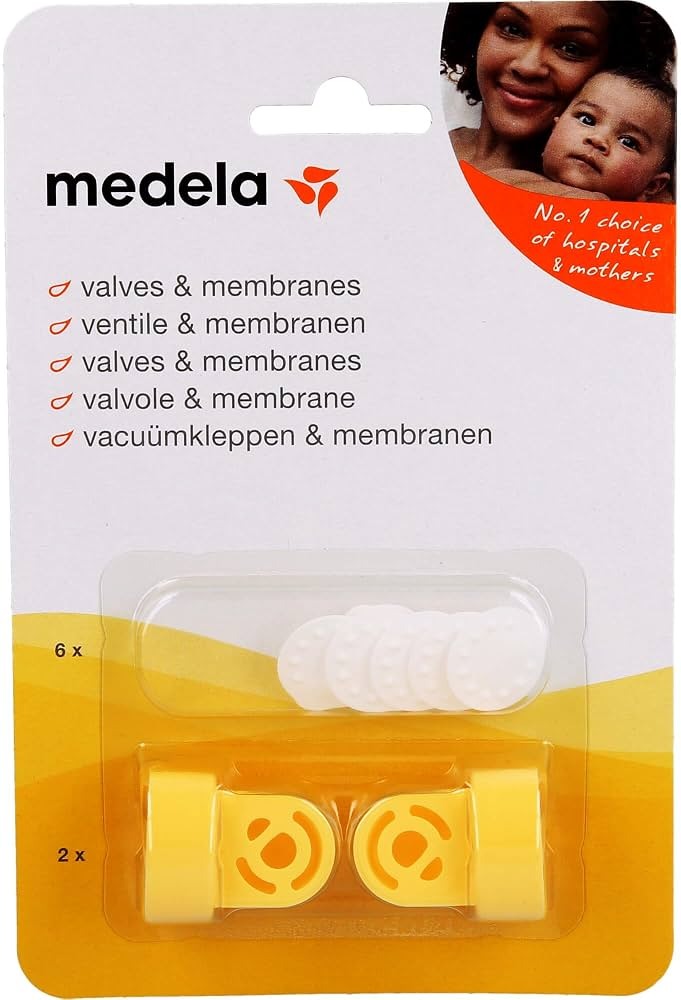
A practical, CDC-supported fix is to bring enough clean pump-part sets for your expected sessions and wash the used sets once you have somewhere to do it.
If you expect three pumping sessions, for example, pack three clean sets, provided compatible parts are available and washing at work isn't practical.
If you can't wash the parts thoroughly after a session, the CDC describes a stopgap: rinse off milk residue if you can, then seal the parts in a bag and refrigerate them for a few hours. If you can't rinse, wipe off residue with a clean disposable paper towel before refrigerating. Refrigeration slows bacterial growth but doesn't stop it, and research hasn't shown this method is as safe as washing.
For babies younger than two months, born prematurely or with weakened immune systems, the CDC stresses full cleaning after each use and sanitizing at least daily. Pump wipes don't replace washing with soap and water.
The CDC's breast pump hygiene guidance gives the full cleaning and sanitizing procedure. Check your manufacturer's instructions for restrictions on your specific parts.
Pack the full kit, then make a backup plan
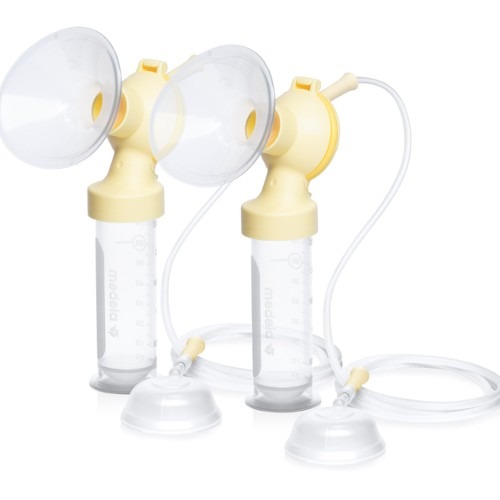
A pump bag can look packed and still be missing the one piece you need. The real test is whether you can assemble and run the pump, with clean collection and storage supplies ready.
- Pump and parts: Motor or manual pump, correct flanges, valves, membranes, connectors and any tubing your model needs.
- Power and collection: Charged battery, charger or an outlet, clean collection bottles or bags, caps and labels.
- Milk transport: Access to a refrigerator, or an insulated cooler with frozen ice packs when you need one.
- Cleaning and personal supplies: Clean spare part sets, washing supplies, a clean place for used equipment, and optionally a change of clothes or absorbent items.
The evening before work, assemble the pump as if you were about to pump. Check that the parts fit, the power works and the collection containers connect.
Plan a backup for the one part you can't do without: hand-expression skills you already know, a clean manual pump, or compatible spare parts kept at work if you can. A backup only helps if it fits your equipment and you know how to use it safely. Not every family needs extra purchases.
When the workday goes wrong: a quick decision guide
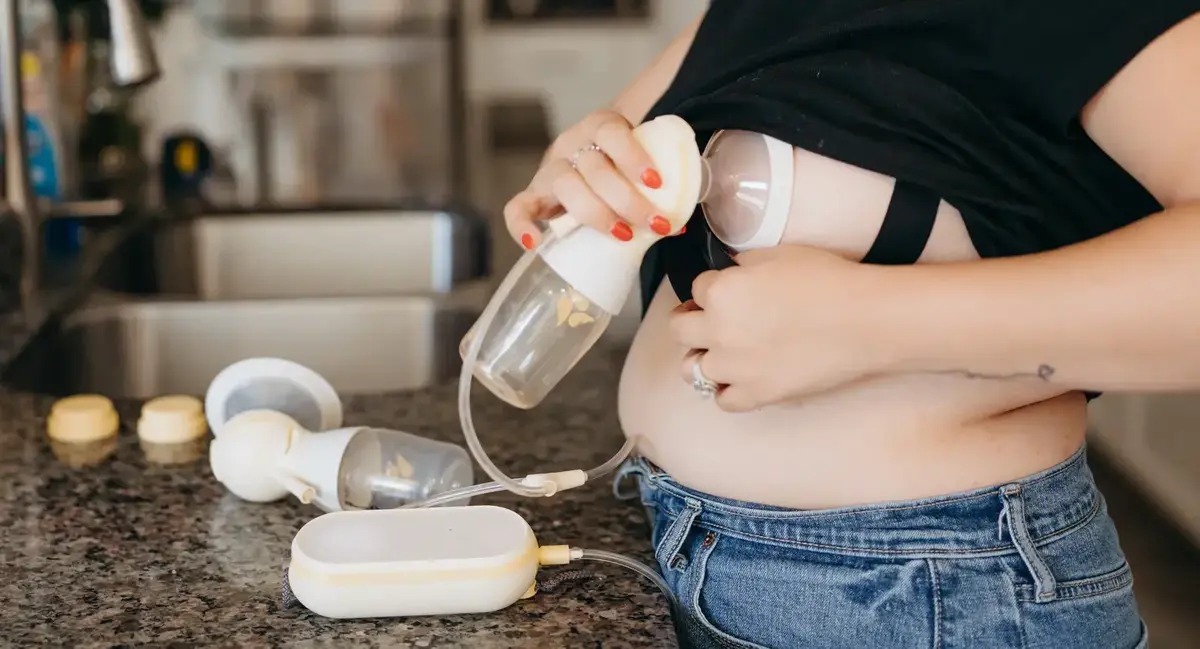
When something goes wrong, work out which part failed. A missed break, a missing part, spilled milk and a baby who won't feed call for different immediate decisions.
| What happened | First check | Next step | Get more help if |
|---|---|---|---|
| Meeting runs over your pumping break | Is there another window today, and what did your workplace agree to? | Set a replacement pumping time | You're denied access repeatedly or you're physically uncomfortable |
| Pump won't assemble | Which part is missing or broken? | Use your backup, if you packed one | Equipment or pumping trouble continues |
| Caregiver reports bottle refusal | What was offered and what the baby took | Compare notes using the trial log from your practice run | Refusal continues or you worry about intake |
| Pumped milk spills | Is there safely stored milk for the next feed? | Tell the caregiver how much safe milk is on hand and how the next feed will work | You keep worrying about whether your baby is getting enough |
| You're unsure how milk was stored | How long it sat, what state it was in and at what temperature | Check the CDC time limits in the storage table above. Don't guess. | Your baby is medically vulnerable or the safety question stays open |
| Privacy keeps failing | What was agreed and what you actually got | Write down the specific problem and ask your workplace to fix it | Your rights are disputed or access problems continue |
If two things fail at once, tell your caregiver which feed is affected while you sort out the pump or workplace problem. That stops an equipment delay from becoming a communication delay.
Know when to adjust the plan or seek help

If your baby's needs, your health or your workplace make this plan unworkable, change it with support. Combination feeding, or shifting your feeding goals, is a legitimate family choice. Here is who to contact:
- Persistent pumping problems, painful equipment fit or milk-expression concerns: a qualified lactation professional such as an IBCLC.
- Persistent bottle refusal, repeated feeding difficulties, or worries about intake or growth: a pediatric clinician or qualified lactation professional.
- A fever or concerning breast pain: a clinician.
- Pumping-break or privacy problems that go unresolved: your employer or HR first, then, if needed, the U.S. Department of Labor's Wage and Hour Division or a state labor agency.