
Surprising Breastfeeding Facts and What the Science Says
Garlic changes milk's odor. Melatonin runs higher in night milk. Breast milk alone doesn't give a baby enough vitamin D. Those findings sit alongside the practical CDC guidance on milk storage discussed below.
Golden colostrum, a cream layer in stored milk, and milk spraying when a baby pulls away mid-feed are all familiar breastfeeding experiences. The details that follow explain the research on those changes, garlic, day-and-night differences, vitamin D, and storage.
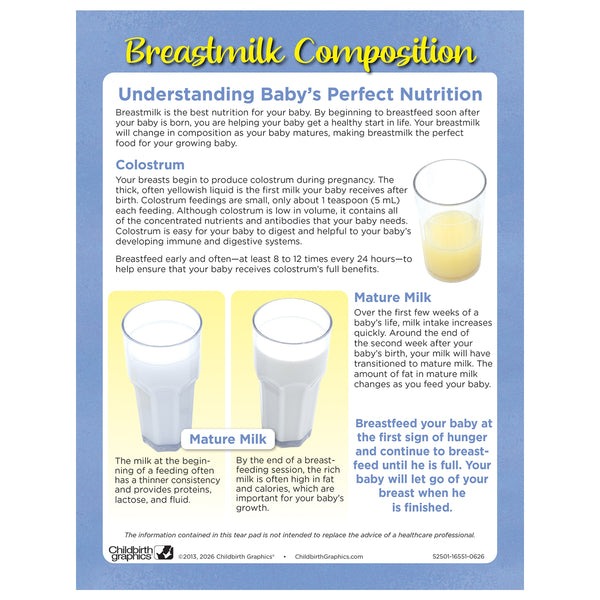
Colostrum, transitional milk and mature milk

Colostrum, the milk you produce in the first days after birth, looks thick and yellowish; its composition differs from later milk, and carotenoid pigments contribute to the golden color.
Transitional milk follows colostrum and gradually becomes mature milk. The names mark phases of one changing process.
| Milk stage | What changes | What you might notice |
|---|---|---|
| Colostrum | Early milk with a distinctive composition | Thicker and yellowish |
| Transitional milk | Production and composition shift as lactation becomes established | Changes in amount and appearance |
| Mature milk | Established milk production | Composition still varies with feeding conditions |
A small amount of yellow early milk can surprise you if you expected a full bottle of white milk. In a newborn, intake shows in swallowing, wet diapers and weight changes. The CDC describes 8 to 12 breastfeeds in 24 hours as common during the early newborn period.
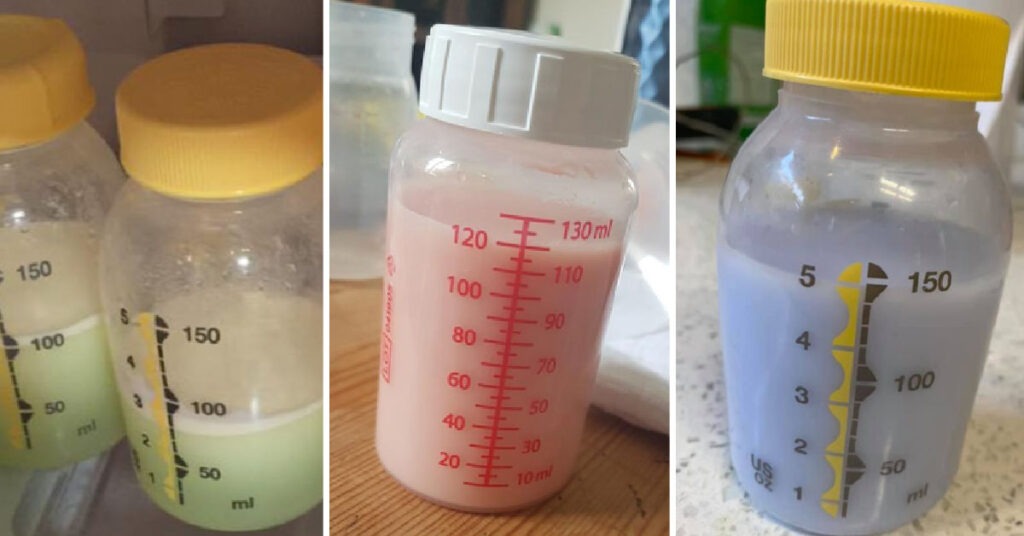
If those signs worry you, your baby's healthcare team can assess feeding and weight together. The color of one milk sample cannot tell you how much milk a baby gets.
Milk can spray when a baby unlatches
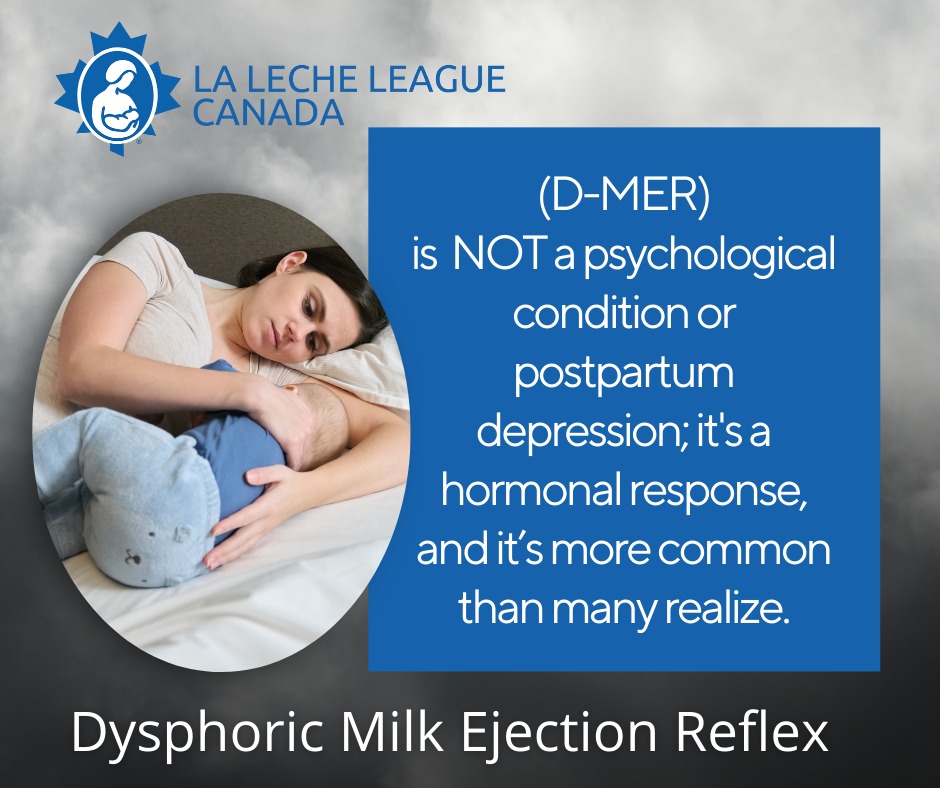
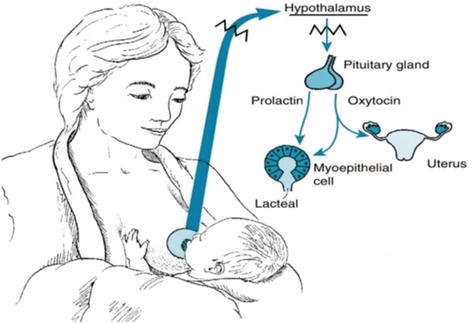
Oxytocin helps trigger the milk-ejection reflex, also called let-down. If milk is flowing when a baby suddenly unlatches, it sprays, and your shirt takes the hit.
Babies pick up odd feeding habits as they grow. One parent on r/breastfeeding listed hers:
My baby used to straight up slap my boobs, I would always equate to it slapping the wine bag lol
Then she moved on to taking a big gulp, then looking up at me and giving me a gummy smile...all while the milk leaked everywhere out of her mouth lol
We also had the phase of her sticking her hand in my mouth while nursing, had to have it in there the whole time
Now at 21 months she loves to nurse while in a downward dog position or having her feet right in my face lol
Or she will blow raspberries on my boobs and again make the milk go everywhere lol
When she is getting sleepy while nursing she will slowly stroke her hand on me, it's my absolute fav
I love every single thing lol
Occasional spraying doesn't point to oversupply or an unusually forceful let-down. Persistent pain, repeated choking, poor intake or ongoing feeding distress need assessment by a qualified infant-feeding professional.
A parent's dinner can change milk's flavor
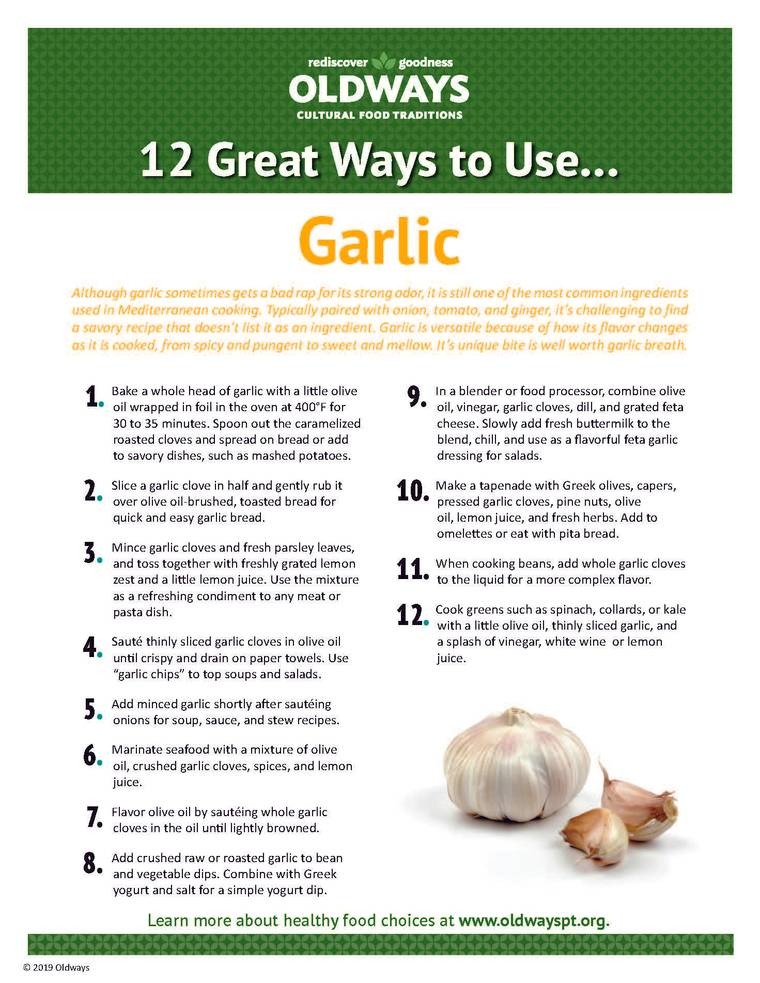
Garlic leaves a detectable trace in breast milk's odor. In an experiment published in Pediatrics, Julie Mennella and Gary Beauchamp tracked what happened after nursing mothers ate garlic and how their infants responded.
One hour after the mothers ate garlic, their milk smelled the same. At two hours the garlic smell peaked, then faded. When the milk smelled of garlic, babies stayed on longer and sucked more.
The 1991 garlic-flavor experiment in Pediatrics documented a temporary sensory change.
A 2019 systematic review examined evidence that some maternal food flavors pass into milk. Research on whether this exposure influences a child's later food preferences remains limited.
Foremilk and hindmilk blend gradually

Foremilk and hindmilk describe the gradual variation in fat concentration during a feed. Breast fullness and feeding conditions shape that variation. An early sample can look pale and a later one creamier.
Milk changes from day to night
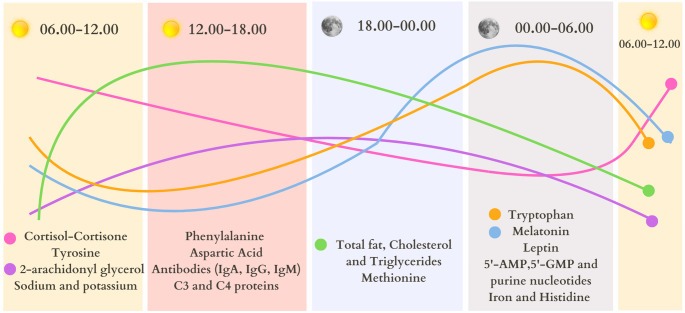
Some components of breast milk follow daily biological rhythms. A 2026 review by Aksu and Arslan summarized research on melatonin, tryptophan and cortisol across the day.
| Component | Pattern described |
|---|---|
| Melatonin | Higher at night |
| Tryptophan | Higher at night |
| Cortisol | Higher during the day |
These differences suggest milk composition follows the mother's body clock. If you pump, you may wonder whether a bottle expressed at night will help your baby sleep.
These measurements don't show that feeding night-pumped milk at night helps a baby sleep.
Breast milk and infections
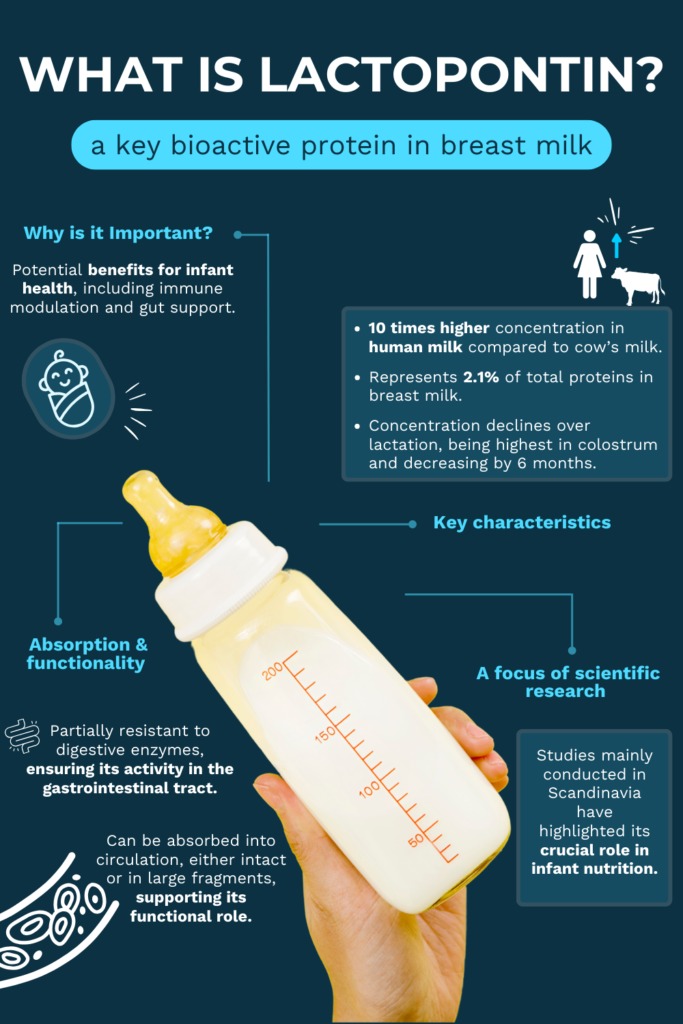
Human milk contains immunoglobulins and other immune components. Researchers also study how breastfeeding is associated with health outcomes in groups of infants and children.
A 2025 systematic review published in Pediatrics combined 29 earlier systematic reviews and 145 additional primary studies of breastfeeding and health outcomes among term infants in developed countries.
The authors reported associations between more breastfeeding and lower risks of several outcomes, including moderate to severe respiratory infections, gastrointestinal infections and otitis media, or ear infections. Most of the studies were observational, so they show associations only.
The review found no single breastfeeding duration that was best for every outcome studied. Evidence strength differs across the named infections.
Breast milk alone doesn't supply enough vitamin D

Breast milk's vitamin D content is too low to meet a breastfed infant's needs. Vitamin D matters for normal bone development and calcium metabolism.
US pediatric guidance recommends 400 international units (IU) of vitamin D daily, beginning shortly after birth, for exclusively breastfed infants and partially breastfed infants who consume less than 32 fluid ounces of infant formula per day. Your child's healthcare professional can confirm the plan.
Milk retains nutrients after six months
Milk produced after six months is still nutritious. In a retrospective study of Dutch milk-bank donors, researchers analyzed 820 samples from 86 donors, collected between five weeks and 28 months postpartum.
Carbohydrate concentrations stayed fairly stable across much of the period, while protein levels changed and later samples had higher fat concentration and energy density. Donors were a selected group, and samples from later months were few.
The CDC's breastfeeding guidance recommends exclusive breastfeeding for about six months, followed by appropriate complementary foods alongside continued breastfeeding.
Separated milk and safe storage times
Expressed milk separates into a creamier fat layer as it stands. That layer reflects the milk's fat content. Whether the milk is safe to feed depends on its handling history, temperature and time in storage.
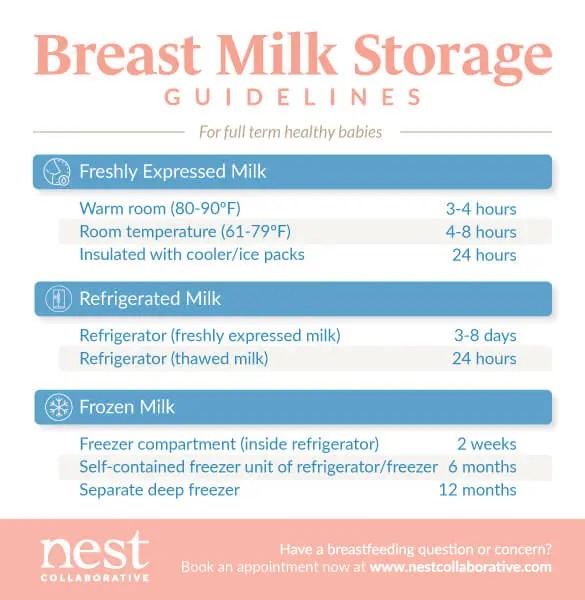
For healthy, full-term infants in standard home-use conditions, the CDC gives these limits:
| Milk condition | CDC guidance |
|---|---|
| Freshly expressed, at room temperature | Up to 4 hours at 77°F (25°C) or colder |
| Freshly expressed, refrigerated at 40°F (4°C) or colder | Up to 4 days |
| Frozen at 0°F (−18°C) or colder | About 6 months is best; up to 12 months acceptable |
| Completely thawed in a refrigerator | Use within 24 hours, counted from complete thawing |
| Warmed or brought to room temperature | Use within 2 hours |
| Milk left in the bottle after a feeding | Use within 2 hours after the baby finishes feeding, then discard. This differs from untouched fresh milk. |
The CDC's milk-storage guidance also says never to refreeze fully thawed milk or heat breast milk in a microwave.

A soapy or metallic smell doesn't tell you the cause or whether the milk is safe.
For the logistics of pumping during the workday, consult the breastfeeding-at-work planning guide for logistics.