
History of Hysterectomy: From Risky Surgery to Questions of Consent
The history of hysterectomy is not simply a march toward safer surgery. Surgical techniques, medical judgment, and patients' ability to consent developed along different paths. Each historical claim needs to distinguish the operation performed, the evidence for it, and whether the patient had a choice; when the account leaves those details unclear, the original record matters.
What a hysterectomy removes, and why the distinction matters
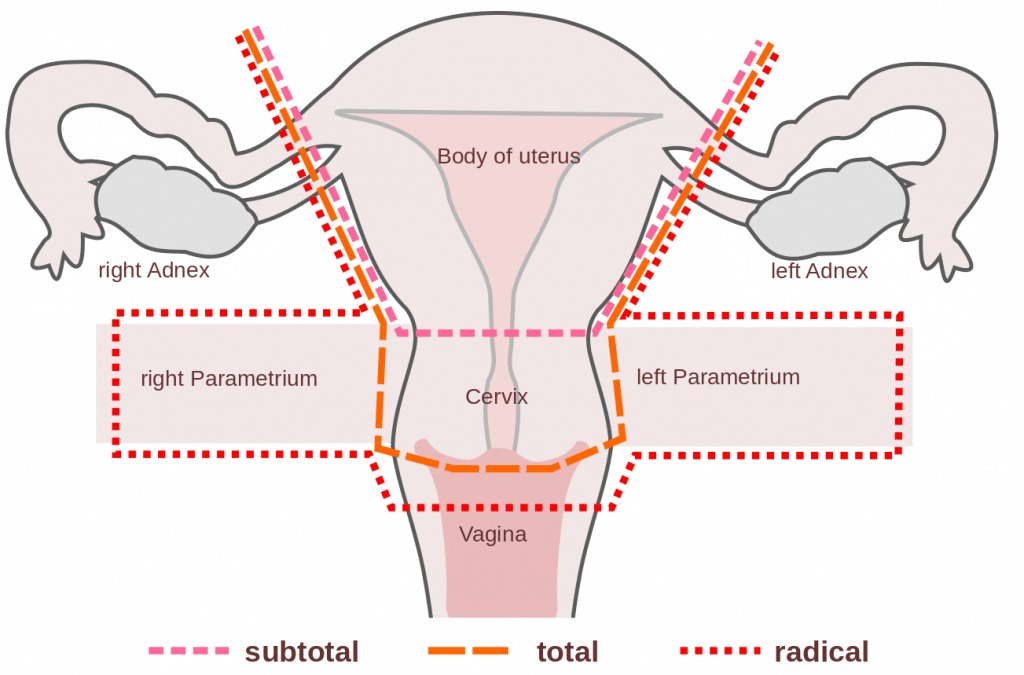
A hysterectomy removes the uterus. The particular operation matters when assessing early surgical successes or procedures performed without patient consent.
A total hysterectomy removes the uterus and cervix; a subtotal, or supracervical, operation leaves the cervix in place. Radical hysterectomy is a more extensive procedure historically linked to certain cancers. An oophorectomy removes one or both ovaries, and surgeons may do it separately or together with a hysterectomy. Removing the uterus does not automatically mean removing the ovaries.
The surgical route is a separate matter. An abdominal hysterectomy uses an abdominal incision, a vaginal hysterectomy reaches the uterus through the vagina, and laparoscopic methods use instruments passed through small incisions. Route describes how surgeons operate. Total and subtotal describe what tissue comes out.
Sterilization can also mean other procedures, such as operations on the fallopian tubes. So when a source says women were sterilized, it may not say which operation was done.
The first hysterectomies: Why historians give different dates
No single date answers “When was the first hysterectomy?” An ancient description, an attempted abdominal operation, a surviving patient, and a deliberately planned procedure are separate milestones.
Ancient medical writing already mentioned uterine removal, in accounts tied to Soranus of Ephesus. Nothing suggests patients routinely survived it.
| Date | Person or record | Milestone | Note |
|---|---|---|---|
| Antiquity | Soranus of Ephesus | Early descriptions of uterine removal | Recorded medical discussion |
| 1813 | Conrad Langenbeck | Planned vaginal hysterectomy; patient survived | Route, intention, and outcome |
| 1843 | Charles Clay, Manchester | Unsuccessful abdominal operation | Reported attempt; patient died |
| 1853 | Ellis Burnham, per C. Sutton | Surviving abdominal hysterectomy | Survival, by Sutton's criteria |
| 1855 (Mettler); August 1853 (Martin) | Gilman Kimball | Deliberately planned abdominal supracervical operation; Mettler reports survival in 1855 | Sources give different dates |
| 1863 | Clay and Köberle, per Mettler | Reported abdominal operations | Accounts of Clay's outcome conflict |
C. Sutton’s 1997 historical review identifies the 1843 Clay attempt and credits Ellis Burnham with a surviving abdominal case in 1853. Mettler and colleagues date Kimball's deliberately planned, surviving operation to 1855, while Franklin H. Martin's 1896 account places a planned Kimball operation for fibroids in August 1853. Mettler's review also gives conflicting accounts of whether Clay's patient survived an 1863 operation.
Burnham's 1853 case took place in Lowell, Massachusetts. Sutton's account also records that the diagnosis prompting the operation was mistaken.
When you meet a claimed “first,” ask what it actually claims: the first description, attempt, planned operation, surviving patient, or use of a particular surgical route. The label decides what the date can establish.
How hysterectomy became safer

Early surgeons faced several separate dangers. Major bleeding threatened life during the operation, and infection, peritonitis, and sepsis could follow afterward. Safer practice came from solving each one.
| Historical problem | Development | Specific contribution |
|---|---|---|
| Pain and the conditions of operating | Anesthesia | Allowed surgery under more controlled conditions |
| Infection and peritonitis | Antisepsis and better infection control | Addressed infectious complications |
| Severe blood loss | Hemostasis and transfusion practices | Improved control of, and response to, hemorrhage |
| Problems with remaining tissue and surgical stumps | Changes in operative technique | Refined vessel control, tissue handling, and completion of the operation |

Historical reviews also describe a move from subtotal toward total procedures and refinements of abdominal and vaginal techniques. Surgery grew safer over decades as these advances accumulated. No single mortality figure covers every place and period.
Why hysterectomy expanded in the United States
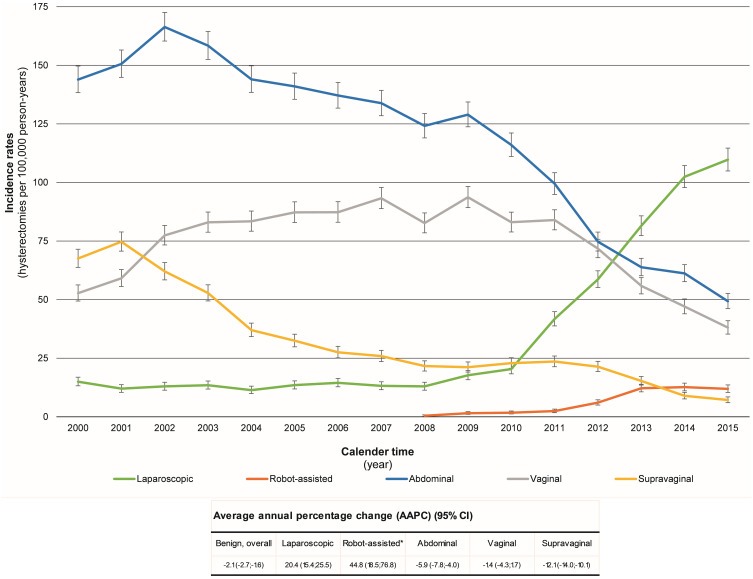
As surgery became more survivable, hysterectomy moved from exceptional operations to established practice. Benign uterine growths, especially fibroids, were a main reason surgeons considered removing the uterus. Cancer surgery and changing professional judgments about indications played a part too. Being able to operate did not settle whether every proposed operation was justified, and decisions about bleeding, fibroids, and other uterine disease reflected the clinical options and professional assumptions of their era.
A 2020 US historical-incidence reconstruction estimated age-standardized annual hysterectomy rates for women ages 18 to 64, per 1,000 women in that population:
| Reference year | Annual rate per 1,000 women ages 18 to 64 | Type of figure |
|---|---|---|
| 1935 | 2.4 | Reconstructed historical estimate |
| 1975 | 10.6 | Estimated historical peak |
| 2035 | 3.9 | Projection from the 2020 model |
The 1935 and 1975 values were reconstructed from historical literature, inpatient data and statistical methods, and the 2035 figure was a forecast. Annual incidence counts operations in a given year against the defined population, so it is not the share of women who ever had a hysterectomy.

The study also shows a change in the type of operation: subtotal hysterectomies made up less than 12% of procedures from 1970 onward. That is a shift in the mix of operations, separate from the rise in annual incidence shown in the table.
Consent and reproductive coercion in American medical history
The ability to perform a hysterectomy and the authority to decide whether it happened developed inside unequal legal and medical institutions. Three records show what consent looked like in practice. The bodily-autonomy framework explores the relationship between hysterectomy, consent, and bodily integrity.
| Record | Documented event | What it establishes |
|---|---|---|
| Schloendorff, 1914 | Legal dispute after a patient alleged she refused fibroid-tumor surgery | Influential reasoning on consent and bodily autonomy |
| Fannie Lou Hamer, 1961 | Hysterectomy performed without her informed knowledge or consent | An individual case of reproductive injustice |
| GAO investigation, 1976 | Review of sterilization practice in four Indian Health Service areas | Documented consent-regulation failures in the reviewed settings |
A right articulated in court
Mary E. Schloendorff alleged that she had agreed to an examination under ether while refusing an operation. During the examination, surgeons removed a fibroid tumor. In Schloendorff v. Society of New York Hospital, decided in 1914, New York's highest court took those events as alleged for purposes of its legal reasoning.
The opinion became influential for stating an adult patient's right to determine what happens to their body. Schloendorff still lost her case against the hospital under the legal theory applied. The opinion describes removal of a fibroid tumor without saying the uterus was removed, so it serves as a surgical-consent precedent.
Fannie Lou Hamer's unwanted operation
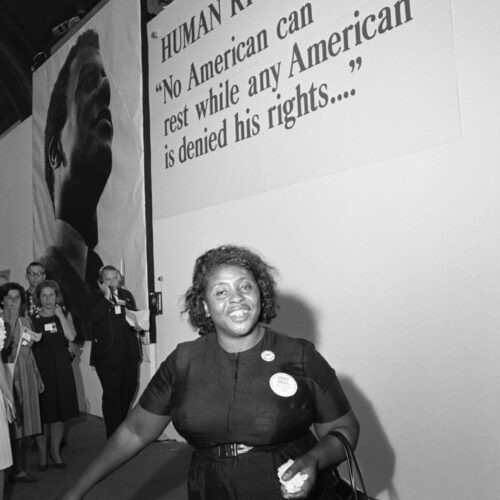
In 1961, Fannie Lou Hamer underwent a hysterectomy without her informed knowledge or consent while hospitalized in Mississippi for a different, minor procedure, according to PBS American Experience. Hamer later became an influential civil-rights organizer who confronted the exclusion of Black Americans from political participation. Her case is part of the wider record of racial and reproductive injustice.
A federal investigation into sterilization consent
In 1976 the Government Accountability Office reported on permanent sterilization procedures in four Indian Health Service areas: Aberdeen, Albuquerque, Oklahoma City, and Phoenix. The GAO investigation found those areas generally out of compliance with IHS regulations, and most of the consent forms examined failed to meet the requirements.
The report covered sterilization procedures, a broader category than hysterectomy alone. Its findings document deficiencies in informed-consent practice within the areas reviewed.
Wanted surgery, denied care, and patient autonomy
The history of reproductive choice also includes women who wanted a hysterectomy and met barriers to getting one. Our Bodies Ourselves, in its account of US hysterectomy history, covers denied procedures alongside unwanted surgery and discusses medical paternalism, racism, and women's reproductive decision-making together. Its public summary also names barriers within medical systems and insurance coverage for people seeking the procedure.
The two situations involved different uses of clinical authority. One patient refused an operation and could be overridden. Another sought relief from severe symptoms and found that a clinician's view about her future childbearing outweighed her wishes. In both, the question was whether the patient had a real voice in the decision.

Family expectations can complicate choice even when the surgery is wanted. One r/hysterectomy poster described a family reaction, including a story from an earlier generation:
I am 27 and had my hysterectomy back in April. Last January, I had my tubes removed because I was terrified of becoming pregnant. It was getting to the point between that and side effects of my birth control that I was having extreme stress and anxiety that was crippling me physically and mentally. I have had terrible periods my entire life that have made my life difficult, and I cannot imagine passing that down to a child.
If I feel the need to have children, I will adopt or foster, or house study abroad students. I would much prefer raising a half-grown child than a baby, no offense lol.
I did have a rough time this past December as my cousin decided to use our family Christmas get-together to announce she was pregnant. The way our family fawned over her hurt, because I knew I would never have that opportunity. However, that was less about me wanting to have a child and more of me not fitting into that mold or idea of what I should be doing. Thankfully, no one in my family ever told me I was making a bad deicison or that I would regret it.
Every single woman in my family (including my aunt) said "finally, you have been through a lot" and offered to take care of me if I needed it.
My great grandmother had a very hard time with multiple miscarriages and had a hysterectomy before 30. My grandmother told me she supported my choice because I should never have to go through what her mom went through. One of my ovaries has a lot of cysts on it and is bigger than the other- it makes me wonder if I would even be able to get pregnant. My mom pushed for my doctor to remove it, but he opted not to since it isn't causing me any issues.
The great-grandmother's operation reaches us secondhand, through the narrator's family. The narrator's own decision is firsthand.
Laparoscopy and later surgical approaches

Harry Reich performed a laparoscopic hysterectomy in 1988 and reported it in 1989, which is why accounts give two dates for the milestone. Laparoscopic and robotic-assisted approaches later gave surgeons more ways to remove the uterus. They extended the surgical chronology but settled nothing about clinical judgment or patient consent.
A patient's account of sudden surgery

Another poster described a sudden operation, relief from symptoms, and doubts about the future:
I had to get an emergency hysterectomy after having a myomectomy 8 months prior. I was in excruciating pain, passing out during my period and could barely walk—-turns out I had stage 4 endo, fibroids grew back, cysts and adeno. So while I don’t regret the hysterectomy and no longer having periods, I wonder if I’ll regret not being able to have kids especially since the surgery was more sudden and not planned. I’m 29 and I’ve never not wanted kids I just thought I’d have them later like 30’s.
Edit:OMG! I wasn’t expecting so many responses but thank you all so much for giving me a new perspective. It’s honestly so hard what we have to go through just by being a woman and how much we have to advocate for ourselves. I’m glad that we are all pain free now and can enjoy our life. Thank you all again!!!
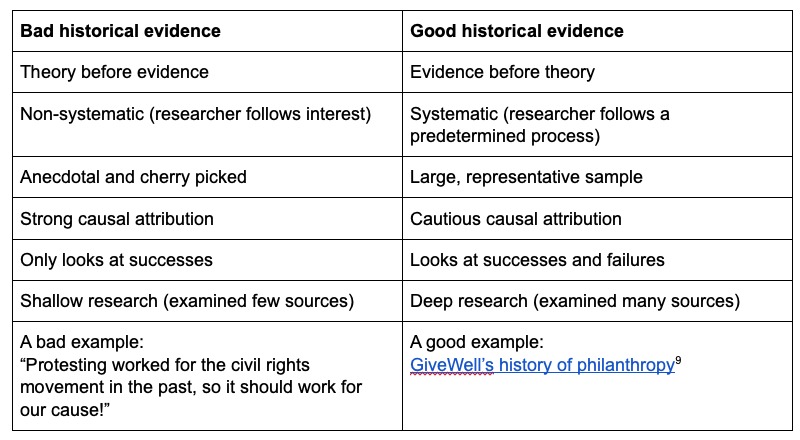
The poster describes a personal future disrupted by an operation. A first-person report like this shows what choice meant to one patient. Conclusions about nineteenth-century outcomes or national prevalence need their own records.