
Negging Examples: How to Spot a Put-Down Disguised as Flirting
Negging is a put-down dressed up as a compliment. Here is a made-up example: “You're surprisingly smart for someone with your job.” The supposed compliment carries a judgment inside it. How often it happens and how the person reacts when you object tell you more than any single line does.
What negging means and what it sounds like
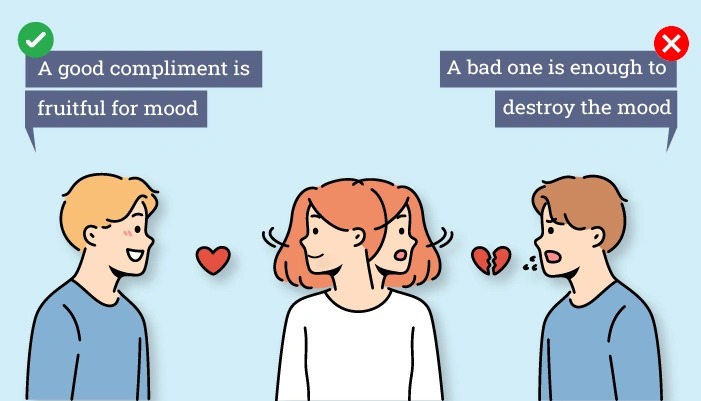
Negging blends criticism with the appearance of praise, flirting, or teasing. It comes from pickup-artist dating tactics. On the surface it offers approval, yet it leaves you feeling judged on your looks, your intelligence, or your worth. In a 2017 study by Green, Kukan, and Tully, 308 people evaluated hypothetical pickup-line scenarios. They perceived negging variants as more harmful than control lines, and the evolved version as more likely to escalate than the original. The scenarios were imagined, so the findings say nothing about real relationship outcomes.
Negging examples in real conversations: compliments, comparisons, and “just kidding”

A typical negging line gives praise and takes it back in the same breath. Comparisons, rankings, and jokes at your expense work the same way. A blunt insult or one awkward joke belongs to a different category. Negging, body-image pressure, and appearance comparisons also overlap with the discussion of unrealistic beauty standards.
| What was said | What it does | Verdict |
|---|---|---|
| “People would be so confused if they see us together, they'd think you have a great personality” | The praise sets up an unflattering comparison about attraction. | Backhanded compliment; negging |
| He joked about being “2 levels above” his date and said the date needed to prove themselves, then added “JK.” | Approval becomes something to earn from someone claiming higher status. | Status put-down disguised as a joke; negging |
| “where is that joke from?” after someone makes a joke | It can be curiosity, or a hint that you couldn't have thought of it. | Ambiguous |
| “trash human” after a comparison involving a pasta box | No compliment hides in the final remark. | Direct insult |
| After a water spill, a date joked about having gone to college but being unable to drink water. | It mocks a small mistake. | Clumsy or belittling joke |
Looking back on an ex, one person listed remarks they couldn't classify.
I’m thinking about some of my ex’s comments and trying to understand whether it was him putting me down or I was too sensitive.
- One time I was telling him about my hairdresser and used the word “my darling” in my native language which my ex didn’t speak. We use these words not just romantically but affectionately in other contexts. My ex asked me to tell him more about the hairdresser. I told him I go to him with my mum. He laughed and said that the last time he went to the hairdresser with his mum was when he was “this big” and indicated a really short person (ie when he was a kid) - I would make jokes and he would ask me “where is that joke from?”, implying it wasn’t me who thought of them
- We were once walking together and passed some trash cans. He said “this is you”, then explained there’s a fusili pasta box on the floor, and it was me because my hair is curly. I told him I thought he was saying I was trash. He said, well yeah, “trash human” - I expressed to him how much I loved dancing and partying with my friends and he said several times it was difficult for him to imagine me dancing
The fusilli box sets up the hair comparison. “Trash human” turns that odd joke into a plain personal insult.
The other remarks are harder to read; asking where a joke came from can be innocent curiosity. Next to comments that doubt your abilities and interests, it stings.
Negging in texts and dating apps
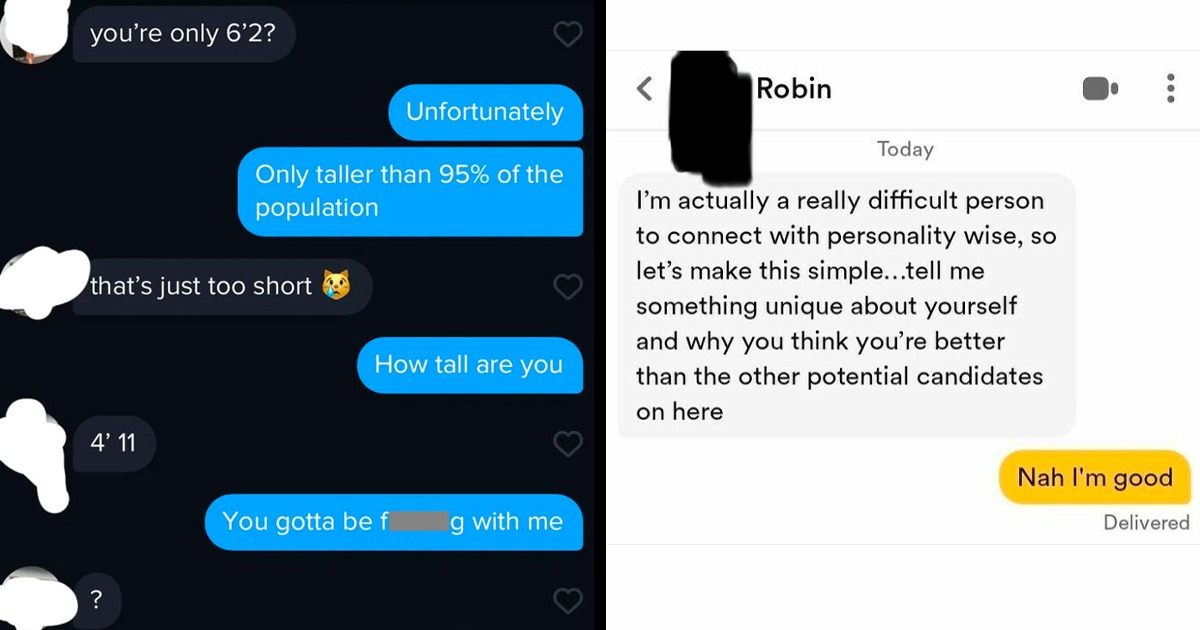
Dating apps produce plainly condescending remarks even without the compliment that defines classic negging.
One conversation turned after a routine question about travel.
So 41F, was in a 16 yr relationship that ended 5 yrs ago. I've been dating for the last 2 years, with mixed results. I'd just started talking to a guy(43M) that matched with me on OLD and things seemed ok until I asked him a simple question about traveling and whether he's ever been to my city.
The guy responds by saying, "All due respect, but that's a dumb question, of course, I travel a lot! LOL." Like....huh? How tf am I supposed to know that, dude? And, despite the fact that I'd been enjoying our chat up til that moment, I instantly unmatched with him.
Anyway, point of this post is to find out if others have experienced an uptick in that old, corny "negging" tactic that was popularized some years ago by some dbag whose name I can't remember (blessedly)? This is easily the 3rd time in as many months that I've matched with someone, and then had to unmatch with them due to an obvious case of negging. The difference this time is that I chose not to entertain it further or engage in what seems like a shitty power tactic.
The “LOL” puts a joking frame on a reply that calls an ordinary question dumb. The two had no shared history that would make that tone feel mutual.
Is it negging, mutual teasing, an awkward joke, or ordinary rudeness?
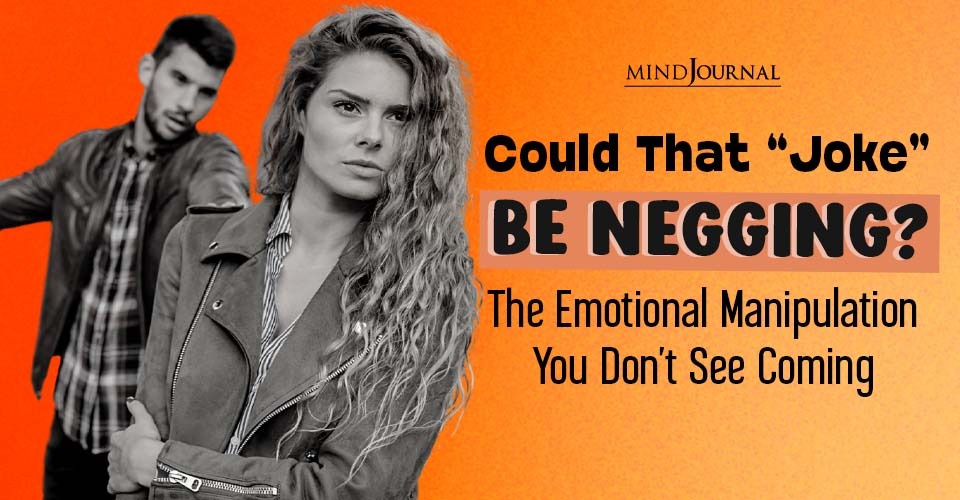
Three things separate these cases: whether the humor is mutual, whether the same put-downs recur, and what happens after someone says a remark hurts. The same line can be harmless between friends and sting on a first date.
| Type of exchange | Context to consider | What happens after an objection |
|---|---|---|
| Mutual teasing | Both people enjoy it, and neither has to put up with an unwanted topic. | The person hears the objection and changes course. |
| Awkward joke | One poorly judged comment, with no repeated pattern. | The person may clarify, apologize, or stop. |
| Direct rudeness | A clear insult or dismissal. The wording itself shows contempt. | The wording already did the damage. |
| Negging pattern | Repeated praise mixed with criticism, status comparisons, or put-downs framed as flirting. | The objection gets brushed off and the put-downs continue. |
love is respect covers how communication and boundaries help you judge disrespectful behavior in relationships.

In another account, early compliments gave way to criticism defended as banter.
I (23F) have noticed this happening after talking to guys, now mind you I don't have much dating experience, so I'm not sure if this is supposed to be flirting? This has happened to me two times already. At the beginning, they seem to be very nice and would compliment me a lot, which is fine. I tend to get compliments from my surroundings, so I don't take it at the beginning very seriously.
After a while when they get comfortable they start to pick on small things that I personally haven't even noticed myself. One time at the beginning of the relationship, I was very confident, but afterwards I started disliking my appearance, which was never really the case.
One time a guy told me it's to humble me and that he wants a bit of a banter, so he would say things: "You aren't as pretty as you think you are" or "People would be so confused if they see us together, they'd think you have a great personality" or that "I'm only with you because of your personality". When I talked about how I didn't appreciate his comments, he said maybe I wasn't confident after all.
I mean, even if it's a joke, it still somehow made me feel bad? I know relationships isn't just about complimenting each other, but is it normal to just constantly roast one another once the relationship is more stable?
The telling moment comes after she objects. He questions her confidence and never answers her complaint about the comments.
Gaslighting is a separate concept: trying to make someone doubt their own perception or memory.
How to respond when a comment crosses the line

Pick a response based on how far the remark crossed the line, whether you want to keep talking, and whether a direct conversation feels safe.
| Situation | Possible action | Words you could use |
|---|---|---|
| You genuinely don't know what was meant. | Clarify. | “What did you mean by that?” |
| The same kind of remark hurts or repeats. | State a boundary, if safe. | “I don't like comments about my appearance. Please stop.” |
| You don't want more contact. | End the exchange. | “I don't want to continue this conversation.” |
| Pressure, intimidation, or fear makes the interaction unsafe. | Get out safely and find support. | None needed. |
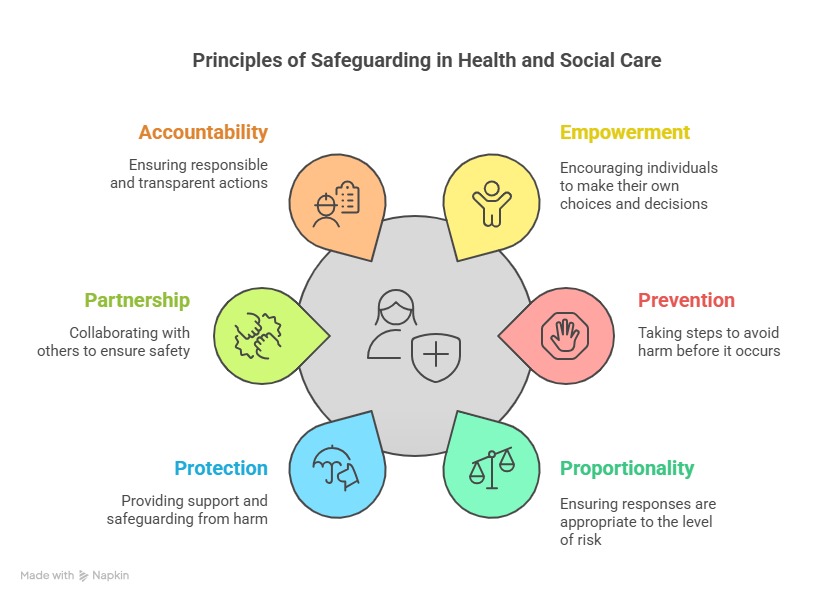
Once you state a boundary, watch what the person does next. They might drop the remark, or they might keep going and mock your objection. You can judge that behavior without persuading them to accept a label for it.
When the problem goes beyond negging: patterns, pressure, and safety
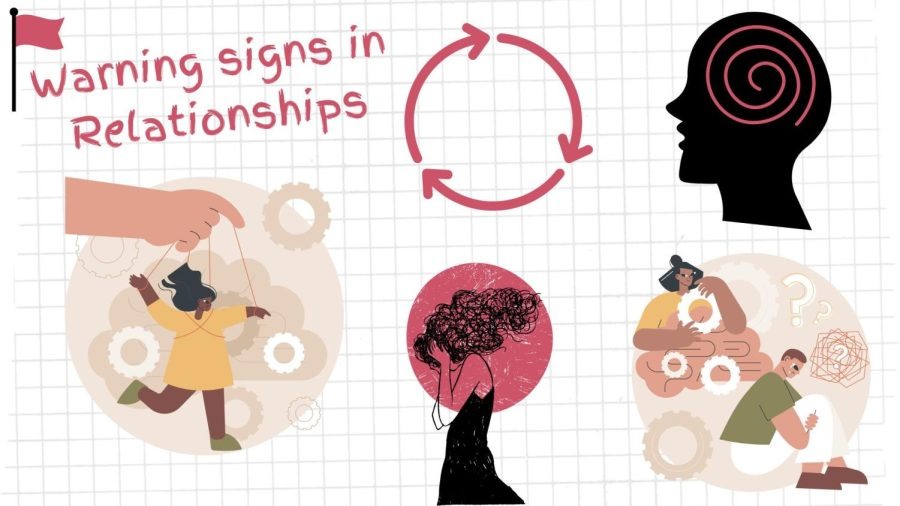
Repeated humiliation, pressure after a refusal, intimidation, and controlling behavior go beyond an uncomfortable dating joke. The CDC's definition of psychological aggression covers communication meant to harm a partner emotionally or mentally, or to exert control, within intimate partner violence.
On a first date, one person faced pressure to go home together, refused clearly, and heard afterward that it was all a joke.
He then randomly asked me if we would be heading back to my place after this. I was shocked and said I am not comfortable with that. He then said "So you come all dressed up wearing a dress and make up, but don't want to take me home?" adding "Common, are you just here to waste my time?", "Is that what you do with all the guys you meet online? Just waste their time?".
At that point, I felt like I was going to cry and said to him that I don't feel comfortable and just walked out. It was my first time just walking out on a date. I got home and could not stop crying.
He texted me a few minutes after I left "I am confused? I was just joking". I replied that I was quite hurt by his comments and said good luck to him, then unmatched. I was respectful and polite to him the whole time and I don't get why someone would treat me like this? I had heard about negging but never experienced anything like this before. The worst part was that he was making these comments as if it was a joke, with a smile on his face, so I am left feeling like maybe I just over-reacted.
The detail that matters is the pressure after her refusal. His “just joking” text did not undo it.
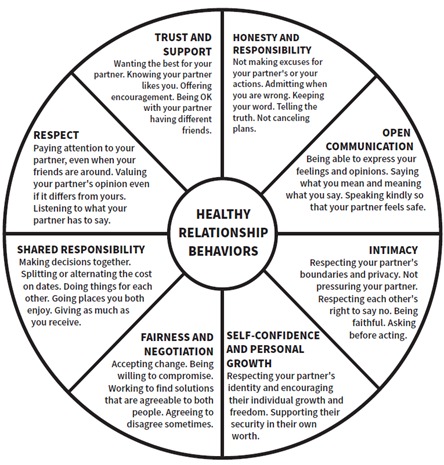
If put-downs come with threats, coercion, control, or fear, leave safely and get support. US readers worried about emotionally abusive behavior can contact the National Domestic Violence Hotline at 800-799-SAFE (7233), by texting START to 88788, or through chat on its website.