
What Is the White Savior Complex? Meaning, Examples, and the Difference Between Helping and Taking Over
Helping across racial or national lines is not automatically white saviorism. The white savior complex describes a pattern in which a white helper or a white-centered story casts people of color as needing rescue while diminishing their agency. The defining questions concern whose needs set the agenda, who has decision-making power, and who bears responsibility for the outcome.
What does “white savior complex” mean?

White saviorism describes paternalistic helping relationships and rescue stories shaped by racial inequalities. In these narratives, a white individual or white-centered institution becomes the central actor, while the people receiving help are portrayed as passive, less knowledgeable, or reliant on outside leadership.
It can describe how a person behaves, how a program distributes power, or how a film or charity appeal presents its subjects. A donor can fund a valuable project even when the fundraising campaign credits an outsider for work local people organized. The intervention and its public story are separate questions.
The term draws on a long history of colonial paternalism. In 2012, writer Teju Cole put the phrase White-Savior Industrial Complex into wide discussion with an essay about humanitarian politics and the appeal of feeling like a rescuer.
White savior complex is a social critique with no clinical diagnostic status; it examines conduct and institutions and makes no claim about anyone's private motives.
How power shapes a helping relationship
Power shows up in routine decisions: whose definition of the problem counts, who approves spending, and who can stop a plan. Friendly language says nothing about who holds that power.
In Maïka Sondarjee's 2025 analysis of the Kony 2012 campaign by Invisible Children, she identified three features of white-savior narratives: the central agency of white actors, the loss of social and economic complexity, and an imperative to intervene.
Take two projects with identical funding. One organization sets the goals abroad and invites local residents to join its plan. The other gives real authority to local partners, including the power to revise priorities or reject the proposed work.
| Question | Savior-centered arrangement | Accountable collaboration |
|---|---|---|
| Who defines the need? | Outsiders assume what people require | People affected identify or jointly set priorities |
| Who directs resources? | Helper chooses the strategy and controls spending | Local partners hold meaningful decision authority |
| Whose expertise counts? | Visiting helper takes precedence | Relevant professional and community knowledge guides work |
| Whose story gets told? | Publicity makes the outsider the hero | Participants shape how their contributions appear |
| Who can challenge results? | Success is defined by the helper's experience | People affected can contest decisions and demand changes |
A partnership can call itself community-led while keeping outside control of its budget or priorities.
A 2024 study of the Just Future partnership combined a literature review with 15 interviews. It found that donor requirements favored larger local NGOs and burdened grassroots organizations, even in an effort meant to shift power locally.
Real-world examples: volunteering, classrooms, and publicity
Volunteering can be a chance to contribute useful skills or a trip organized around the visitor. The difference shows in the assignment, supervision, continuity, and local participation.
A prospective volunteer asked r/volunteer for advice after a friend called a planned six-week animal-sanctuary placement a white savior move. The trip had not yet happened.
After looking into it for a bit I thought it was something I was interested in doing and my idea was 6 weeks (due to budget etc) at this animal sanctuary helping to take care of the animals as well as with their research among other things.
When talking to my friend about this she looked really awkward and uncomfortable and when I later asked her why she seemed so anti me doing something like this she said that it seemed “a bit white savioury”, and when I asked her to elaborate she said “well you know, white person goes to Africa to save the animals…”.
Since this I have tried to do some reading into the white saviour trope and from my understanding it is to do with the motivation in which people decide to volunteer? But I was only looking at it as I enjoy working with animals, wanted to go and experience a completely different culture and hopefully gain some good life experience, not because I want to ‘fix Africa’ or think I am somehow superior to the people that live there. What do I do?
The friend pointed to a familiar rescue narrative. Judging the placement itself would take facts about the sanctuary's governance, the role, and the outcome.
In a school, a teacher can work alongside families and colleagues who know the students well. Another teacher can present those same students as helpless until an inspiring outsider arrives. The second version credits the teacher and overlooks the expertise of families and colleagues.
Charity campaigns split the same way. Local organizers can design and sustain a program while the photographs and captions put a visiting helper at the center. Viewers see the visitor's feelings. The people doing the daily work go unseen.
What can go wrong, and what the evidence shows
Saviorism raises concerns beyond self-promotion. Risks include volunteers without the needed skills, fragile programs, and weak safeguards for people exposed to outsiders with little oversight.
For example, UNICEF Cambodia's child-safe practices tell visitors not to volunteer in residential child-care facilities. Frequent turnover and inadequate screening put vulnerable children's wellbeing at risk. The guidance applies to that child-protection context and favors appropriate services and safeguards.
Public images raise a separate question. In five online studies published in Kyklos with Australian adult panel participants, Swee-Hoon Chuah and colleagues tested how photographs associated with white-savior perceptions affected attitudes and giving. Some of the images lowered stated intentions to donate.
Study 4 measured actual amounts given. Participants donated an average of 88.5 cents after higher-savior-imagery photographs and 83.5 cents after lower-savior-imagery photographs. The gap was not statistically significant (p ≈ 0.617).
An exploratory analysis in Study 5 looked at whether participants donated at all. In the unprimed condition, lower-savior-imagery appeals made donating more likely. Participants primed with information about white saviorism did not show that effect. The studies thus separate whether people gave from how much they gave, under different experimental conditions.
| Kind of evidence | Useful finding | Remaining question |
|---|---|---|
| Volunteer's first-person account | What that individual reports considering or experiencing | What happened in the organization and to other people |
| Online fundraising experiment | Responses to tested photographs in defined conditions | Effects in other campaigns or ordinary fundraising |
| Child-protection guidance | Safeguarding risks and recommended institutional practices | Specific practices at a particular placement |
A photograph can sway an audience. Judging a project's performance takes evidence of what the organization did and what happened to the people involved.
White saviorism, allyship, and the ordinary savior complex
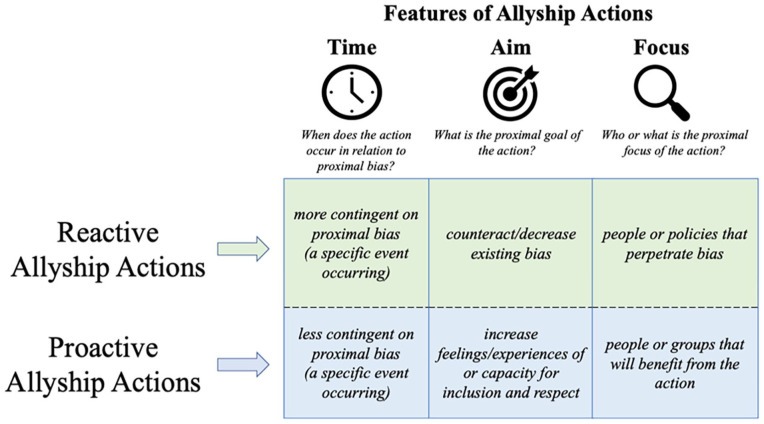
An ordinary savior complex is an urge to rescue or fix other people's problems, sometimes with poor boundaries. White saviorism concerns racialized power and representation. Allyship is support that respects the agency and expertise of people facing inequity. In a 2021 study, Monnica Williams and Noor Sharif developed the 10-item Interpersonal Racial Allyship Scale (IRAS). The research involved 987 white students and 61 Black students.
Does helping while white make someone a white savior?
An accusation is more useful when it names behavior someone can examine or change. Being white, traveling abroad, or wanting to help says little about who controls a project and what it does.
The Scotland Malawi Partnership's educational guidance acknowledges genuine benefits from international cooperation while warning against simplistic judgments that stereotype communities or dismiss their needs. A 2012 essay challenging criticism of the Kony campaign argued that sweeping denunciations can discourage worthwhile activism.
Paternalism also occurs beyond Western volunteer programs. A 2026 qualitative study of South-to-South volunteer tourism interviewed 20 people from 16 countries and documented similar dynamics of superiority and unequal power.

Take a disputed placement described as a partnership. If affected people say decisions were imposed and their objections ignored, the criticism points to observable conduct. If local organizers requested the support, control its scope, and can refuse the offer, the assessment changes.
The white savior trope in movies and campaigns

The white savior trope is a storytelling structure. A white protagonist takes the decisive role in someone else's struggle, and the people being helped get less agency in the plot. Film scholar Matthew W. Hughey examines this tradition in The White Savior Film: Content, Critics, and Consumption.
Campaign editing also decides whose voices audiences hear and whose ongoing work shows. The Kony 2012 narrative Sondarjee studied centered outside actors and left less room for local perspectives.
A teacher rewatching Freedom Writers reacts to the standard the film sets:

I watched Freedom Writers as a child, and I’ve been seeing a bunch of shorts clipping it lately so decided to give it another watch at the gym today. I have to say, I still like it as a narrative, but I am much MUCH more sympathetic to the teachers who have “given up” than I was when I watched it as a kid. Writing this here because I’m kinda triggered by all the comments I’m seeing in the posts talking about how great of a teacher that the protagonist is, and I don’t know where else to post this.
Maybe I’m jaded and terrible now, but I just think this movie is setting up such an unrealistic expectation of teachers.
Aside from the fact that the protagonist is a “white savior” trope, she makes 27k a year in mid 90’s California, and gets two jobs to “pay for her job” in the words of the husband character, whom she completely neglects throughout the film to the point of destroying their relationship.
(The movie doesn’t make it look like it’s her fault, and that he just couldn’t be supportive, but realistically— she had three jobs, worked on school projects at home, constantly came home late from school, and could only ever talk about work… what kind of relationship is that from his POV?)
The rewatch points to a cost the film overlooks: it holds up extraordinary sacrifice as the measure of a good teacher.
How to help without taking control
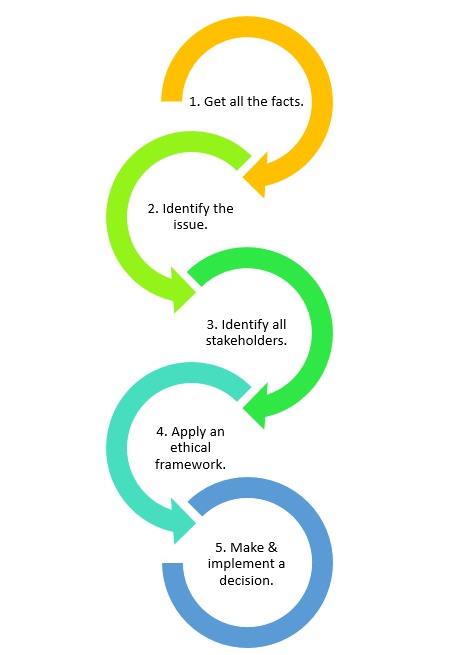
Respectful help involves the people affected in decisions from the start and leaves room to revise the work when their priorities or circumstances change. The useful questions concern authority, competence, public representation, consequences, and accountability.
Six questions to ask about a real effort
Put these questions to the organization and, where appropriate, to its local partners.
- Need and consent: Who requested the help, and can those affected decline it?
- Decision-making: Who sets the priorities and can change or stop the plan?
- Competence: What skills, training, and supervision does the role require?
- Representation: Whose perspective shapes the publicity, and was informed consent obtained before taking or sharing identifiable photographs, especially of children?
- Results: What evidence shows that the effort serves the stated need, beyond a volunteer's experience?
- Accountability: Who responds when participants challenge the project or report harm?
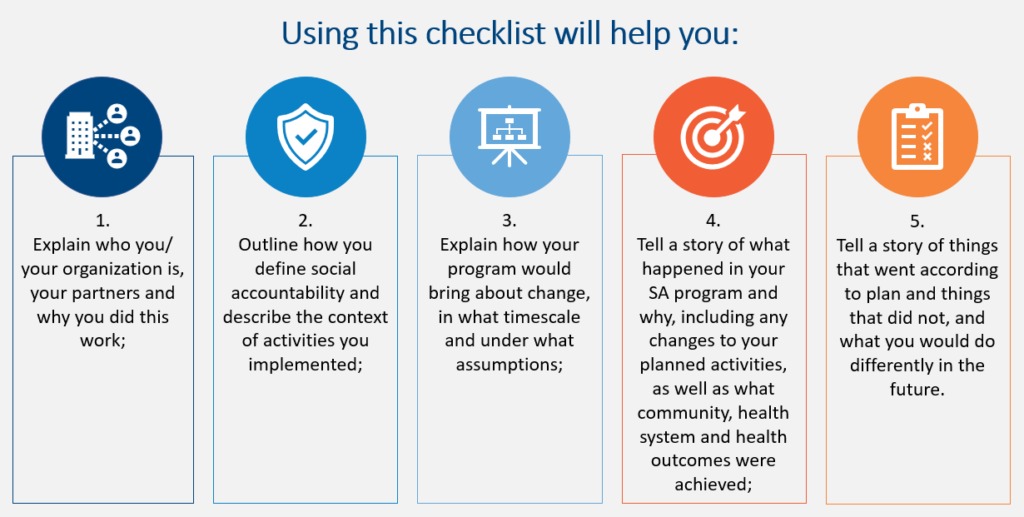
A sincere motive can coexist with poor supervision or an imposed plan. A mutually agreed role can offer both useful work and personal growth.
Look at who actually makes decisions and whose expertise counts. Without meaningful authority for the people affected, the helping relationship remains unequal. The bodily-autonomy explainer connects consent and personal agency with power in helping relationships.