
Vajrasana (Thunderbolt Pose): How to Practice, Modify, and Understand the Benefits
Vajrasana offers a seated position for breathing or meditation when kneeling feels comfortable and your feet don't develop pain or tingling. Use a prop if it helps. If you get pain, numbness, or weakness, come out of the pose and pick another seat.
What is Vajrasana, and how is it different from Hero Pose?
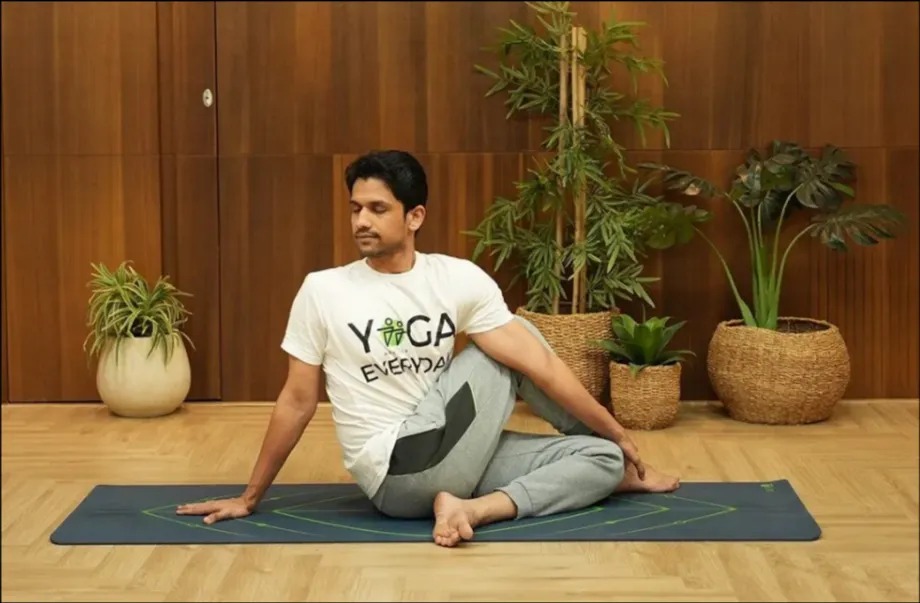
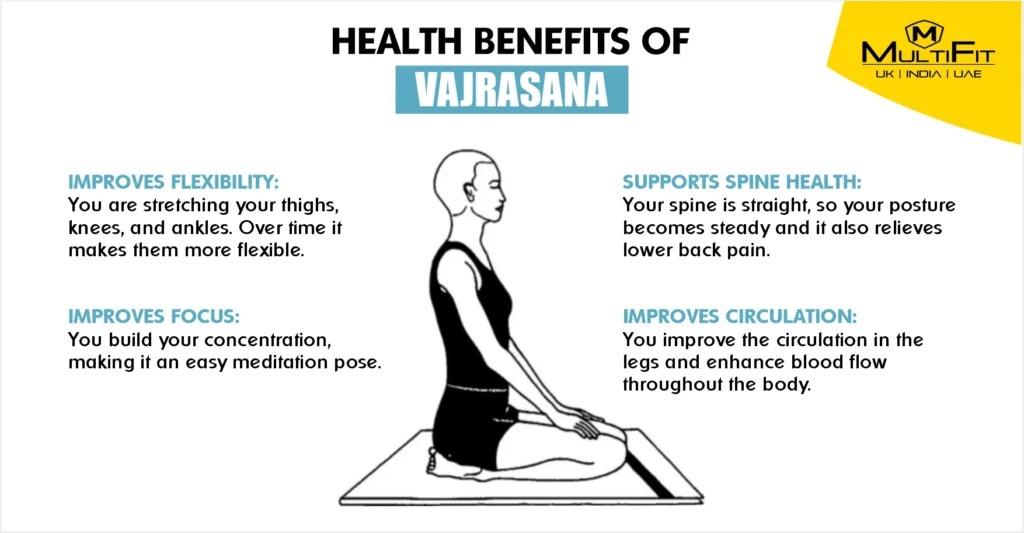
In Vajrasana, you hold a kneeling yoga posture. Your hips settle toward your heels, your shins rest on the floor, and the tops of your feet point back. Also called Thunderbolt Pose or Diamond Pose, it serves as a seated position for breathing and meditation. The adaptable yoga-pose guide offers more context on kneeling poses, flexibility, and joint comfort.
Two other kneeling poses look almost the same; the difference is where the pelvis lands and which way the toes point.
| Pose | Where the hips rest | What the toes do | Visual distinction |
|---|---|---|---|
| Vajrasana (Thunderbolt Pose) | On or toward the heels or feet, sometimes on a support | Point backward; tops of the feet face the floor | Heel-seated kneel, lower legs beneath the thighs |
| Virasana (Hero Pose) | Between the feet | Feet lie to the sides of the hips | Pelvis sits in the space between the ankles |
| Toe Squat | Toward the heels | Tuck under | Pressure shifts to the bent toes and forefeet |
Who should adapt Vajrasana or choose a different seat?
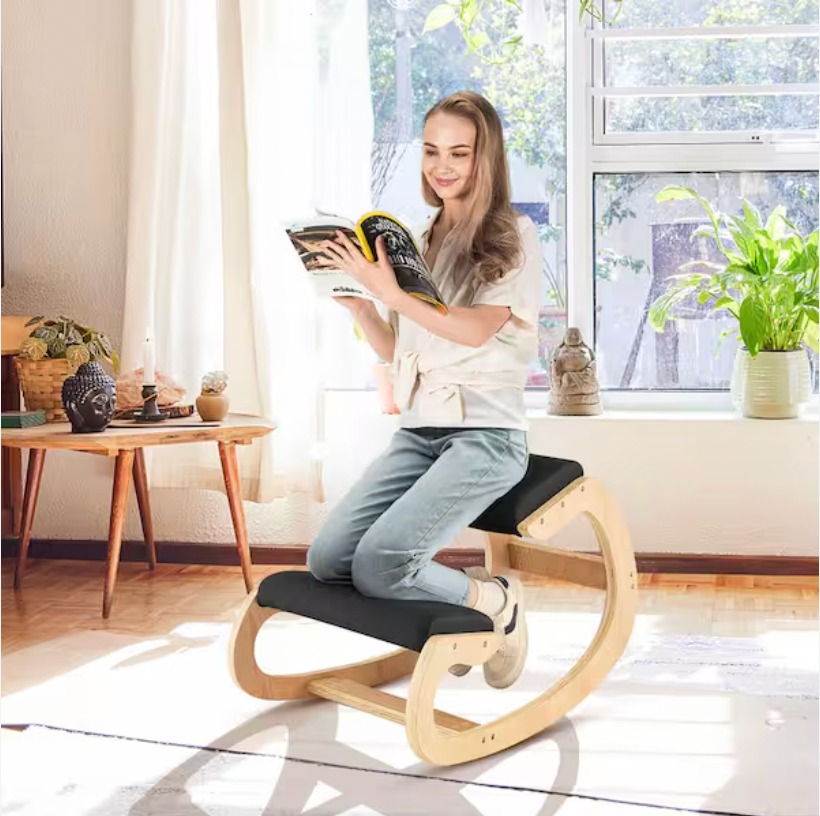
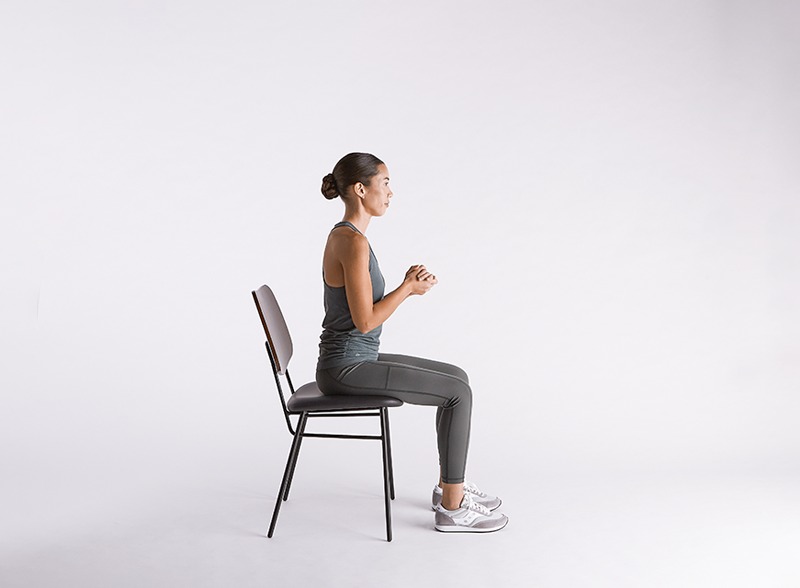
Vajrasana bends your knees deeply and asks a lot of your ankles, so even an experienced practitioner can find it uncomfortable. If you have a knee or ankle injury, recent knee surgery, restricted joint movement, or another relevant health condition, or you're pregnant, get individual guidance. The NIH National Center for Complementary and Integrative Health also recommends adaptations for certain groups practicing yoga. A chair is a fine alternative for breathing or meditation, and it keeps your knees less deeply bent.
How to do Vajrasana, step by step
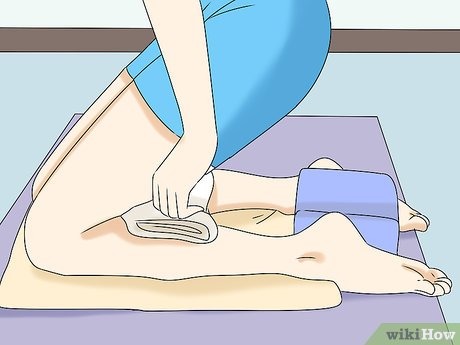
Start in high kneeling, lower your hips gradually, and keep your torso upright.
- Start on a stable surface. Kneel with your shins on a mat and keep your hands free to steady your weight.
- Place the feet. Point your toes behind you, with the tops of your feet on the floor. Bring your legs as close together as feels comfortable, without twisting your knees into position. You can touch your big toes together or simply keep your feet as close as is comfortable.
- Lower the seat. Move your hips slowly toward your heels, or toward a support between your lower legs. Don't drop your full weight onto your feet.
- Sit upright. Let your head rest naturally above your trunk, relax your shoulders, and place your hands on your thighs.
- Breathe normally. Use an easy rhythm that lets your attention settle. No breath-holding sequence is required.
- Exit with control. Shift your weight forward onto your hands if needed, lift your hips, and unfold your legs gently.
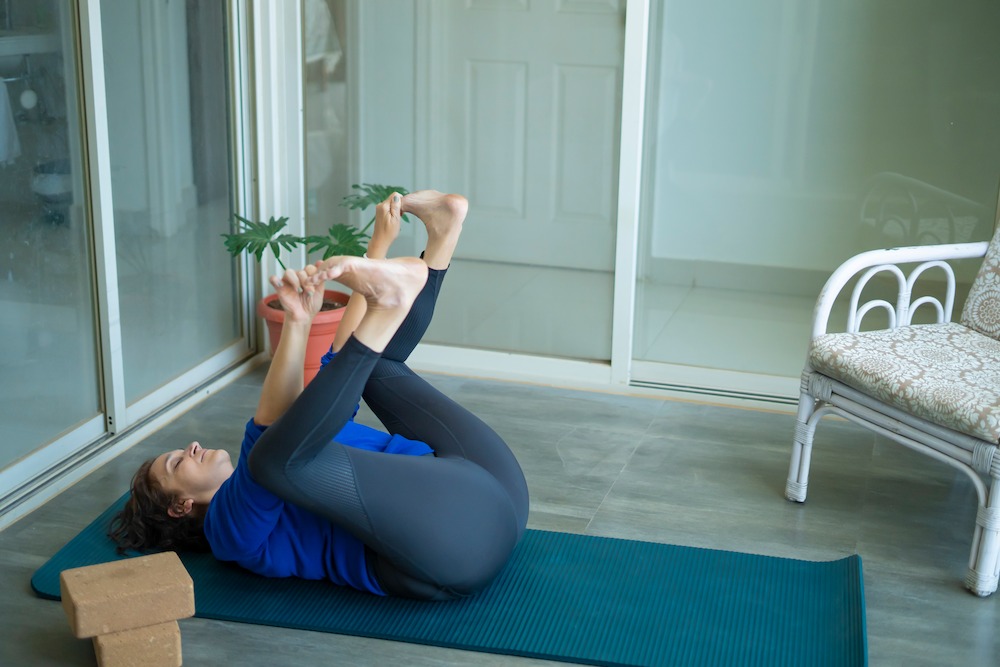
Knee, ankle, or seat pressure? Choose the support for that problem
Props fix different problems. Raising the seat changes how deeply your knees bend, and padding under your legs changes how they meet the floor. Find the pressure point first.
| Where you feel pressure | What's involved | Adjustment to try |
|---|---|---|
| Hips can't settle comfortably near heels | Low seat and deep knee bend | Place a block or low bolster between your lower legs, under your sitting bones, to raise your pelvis. |
| Tops of feet or fronts of ankles | Foot extension and contact with the surface | Fold padding under your shins with your toes extending past its back edge, a common instructional variation. Adjust only for comfort. |
| Knees or shins pressing into the floor | Direct surface contact | Use a supportive mat or folded padding under the contact area. |
| Behind the knees in the deep bend | Amount of knee flexion | Raise your seat. A qualified teacher can tell you whether a small rolled support suits you. |
Check whether the adjustment takes pressure off the original spot. Extra padding won't make every painful position workable.
Pain, tingling, or numb feet: when to come out

Feeling the floor under your shins is normal. Pain, pins and needles, numbness, spreading discomfort, or weakness are not. Take the weight off your legs, and continue your breathing or meditation in another position if any of these appears, come out gently. Don't stay in the pose to test how much discomfort you can take.
An r/yoga contributor wanted to sit longer, but numbness in the feet got in the way:
I meditate sitting in vajrasana. After about 15–25 minutes, my feet start going numb and get that pins-and-needles feeling.
I use a simple setup, a mat with a folded cotton blanket on top.
I want to increase my meditation time, but the numbness becomes too distracting. What can I do about this?
Also, are there any travel friendly/foldable cloths/mats you recommend which I could use to meditate?
A 1971 JAMA case report described foot drop associated with prolonged kneeling-style yoga. A later clinical review described exposure of six hours daily for two months, far beyond an ordinary brief seated practice.
The common peroneal nerve lies near the outside of the knee, and pressure in some positions can affect it. Get a medical assessment if symptoms persist, recur, become severe, or affect your ability to walk or control your foot.
How long should you sit in Vajrasana?

A brief, comfortable pause is enough to use Vajrasana as a breathing seat.
Healthline's Vajrasana instructions suggest starting with a hold of about 30 seconds and describe an upper limit of ten minutes. These are instructional conventions, not clinical thresholds, and neither duration suits every practitioner.
A longtime r/yoga practitioner had the same ankle problem at first and got past it:
Oooh finally a post I can contribute to somehow!
I’ve been doing almost daily vajrasana for the last six years or so. When I started, like you, I could only hold the position for a few minutes before my feet and ankles took my attention.
It took a few years, but eventually I built up the ability to hold the pose almost indefinitely.
Some things that helped me included keeping track of how long I hold the pose for and deliberately increasing it by small increments every now and then; stretching out each leg, ankle and foot for a minute or two after the pose; sometimes combining some other movements while kneeling (I like to use kneeling time to work on my neck and shoulder mobility); and over time, removing the soft mat I was kneeling on (I can comfortably hold the pose on pretty much any flat surface).
There’s something about vajrasana that I find really appealing, probably because it is such a challenging pose to hold for a material amount of time, but once I crossed that threshold it’s just so comfortable. And it looks cool :)
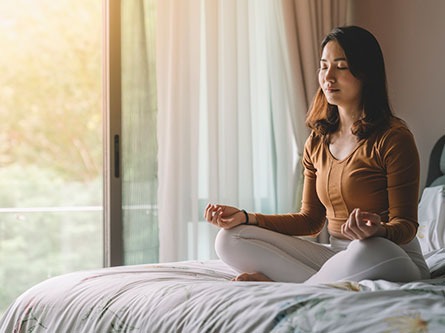
What are the benefits of Vajrasana, and what does the research test?
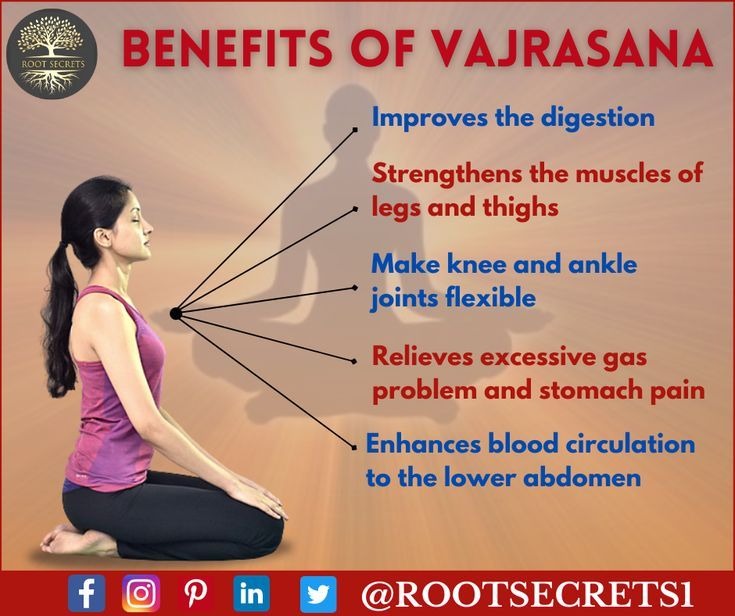
Vajrasana gives you an upright kneeling seat for quiet breathing and meditation. Claims that it treats digestive disorders, regulates blood sugar, or lowers blood pressure need evidence about the pose itself.
| Claim or use | What the sources show | Bottom line |
|---|---|---|
| A seat for breathing and meditation | Yoga instruction uses Vajrasana as a still, upright sitting position | Useful if you find kneeling comfortable |
| Stress reduction or general well-being | NIH discusses studies of broader yoga programs involving poses, breathing, and meditation | Those findings don't measure the effect of this single seat |
| Digestion or irritable bowel symptoms | A small 2004 study of men with diarrhea-predominant IBS used a 12-posture program that included Vajrasana | The results belong to the combined program, not to Vajrasana alone |
| Blood sugar, blood pressure, or pelvic-floor treatment | The examined evidence doesn't establish a clinical treatment effect from Vajrasana alone | These sources don't support a medical promise about this one pose |
The 2004 study of diarrhea-predominant IBS enrolled 22 men and ran a yoga program for two months. The program combined 12 postures, including Vajrasana, with right-nostril breathing, and was compared with conventional loperamide treatment.
Both groups reported improvements in bowel symptoms and state anxiety. A later Cochrane review found the comparison between yoga and loperamide inconclusive and rated the certainty of evidence very low.
Before you trust a study's claim about one pose, check which postures and breathing techniques it included, who took part, and whether researchers measured symptoms or physiological signals. Those details show how closely the result applies to the posture itself.