
Wall Angels: How to Do Them, Fix Form Problems, and Modify the Move
A wall angel should stay within a range you can control, without arching your back or pressing your wrists and elbows against the wall by force. If you feel sharp, spreading, or worsening symptoms, stop and get a professional assessment. If the move feels off, shorten it or switch to an easier variation, then check your form again.
How to Do Wall Angels With Good Control
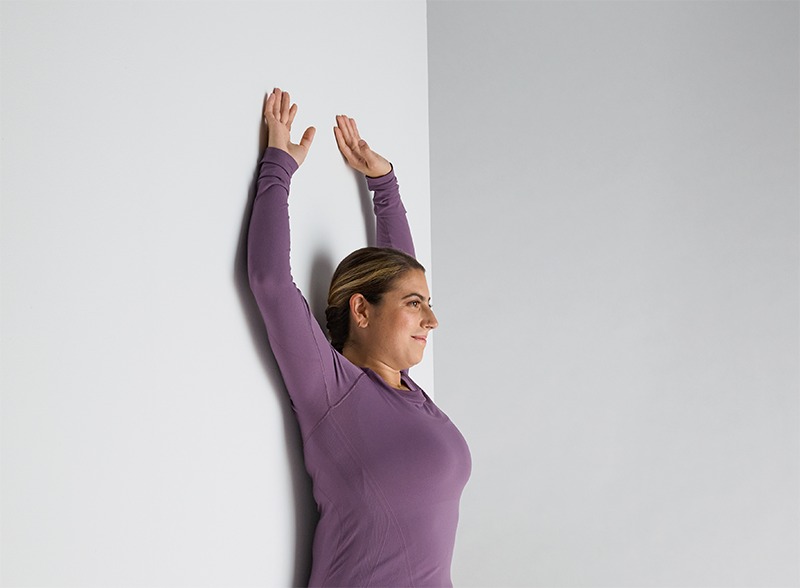
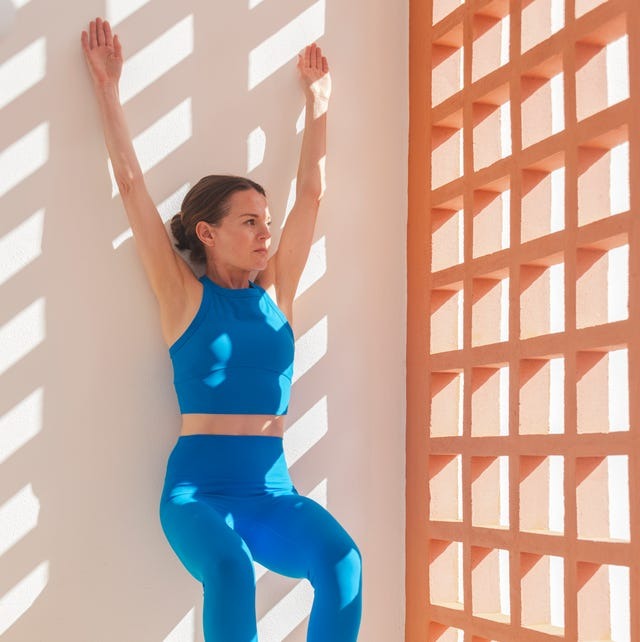
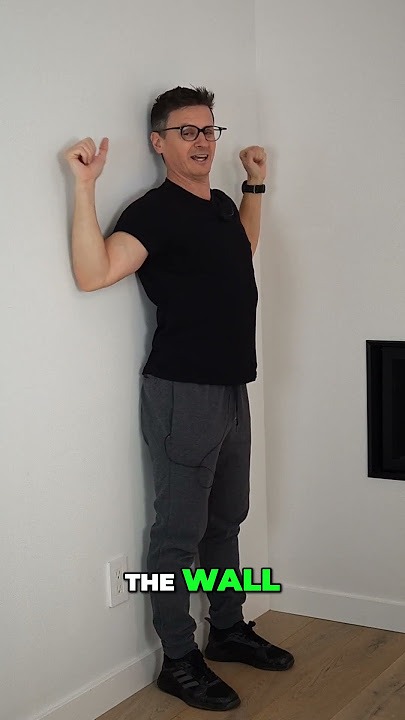
In a wall angel, you move your arms slowly with your back against or near a wall. Your arms travel between a bent-elbow W and a higher V or overhead position while your shoulder blades, upper back, and trunk work together. The shoulder-press muscle guide covers the same shoulder blades, deltoids, and overhead movement, but a wall angel is a slow movement, not a press.
Stand with your head, upper back, and glutes near or against the wall and your feet a comfortable distance in front. A small natural curve under your lower back is fine. The wall gives you feedback on your position, and pressing your whole spine flat only adds strain.
- Set your stance. Stand with feet slightly forward and knees relaxed. Stack your ribs over your pelvis without pushing your chest out.
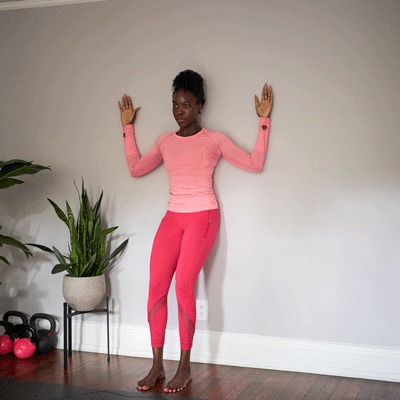
- Make a W. Bend your elbows to about 90 degrees, with upper arms out to the sides and hands pointing up. Bring your arms toward the wall as far as they comfortably go.
- Slide upward. Raise your arms slowly toward a wide V or overhead. Let your shoulder blades move naturally and keep your trunk steady.
- Return along the arc. Lower your arms smoothly toward the W and stop where you still control the motion. Breathe normally.
- Repeat slowly. Watch where your ribs, head, and arms start to shift.
Some demonstrations start overhead and lower to the W first.
The University of Calgary workplace movement-break guide shows wall angels with the heels about six inches from the wall and enough natural space at the lower back for a hand.
Why Your Elbows or Wrists Won't Stay Against the Wall

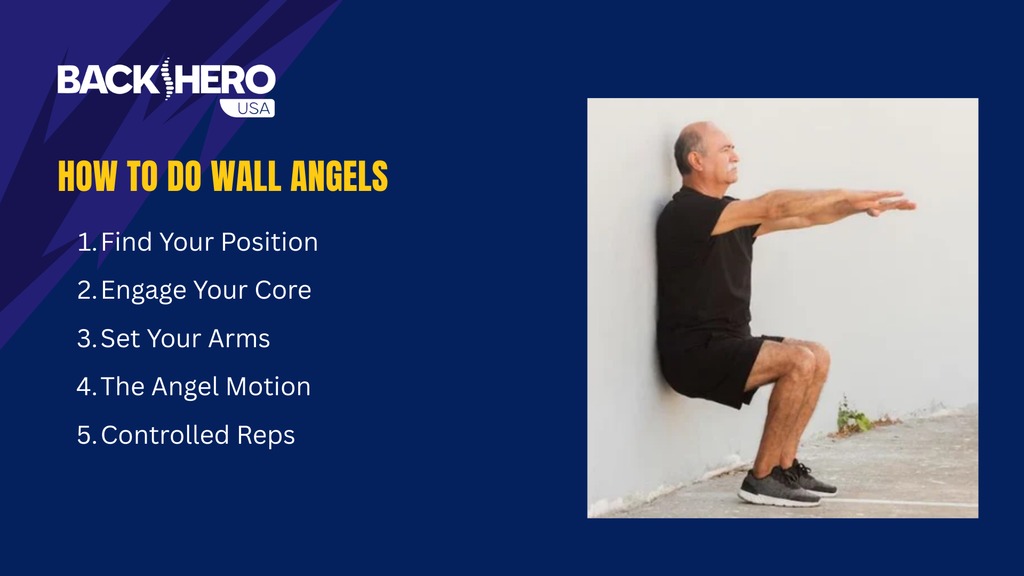
Your wrists or elbows often drift off the wall as your arms rise and fall; shoulder rotation, shoulder blade movement, upper-back position, and trunk control all shape that. A floating wrist doesn't tell you whether a muscle is tight or weak, and it isn't a diagnosis.
The low W and the high V put your shoulder in different positions, so the bottom of a wall angel can be harder than the overhead part.
I've never done Wall Angels and understood whether I'm doing them wrong. No video ever says where you should feel them just (keep back against wall).
My shoulders are super weak from computer work. It's very difficult for me to put my arms flat on the wall. My biggest confusion is about how it's much easier for me to keep my arms pressed against the wall high up vs low in a W. All the videos say to start low, and raise as high as you can, I can go all the way up, but not down. Pulling down is a much harder workout than lifting up.
Also confused about whether the entire back should be flat or just lower and upper.
Find the point where contact breaks first. The table below matches each sign to a fix.
Find the contact point that changes
| What you notice | What it means | What to try |
|---|---|---|
| Wrist or hand hovers in the low W | The low position is your sticking point | A higher, comfortable starting position from the variations table below |
| Elbow lifts as arms rise | You've reached the end of your controlled arc | Partial-range standing angel |
| Lower back arches as arms climb | Your trunk is adding to your arm reach | Shorter arm arc and the mistakes check below |
| Head moves forward or hips leave the wall | Your body position shifts along with your arms | Stance and control check |
| One side moves differently | Your arms are not following the same path | Compare comfortable motion on each side; if symptoms accompany it, see the stop section below |
Easier Wall-Angel Variations: Which One to Try
Choose the variation that addresses the part of the movement you struggle to control. A smaller arc keeps you in the standing wall angel. The floor and a doorway change how your body is supported and what the movement emphasizes.
| Variation | Choose it when | How to adapt the movement | Trade-off |
|---|---|---|---|
| Partial-range standing angel | Your elbow lifts as your arms rise or your trunk arches near the top | Keep the usual stance and end the upward sweep before you lose control | Less arm travel, by design |
| Adjusted lower W | The low W or wrist contact is harder than the higher position | Begin at a comfortable arm height and lower only as far as you can control | The lowest W may stay out of reach |
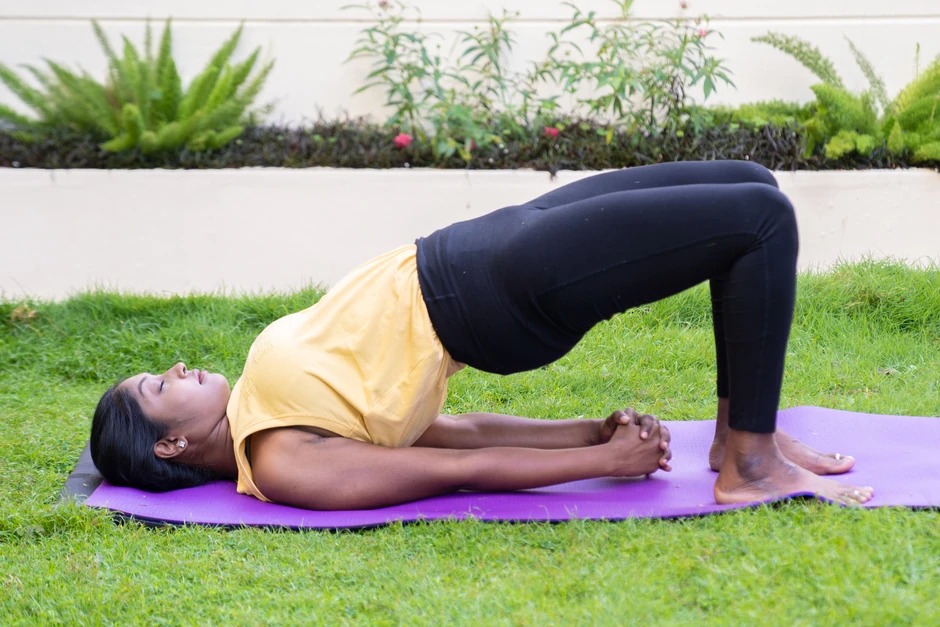
| Floor angel | The standing trunk position is awkward to hold | Lie on your back with knees bent and move your arms through a comfortable arc | Floor support changes how your wrists and elbows meet the surface |
| Doorway movement | Your goal is a related chest or arm stretch and the standing wall setup doesn't suit you | Place your hands high on the doorway edges in a V, step forward gently into a comfortable chest stretch, lower your hands toward a W, then return | It's a different stretching movement |
The Hinge Health wall-angel guide also lists reduced arm travel as an easier option.
What changes on the floor?
A floor angel puts support under your trunk and changes how your arms meet the surface. Some people move more comfortably there. Others still get a limited arc, with wrists and elbows hovering above the floor.
The doorway version is a related chest stretch, so judge progress within that movement. Don't add handheld weights to force your arms against either surface.
Common Wall-Angel Mistakes and What They Change
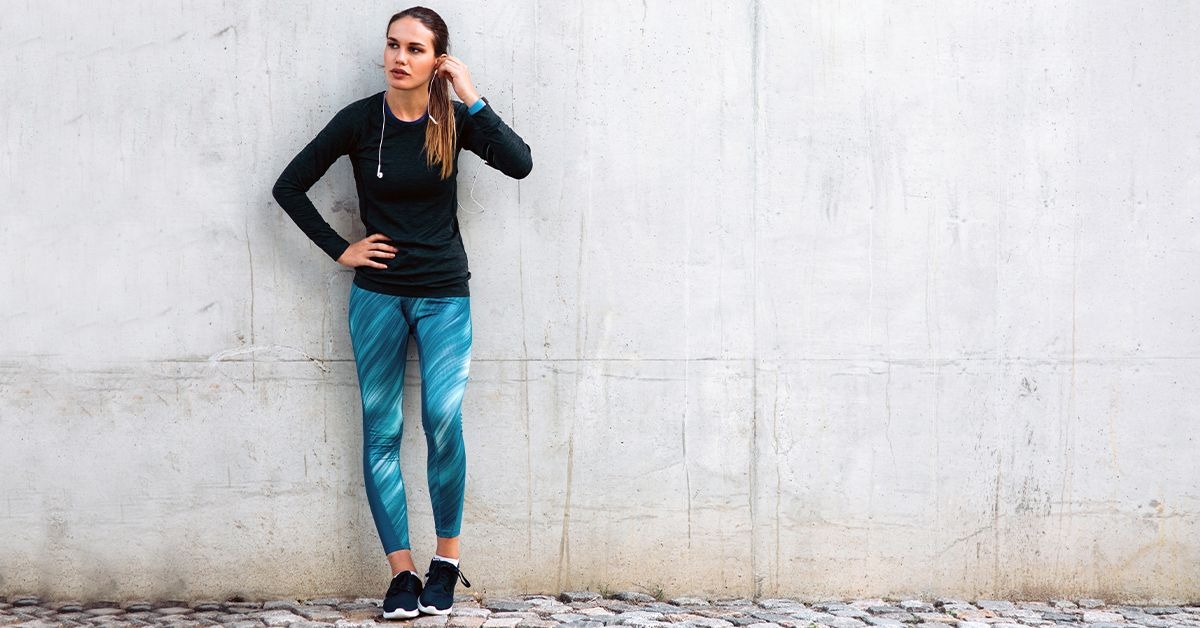
A big lower-back arch or flared ribs makes your hands travel higher because your trunk moved with them. A side-view mirror or a recording shows it. These also change the movement you are trying to control:
- A head that juts forward
- Hips that leave the wall
- Rushed repetitions
- Held breath
Your shoulder blades rotate upward as your arms rise, and that is normal. Exaggerated shrugging to gain extra reach is a form error.
What Wall Angels Train and What Studies Show
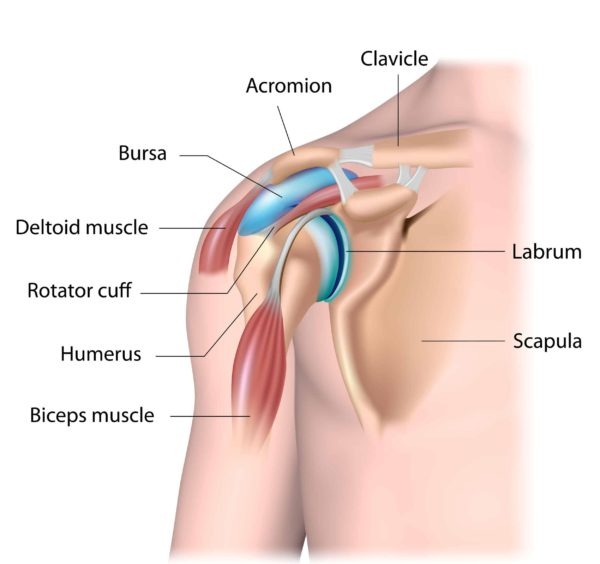
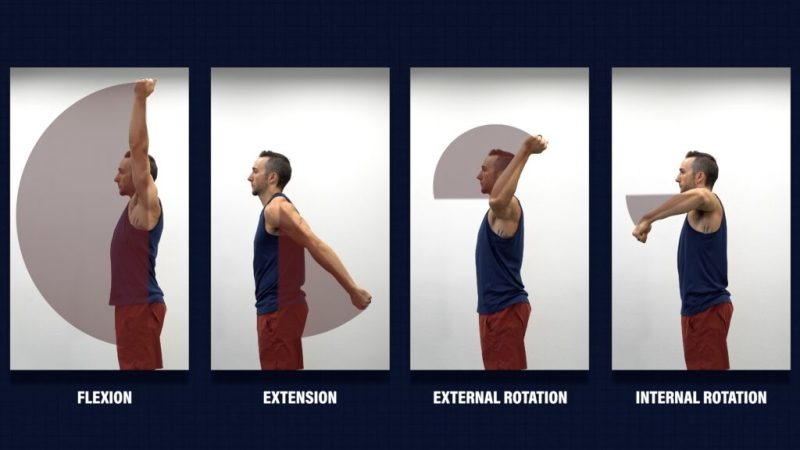
Wall angels involve the shoulder joint, shoulder blades, upper back, and trunk muscles. Their clearest practical purpose is practicing smooth, coordinated arm elevation.
The trapezius and serratus anterior help control shoulder blade movement, and the rotator cuff helps control the shoulder joint. Your upper back gives the arm a moving base.
What studies measured
| Claim | What studies measured | Result |
|---|---|---|
| Better shoulder movement | A specific Wall Angel Slider program measured short-term shoulder and scapular range | Shoulder and scapular range improved after a specific slider program in a screened group |
| Stronger shoulder stabilizers | Studies of related wall-slide movements measured muscle activation | Long-term strength effects from ordinary wall angels have not been shown |
| Corrected rounded shoulders | Broader corrective-exercise programs measured posture angles | Reported posture effects came from the complete programs studied |
| Less neck or shoulder pain | Clinical outcomes across broader exercise-program studies were inconsistent | Wall angels alone have no established stand-alone pain-treatment effect |

In a Wall Angel Slider study, researchers screened 54 people and included 48 with restricted scapular mobility in an exercise group. Participants did three sets of eight repetitions across six sessions over two weeks. Selected shoulder and scapular range-of-motion measurements improved. The study followed one group with no randomized control and used a slider variation.
A systematic review of corrective-exercise programs pooled 28 randomized trials involving 901 people with upper-crossed syndrome. Some postural-angle measurements improved. Findings for pain and function were inconsistent or inconclusive. The programs combined exercises and studied a specific clinical population.
How Often to Practice and How to Notice Progress
No study has established a wall-angel dose or a fixed timeline. Published instruction sheets give different examples because their purposes and contexts differ.
| Published source | Example amount | Setting |
|---|---|---|
| Healthline | 5 to 10 repetitions | General standing exercise instructions |
| University of Calgary | 1 to 3 sets of 10 | Workplace movement-break guide |
| PhysioOnClick | 3 sets of 10, once daily on five days per week | General clinical exercise-library example |
To track change, compare the same version under similar conditions from one session to the next. Keep your stance and starting arm position consistent, then watch for:
- Smoothness: Your arms travel with fewer pauses or abrupt changes.
- Comfortable arc: A controlled range feels easier at either end.
- Trunk control: Your rib cage and head stay steady while you breathe normally.
Control can improve even when your wrist contact stays the same.
When to Stop, Skip, or Get Individual Advice
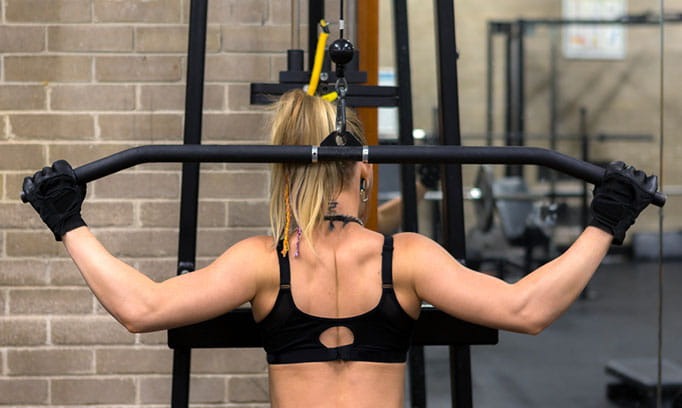
Gentle local effort or a mild stretch is normal during a controlled wall angel.
I want to work on correcting my posture and I found some exercises and one of them is a wall angel. I make sure my head, back and hip is only touching the wall and brace my core. I lower myself a bit and have my feet a couple fists away. This position seems best for me to allow my back to stay on the wall. I place my elbows wall first and then lift my arms up and start raising my arm sliding against the wall. The problem is I can only move them up a few inches and I feel my back muscles restricting the movement, primarily my upper traps start burning up. Anyone else have similar experience and what is the best way to progress. Is it because I have tight lats or should I just keep pushing through even with my upper traps burning?
Thanks!
Burning that builds is a signal to stop. Don't push harder into the wall.
Symptoms that call for stopping
- Sharp or spreading pain: Especially pain that travels into an arm or gets worse as you move.
- Tingling or numbness: New neurological sensations during the exercise.
- Dizziness or disturbing sensations: Stop if continuing feels unsafe.
- Worsening after the session: Symptoms that persist or escalate afterward.
Get individual guidance before following general exercise instructions if you have a recent shoulder injury or surgery, known instability or a clinically identified restriction, or ongoing unexplained pain. If even a simpler version feels uncomfortable, a qualified healthcare professional can help you decide whether another movement fits.