
Pool Exercises: Build a Water Workout That Fits
A basic pool workout can move from steady walking or marching to arm and supported leg movements, ending with slower walking. Begin where you can stand securely. Build effort gradually. Deep-water exercise calls for different support and water skills, so treat it as a separate activity.
Choose a Pool Depth You Can Control
In water shallow enough to stand, keep your feet on the pool floor and leave enough space for full steps. Deep-water aerobics involves flotation and a different way of holding your body upright.
Standing-depth water aerobics does not require swimming skills when you have secure footing and supervision; deep-water exercises demand separate attention to swimming confidence and flotation support. Mayo Clinic shows water walking in roughly waist-high water, but the same marked depth sits differently on a short person and a tall one.
| Pool setting | What supports you | Movement choices | You're ready when |
|---|---|---|---|
| Secure standing depth | Feet on the pool floor | Water walking, marching, arm work | Your feet land where you aim and you aren't fighting for balance |
| Deeper standing water | Feet still touch, buoyancy is more noticeable | Grounded movements near the side | You stay stable and can reach the side |
| Deep water | Flotation, water-safety skills and supervision | Supported deep-water jogging or supervised classes | You have the equipment, the confidence and a supervised class |
A shorter person can wade into a pool's shallow end and still find the bottom too far down for marching. Before getting in, read the depth markings and rules, and find the side or steps. Use only an area where you can place and move your feet firmly. If a movement needs footing you can't hold, leave it out.
Start With Water Walking and Marching
Water walking gives you rhythmic exercise without special equipment. The water resists your moving legs and hands, while buoyancy changes the load passing through your feet.
Walk forward through the water
Stand upright in roughly waist-high water. Walk with a normal heel-to-toe motion, keep your back upright, and let your arms swing naturally under the surface. Don't shuffle on tiptoe or pitch your upper body forward. Mayo Clinic's aquatic exercise guide shows this basic pattern.
March in place
When there's little room to travel, lift one knee, lower that foot with care, then switch legs. Let your hands move through the water beside you. Pick a knee height that doesn't pull you off balance.
Make the rhythm continuous
Once marching feels steady, you can speed up into water jogging with quicker, regular steps. Jogging in place works well in a small exercise area. An easy walk and a sustained quick march take very different effort, even in the same pool.
Gentle side steps add variety when you have space to move sideways. Step out, bring the other foot toward it, and keep the motion small enough to land cleanly.
Add Arm and Leg Resistance
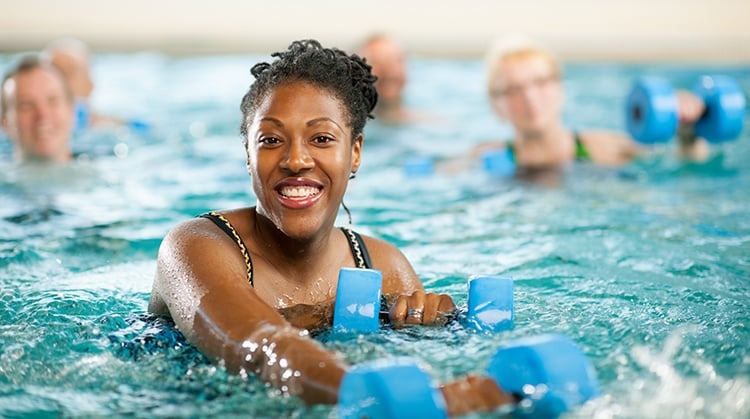
With your feet planted, try an arm movement that pushes water along a clear path, then a leg movement you can do with support. Water drags against your hands and limbs, so you don't need foam dumbbells for every exercise.
| Exercise | Position and action | Tips |
|---|---|---|
| Flat-palm press | Stand upright with elbows near your sides and hands below the surface. Press your open palms forward, then bring them back slowly. | Keep your elbows bent and shorten the reach if the resistance pulls your shoulders forward. |
| Hand-web elbow bend | With aquatic hand webs and wrists straight, keep elbows near your body. Bend your elbows to lift your forearms toward the surface, then press down through the water to return. | Move smoothly and don't shrug your shoulders up. Mayo's example uses 12 to 15 repetitions, or until tired. |
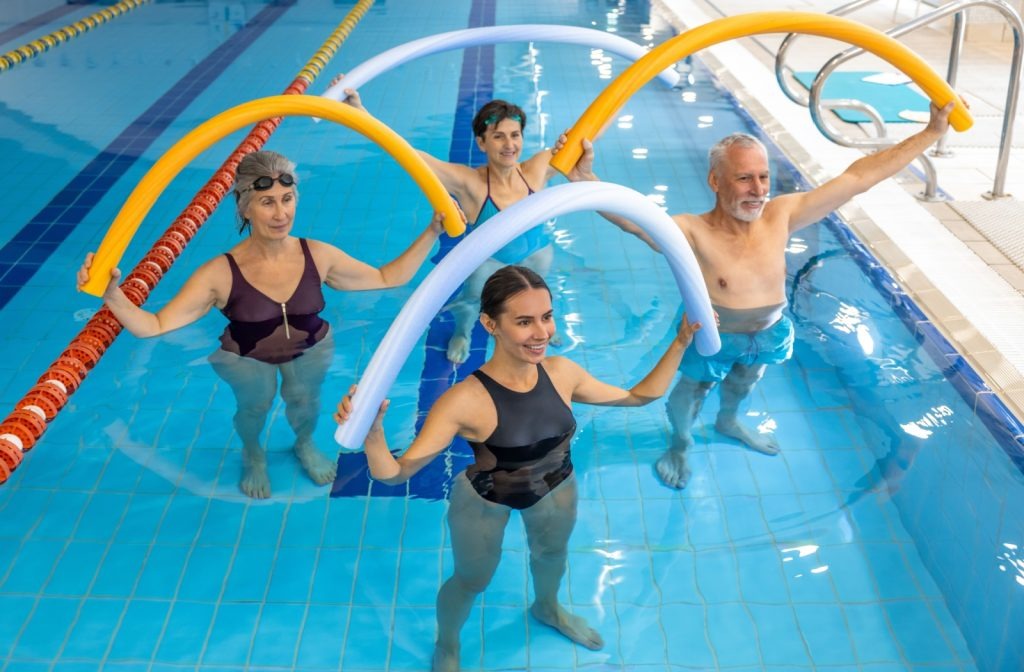
| Supported noodle leg bend | Secure a pool noodle around one foot or water shoe. With your back to the poolside and both arms supported on the edge, straighten that knee forward, then bend it back toward a right angle slowly. | Keep your standing leg planted. Skip the move if you can't stay steady or can't set up the noodle correctly. |
Deep-Water Exercise and Equipment
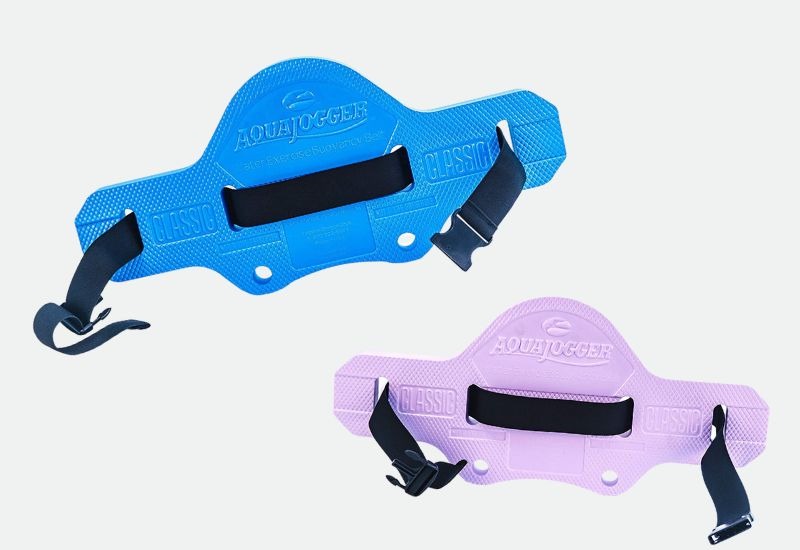
Deep water takes the pool floor out of the exercise. A flotation belt helps you stay upright while your arms and legs move against the water. Even an experienced lap swimmer can find that body position unfamiliar.
A participant in r/Swimming described how a belt affected their first experience with deep-water aerobics:
Hi! I’ve been a lap swimmer for a long time but have recently tried taking water aerobics just for some variety in my workouts.
However, I am confused about whether or not I should use a flotation belt. I am one of those weirdos who is VERY buoyant - I will float vertically while motionless, even without treading water. When I have the belt on, I feel like it is making me too buoyant, pushing my back into a weird arch and making it difficult to stay in a neutral position. I feel I get a better workout when I don’t have the belt on and I can focus on resistance and holding my core.
But maybe I’m misunderstanding the purpose of the belt - is it supposed to make the workout more difficult so I have to work harder to stay neutral? Like is that part of the strengthening benefit?
(I’m in my 30s and not particularly at risk of having a medical event in the water, if that matters)
EDIT: this is specifically about deep-water aerobics
A belt supports flotation, while gloves and other accessories change resistance.
| Equipment | What it does | Use it for |
|---|---|---|
| Flotation belt | Helps support your body in deep water | Supervised deep-water activity |
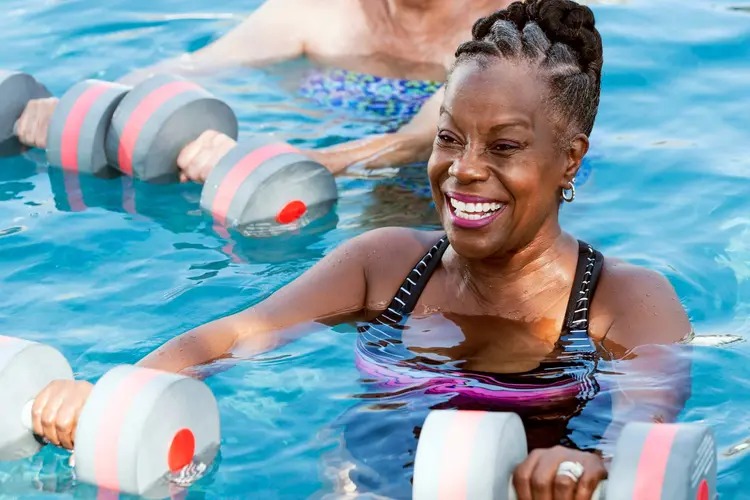
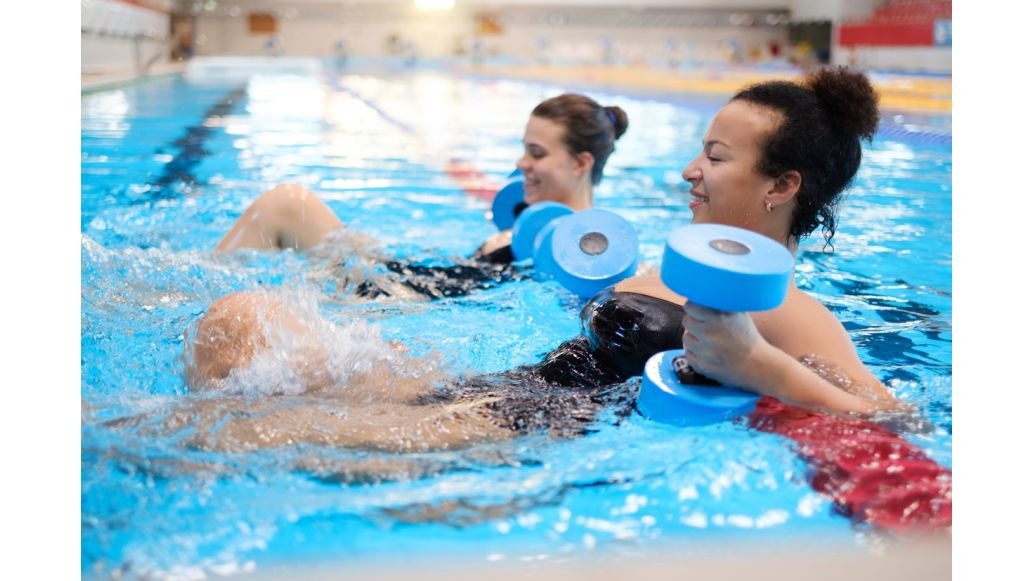
| Foam aquatic dumbbells | Give buoyant resistance when you push them underwater | Arm exercises |
| Webbed gloves | Increase the hand area moving through water | Underwater arm movements |
| Kickboard or noodle | Give support or resistance, depending on use | Supported or resistance movements |
| Pool shoes | Give you footwear and traction | Pools and activities that allow or recommend them |
Foam dumbbells behave differently from metal weights. Submerged foam tries to rise, so pushing it down is hard work. Webbed gloves create drag by enlarging the surface moving through the water.
Feeling naturally buoyant doesn't make unsupported deep-water exercise safe for you.
Adjust Effort Without Losing Control
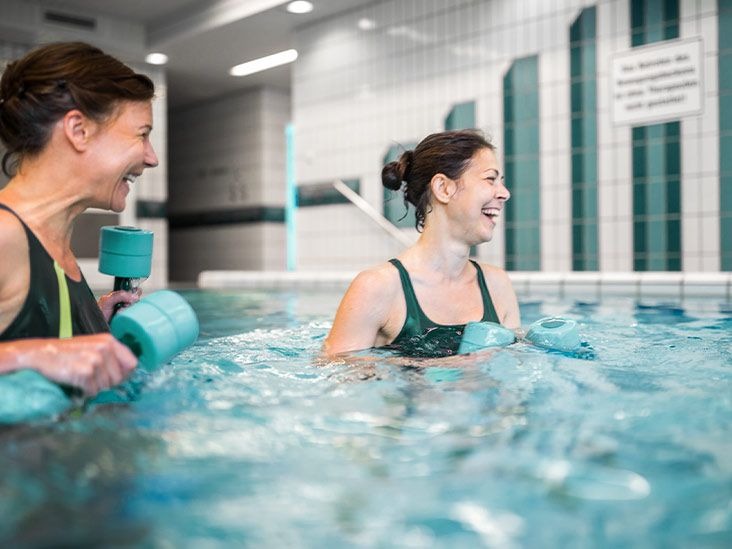
To change how hard a pool exercise feels, adjust the speed, the range of movement or the surface area pushing through the water. An open, flat palm meets more resistance than fingers slipping loosely through it. A bigger movement helps only while you can still manage it.
A beginner in r/Swimming expected a more demanding class:
I went to aqua aerobics for the first time the other day, and whilst I did enjoy it, I felt like I did most of it wrong. Most of it felt much too easy (which I don’t think it should have been, I’m v unfit!) and most of it was just turning around and walking. Up until we started using weights and pool noodles I didn’t feel any affect whatsoever on my body, and I felt clumsy and like I hadn’t grasped the concept.
Is this normal? Are there any common mistakes you think I could be making? I’m going back tomorrow so would love any insight
The same participant returned to the thread with a later update:
Thanks everyone! I took some of the advice and today I focussed on bigger movements. When I didn’t understand what I was supposed to do I prioritised movements that pushed me rather than doing what she wanted us to do, and it helped a lot and made it much more enjoyable
The second attempt went better. Bigger movements meet more water resistance, so the same exercise feels more demanding.
- Make it easier: Slow down, shorten the movement, use less drag or choose a supported variation.
- Keep it steady: Hold a rhythm and body position you can repeat without scrambling for balance.
- Make it harder: Move faster, widen the range, or add resistance equipment while your form holds.
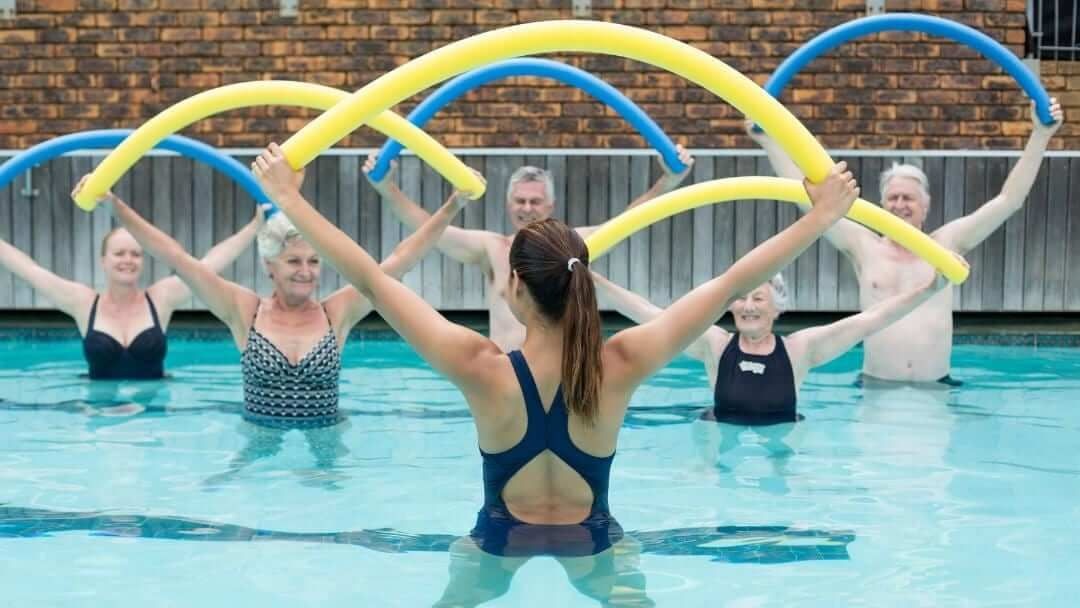
The CDC talk test is a quick way to gauge aerobic intensity. At moderate effort you can talk but can't comfortably sing. At vigorous effort you can say only a few words before stopping to breathe.
Low-impact movement can still tire you out. Use the talk test during the rhythmic part of the session, and ease off when the effort climbs too high or your form slips. Buoyancy can make exercise feel gentler on the joints even while your body works hard. Water walking, joint comfort, and supported exercise also feature in the low-impact exercise guide for older adults.
Put the Moves Into One Pool Workout
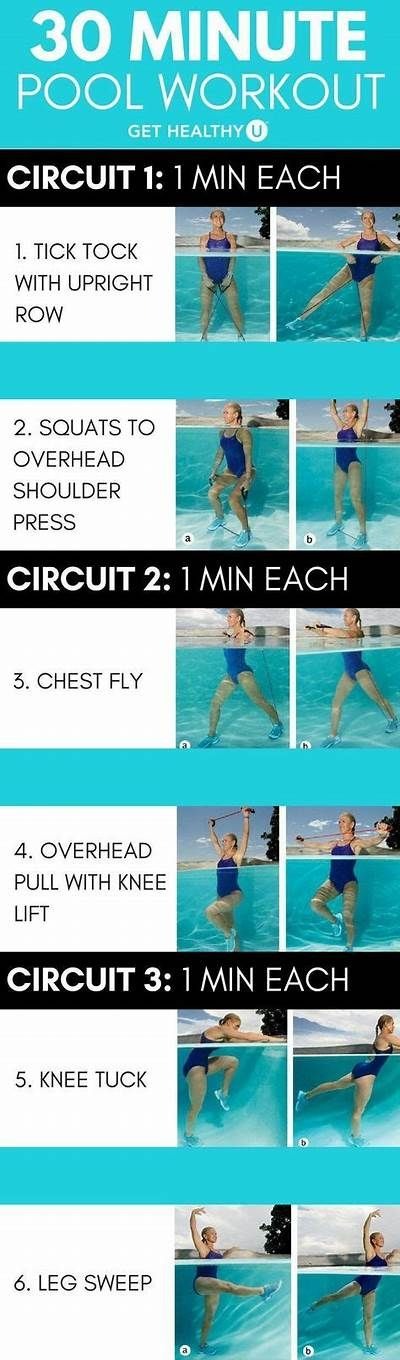
A simple session moves from gentle walking to rhythmic exercise, adds a resistance movement or two, and finishes slowly. Treat it as an adaptable example for anyone with safe standing-depth access.
| Step | Exercise | How long | Easier option |
|---|---|---|---|
| 1. Ease in | Walk forward at an easy pace | Healthline lists 5 to 10 minutes of water walking | Shorten the walk or rest sooner |
| 2. Raise the rhythm | March in place, then move to gentle water jogging | Cleveland Clinic lists 2 to 3 minutes of water jogging | March more slowly or take a break |
| 3. Add arm resistance | Hand-web elbow bends, if you have hand webs | Mayo lists 12 to 15 repetitions or until tired for this movement | No webs? Use the flat-palm press taught above and stop before your form breaks down |
| 4. Vary the movement | Poolside-supported leg bend with a noodle secured around one foot or water shoe | Steady repetitions, no fixed count | Skip it and stay with grounded movements if setup or balance feels shaky |
| 5. Ease out | Return to slow water walking | Cleveland Clinic lists a two-minute slowdown | Take more recovery time if you need it |
If your pool has little space, marching covers the rhythmic part while you stay in one place.
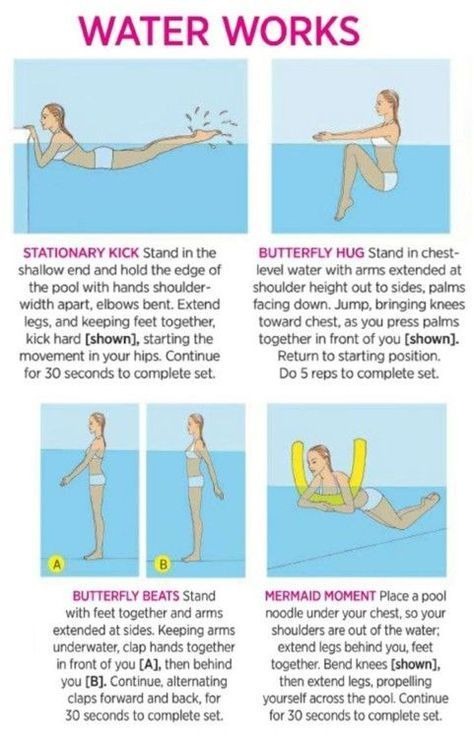
After the session, note which movements felt steady, which took more effort and which you skipped. That gives you a concrete basis for adjusting the next session.
What Pool Exercise Can Do for Fitness
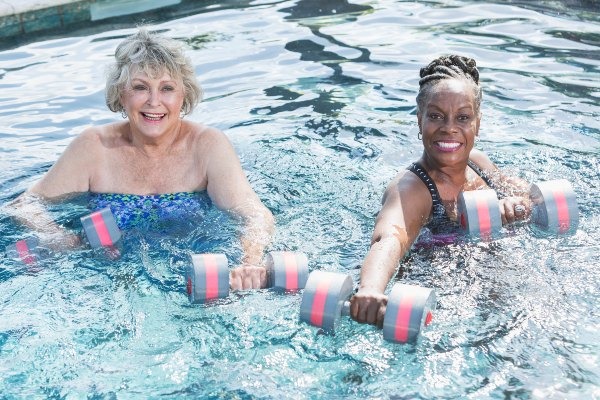
Water workouts add aerobic and muscular activity. A 2026 review of 15 studies of older adults found improvements in fitness and strength compared with control groups, though results varied between studies. A 2018 review of eight trials involving 579 people with knee osteoarthritis found no significant differences between aquatic and land exercise in pain, physical function or quality of life. US activity guidance recommends at least 150 minutes of moderate aerobic exercise each week plus muscle-strengthening work on two days.
Know the Safety Rules and Stop Signs
Stop exercising if you feel dizzy, lightheaded, faint or unusually weak, or if you get nausea, trouble breathing, or chest or upper-body pain or pressure. Get medical help for chest discomfort, severe breathing difficulty or fainting. Don't push through pain that gets worse with a movement.
Pool safety also covers germs. The CDC's guidance for healthy pool use includes three simple rules:
- Before entering: Shower for at least one minute.
- While in the pool: Avoid swallowing the water.
- If you have diarrhea: Stay out of the pool to protect other swimmers.
Take breaks when you need them and keep water within reach. Follow facility safety instructions and the directions of staff supervising the activity.
If a condition, injury or rehabilitation plan limits which movements suit you, ask a qualified health professional. General pool-workout instructions don't replace their advice.
Prepare for a Water-Aerobics Class
For a first class, bring a swimsuit you can move in, a towel and drinking water. Deck footwear makes walking around the facility easier, and some venues recommend pool shoes for particular activities.
Before you go, find out what equipment the class supplies, how breaks work, where personal items go and whether the exercises share water with lap-swimming lanes. Rules and layouts vary between facilities.
Take an easier option or a brief rest instead of keeping up at the expense of your form if the instructor gives you an unfamiliar move. Keep shared equipment in designated areas and follow lane or class-space directions.