
Resistance Band Ab Exercises: Choose Your Setup and Workout
The right resistance-band ab exercise depends on the band you own and whether you have a secure anchor. With an anchor, start with the Pallof press. With only a mini-loop, do the mini-band dead bug.
With a long flat band and no anchor, use the foot-anchored chop or the band rollup. If your gear can't support a move, do the bodyweight version. Get the setup and every rep steady before you add resistance.
What resistance bands can do for your abs
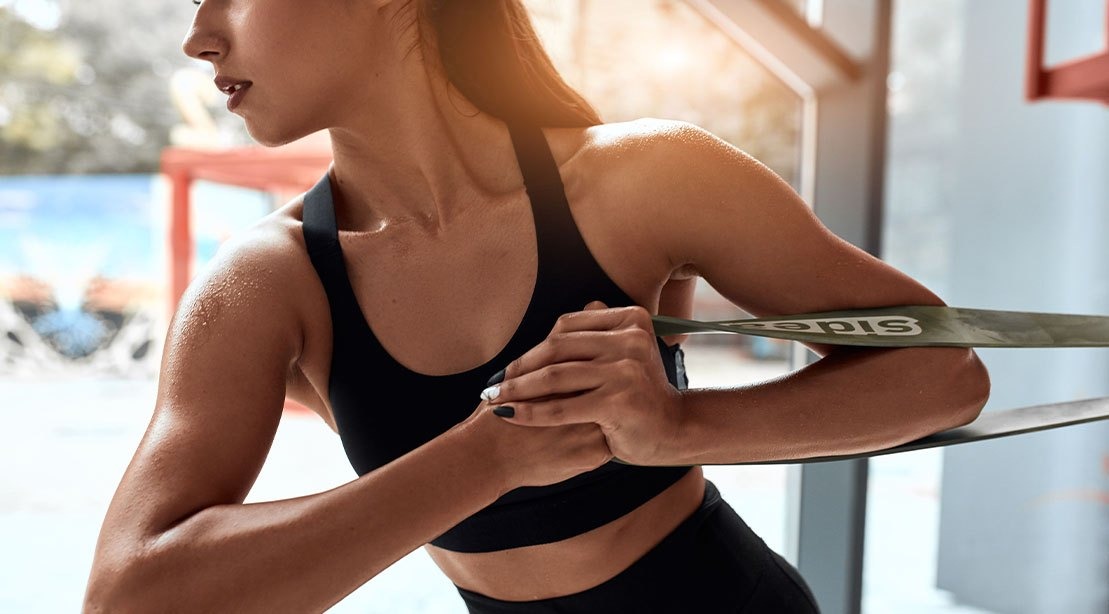
Bands train your core in two ways: your trunk resists a pull, or it moves against elastic tension. You might resist a twist, keep your lower back from arching, or curl your ribs toward your pelvis.
A 2019 meta-analysis of eight studies found no clear strength advantage for either elastic or conventional resistance methods across the general outcomes measured. Band tension changes as the elastic stretches, so body position and control become part of the challenge. The CDC recommends strengthening all major muscle groups at least two days per week, and a core session fits inside that.
Match your band to an exercise you can set up
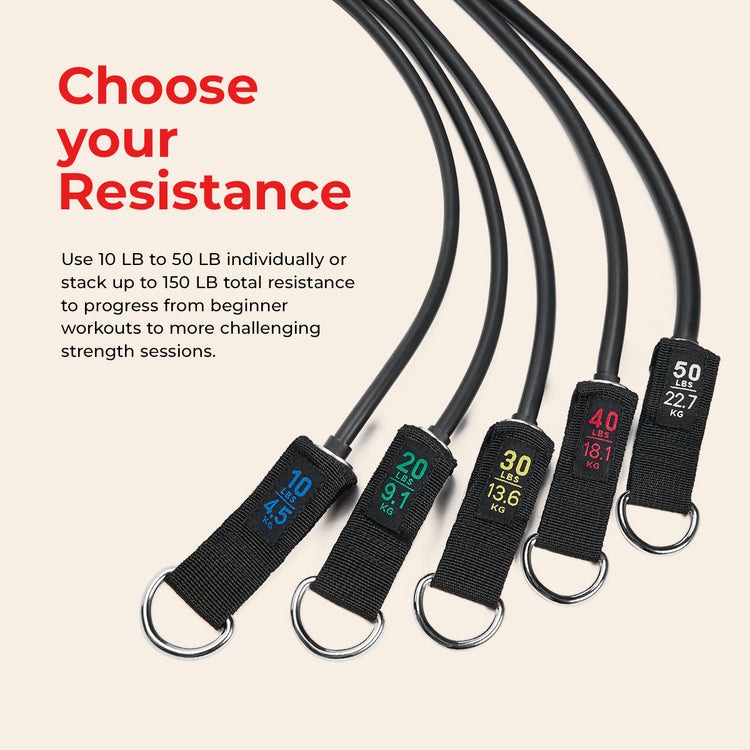
A mini-loop, long flat band, and handled tube suit different exercises; your available anchor narrows the choice further.
| Equipment | Anchor | Exercise | Condition |
|---|---|---|---|
| Long loop or flat band | Secure anchor at chest height | Pallof press | Anchor must hold against a sideways pull |
| Long band or handled tube | Secure, higher anchor | Kneeling band crunch | Band and handles must suit the setup |
| Short mini-loop | None | Mini-band dead bug | Opposite hand and foot; intermediate option |
| Long flat band | None fixed to a door or wall | Foot-anchored chop or band rollup | Band must stay put under your feet |
| No suitable band | None | Bodyweight dead bug or side plank | Non-band substitute |
A chest-height Pallof press needs a fixed sideways pull. With a mini-loop and no anchor, the banded dead bug is a different exercise with a different setup. Pick the row that matches your equipment, and never turn an anchored move into a DIY one by tying a band to furniture you haven't checked.
Check the band and anchor before the first pull
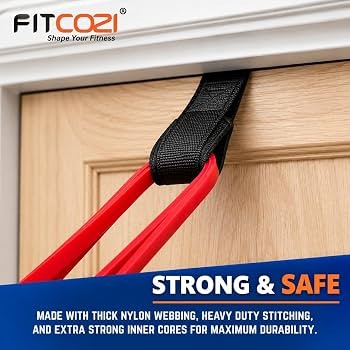
The load passes through the elastic, any handles or clips, the anchor and the structure holding it; follow your product's instructions and stretching limits. If the anchor or any part looks doubtful, skip the anchored movement.
- Examine the elastic. Look for tears, cracks, thinning, shredding and frayed edges. Stop using any band you doubt.
- Check each connection. Inspect handle stitching, clips and anchor attachments as well as the band itself.
- Secure a door anchor, if the manufacturer allows one. Follow its required door orientation, and make sure the door can't be pulled open, by you or anyone else, during the exercise.
- Mind the recoil. Keep your face out of the line where a loose clip would snap back.
- Control the return. Never let go of a stretched band, and stay within the manufacturer's extension limits.
The American Council on Exercise describes equipment checks and controlled resistance-band use. PTP's safety instructions give examples of manufacturer-specific attachment precautions.
Two Reddit users described gear failing on them. The first had a door anchor snap:
Coincidently, right when you posted this my nylon door anchor from undersun snapped, slingshotting a metal anchor into my stomach. If I was doing a pull down, I’d be missing teeth. Personally, I’m looking into a more stable anchor moving forward.
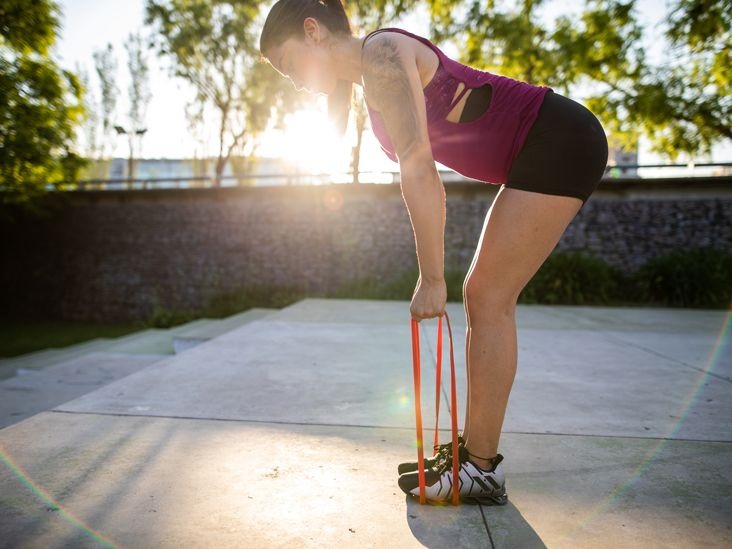
A second user had a band break during seated rows:
Funny I just had one snap on me too while also doing some seated rows.
I was using the typical generic branded ones from Amazon which all brands look like they were made from the same manufacturer. It's one of the lighter thinner ones. Doesn't get much use except when I bring them for travel. Other than that it stays in a plastic box in a closet, no sunlight or UV. It was at about 50% in when it snapped so you might be on to something.
I tried looking for some cracks or chipping and did find a slight shredding (?) in one spot, but the spot where it split was clean and no noticeable wear.
I'm probably going to stick with the thicker ones from now on or maybe look into a more reputable brand.
This is a general-fitness routine. People with an active injury, persistent pain, recent surgery, or pregnancy or postpartum exercise limits need individual guidance on which movements suit them.
Choose exercises by the movement they train
A good core session trains the trunk in different ways. Anti-rotation means resisting a turning force. Anti-extension means stopping your lower back from arching. A crunch trains controlled trunk flexion, and a chop adds controlled rotation.
| Movement | Core task | Setup | Watch for |
|---|---|---|---|
| Pallof press | Resist rotation | Band on an anchor at chest height | Chest turning toward the anchor |
| Mini-band dead bug | Resist extension | Mini-band between opposite hand and foot | Lower back arching |
| Kneeling band crunch | Trunk flexion | Band on a higher anchor | Arms yanking the band |
| Foot-anchored band chop | Controlled rotation | Long flat band under the forward foot | Jerking or a slipping band |
| Band rollup | Controlled trunk movement | Long flat band around feet, ends in hands | Momentum on the way down or back up |
Pallof press: keep your chest facing forward
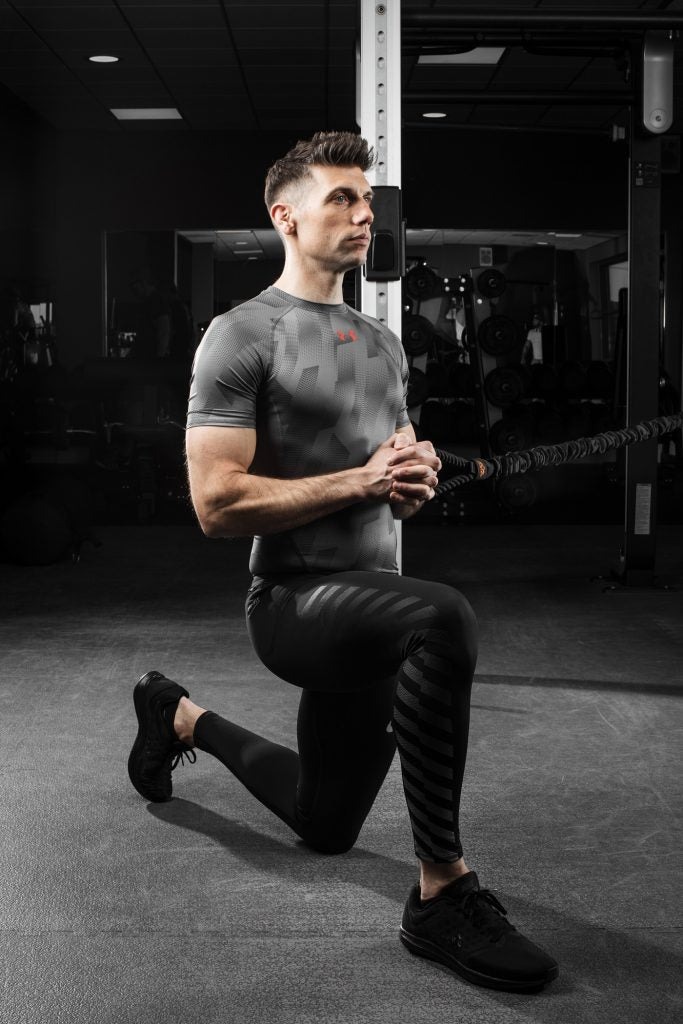
Attach a long band to a secure anchor at chest height. Stand sideways to the anchor and hold the band against your chest with both hands. Press your hands slowly forward and keep your chest facing straight ahead as the band pulls sideways. Bring your hands back without letting your trunk turn.
If you rotate toward the anchor, shorten the reach or reduce the starting tension. Work both sides with the same position and reach.
Mini-band dead bug: control the arch
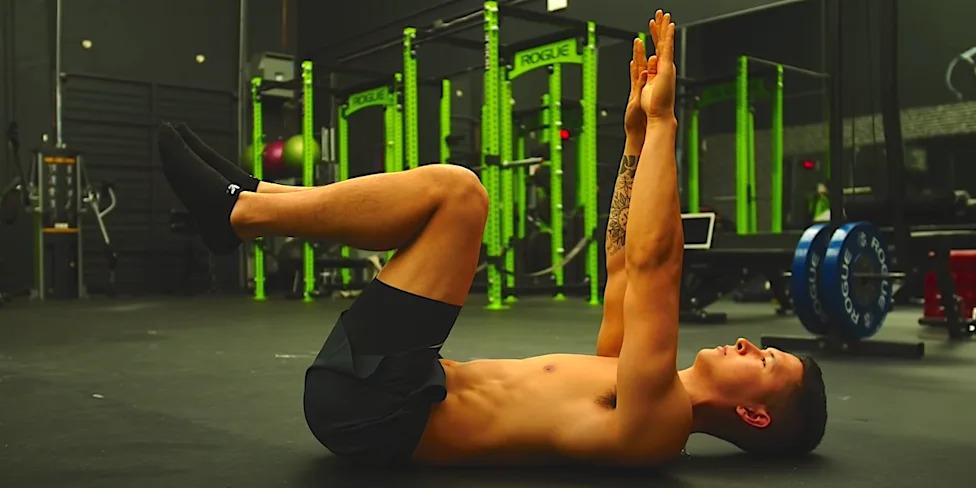
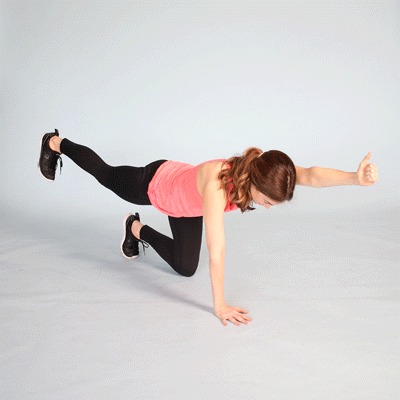
Lie on your back with your knees raised and your trunk steady. For this intermediate version, loop a mini-band around one foot and hold the other end with your opposite hand. Extend the banded leg slowly and keep your ribs and pelvis steady. Return slowly, then set up the other side.
Shorten the leg reach when your lower back starts to arch. The simpler non-band option is a bodyweight dead bug, with alternating arm and leg movement and no elastic.
Anchored band crunch: let the trunk curl
Use a band and higher anchor made for the kneeling crunch. Kneel with the band held near your shoulders. Curl your rib cage toward your pelvis, keep your arms steady, then return slowly. Your trunk should drive the curl.
If your arms yank or your neck strains, lower the resistance and make the movement smaller.
Foot-anchored band chop: follow a smooth diagonal
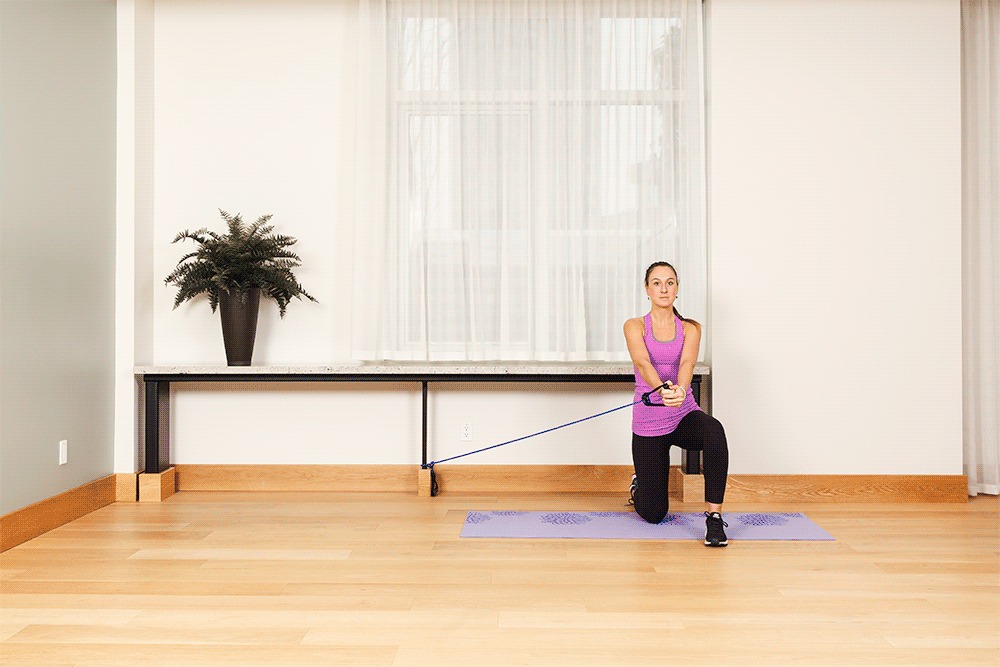
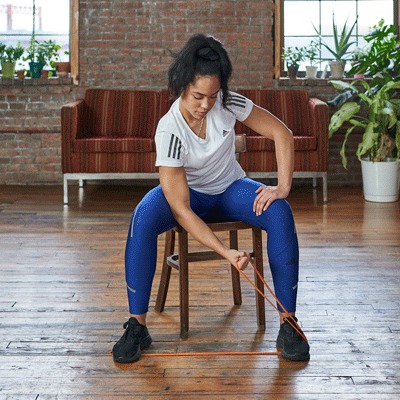
Take a split stance and set a long flat band securely under your forward foot. Hold the free end with both hands. Keep your hips steady, rotate your torso toward your rear leg and lift your hands along a diagonal. Return slowly, without whipping the band or letting it slip from under your foot.
If the band shifts or your torso jerks, shorten the movement and reduce tension. This foot-anchored version loads you differently from a high cable-style chop.
Band rollup: lower slowly, then roll up
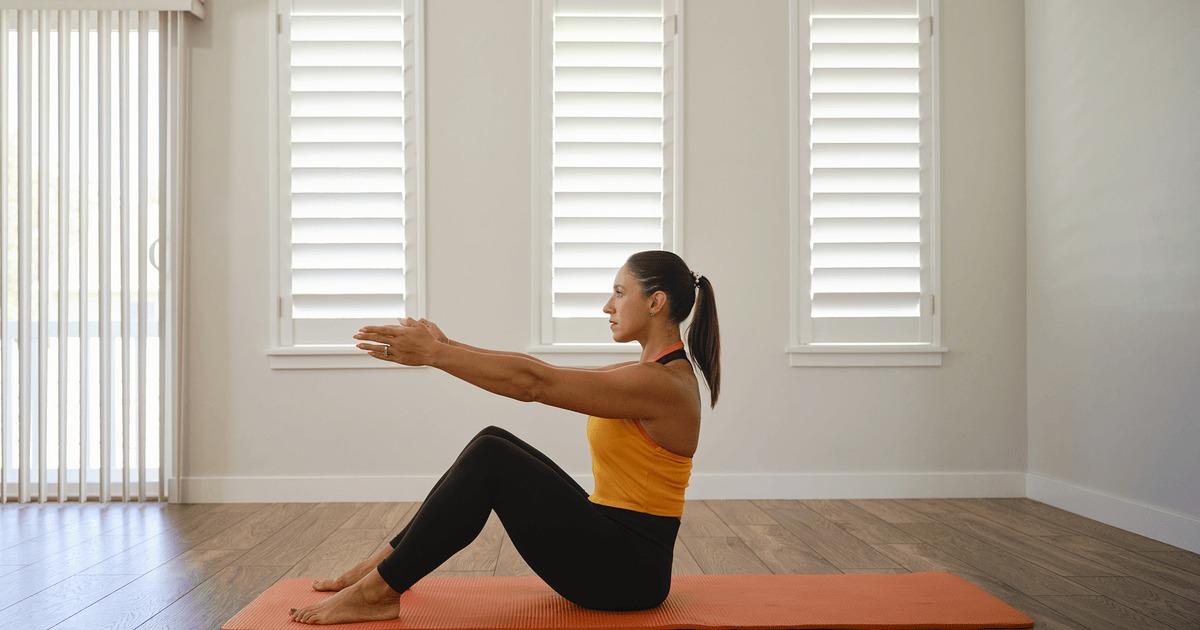
Sit with a flat band looped around your feet and an end in each hand. Keep your arms straight and slowly roll your torso down until you're lying on your back. Use the band's assistance to roll back up to sitting. Keep the band secured at your feet and the pull manageable throughout.
Use a smaller range if momentum takes over. If the band can't stay in place, switch to a movement without the band.
The NASM exercise guide explains the core functions behind anti-rotation and controlled trunk training. Healthline's abdominal-band exercise guide also describes these anchor-free band setups.
Put the exercises into a short core session
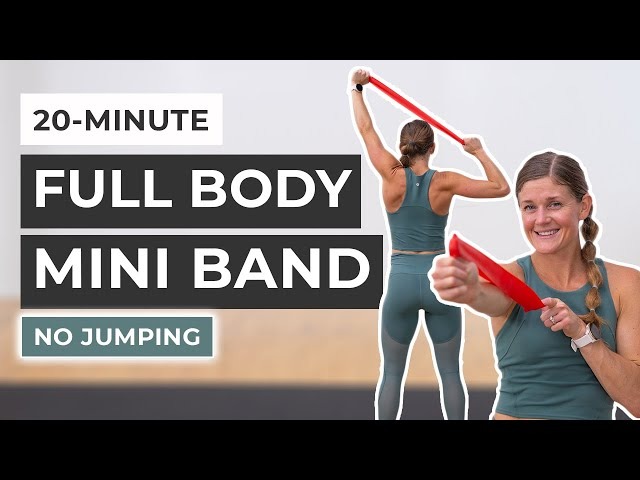
Pick the track that matches your equipment and do one or two rounds. Plan on 15 to 20 minutes for setup, technique practice, movement and rest.
| Stage | Secure anchor | Mini-loop, no anchor | Long flat band, no anchor |
|---|---|---|---|
| Practice | Easy Pallof press | Bodyweight dead bug | Rehearse the foot-anchored band position |
| First movement | Pallof press, both sides | Mini-band dead bug (intermediate; use the bodyweight version if control slips) | Foot-anchored band chop, both sides |
| Second movement | Anchored crunch | Bodyweight toe taps | Band rollup |
| Optional third | Chop | Bodyweight side plank | Bodyweight dead bug |
| Finish | Note your steady reps | Note both sides and how steady you felt | Note whether the band stayed put and how steady you felt |
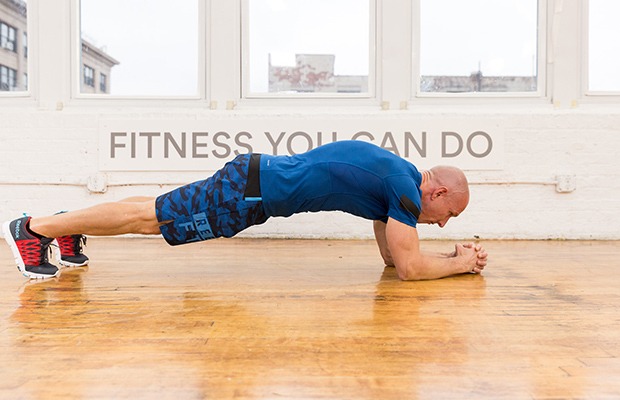
For bodyweight toe taps, lie on your back with knees bent and raised. Lower one foot to the floor, return it to the raised position, then alternate, keeping your trunk steady. For a side plank, support yourself on one forearm and the side of your feet, lift your hips and hold your body in a straight line.
A general-fitness starting routine, not medical advice. Adjust sets and repetitions to the quality of your movement.
On movements counted in reps, start with 6 to 10 slow repetitions per side. Hold a side plank for a manageable time, and rest long enough to do the next movement with good form. The mini-loop track mixes one band exercise with bodyweight substitutions. If even that band exercise doesn't suit you, use the bodyweight versions.
Skip the optional movement if fatigue, balance or a setup change makes your form unreliable.
Troubleshoot the movement that feels wrong
When a movement feels awkward or uneven, compare what your body is doing with what the exercise is meant to resist or control. That's a better starting point than chasing a stronger burn.
| What you notice | What to look for | First fix |
|---|---|---|
| Pallof press feels like an arm exercise | Chest turns, shoulders rise | Shorten the press or reduce tension |
| Dead bug works mostly through the hips | Lower back arches as the leg extends | Shorten the reach or remove the band |
| Crunch pulls on the neck or arms | Arms yank, torso swings | Lower the tension and shorten the curl |
| One side feels harder | Anchor distance, band stretch or reach differs | Match the positions and simplify the movement |
| No burn or next-day soreness | Reps stay controlled and repeatable | Judge the set by form and effort, not by burn |
If a movement causes pain, or one side stays much harder even after you simplify the setup, stop that version and get a professional assessment. A sensation alone can't tell you what's going on underneath.
Progress when each repetition stays controlled
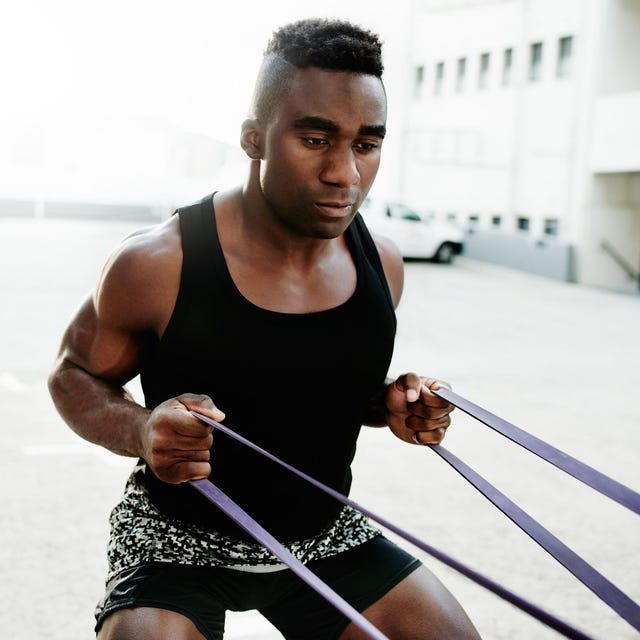
With elastic resistance, stepping farther from an anchor adds tension before the exercise even starts.
- Set a baseline. Record the version, the exact band, your position, and the repetitions or hold you managed with a steady trunk.
- Change one variable. Add a repetition, extend your reach a little, or adjust the band or position if the manufacturer allows it.
- Test movement quality. Watch for turning, arching, shoulder shrugging, loss of balance or a return you can't control.
- Keep or reverse the change. Keep it only while the movement stays steady.
ACE's July 2025 resistance-band guidance describes changing the challenge by adjusting the band or exercise position.
Color and advertised resistance labels don't compare reliably across brands or extension lengths. A thicker band doesn't raise the capacity of its attachment or door. If your setup is the limit, pick a different exercise or equipment built for the load.
Measure core progress without promising visible abs
A steadier Pallof press, a dead bug with better trunk control, or more clean repetitions in the same setup all count as real progress. Visible abdominal definition depends on body-fat distribution and other factors beyond ab exercises.
In a 2011 study of 24 people, six weeks of abdominal exercises improved abdominal endurance but didn't significantly reduce measured abdominal fat. You can read it in the published trial record.
A small 2023 study of 16 men reported localized trunk-fat changes over ten weeks, but it used a different, higher-volume abdominal-endurance protocol. That doesn't show that this short band routine will predictably remove fat from one area.

Track steadiness, range, repetitions and how cleanly you return to the starting position. An unchanged waistline can still come with better control of the movements you train.
No anchor? Use an anchor-free band version or a bodyweight substitute, and base your next session on what you can repeat safely. For a closer look at abdominal bracing and deep-core control during band work, read the transverse-abdominis exercise guide.