
How Many Squats Should You Do a Day? A Goal-Based Guide
A useful squat target depends on your experience and the effort of each set, not a universal daily number. If you're a healthy adult starting out with bodyweight squats, do one set of 8 to 12 controlled reps on two days a week. Use that first set to check your technique and effort.
For real strength work, the set has to feel hard enough that another rep would be tough. Easy movement fits on the other days, and hard sessions need recovery. Judge how the first set felt before you schedule the next tough one.
How Many Squats Should You Do? Start Here
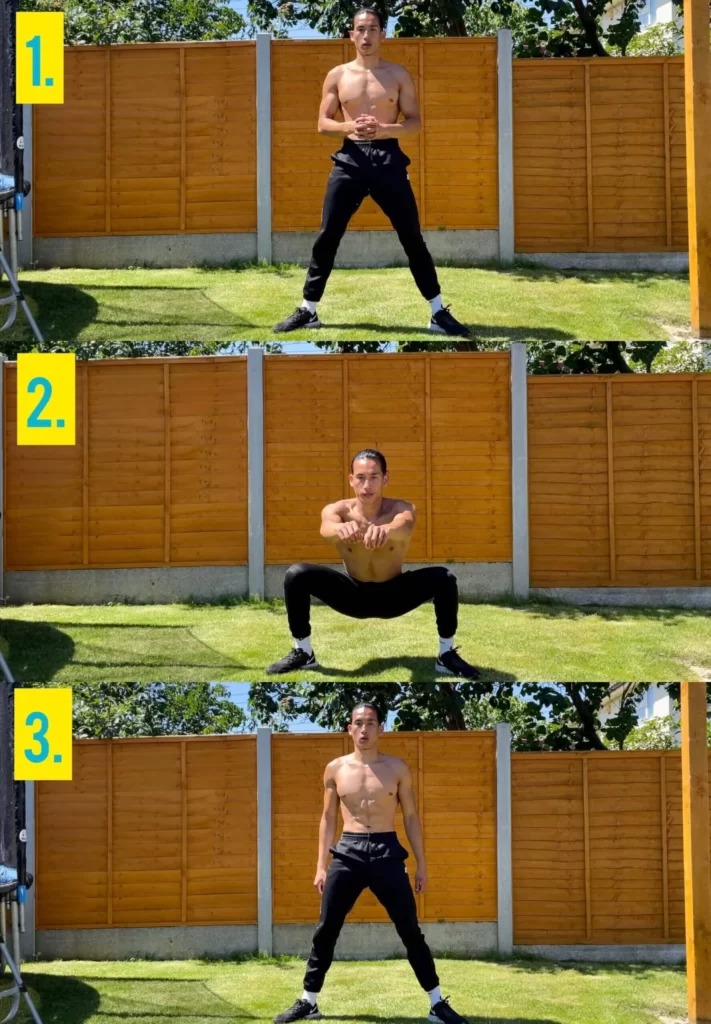
Treat 8 to 12 controlled reps as a starting test of form, not a daily quota. Leave recovery time between demanding sessions.
The CDC's muscle-strengthening guidance describes about 8 to 12 repetitions per set, at an effort where another repetition is difficult. A single set that's hard enough gives you a useful starting framework, and more sets can add benefit. The CDC recommends strength work for all major muscle groups on at least two days per week.
Three numbers are easy to mix up:
- Repetitions: How many times you squat before stopping.
- Sets: How many groups of repetitions you complete in one session.
- Frequency: How often you perform those sessions during the week.
Ten squats in one set and ten squats repeated over several hard sets add up to different amounts of work.
Watch how your first set goes. If 8 reps already feel hard to control, drop the number or use an easier, supported variation. If 12 feel effortless, you need more challenge before it counts as strength training.
The American Academy of Orthopaedic Surgeons also names a challenging set of about 12 to 15 repetitions as a useful strength-training approach.
Choose Your Squat Number by Goal
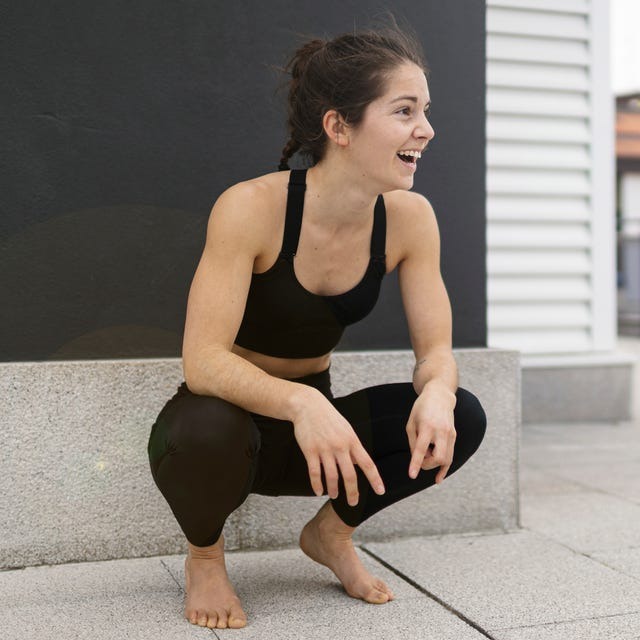
Your goal decides what a useful squat session looks like. Someone doing squats on a work break and someone building stronger legs have different aims, even when their rep counts match.
The American College of Sports Medicine's 2026 resistance-training guidance draws on 137 systematic reviews involving more than 30,000 adults. The evidence supports regular resistance training, with the training variables adjusted to the goal: strength, muscle growth, or another adaptation.
| Your goal | What matters most | How to interpret squat repetitions |
|---|---|---|
| General movement | Comfort, consistency, manageable effort | A small easy set works as a movement habit. |
| Muscular endurance | Repeated controlled movement with relatively light resistance | Higher reps suit endurance-focused practice. |
| Building muscle | Challenging sets and sufficient weekly training stimulus | Easy daily reps alone give limited muscle-building stimulus. |
| Greater strength | Appropriate resistance, skill, and progressive challenge | Heavier or harder squats become useful as your ability grows. |
| Weight management | Physical activity as part of broader habits | Squat counts don't set a predictable calorie deficit or body-shape change. |
Picture two adults who each complete 30 bodyweight squats. One struggles to control the final reps. The other finishes comfortably and could keep going. Both did 30 reps, but their effort was different.
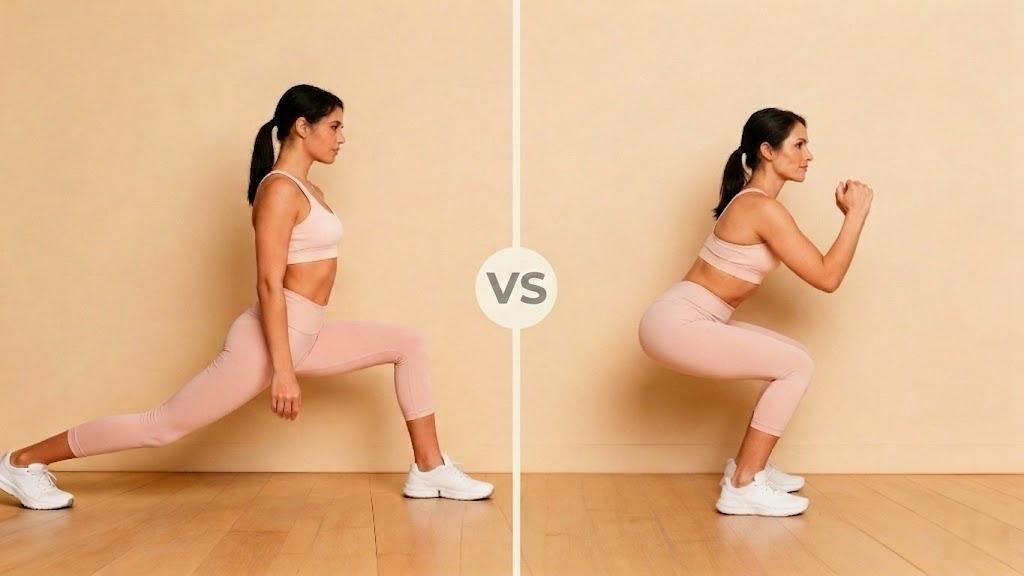
A meta-analysis covering 67 resistance-training studies and 2,058 participants found diminishing returns as weekly training volume increased, with different relationships between frequency, strength, and muscle growth.
Should You Do Squats Every Day?
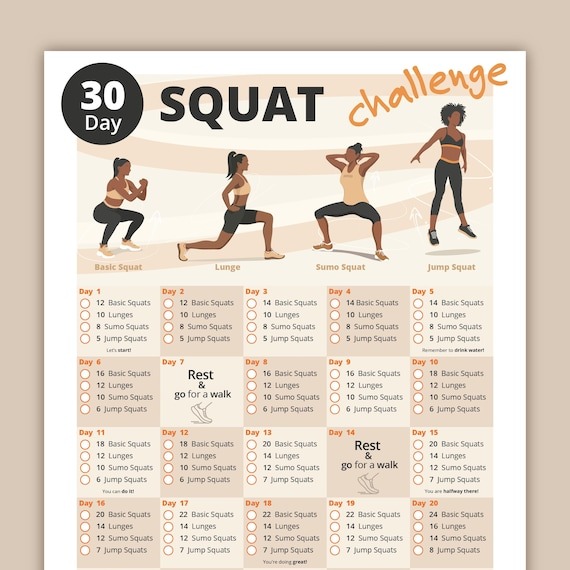
You can do easy squats often if the movement feels comfortable and you're recovering well; demanding squat workouts tax your muscles more, so schedule them around your other exercise and recovery.
| Easy daily practice | Challenging squat workout | |
|---|---|---|
| Main purpose | Movement habit or light conditioning | Strength or muscle-building stimulus |
| Relative effort | Comfortable and repeatable | Noticeably demanding |
| How to measure the work | Reps make a convenient habit target | Sets, reps, resistance, and effort all count |
| Frequency decision | You can practice more often | Recovery and other lower-body training set the schedule |
A few comfortable squats during the day put a very different recovery demand on you than difficult weighted sets. The American Academy of Orthopaedic Surgeons advises a full day between demanding strength sessions for the same muscle groups. Comfortable movement still fits between those workouts.
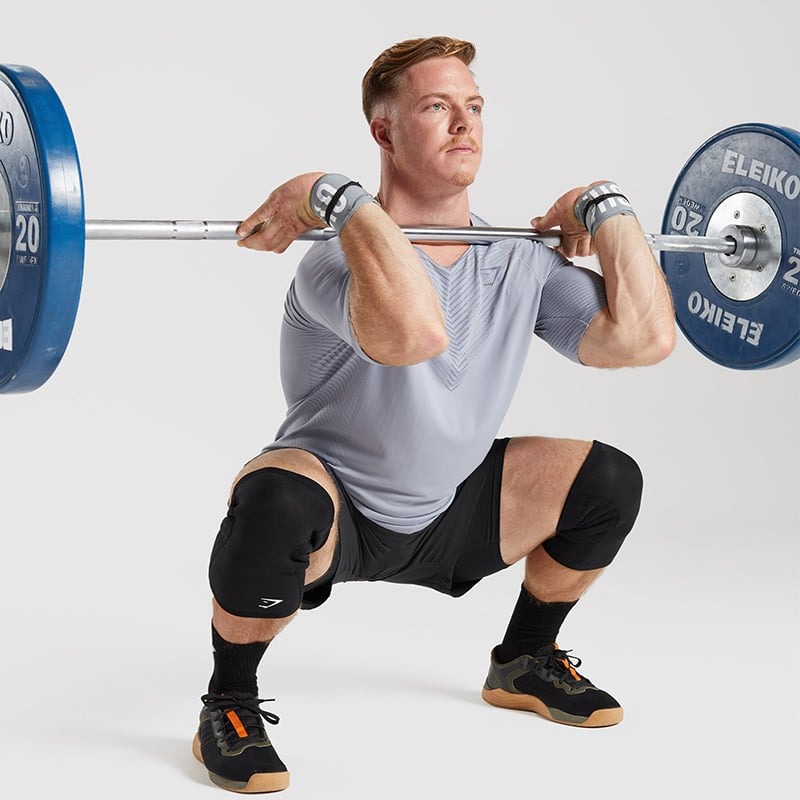
Plenty of people hear "do 100 squats a day" with no explanation of the training effect behind it.
I recently decided to start working out as I weigh like 140 pounds and am a skinny dude. Getting a routine from a trainer tomorrow and gonna start going to the gym.
I work at a gas station and have this regular that is a really buff dude in his early 40s that looks great. I chatted him up asking about lifting for a bit and one piece of advice he gave me was to do 100 unweighted squats every day. Something about testosterone and how it will help with gaining muscle.
So night two of doing squats (divided them into sets of 20 while doing sets of 20 crunches/situps in between as a leg rest period, also want to get abs too) and I'm kinda just wondering if this constitutes overtraining. My legs were definitely a bit sore today from last night but it wasn't terrible; my abs were a bit more sore to be honest.
The way I'm doing this is I'm doing them at night once I get home from work at 10:30-11:00PM. I try to eat something first as I'm often hungry after work, I might smoke a cigarette, then do the squats/situps, then have a protein shake. Usually another 2-3 hours before I'm heading to bed at around 1-2AM.
He was told it would help with testosterone, then worried about sore legs after two evenings. Ordinary soreness alone doesn't point to clinical overtraining syndrome.
Before your next training day, decide whether it's easy movement, another demanding lower-body session, or recovery. Base that on how hard the last session was, how your legs feel, and what else you have planned.
How to Check Whether Your Current Number Is Too Many
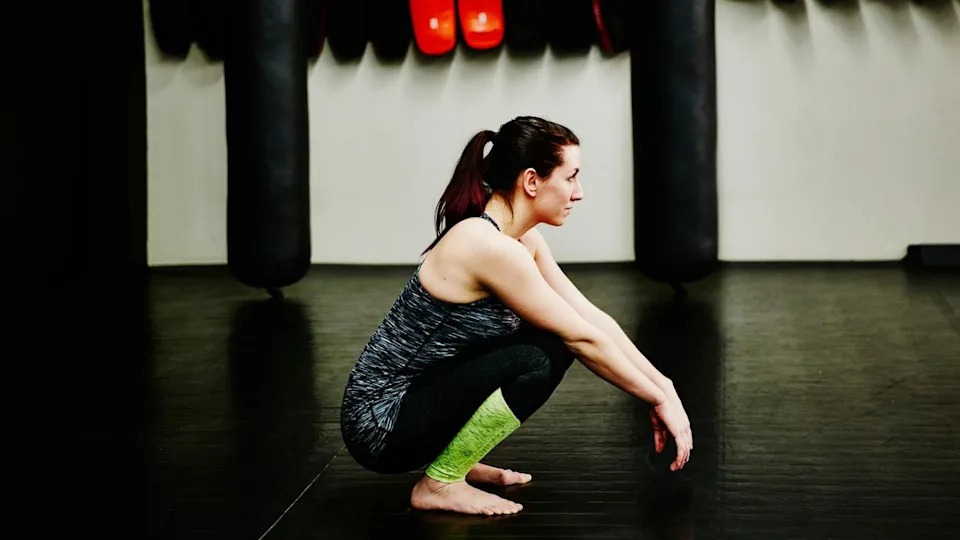
Your squat count is too high for your current routine when your technique breaks down, fatigue is hard to recover from, or the squats keep getting in the way of activities you want to do.
A runner in r/bodyweightfitness described mixing a high-rep squat routine with regular running:
I tried doing 100 squats a day 30-40-30 but they made my quads so sore that next morning my 5K run suffered badly. I am curious to kn ow how runners incorporate high rep squat training in their program. For me the schedule is M W F calisthenics and T T S running.
The takeaway is about planning. An extra squat session can compete with another activity, even when the reps seem manageable on their own.
Running, hiking, cycling, and gym leg sessions all load your lower body, so count your squats alongside them.
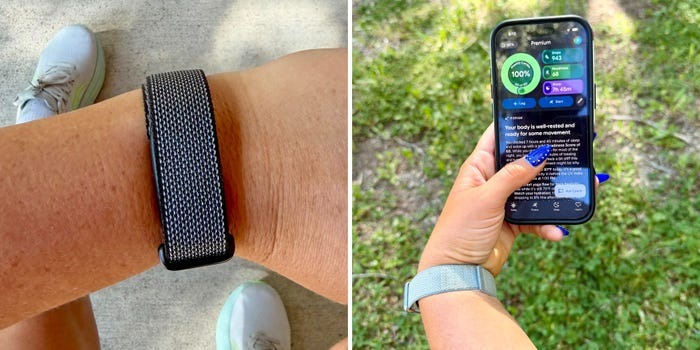
For several sessions, keep a brief record of three things:
- Work performed: Repetitions, sets, and whether the exercise was bodyweight or loaded.
- Effort and control: How demanding the reps felt and whether the final ones stayed controlled.
- Recovery and interference: Whether soreness or fatigue affected your next planned activity.
How to Increase Difficulty Without Just Adding Reps

When your sets get consistently easy, you can raise the challenge with more resistance, a different variation, better-controlled movement, or a small increase in sets. Squat depth, knee tracking, and single-leg movement come up again in the curtsy-lunge technique guide, which covers a different exercise with different demands.
This is progressive overload: gradually raising the demands of training as your ability grows.
Adding reps has its place, especially for muscular endurance. A long series of easy bodyweight squats still gives a different stimulus from a smaller number of properly challenging loaded squats.
- Improve the movement: Make your existing reps steady and consistent through a comfortable range.
- Change the variation: Move from a basic bodyweight squat to a goblet or held-weight squat.
- Add work: Add one manageable set once the current workload stops feeling demanding.
Change one variable at a time so you can judge the effect. Added resistance requires good technique and readiness, and heavier isn't automatically better.
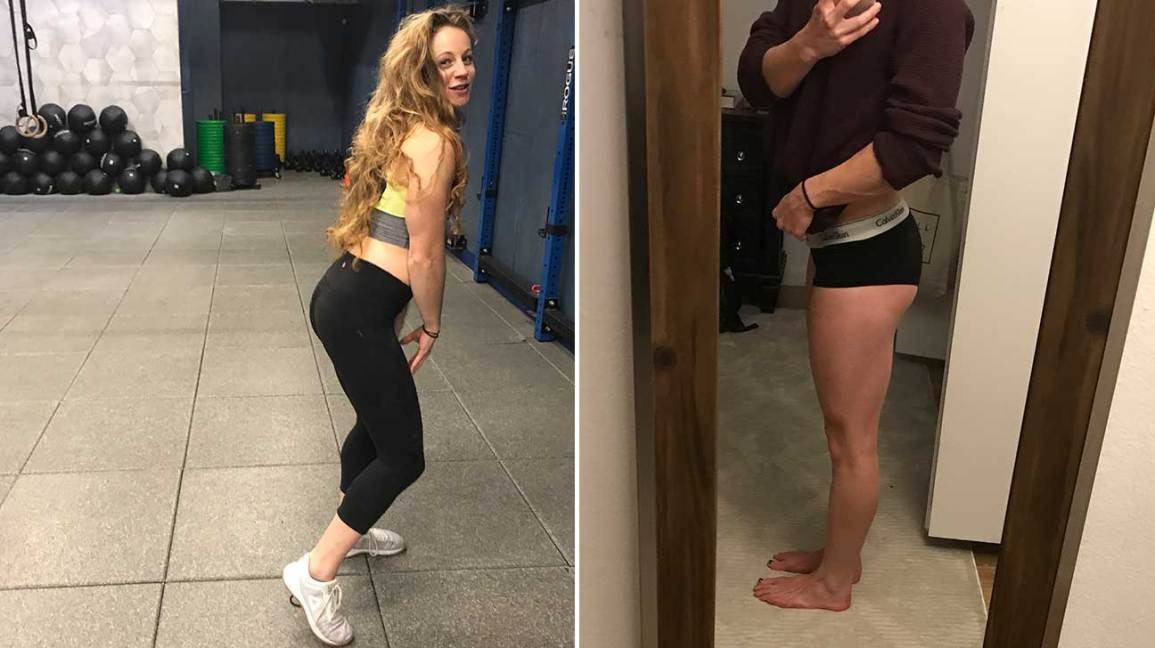
A discussion in r/GYM shows how progression and a daily rep habit get tangled together:
I've been doing 100 squats a day since May 1st, and I have been holding two 20 lb. dumbbells while doing so for the last 2 months (bumped up from 20 lbs.) I'm up to almost 23,000 squats over 235+ days. I'm a little obsessed now with the streak and don't really want to break it, but am I doing my ass a disservice by doing it every day? For the record though, my backside has never looked so good, and with watching what I eat and working out 4-5 days a week, I'm down 50 lbs. so far.
Any tips would be appreciated!
That account mixes changes in resistance, other workouts, and eating habits, so you can't credit the weight change to squats alone.
Bodyweight Squat Form Check
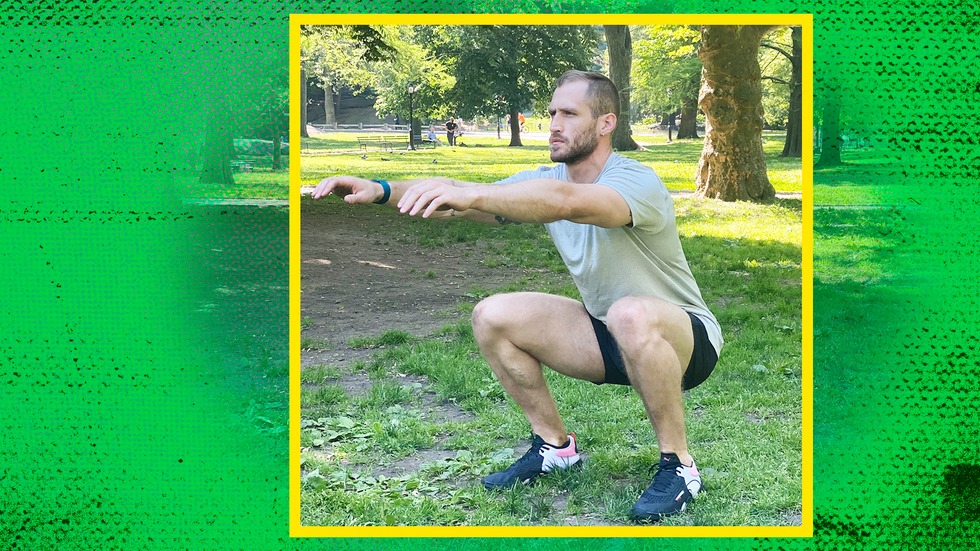
Stand with your feet in a stable, comfortable position and engage your trunk so you stay in control. Bend at your hips and knees and lower yourself steadily, letting your knees move in line with your feet. Go down through a range you can handle comfortably, then stand up without bouncing or losing your balance. Stance and depth vary with body proportions and mobility. If control slips, use a supported variation or end the set. You can compare your movement with the ACE bodyweight squat demonstration.
What About 100 Squats a Day and 30-Day Challenges?
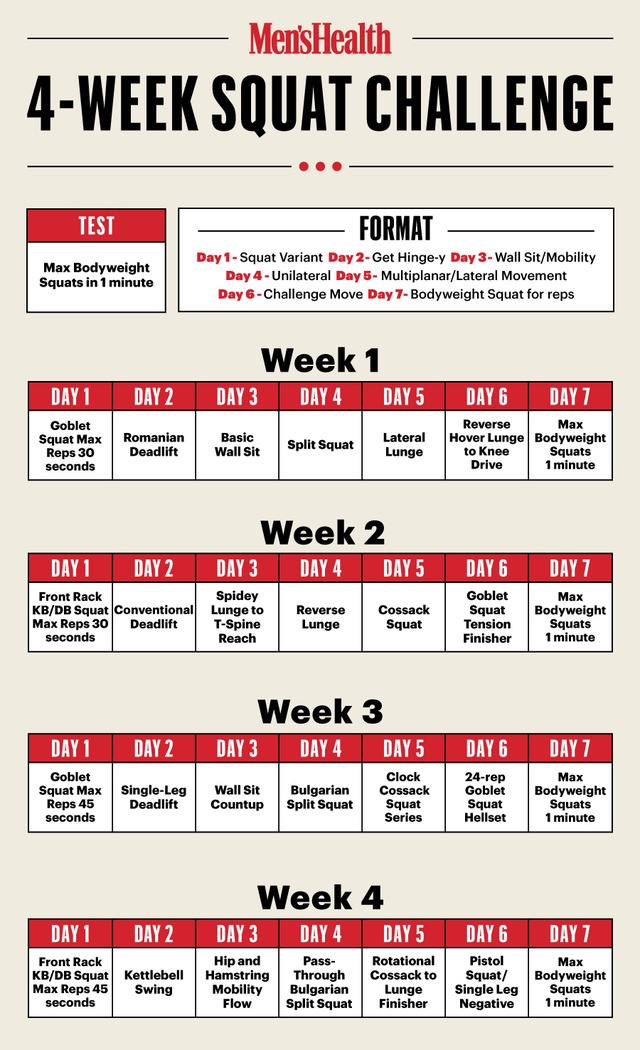
A 100-squat daily challenge can build consistency or endurance-oriented movement. The round number doesn't come from an official CDC or ACSM daily squat recommendation.
If you like keeping a streak, the challenge can keep you motivated. Results in strength, muscle growth, physical function, and body composition still depend on the actual training stimulus and your wider circumstances.
A 2023 study assigned 25 community-dwelling older adults, averaging about 78 years of age, to squat or control groups. The squat group performed 100 bodyweight squats daily for four months.
The 2023 home-based squat study found no marked improvement in the measured muscle-strength, muscle-thickness, or physical-function outcomes, while firing rates of relatively low-recruitment-threshold motor units decreased in the squat group.
Those results apply to that population, protocol, and those outcomes. They don't show that daily bodyweight squats fail for everyone.
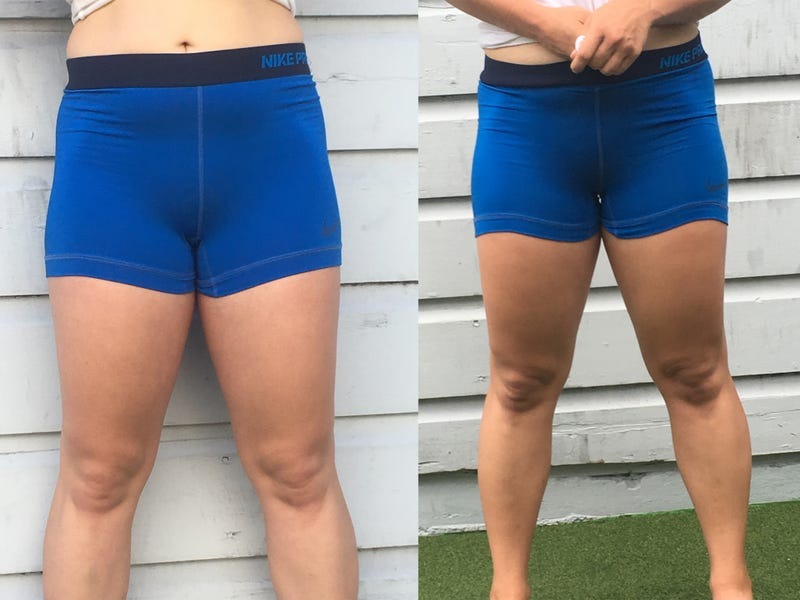
Another firsthand account shows a fixed challenge turning into a long-term habit:
I did 100 squats a day for 30 days along with my regular workout program. I started w 4x25 Bodyweight w about 30 sec rest between sets. From there I mixed it up. Some days 2x50. Sometimes with dumbbells. Sometimes Sumo, goblet, with calf raises etc. whatever I felt like.
By day 30 I had noticeable more definition in quads. I could do 100 consecutively at end.
I now throw in 25 a day (along with daily pushups). on top of whatever my normal program has me doing.
This participant reports a subjective change in appearance and better rep performance, all while following a regular workout program.
A challenge can end sensibly even if you enjoy the routine. Before you start one, decide what you want from it, whether you can keep your movement controlled, and what your routine looks like afterward.
A Practical Two-Week Beginner Example
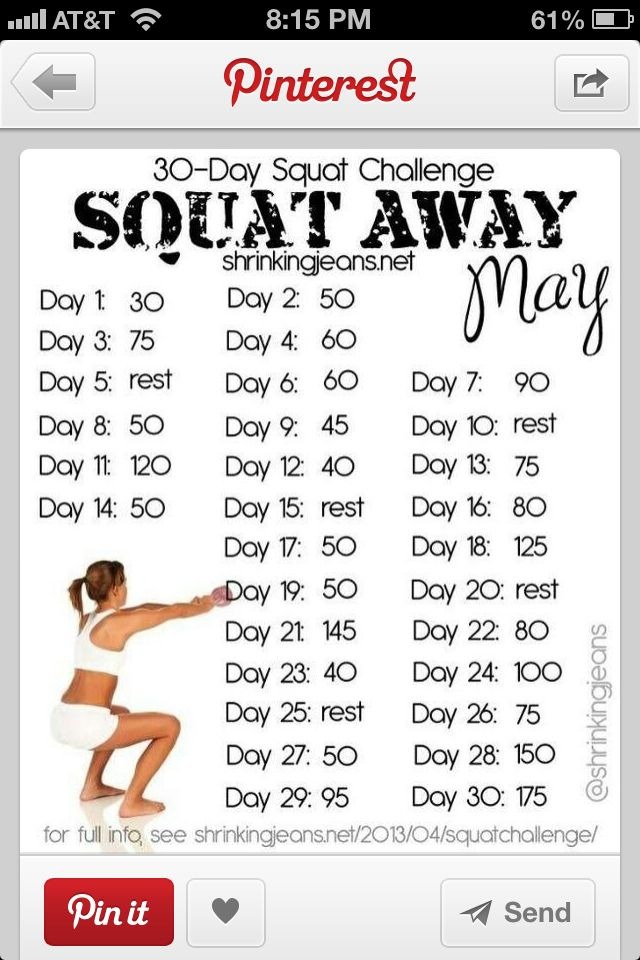
Put two squat sessions on separate days each week and arrange your other activity around them. The example below uses Monday and Thursday for convenience. No scientific reason favors those days.
| Session | Squat work | If the session feels unsuitable |
|---|---|---|
| Week 1, Monday | One controlled set of 8 to 12 bodyweight squats, if manageable | Use fewer reps or an easier variation |
| Week 1, Thursday | Repeat a manageable set if you've recovered | Allow more recovery or lower the difficulty |
| Week 2, Monday | Repeat the previous workload; optionally add a modest second set | Keep the original workload |
| Week 2, Thursday | Repeat, or make a small adjustment based on how the week went | Reduce the session's demands |
Between these sessions, ordinary comfortable movement is fine. Treat it as movement practice until you pick a version hard enough for strength work if the set feels easy throughout.
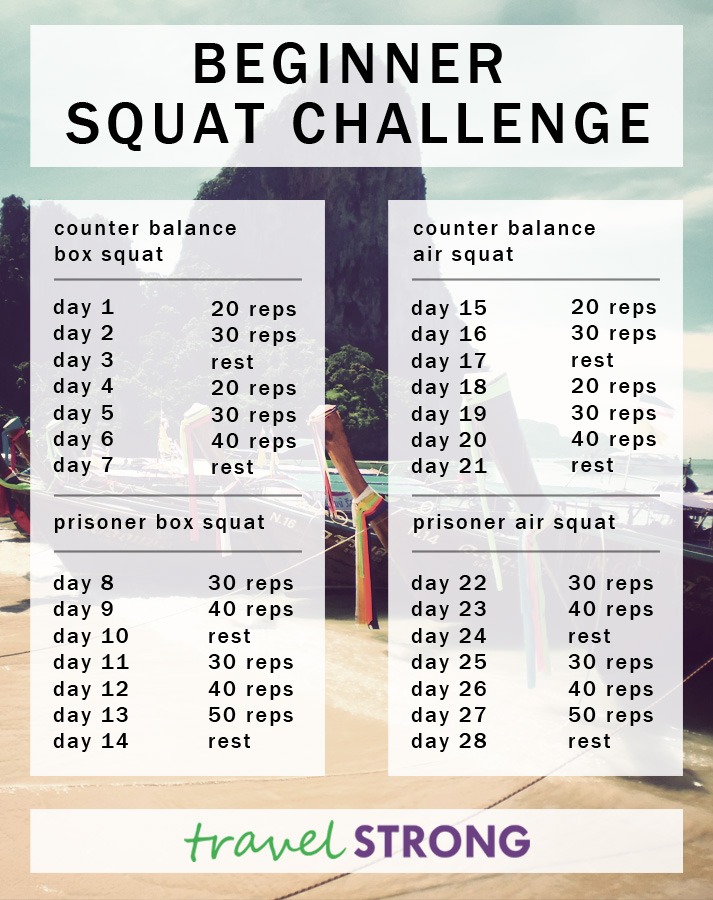
This plan is an example built on the CDC's general strengthening framework and gradual progression. It hasn't been tested as a two-week program.
Squats train only part of your body. A complete strengthening routine covers the other major muscle groups in general activity guidance.
When to Rest, Modify, or Ask for Help

Some muscle soreness after unfamiliar or challenging exercise is part of the normal post-exercise response. Persistent trouble functioning, worsening symptoms, or concerns about an existing injury need closer attention.
Severe muscle pain, marked swelling, or dark urine after exercise are significant warning signs. Stop the workout and seek immediate medical care.
For ongoing, nonurgent problems with squat technique or choosing variations, a qualified trainer or physical therapist can assess your movement. An existing medical condition or rehabilitation requirement may call for an individualized approach.