
Burpee Benefits: What They Improve and How to Do Them
A burpee offers demanding, equipment-free exercise in a small space—provided you can perform a variation with control. They work your heart, your lungs, and several muscle groups at once. If jumping, getting down to the floor, or your main goal rules them out, use a modified burpee or pick a different exercise.
What benefits do burpees offer?
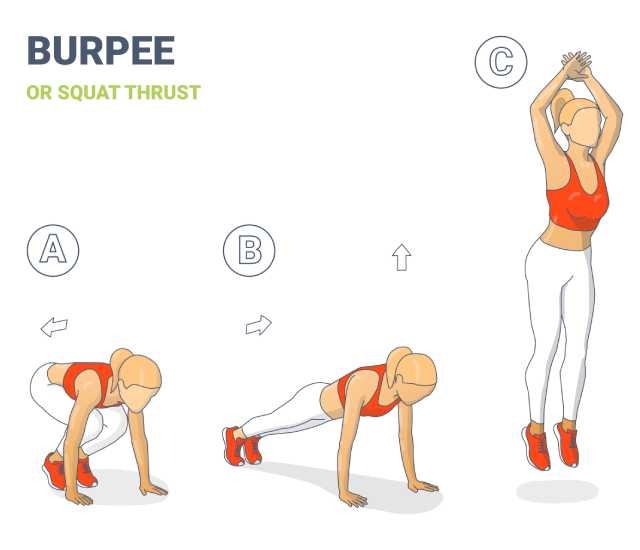
In a burpee, you move from standing down to the floor, into a plank, then back onto your feet. Depending on the version, a push-up or jump adds more work; repeated rounds combine coordination, muscular effort, and cardio. If you want to pair burpees with other no-equipment work, try the outdoor workout ideas.
- Cardiovascular effort. Repeated floor-to-standing movements raise your heart rate and breathing rate fast, especially in vigorous intervals.
- Muscular endurance. Your legs, trunk, and upper-body support muscles work nonstop as you move between positions.
- Whole-body coordination. Every rep asks you to control the way down, hold your body steady, and get back up.
- Adjustable difficulty. Step back, drop the push-up or jump, or put your hands on a stable incline.
- Minimal equipment. Many versions need only floor space and a stable surface to lean on.
For general conditioning, that combination works well.
What research says about conditioning, endurance, strength, and power
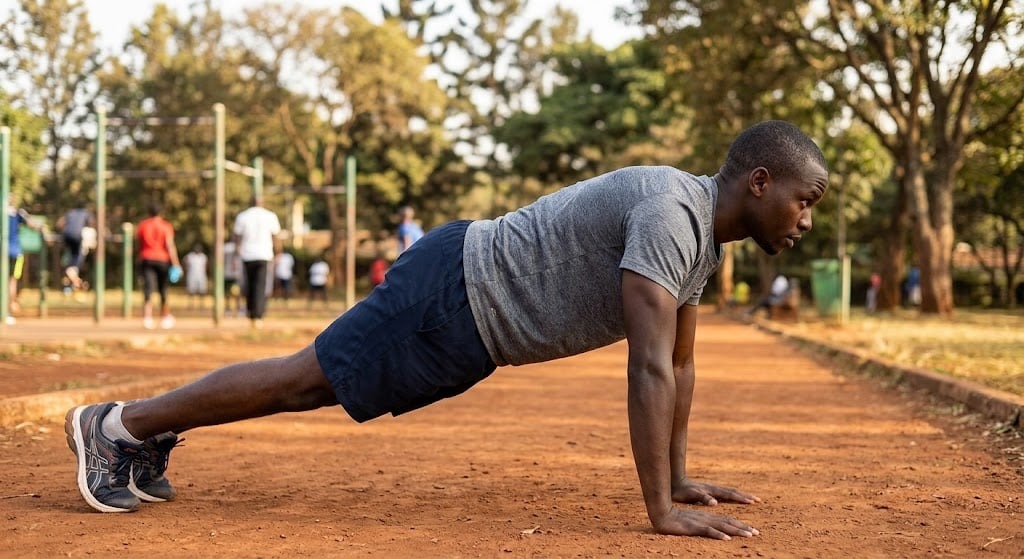
Burpees produce vigorous effort in a short interval. In a 2014 study, 11 moderately trained adults did four 30-second bouts of modified burpees or sprint cycling, with four minutes of active recovery between bouts.
Modified burpees pushed heart rate to 84.6% of peak. Cycling reached 86.8%. The gap was not statistically significant (p > 0.05).
Results measured over weeks are a different matter. Studies of bodyweight intervals found gains in some fitness measures, while a burpee-focused experiment produced a narrower set of changes.
| Outcome | What researchers found | What the result tells you |
|---|---|---|
| Immediate cardiovascular demand | A 2014 modified-burpee comparison in 11 adults produced high heart-rate and oxygen-use responses during short bouts. | Vigorous burpee intervals are physiologically demanding. |
| Aerobic fitness after four weeks | In a 2012 study of 22 young women, the bodyweight interval group improved peak oxygen uptake by about 8%; the treadmill group improved by about 7%. | A short bodyweight interval program improves measured aerobic fitness. |
| Aerobic fitness after six weeks | A 2021 study of 19 inactive young adults reported posttraining peak oxygen uptake of 34.2 versus 30.3 mL/kg/min in the exercise and control groups. | A brief, five-movement bodyweight routine produced a favorable aerobic result. |
| Muscular endurance | The 2012 bodyweight group improved several endurance tests, including push-up performance. | Bodyweight work builds endurance. |
| Jump performance | In a 2024 randomized trial involving 43 active adults, the burpee group improved countermovement-jump height (p=0.0014; effect size 0.72). | The tested burpee protocol improved explosive performance. |
| Body composition and aerobic-capacity estimate | The same 2024 trial found no statistically significant changes in body composition or estimated maximal oxygen uptake (VO₂max), derived from a shuttle-run test. | Neither measure improved significantly. |
The two favorable aerobic studies used mixed exercises. In the 2012 study, participants picked one bodyweight movement per session from four options, including burpees. The 2021 program used five movements in a session of about 11 minutes. Neither result isolates the effect of burpees.
The 2024 randomized burpee training trial offers a more specific comparison. Healthy, active adults did a brief repeated-effort protocol, and the burpee group improved jump height.
For strength and muscle growth, the American College of Sports Medicine's resistance-training guidance stresses load and volume matched to your goal. Burpees involve muscular work, but progressive resistance training is the more direct route to maximal strength or muscle size.
Which muscles work during a burpee?

Your quads, glutes, and hips drive you down and back up; in the plank, your shoulders hold your weight and your abs keep your torso straight. A push-up adds work for your chest, shoulders, and triceps. A jump adds explosive work for your legs and calves. Drop either one and those muscles do less.
How many calories do burpees burn?
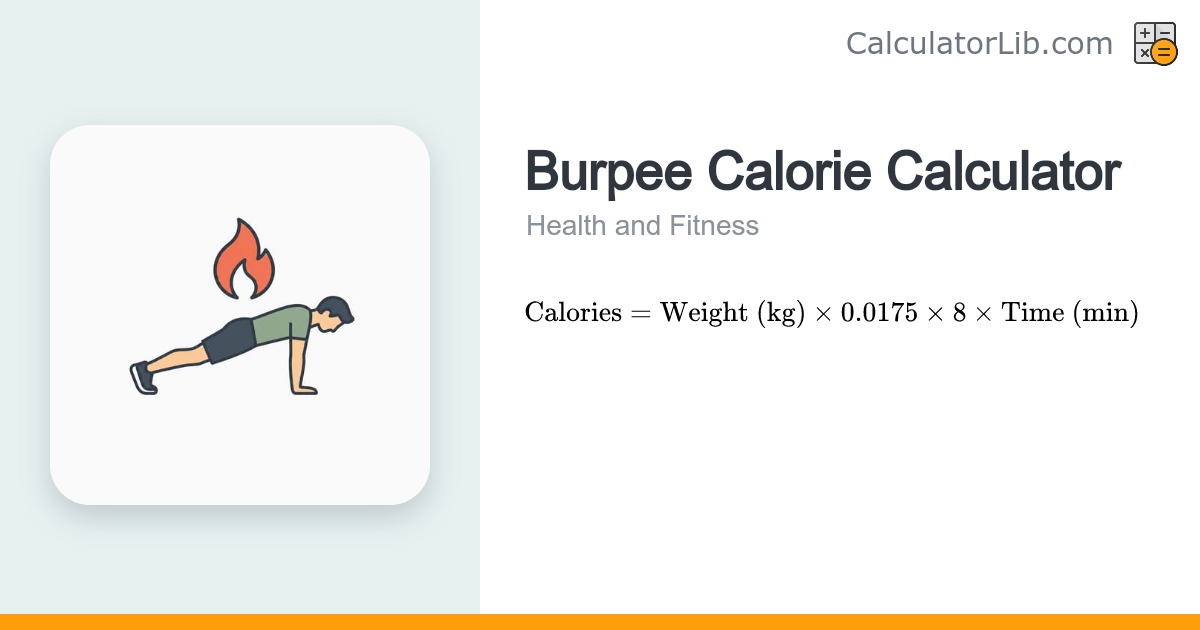
Burpees are demanding, but the energy you burn depends on your body mass, speed, version, working time, and recovery between efforts.
In a 2024 laboratory comparison of seven bodyweight exercises, ten healthy young adults did short bouts of 30 or 45 seconds. Burpees produced the highest measured acute metabolic and exertional responses of the movements tested.
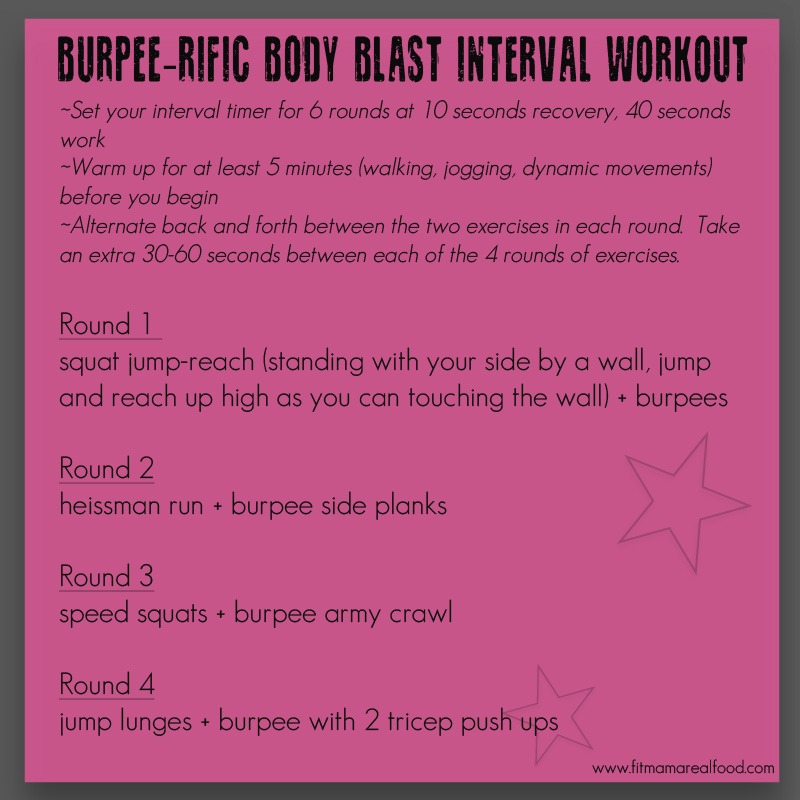
About the 250-calorie claim: Healthline illustrates approximately 250 calories for a 155-pound person doing burpees for 20 uninterrupted minutes. The calculation assumes continuous exercise at an unusually demanding pace. A workout with pauses has less active work and needs a different estimate.
Weight change depends on overall energy balance and behavior over time. The measured intensity of a burpee interval tells you about effort, not about how much weight you will lose.
How to perform a controlled burpee
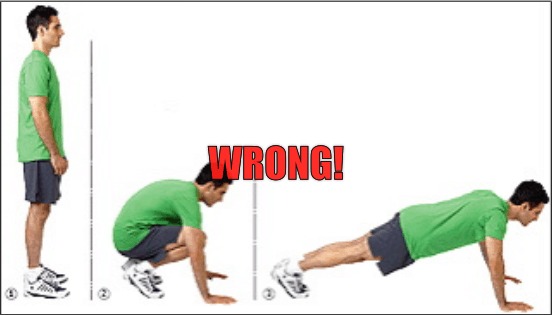
Start with a brief general warm-up and easy practice of the pieces. A few controlled standing-to-crouch transitions and step-backs into plank prepare you for the full sequence.
The reference version below includes a push-up and a jump. You can drop either one.
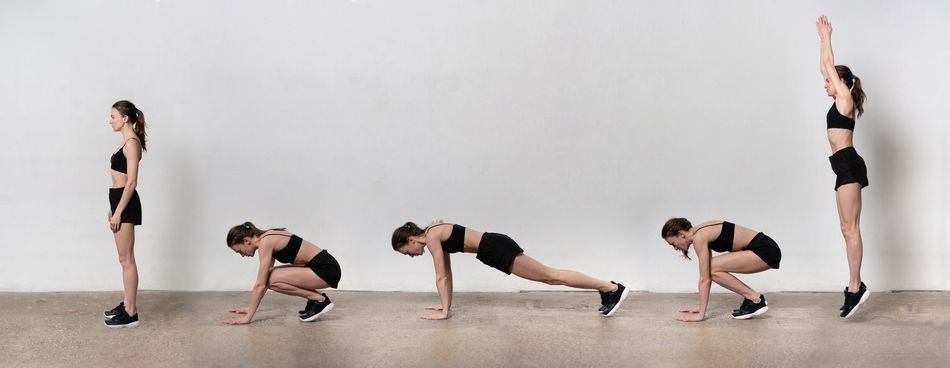
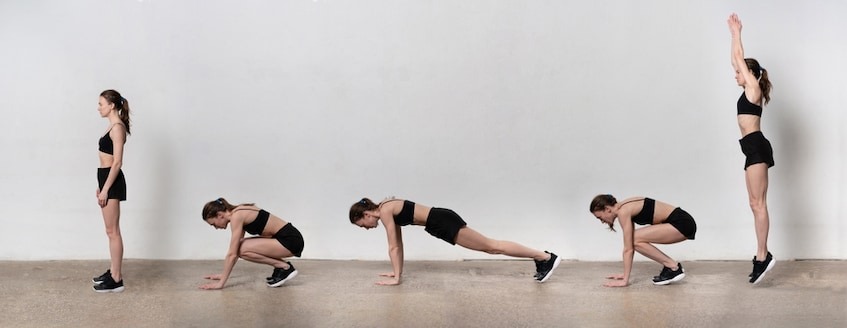
- Stand with room to move. Set your feet comfortably apart on a stable, nonslip surface, with space behind you for your legs.
- Lower your hands. Bend at the hips and knees and place your hands on the floor in front of your feet. Control the way down.
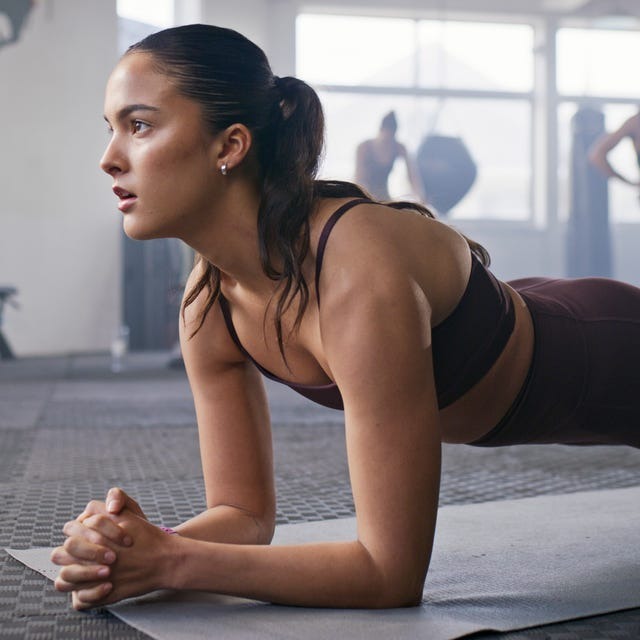
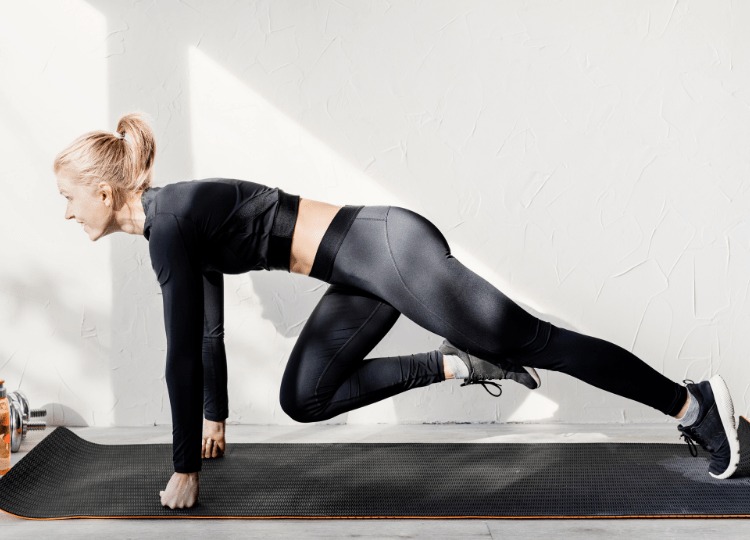
- Move into a high plank. Step or hop your feet back. Stack your shoulders over your wrists, brace your abs, and keep your lower back from sagging.
- Do the push-up. Bend your elbows, lower your chest, then press back to plank. Skip this step in versions without a push-up.
- Bring your feet forward. Step or hop them toward your hands, leaving enough space to regain balance.
- Stand and jump. Rise through your legs, jump, and land with control, knees tracking in line with your feet.
Do one slow rep first and check three things: your trunk stays steady in plank, your feet return without crowding, and you land under control.
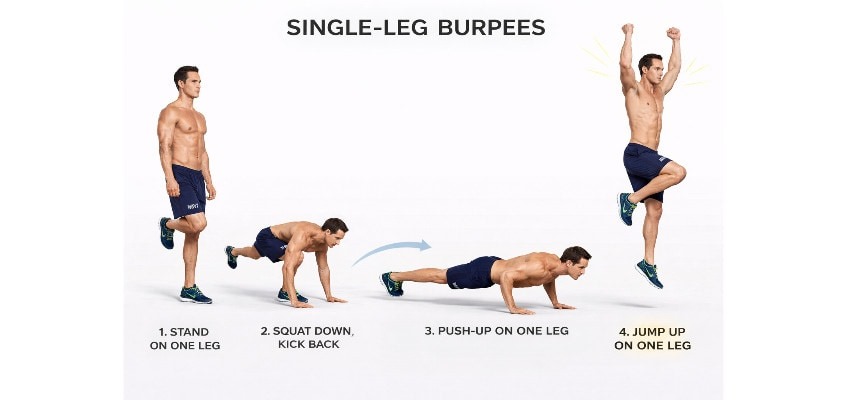
In CrossFit's formal floor-contact version, your chest, hips, and thighs touch the floor before you stand and jump. Recreational burpees can use a high plank, skip the push-up, or finish by standing.
Which burpee variation should you choose?
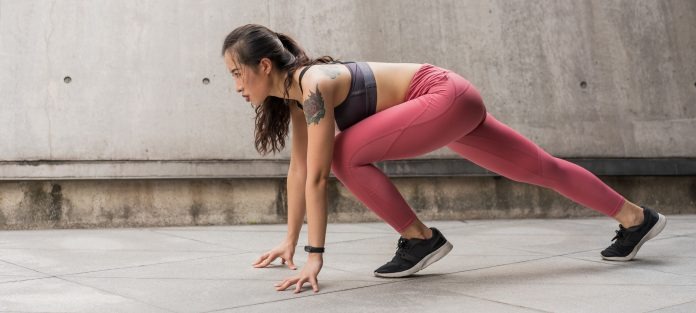
A good variation keeps the parts you can control and reduces the one demand that makes the full rep hard.
| Variation | What changes | When it fits |
|---|---|---|
| Standard push-up-and-jump | Includes plank, pressing, and a jumping finish. | You can control all phases and want a demanding version. |
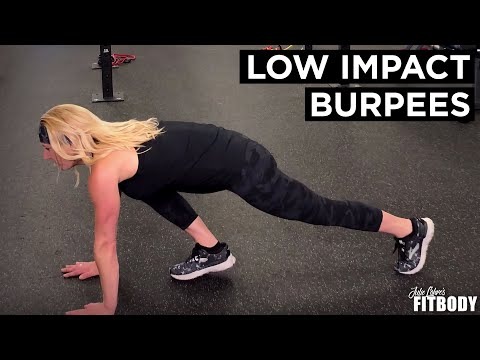
| Step-back burpee | Move the feet backward and forward one at a time. | Hopping into or out of plank is the main difficulty. |
| No-jump burpee | Stand upright at the end. | You want less jumping and landing impact. |
| No-push-up burpee | Keep the floor transition, skip the pressing phase. | Repeated upper-body pressing is what limits you. |
| Incline burpee | Place hands on a stable, raised surface. | Reaching the floor or supporting your weight at floor level is difficult. |
| Different activity | Remove the burpee movement entirely. | Floor support, impact, symptoms, or training goals rule burpees out. |
If both hopping into plank and jumping at the end are hard, combine a step-back with a standing finish.
Why burpees feel so hard and how form breaks down
Every rep moves your body between standing and floor support. Repeat that fast and you combine muscular work, stabilization, and cardio effort at once, so strength in other gym lifts won't prepare you for a long burpee set.
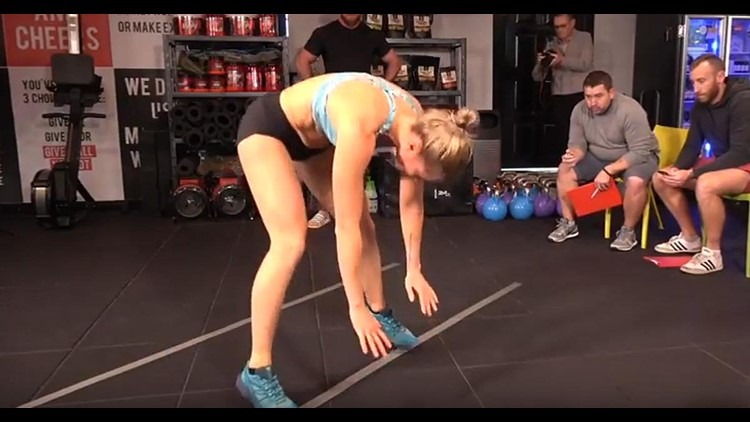
At a first CrossFit class, a lifter with obstacle-race experience hit a workout of 40 bar-over burpees:
I was 100% out of breath after about 18 burpees.
They lost count, left the workout unfinished, and still planned to come back.
| What goes wrong | What to notice | Adjustment |
|---|---|---|
| Hips sag in plank | Your lower back drops as your feet move back. | Slow down and brace your trunk. |
| Feet land too narrowly | Your feet crowd together and your knees collapse inward. | Give your feet room and settle your balance before standing. |
| Landing becomes stiff | The jump ends in a hard, uncontrolled impact. | Slow down and land under control. |
| Repetitions blur together | The next descent starts before you are stable. | Reset your position and breathing between reps. |
Watch which phase breaks down first: the descent, plank, feet-forward transition, or landing. Work on that one.
Heavy breathing is normal. Sharp pain, concerning dizziness, chest symptoms, or unusual distress are not, and they are no reason to push harder. Stop and get medical attention.
How many burpees should you do?
Start with a few controlled reps of a variation you can manage, then rest. Keep the first effort short and stop the set when your form slips. Add reps gradually as the movement becomes comfortable and repeatable.
For context, Cleveland Clinic describes 30- to 90-second burpee sessions, and the National Academy of Sports Medicine gives a sample workout of three to five sets of five to ten reps with rest.
One CrossFit participant judged when to stop a nominal set of 25 burpees by watching when classmates finished:
Maybe I finish that set at 23 burpees, maybe I finish at 17, who knows.
To make your sessions comparable, record four things:
- Variation: standard, step-back, incline, or another defined version.
- Controlled reps: the reps you completed to the same movement standard.
- Work and rest: active interval duration and recovery time.
- Form: whether the plank, foot return, and landing stayed consistent.
When another exercise makes more sense
Walking or cycling suits you if you want aerobic activity without repeated floor support or jumping. Either one can be easy or hard, depending on your pace.
The CDC adult physical activity guidelines recommend at least 150 minutes of moderate aerobic activity each week, or 75 minutes of vigorous activity, or an equivalent combination, plus muscle-strengthening activity on two days. A short burpee session alone does not meet the weekly guidance.
For upper-body pressing, dedicated push-up progressions concentrate the work better than a burpee without its pressing phase. Vigorous cycling intervals are another conditioning option.
Enjoyment matters too. If you consistently dislike burpees, you are more likely to stick with a different exercise you tolerate. Keep them in a varied routine if you enjoy them.