
Toe Tap Exercises: Variations and How to Do Them
Three moves share the name toe tap, but they serve different goals: low standing taps for cardio and coordination, supported directional taps for balance, and slow lying taps for core control. If the movement gets shaky or uncomfortable, shorten it, add support, or stop. Stay with the easiest version you can repeat with control.
Your trainer asks you to do toe taps. One person faces a step, another balances beside a counter, and someone in Pilates lies on a mat with both knees raised. The shared name hides three distinct movements.
The name covers several movements. First, identify the one your workout calls for.
Which Toe-Tap Exercise Do You Mean?
| Your goal | Variation | What moves | Equipment |
|---|---|---|---|
| Cardio movement and foot coordination | Standing step taps | Alternate light forefoot taps on a low step | Stable step or low platform |
| Balance and controlled leg movement | Standing three-way taps | One foot stays planted while the other taps forward, sideways and backward | Clear floor; stable support optional |
| Abdominal and trunk control | Supine Pilates taps | Lower one bent leg at a time from tabletop toward the floor | Exercise mat |
A fast workout circuit means alternating taps on a step; in a Pilates class, "tabletop" points to the floor version. A balance drill beside a counter uses directional taps. The three overlap in how the legs and trunk work.
How to Do Standing Step Toe Taps
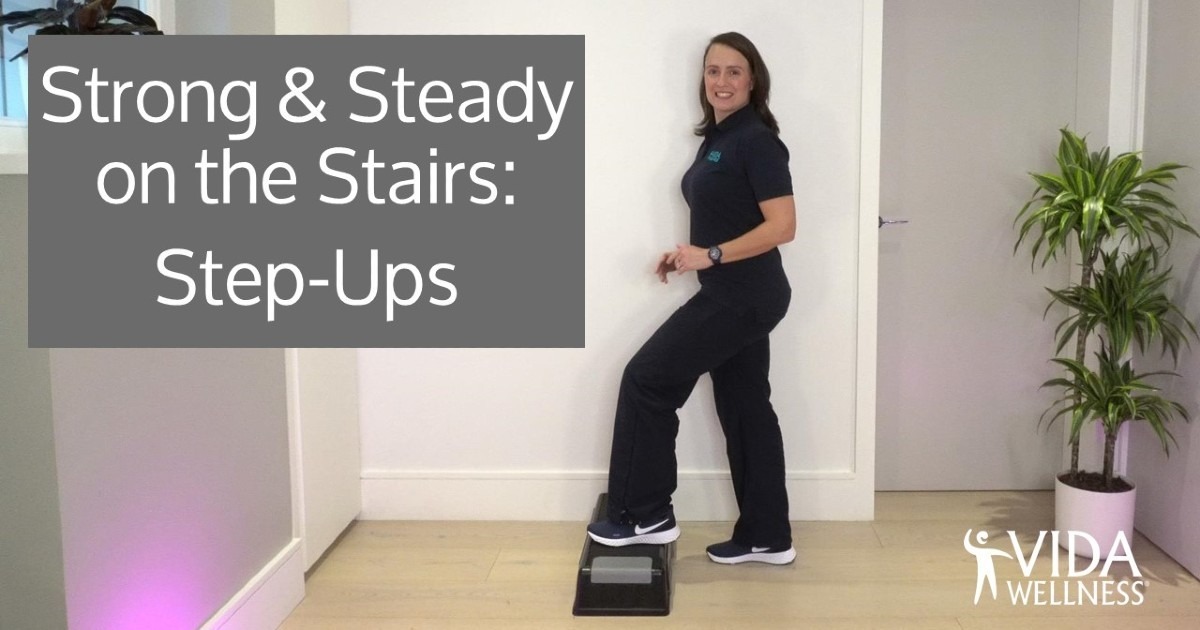
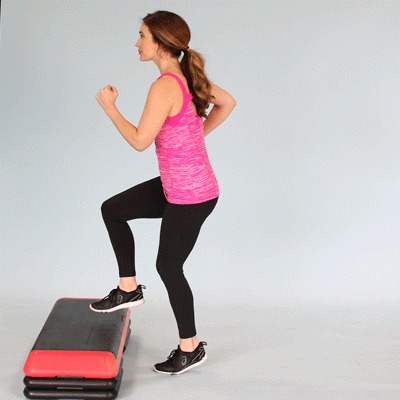
Standing step toe taps alternate a light foot touch on a raised surface. Skip the hop while you learn the pattern. The step edge is easier to handle that way.
- Set up. Place a low, secure platform on a level floor, with clear space around your feet. Face it.
- Touch. Lift one foot and lightly place its ball or toes on the top surface while the other foot stays on the floor.
- Return. Set the lifted foot back on the floor before tapping with the other foot.
- Find your rhythm. Keep alternating at a pace that keeps every tap clean.
Your weight stays over the grounded foot. The step only gets a light touch. Let your arms swing naturally. For a faster version, switch feet in a running style.
Watch your shoe near the step edge. A scraping toe or a catching sole means your foot isn't clearing the step.
Healthline demonstrates standing toe taps on a step about 10 to 12 inches high. Pick a height you clear easily.
For the stepping pattern, modifications and common mistakes, see Verywell Fit's standing toe-tap guide. Standing toe taps, chair support, and low-impact exercise alternatives are covered in the older-adult exercise guide.
How to Do Three-Way Toe Taps for Balance
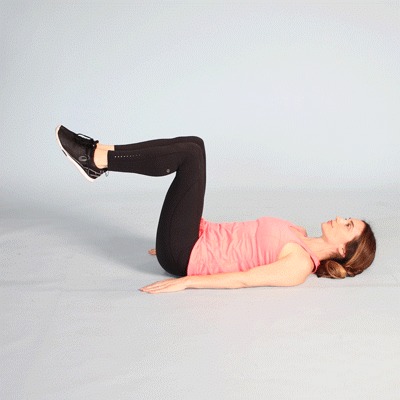
Three-way taps keep most of your weight on one standing leg while the other foot touches the floor in several directions. A fixed countertop gives your hand support.
Stand on a clear, even floor with your weight over one foot. Move the other foot lightly through this sequence:
- Forward: Tap the free foot a short distance ahead, then bring it back.
- Sideways: Reach to the side, touch down gently and return.
- Backward: Tap a short distance behind you and return.
- Change sides: Switch supporting legs and repeat all three taps.
Keep the standing foot planted while the free foot reaches. If the reach gets too long, your hips and trunk follow the moving foot and you lose stance-leg control.
How to Do Pilates Toe Taps on Your Back
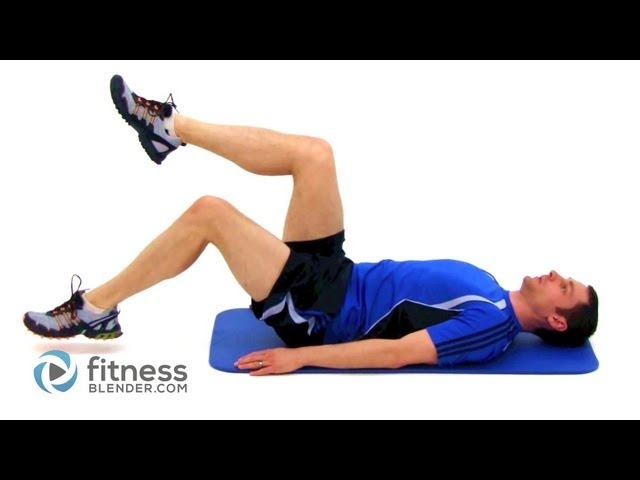
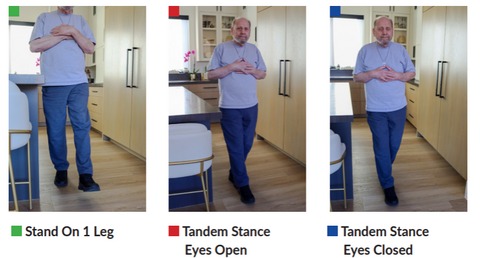
Supine Pilates toe taps keep your trunk steady while one bent leg lowers toward the mat.
Lie on your back with your arms at your sides. Bring your bent legs into tabletop if you can hold the position with a steady torso. Your hips and knees form right angles, with the knees above the hips and the shins nearly parallel to the floor.
- Lower: Move one bent leg slowly toward the floor, moving from the hip.
- Exhale: Breathe out gently as the leg goes down.
- Return: Bring the leg back to tabletop without swinging it.
- Alternate: Repeat on the other side while your ribcage and pelvis stay still.
Touch the floor at the bottom if you can reach it with a stable torso. If not, lower only as far as the torso stays still.
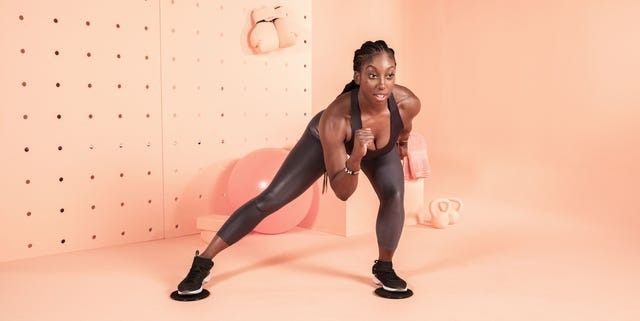
Some instruction traditions favor a small natural curve in the lower back; others cue a flatter or imprinted position. Either way, the task is the same: control your ribs and pelvis without forcing an uncomfortable spinal shape or holding your breath.
Harvard Health's alternating toe-tap demonstration shows the bent-knee lowering pattern and breathing cue.
What Muscles Do Toe Taps Work and What Should You Feel?
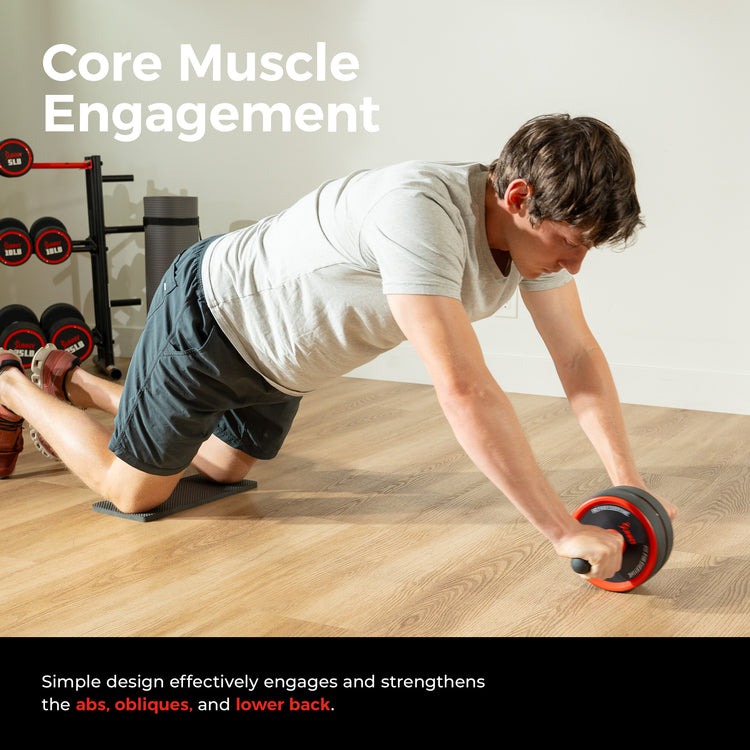
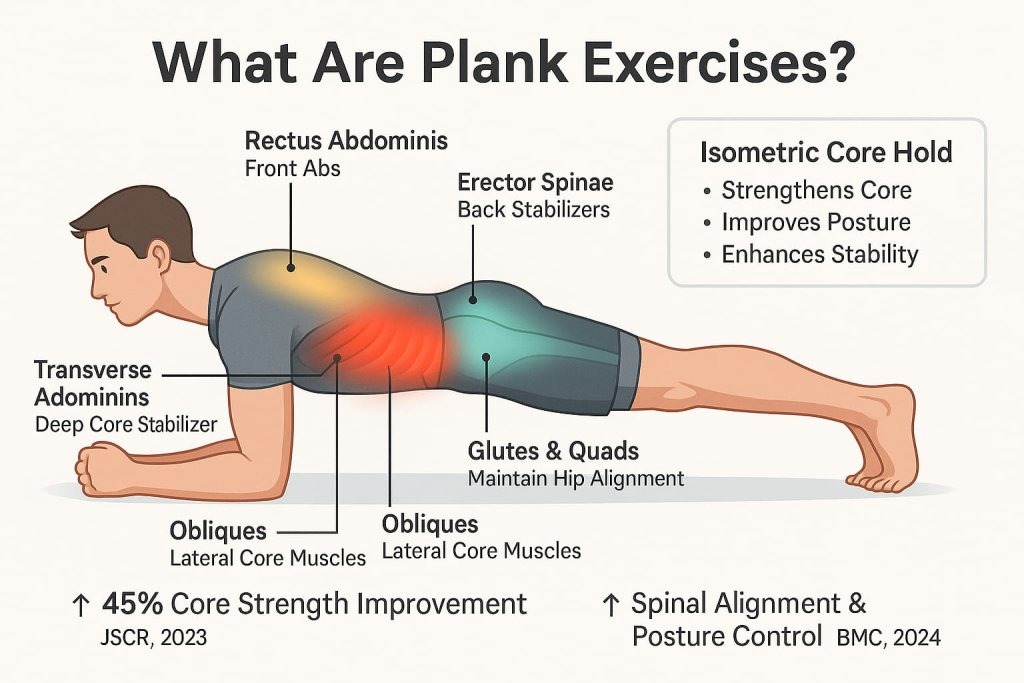
Which muscles work depends on the variation. In standing step taps, your quadriceps, hip flexors, calves and glutes lift, land and return each foot and support you while you stand. In supine taps, your hip flexors hold and lower the thighs while the rectus abdominis, obliques and transverse abdominis stabilize your torso.
In tabletop taps, some people feel strong effort in the front of the hips. Others feel shaking without the abdominal burn they expected. Neither tells you whether your form is right or wrong.
One exerciser describes feeling shaking but no burn:
I’m a 31 yo female with apparently a very week core. Years of doing pilates exercises incorrectly (as in I didn’t bother to ever brace) have led to very strong upper abs, but sadly, a weak core. Also have anterior pelvic tilt
I’ve now started doing doing some simple exercises (over the past 2 weeks) such as breathing and working on TVA/pelvic floor connection, single leg toe taps, deadbugs, double leg toe taps, and planks. I feel like I am able to slowely move through each exercise while keeping the core braced & my back flat. However, all that happens is my core shakes, I never actually feel any burning in my lower abs.
This has me concerned I am doing something incorrectly. Can anyone offer any insight? Is this normal for a beginner??
To check a supine tap, watch whether the bent leg lowers and returns without your ribs, pelvis or breathing visibly changing.
How to Make Toe Taps Easier or Harder
Change one demand at a time. Match the change to what is getting hard: foot clearance, unsupported balance or the time you spend holding your legs up.
| Variation | Easier option | More demanding option |
|---|---|---|
| Standing step taps | Practice floor-level taps or use a lower, fixed step without hopping | Gradually increase pace or step height |
| Three-way balance taps | Use fixed hand support and short reaches | Extend the reach or reduce support gradually |
| Supine Pilates taps | Start with feet on the floor and slow, alternating bent-knee lifts | Hold tabletop and lower through a larger controlled range |
If you can't comfortably hold tabletop, the starting position itself is the obstacle. One beginner describes it:
hi all! i'm still relatively new to doing pilates so i'm still working towards building core stability and strength. one thing i'm still having trouble with is holding tabletop. i am plus-size with most of my weight concentrated in my stomach and thighs, so i'm assuming it's simply tiring for me to hold my legs up for a longer period of time. has anyone faced this issue before and if so, what helped you either make adjustments in class or work towards making tabletop easier?
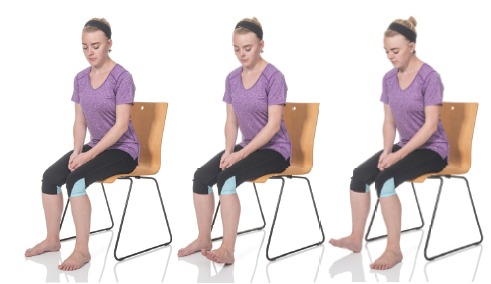
A feet-on-the-floor alternative is the supine reverse march. Lie with both feet on the mat, lift one bent leg slowly, lower it, then lift the other. You train leg control without holding two legs up for the whole set.
The American Council on Exercise's supine reverse-march demonstration shows the movement with the feet grounded.
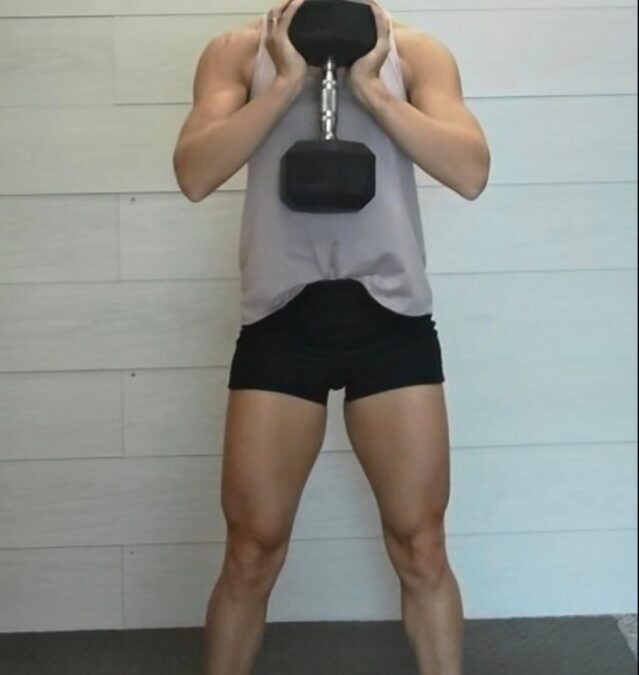
Keep your knees bent as a beginner. Straight-leg versions demand more leg control.
Keep a change only if the movement stays comfortable and deliberate. If your form breaks down, go back a level.
How Many Toe Taps Should You Do?
Each publisher counts differently, because a fast standing set and a slow bent-knee lowering are different tasks.
| Variation | Publisher's example | How to track the set |
|---|---|---|
| Standing step taps | Healthline: 30 to 60 seconds, followed by 15 to 30 seconds of rest; 2 to 3 rounds | Time the set and tap deliberately |
| Supine Pilates toe taps | Harvard Health: 8 to 10 repetitions per side, with 30 to 90 seconds of rest before an optional repeat | Count controlled lowerings per leg |
| Standing three-way taps | Health and Wellbeing Queensland: 15 to 30 repetitions per side | Count completed forward, side and back sequences per standing leg |
Stop a set when you can no longer keep the intended movement. Note how many taps you complete with steady technique and whether your last ones are as controlled as your first.
For faster standing taps, the CDC's talk test gauges aerobic effort. At moderate intensity you can talk but not sing. At vigorous intensity you can't say more than a few words without pausing to breathe.
See the CDC physical activity intensity guide for the test and its context.
Common Toe-Tap Mistakes and When to Stop
Form usually slips before the rep ends. Watch for these signs:
- Standing step: A shoe hooks the platform edge, the step shifts, or your taps get too rushed to clear the surface.
- Directional balance: The free foot starts taking body weight, your trunk lurches, or your support stops being stable.
- Supine Pilates: Your pelvis and ribcage move with the descending leg, or you have to hold your breath to finish the movement.
Stop the set when any of these signs appear, or if you feel sharp, deep or worsening pain, significant dizziness, or a near fall.
Muscle effort is normal in a hard set. Pain or instability that persists after you switch to a gentler version needs assessment by a qualified healthcare professional.
Toe Taps vs. Toe Touches vs. Dead Bugs

In Pilates toe taps, a bent foot lowers toward the floor while the trunk stays steady. In toe touches, your hands reach toward raised feet during an abdominal curl. Dead bugs coordinate limb movements around a related trunk-stabilization task.