Bison vs. Beef: Which Is Healthier and Better to Cook?
Although bison is often leaner than beef, a fatty bison product may contain more fat than a lean beef cut. Compare the actual cut, fat percentage and portion weight, pick the one that fits your goal, and cook it to the safe temperature for its form.
Is Bison Healthier Than Beef?
Bison and beef are both red meats that supply protein, iron, zinc and B vitamins. For other lean options, see the lean-meat selection guide, which compares bison, beef and other lean cuts.
Bison vs. Beef Nutrition: What a Fair Comparison Shows
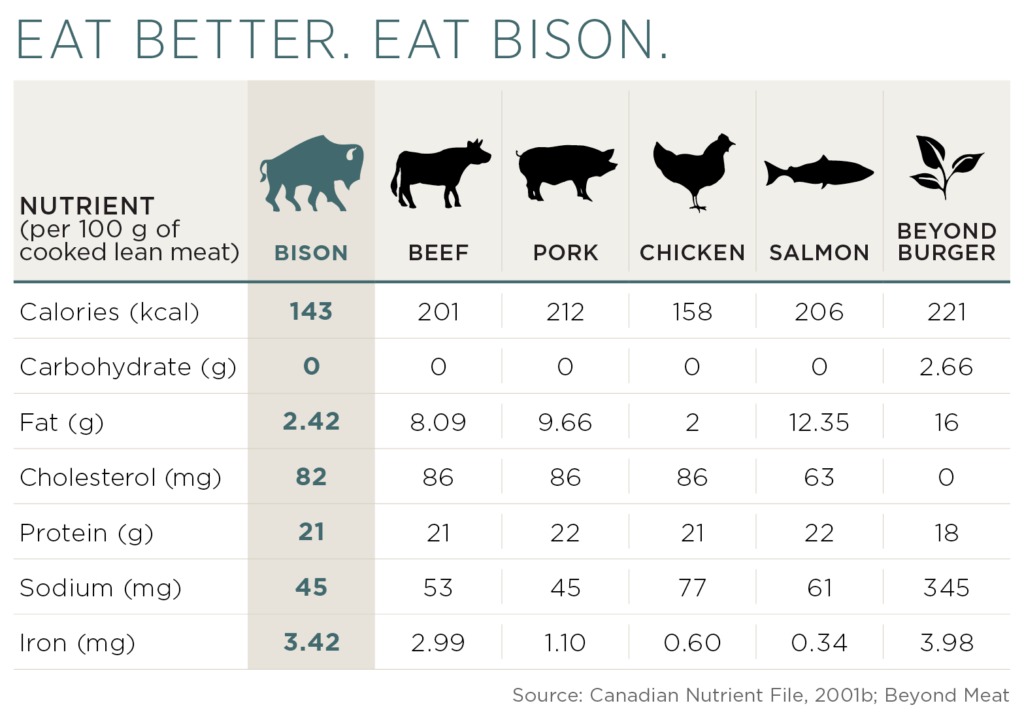
Lean bison sirloin has fewer calories and less fat than beef sirloin. Ground bison varies more: one USDA entry has more fat than 90% lean ground beef. For a nutrition comparison, the cut and its fat content matter more than the species name.
Six raw-meat profiles, compared by weight
The table comes from a Genesee Nutrition comparison of USDA SR Legacy records. All values are raw meat per 100 grams, and two of the six rows are ground bison. Store packages can differ from these records.
| Raw meat, per 100 g | Calories (kcal) | Protein (g) | Total fat (g) | Saturated fat (g) | Iron (mg) | Zinc (mg) |
|---|---|---|---|---|---|---|
| Bison top sirloin, lean only (FDC 172564) | 113 | 21.4 | 2.4 | 0.9 | 3.0 | 3.4 |
| Beef top sirloin, lean only, Choice (FDC 174763) | 135 | 21.9 | 4.6 | 1.7 | 1.6 | 4.1 |
| Ground bison, grass-fed (FDC 175293) | 146 | 20.2 | 7.2 | 2.9 | 2.8 | 4.6 |
| Ground beef, 90% lean (FDC 174030) | 176 | 20.0 | 10.0 | 3.9 | 2.2 | 4.8 |
| Ground bison, generic record (FDC 174421) | 223 | 18.7 | 15.9 | 6.8 | 2.6 | 4.3 |
| Ground beef, 80% lean (FDC 174036) | 254 | 17.2 | 20.0 | 7.6 | 1.9 | 4.2 |
The grass-fed ground-bison entry has 30 fewer calories, 2.8 grams less total fat and 1 gram less saturated fat than the 90%-lean ground-beef entry per 100 grams. Their protein is nearly identical. The generic ground-bison record goes the other way: 15.9 grams of fat against 10 grams in that lean beef entry.
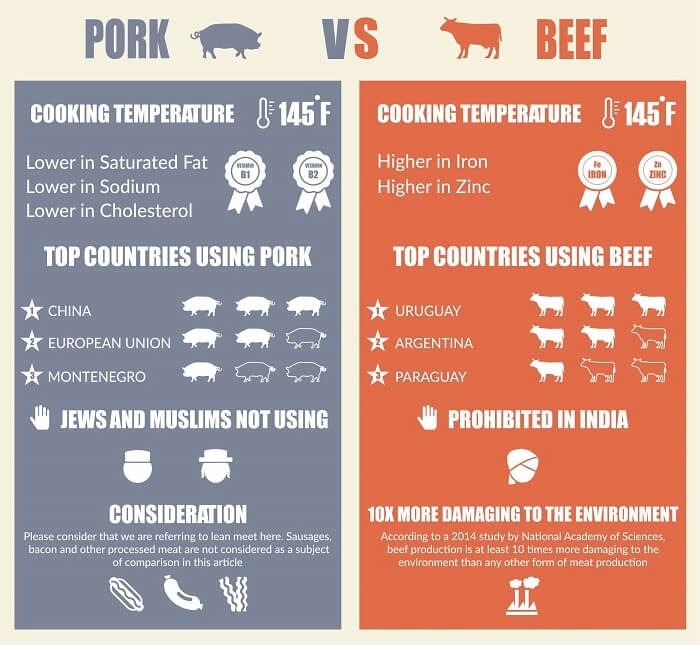
In the two top-sirloin records, bison has more iron (3.0 mg vs 1.6 mg) and beef has more zinc (4.1 mg vs 3.4 mg). Both meats supply B vitamins, including B12.
How to compare packages with different serving sizes
If two labels use different serving sizes, convert both to 100 grams. Divide the nutrient amount by the labeled serving weight in grams, then multiply by 100. The calorie or saturated-fat numbers then compare directly.
Compare raw with raw and cooked with cooked. Meat loses moisture when cooked, and recipes add other ingredients; uSDA FoodData Central keeps separate records for cooked ground meats.
Is Bison Better for Your Heart or Overall Health?
A meat with less saturated fat helps if that is your dietary goal. Comparative human evidence does not support claims that bison itself prevents cardiovascular disease.
In a 2013 randomized crossover study by McDaniel and colleagues, 14 healthy men ate a 12-ounce (340-gram) meat meal in an acute experiment. Ten of them also completed longer interventions of 12 ounces of bison or beef per day, six days a week, over seven-week periods separated by a washout. Researchers measured blood lipids, inflammatory and oxidative-stress markers, and vascular responses. Some acute vascular and inflammatory responses differed between meals. The beef and bison diets also differed in fat amount and composition, so the study cannot isolate the effect of the species.
A USDA Nutrition Evidence Systematic Review available through NCBI Bookshelf records no significant between-intervention differences in fasting total, LDL or HDL cholesterol or triglycerides after the longer periods. The study measured intermediate markers in a small group of healthy men. It did not establish long-term effects on heart attacks or other cardiovascular events.
The American Heart Association recommends a broader eating pattern with plenty of plant proteins and seafood, and lean, unprocessed choices if you eat meat. The World Cancer Research Fund advises limiting red meat to roughly 350 to 500 grams cooked per week, about three portions, and eating very little processed meat. That applies to both bison and beef.
Taste and Texture: What Changes When You Switch?
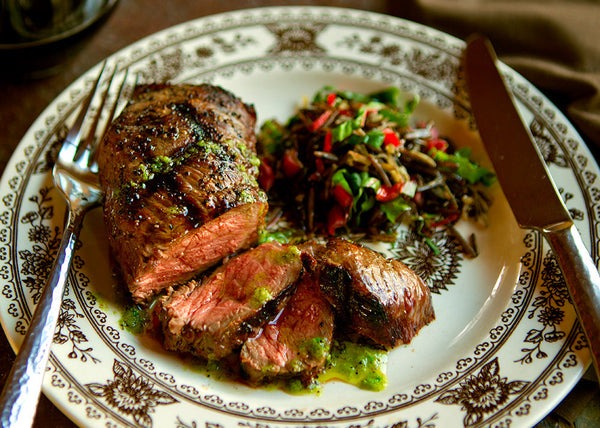
Bison tastes close to beef. Some people find it sweeter or earthier, others notice no difference. Lean cuts have less fat, so they taste less rich and feel less juicy, and that can surprise you if you expect a beef steak.
In a 2013 Consumer Reports blind tasting of bison and beef steaks, medallions and burgers, tasters believed all samples were beef. Some bison samples drew descriptions such as liver-like, metallic or sour.
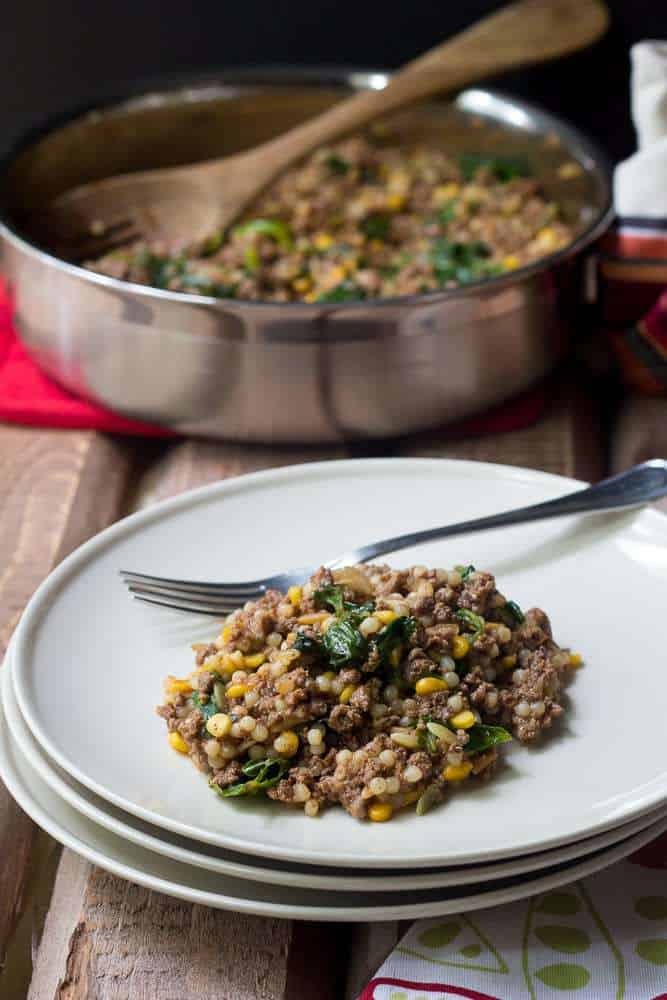
For a first try, cook a small portion in a dish you know. Try another cut or seasoning if the result disappoints.
Cooking Bison vs. Beef Without Ruining the Result
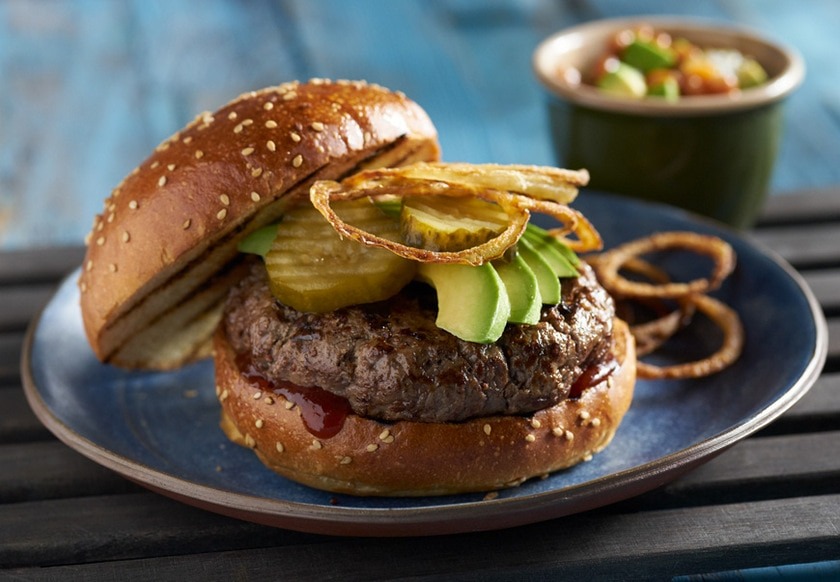
Bison works in burgers, tacos, chili, stir-fries and roasts. Very lean ground meat makes a less forgiving burger. Chili is another way to try lean ground meat.
Cut and preparation also affect tenderness. Handle the mixture gently when you form patties. Anything you add, such as cheese, oil or sauce, counts toward the meal's fat.

Safe temperatures for ground meat and steaks
Ground bison and ground beef share the same safe minimum internal temperature. Whole cuts such as steaks, roasts and chops follow a separate temperature-and-rest rule.
Use a food thermometer. FoodSafety.gov specifies 160°F (71°C) for ground bison and beef. For whole-muscle bison or beef steaks, roasts and chops, the minimum is 145°F (63°C), followed by a rest of at least three minutes.
Color and cooking time don't tell you the internal temperature. In 2019, the CDC documented an E. coli outbreak linked to ground bison: 33 illnesses across eight states and 18 hospitalizations. Bison needs the same food-safety care as beef.
Grass-Fed Claims, Sourcing, and the Price Premium
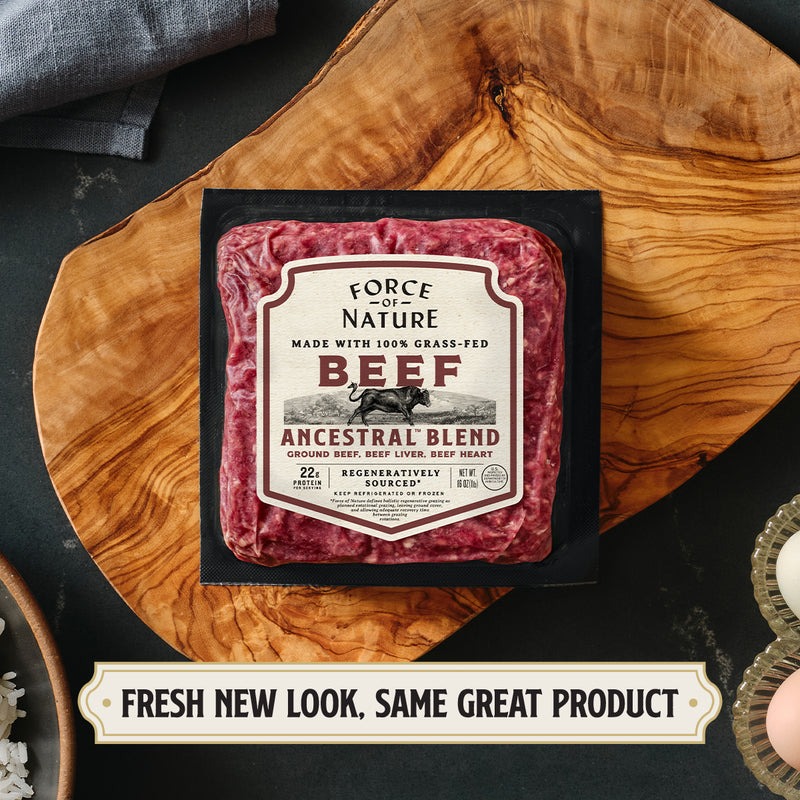
Bison is often pasture-raised, and beef can be grass-fed too. Check the label on the package, because farms and products vary.
Grass-fed describes feeding. Grass-finished, certified organic, no added hormones and antibiotic claims each mean something different, so read them one by one on the package or in the seller's documentation.
In US grocery language, buffalo meat usually means American bison. Water buffalo is a different animal, so check what you are buying at a specialty market.
Compare price per same weight for the bison and beef packages you can buy. The extra cost makes sense if flavor, source or nutrient profile matters to you. If it doesn't, a lower-priced lean beef package can do the same job.
Which Should You Choose?
| Your priority | Compare | Choose |
|---|---|---|
| Fewer calories | Per 100 g: bison sirloin 113 kcal vs beef sirloin 135; grass-fed ground bison 146 vs 90% lean ground beef 176 | Bison, in both pairs |
| Less saturated fat | Sirloin 0.9 g vs 1.7 g; ground 2.9 g vs 3.9 g | Bison, in both pairs |
| Similar protein | Grass-fed ground bison 20.2 g vs 90% lean ground beef 20.0 g | Either |
| Juicier burgers | Fat percentage on the label | The fat level you prefer |
| Better value | Price per same weight | The lower price that still meets your goal |
For tacos, the grass-fed ground bison in the table has less fat than 90% lean beef (7.2 g vs 10 g per 100 g). If the beef costs less and meets your goal, buy the beef. For a steak dinner, buy bison if you like the flavor.