Chicken Feet Nutrition and Benefits: What the Evidence Shows
Chicken feet make sense as food when you enjoy their texture and prepare them safely. They give you collagen-rich protein and fat, and they make a gelatinous stock. Collagen-supplement studies do not show that eating chicken feet or drinking their broth improves skin or joints. What you get depends on whether you eat the cooked feet or make stock, and on how the portion is prepared.
What Are Chicken Feet and What Do You Eat?

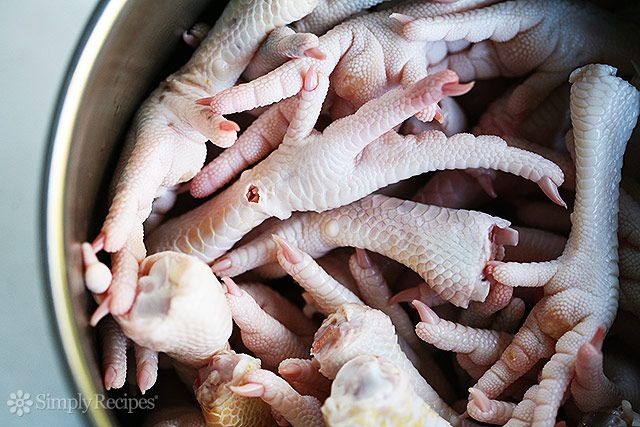
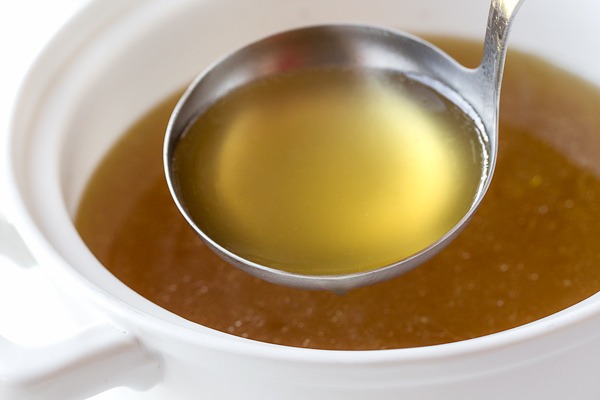
Chicken feet contain many small bones surrounded mainly by skin, tendon, cartilage, and other connective tissue; it has very little of the muscle meat you know from chicken breast. In Cantonese-style braised dishes, sometimes called phoenix claws, you eat the softened skin and connective tissue around the bones. Other recipes use the feet to give stock body. The slippery, chewy texture is part of the appeal in cuisines where the dish is familiar, though it can surprise you the first time.
Chicken Feet Nutrition: Calories, Protein, and Portions

Chicken feet contain a lot of protein and fat, but the numbers depend on the form of the food. USDA FoodData Central's SR Legacy record 171119, “Chicken, feet, boiled,” gives composition values for the boiled edible food. A separate survey entry, FNDDS record 2706085, uses a household measure of one foot at 35 grams including bones.
| Nutrient | Boiled edible food, per 100 g | Calculated for 35 g of that food |
|---|---|---|
| Calories | 215 kcal | 75 kcal |
| Protein | 19.4 g | 6.8 g |
| Total fat | 14.6 g | 5.1 g |
| Carbohydrates | 0.2 g | 0.07 g |
The last column is simple math: each per-100-g value times 0.35. It shows what 35 g of the same boiled edible food would give you. The survey's 35 g for one foot includes the bones, so it does not tell you how much tissue you actually eat from that foot.
You can check the 100 g reference in the USDA-derived boiled chicken-feet record.
Healthline's October 19, 2020 chicken-feet article gave two feet as a 70 g serving example. That is a bone-in weight, so a count of feet and a weight of cooked edible tissue are different quantities.
The boiled-food reference also lists 86 micrograms of folate, 88 milligrams of calcium, and 83 milligrams of phosphorus per 100 grams.
Much of the protein in chicken feet is collagen, which lacks the essential amino acid tryptophan. That makes it an incomplete protein, so chicken feet work as part of a varied diet that includes other protein sources supplying all the essential amino acids.
Why Chicken Feet Make Gelatinous Stock
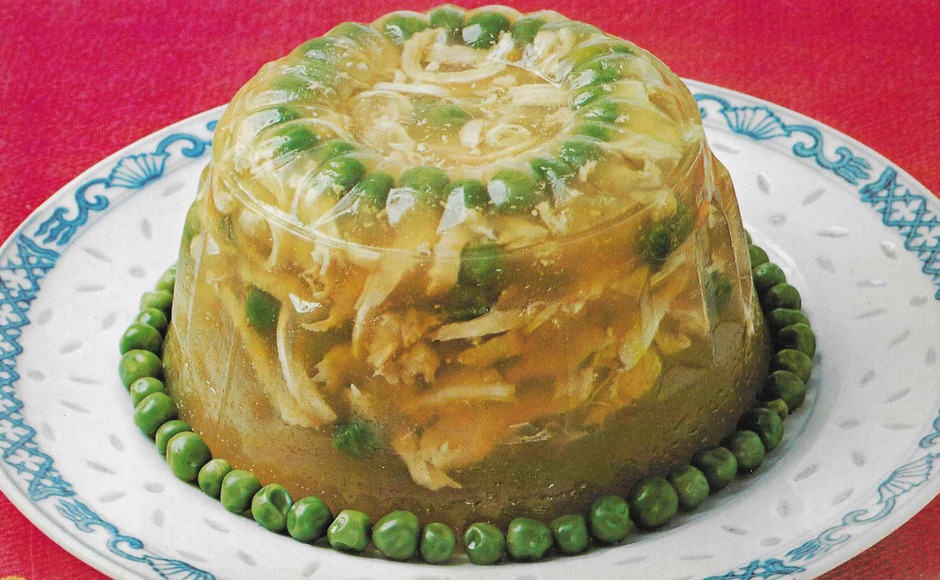
Chicken-foot connective tissue is rich in collagen. Moist cooking turns some of that collagen into gelatin, which forms a soft network as the liquid cools. A chilled stock can wobble or set firmly even though it pours freely when warm.
A 2020 laboratory study estimated that about 70.90% of the total protein in its chicken-foot material was collagen, using one analytical method. That figure describes the tested material, not every cooked serving.
The layer called a “fat cap” is separate from the gel beneath it. Fat solidifies at the surface of chilled stock, while gelatin sets the liquid throughout, so you can get one without much of the other.
A first-time cook in r/slowcooking ran into that difference after making a batch with feet and wings:
It’s my first time making broth, first time using a slow cooker, and first time I ever cook anything overall. (unless baking is cooking) I roasted chicken wings, chicken feet, carrots, white onion, and celery in the oven. It was slightly charred (as I wanted). I added it to the slow cooker and covered it with water, forgot to add any herbs or salt or anything else. I cooked it on low for 24 hours. Cooled it down to take off the “fat cap” but there wasn’t any and it’s very jiggly.
The ones I see online are much firmer for some reason! Please help me understand Also, please share your favorite broth recipes because I’m not a huge fan of the flavoring on this one. It’s too “dark” flavored.
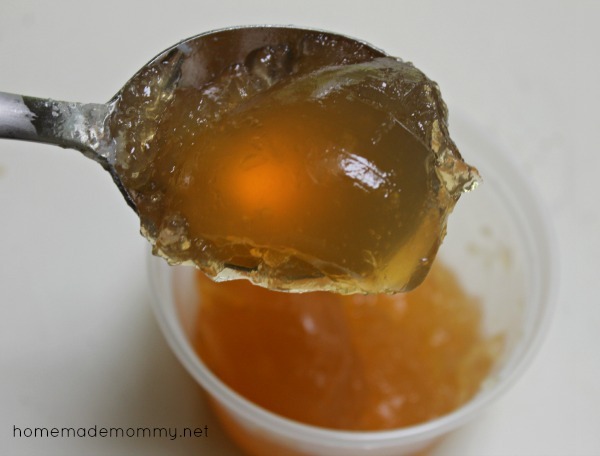
To see how your own stock behaves, chill it in the fridge and check whether it sets. Gel firmness tells you about the stock's texture, not a collagen dose or a health outcome.
Can Chicken Feet Help Your Skin, Joints, or Bones?

The health claims around chicken feet often come from research on isolated collagen products. Trials of collagen supplements report different outcomes depending on the intervention, the participants, and the quality of the evidence. None of the studies below tested an ordinary serving of cooked chicken feet or a bowl of homemade chicken-foot broth.
| Claim | What was studied | What the evidence supports |
|---|---|---|
| Skin hydration, elasticity, and wrinkles | Collagen supplements in randomized trials | Mixed supplement findings; no clinical effect shown for eating chicken feet |
| Knee pain and physical function | Collagen-based supplements in people with knee osteoarthritis | Favorable pooled findings with large variation between studies; no chicken feet tested |
| Bone health | Specific collagen-peptide products in selected research populations | No evidence that ordinary chicken-foot meals prevent osteoporosis or bone loss |
What skin research found
A 2025 systematic review and meta-analysis of collagen supplements included 23 randomized controlled trials with 1,474 participants. Pooled across all trials, the results suggested improvements in hydration, elasticity, and wrinkles. In higher-quality studies and in studies without pharmaceutical-industry funding, those subgroups showed no statistically significant benefit.
The review's authors concluded that the clinical evidence did not support collagen supplements for preventing or treating skin aging. Other reviews read parts of the supplement literature more favorably, so trial quality and selection matter.
What joint research found
A meta-analysis of collagen supplementation for knee osteoarthritis examined 11 randomized controlled trials with 870 participants. Pooled findings favored collagen-based supplements for pain and physical function. Variation between studies was large, with heterogeneity of 88% for pain and 75% for function.
Those findings cover specific collagen products and specific groups of people. They do not show that eating chicken feet repairs cartilage or treats osteoarthritis. Bones are the same story: the research concerns particular peptide products in selected populations, and nothing in it shows that a chicken-feet meal prevents bone loss. A trial dose of hydrolyzed collagen peptides also cannot be converted into a number of chicken feet without food-specific evidence.
Eating Chicken Feet Versus Making Stock

A plate of cooked chicken feet and a bowl of strained stock are different foods. Whole-foot survey weights, boiled edible-tissue nutrient values, and broth composition each answer a different question. Chicken feet and chicken hearts need separate comparisons; the chicken-heart nutrition table covers the organ-meat case.
| Preparation | What ends up in the serving | Why someone chooses it | Nutritional reference to use |
|---|---|---|---|
| Braised or slowly cooked feet | Soft skin and connective tissue eaten around the bones | Chewy, slippery texture and seasoned flavor | Edible cooked-food composition, adjusted for the tissue consumed and added sauce |
| Strained chicken-foot stock | Liquid containing extracted gelatin and other dissolved substances | Body and gelatinous mouthfeel | Measurements of the finished stock; whole-foot values cannot supply a per-cup amount |
| Fried or glazed feet | Cooked tissue plus oil, glaze, or seasoning | Different surface texture and richer flavor | The completed dish, including added fat, sugar, and sodium |
A gelatinous stock does not reveal its protein content. That figure changes with the ingredients, water volume, and preparation. A study published online in 2018 and in a 2019 journal issue found wide variation in bone-broth amino-acid concentrations. Several measured amino acids in standardized broths were present at lower concentrations than in a reference 20 g collagen supplement.
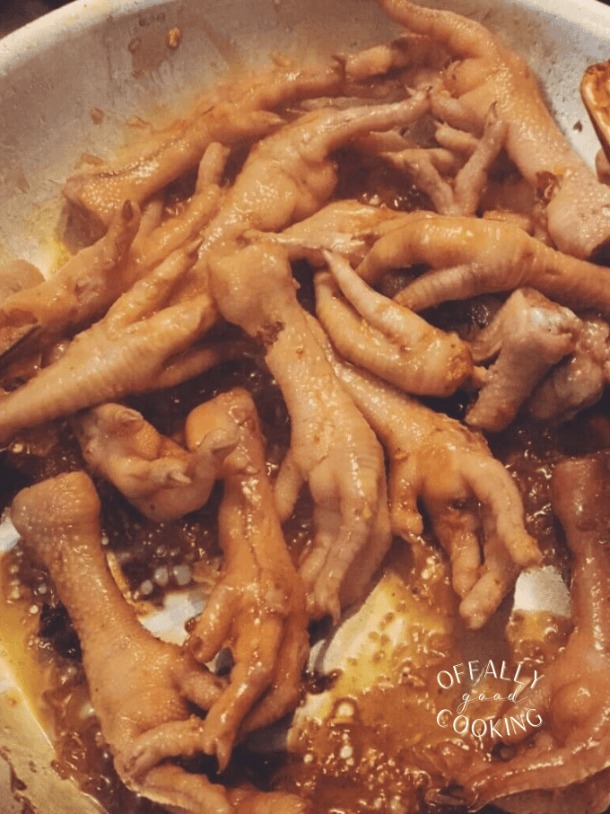
A broth can have plenty of body from gelatin and still taste mild, especially if you expect a deeply meaty flavor.
An r/Cooking contributor described making stock for their parents:
I decided to make my own jiggly chicken feet broth for my parents, but I don’t thinks I’m doing it right.
I baked a pound of chicken feet at 420f for 30 mins then put them in a pot with two chopped carrots, three celery, one onion, roughly two tbsp peppercorn, and filled the pot up until it covered the feet. It’s now been going for three hours. I was planning on at least doing six hours but I don’t want to wait for it to cool down since it’ll be late.
The best way I can describe the broth is having a golden color but that’s about it. It just tastes like vegetable water and I’m not sure if it’ll solidify.
Should it have a specific taste and a more “creamy” look?
The post ends before the cook says whether the cooled broth set. The takeaway is about expectations: taste, appearance, and gelatinous body are separate properties.
How to Handle, Eat, and Store Chicken Feet Safely

Treat chicken feet like any raw chicken, and watch for the small bones when you eat them. Keep raw juices away from ready-to-eat food, and cool and store cooked stock promptly.
USDA FSIS advises against washing raw poultry because splashing water can spread bacteria to the sink and nearby surfaces. Cook thoroughly and avoid cross-contamination instead.
- Choose suitable food. Buy chicken feet from a reputable seller. Reject any with obvious spoilage, a suspicious odor, or contamination.
- Prepare without splashing. Keep raw poultry and its juices away from other food. If the claws need trimming, do it without rinsing under running water, then clean your hands, tools, and work surfaces.
- Cook thoroughly. The CDC's chicken food-safety guidance specifies 165°F (74°C) internally. Use a food thermometer when you can get a reliable reading; the small size of a chicken foot can make probing difficult.
- Eat around the bones. Remove the softened skin and connective tissue from the many small hard bones, and discard the bones. They are a choking risk, especially for young children and people who have difficulty swallowing.
- Cool and refrigerate promptly. Refrigerate cooked food within 2 hours, or within 1 hour when the surrounding temperature is above 90°F (32°C). Divide larger batches of stock into shallow containers so they cool faster.
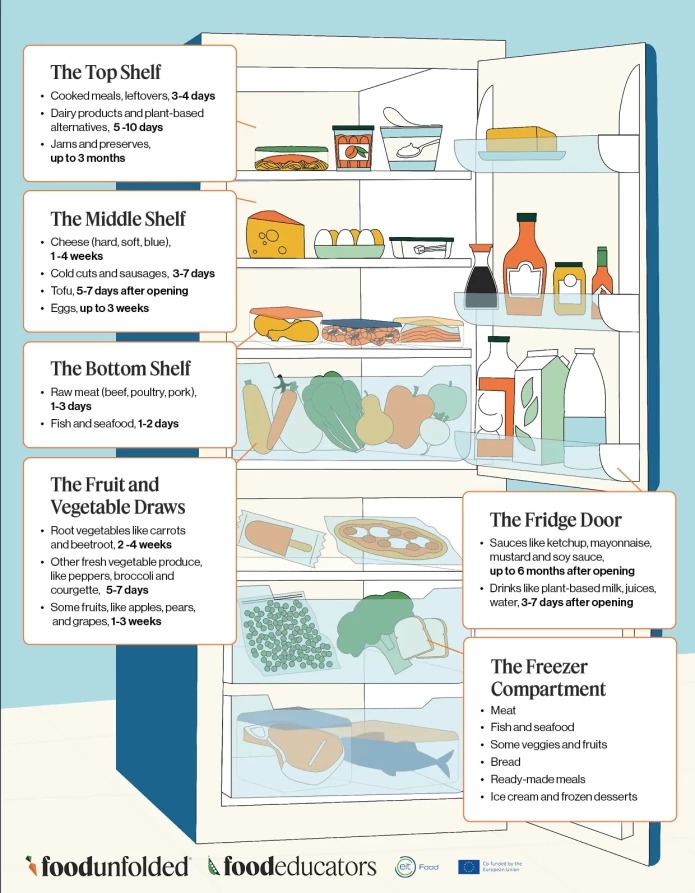
- Use safe storage windows. At 40°F (4°C) or below, raw poultry generally keeps for 1 to 2 days in the fridge. Properly cooled cooked poultry and leftovers generally keep for 3 to 4 days; freeze portions intended for longer storage.