
Chicken Heart Nutrition: Calories, Protein, and Serving Sizes
Chicken hearts supply protein, vitamin B12, iron, and zinc. Per 100 g, raw hearts have 153 kcal and 15.55 g of protein, and simmered hearts have 185 kcal and 26.40 g. For a meaningful comparison, match the figures to the raw or cooked weight you measured. Include any oil or sauce, and cook the hearts to 165°F (74°C).
Chicken heart nutrition facts: Raw and simmered
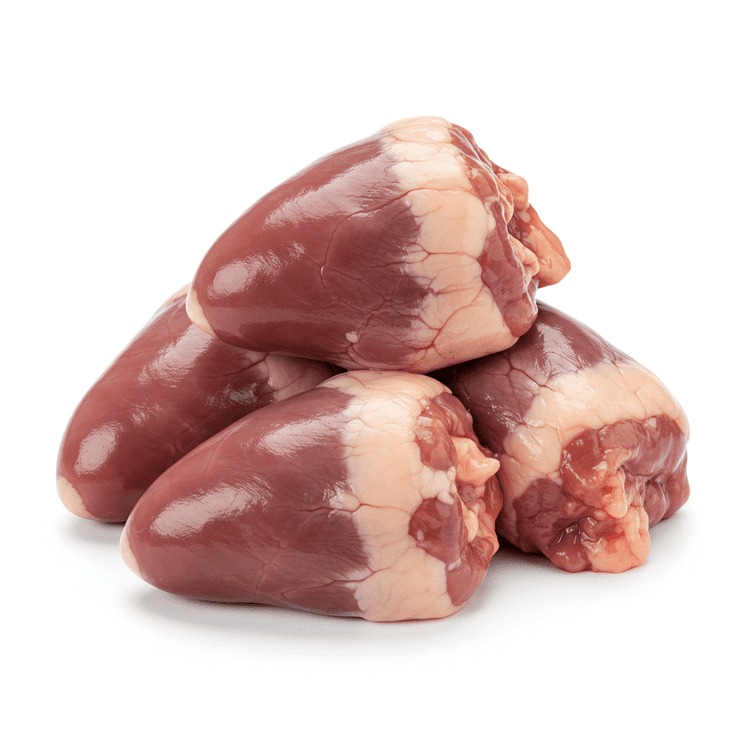
Chicken hearts are cardiac muscle, sold alongside other poultry giblets. Check the name on the package or in your tracking app, because liver and gizzards have different numbers.
Two USDA SR Legacy records give the numbers for 100 grams (about 3.5 ounces) of hearts, raw and simmered:
| Nutrient per 100 g | Raw chicken hearts | Cooked, simmered chicken hearts |
|---|---|---|
| Calories | 153 kcal | 185 kcal |
| Protein | 15.55 g | 26.40 g |
| Total fat | 9.33 g | 7.92 g |
| Carbohydrates | 0.71 g | 0.10 g |
| Iron | 5.96 mg | 9.03 mg |
| Zinc | 6.59 mg | 7.30 mg |
| Vitamin B12 | 7.29 µg | 7.29 µg |
| Cholesterol | 136 mg | 242 mg |
The raw column corresponds to USDA SR Legacy record 171458, reproduced in the WhatYouEat raw chicken-heart nutrient entry. The simmered column corresponds to USDA SR Legacy record 171059.
Why raw and cooked chicken heart numbers differ
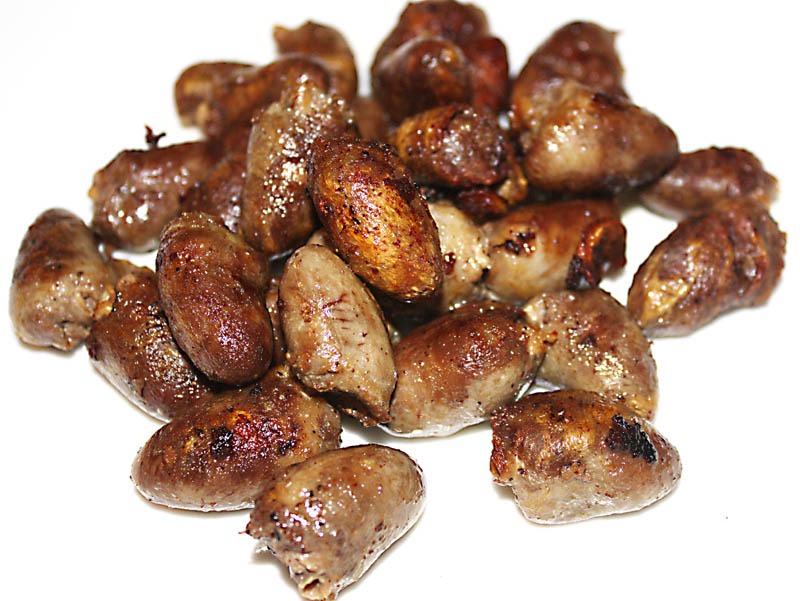
Simmered hearts show more protein per 100 grams than raw ones because cooking removes water, which concentrates the nutrients. Some fat also stays in the pan or the cooking liquid. The two sets of numbers describe different foods, so don't read them as one batch before and after cooking.
Tracking macronutrients and wondering about chicken hearts. Fat:protein ratio changes from about 1:2 raw to about 1:4 cooked. Is this because we're assuming the fat in the pan is discarded? Therefore if I plan to consume it, it should remain that 1:2 ratio?
Count it if you eat the rendered fat.
Match the figures to how you weighed the food:
- Weighed raw: use the raw figures for that weight.
- Weighed after simmering: use the simmered figures for the cooked weight.
- Fried, grilled, or roasted: the simmered figures don't match these methods, so treat your result as an estimate.
Logging raw and cooked weights as separate servings of the same hearts counts the food twice.
How many calories are in a 3-ounce serving?
Three ounces is about 85 grams. For 85 grams of simmered hearts, the USDA figures work out to about 157 calories, 22.4 grams of protein, and 6.7 grams of fat.
To scale a 100-gram figure to your portion, multiply it by the portion's weight in grams and divide by 100:
185 kcal × 85 g ÷ 100 g = 157.25 kcal
| Food state and portion | Calories | Protein | Total fat |
|---|---|---|---|
| Raw, 85 g (about 3 oz) | 130 kcal | 13.2 g | 7.9 g |
| Cooked, simmered, 85 g (about 3 oz) | 157 kcal | 22.4 g | 6.7 g |
| Cooked, simmered, 145 g | 268 kcal | 38.3 g | 11.5 g |
Weigh the portion in grams. Counting hearts gives a poor estimate because their size varies.
Vitamin B12, iron, and zinc in chicken hearts
A simmered 100-gram portion supplies about 304% of the US Daily Value for vitamin B12, 50% for iron, and 66% for zinc.
B12 supports your blood cells and nervous system. Chicken hearts won't treat anemia or a deficiency on their own. Chicken hearts, B12, and other meat-derived B vitamins belong in the meat B-vitamin comparison.
The FDA calls 5% DV or less low and 20% or more high. Check the unit as well: iron and zinc are in milligrams (mg), while B12 is in micrograms (µg). A label's %DV applies to its own serving size.
Why a package label may disagree with a food database
Even listings from the same manufacturer can disagree. Sanderson Farms publishes a 4-ounce (112-gram) chicken-heart serving on both its English and Spanish product pages, yet the calorie, fat, and cholesterol figures differ.
| Nutrient per 112 g | Sanderson Farms English page | Sanderson Farms Spanish page | Generic raw reference |
|---|---|---|---|
| Calories | 100 kcal | 170 kcal | About 171 kcal |
| Protein | 17 g | 17 g | About 17.4 g |
| Total fat | 2 g | 10 g | About 10.4 g |
| Cholesterol | 210 mg | 150 mg | About 152 mg |
The two manufacturer figures come from the Sanderson Farms English chicken-hearts page and the Sanderson Farms Spanish chicken-hearts page. The generic figures are arithmetic conversions of the raw 100-gram reference. Protein is similar across the three columns, but fat and calories diverge sharply.
Which page is right is unclear, and so is what's printed on a retail pack.
On a packaged product, use its Nutrition Facts and keep the serving weight with the numbers. If you rely on a database, say so. Don't average conflicting entries.
When cholesterol or gout changes the choice
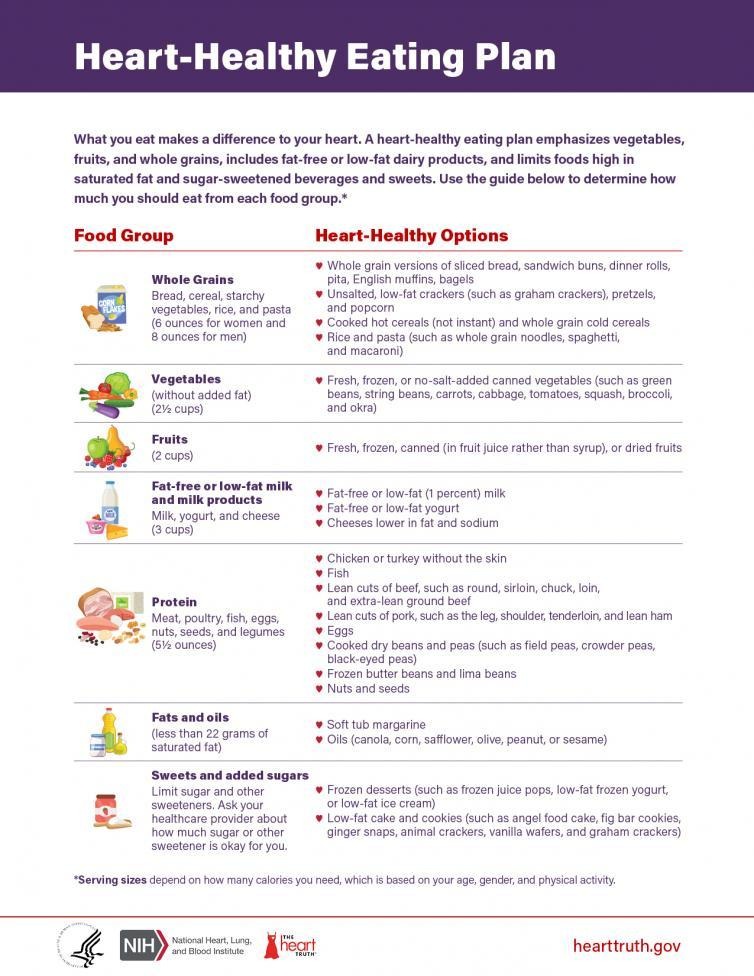
Chicken hearts contain dietary cholesterol. The American Heart Association's 2026 guidance looks at cholesterol in the context of your whole diet and saturated fat. The Arthritis Foundation and Mayo Clinic advise people with gout to limit organ meats high in purines. If you have gout or a doctor-directed restriction, ask your clinician or dietitian how much, if any, fits.
Cooking chicken hearts and accounting for the whole meal
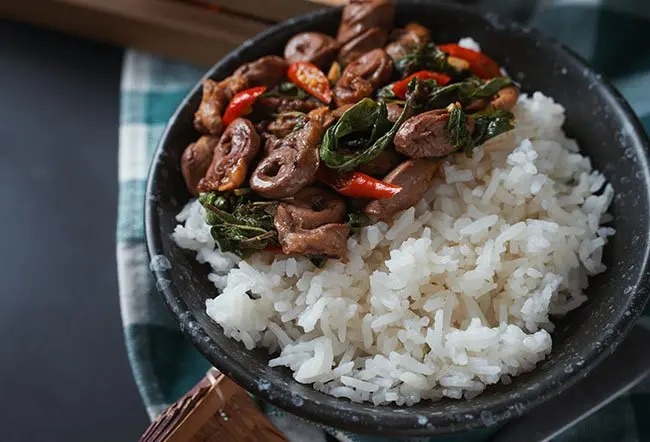
The simmered figures cover the hearts only; oil, coatings, sauces, marinades, and sides add their own calories, so count them separately.
i’m not very happy with the way my photos turned out this week, but…here, have the least unappetizing one!
i’m actually a big fan of offal — heart, tongue, and beef cheek are some of my favorite foods, but i’ve never tried making them at home; they’ve been more of a treat when i go to a restaurant that i know does them well. i’ve always found cooking offal, and especially organ meat, a little intimidating, to be honest.
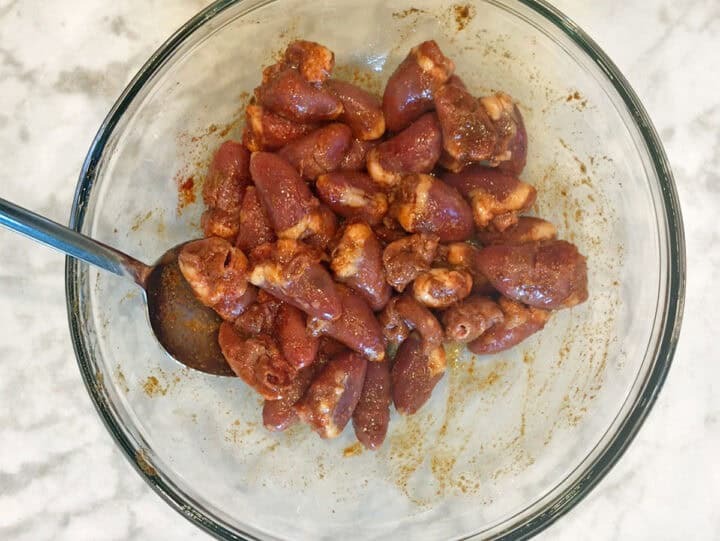
cooking chicken hearts turned out to be much easier than expected! i just marinated them in olive oil, garlic, lime juice, and spices, threaded them onto the skewers, and stuck them under the broiler for around 12 minutes. as a bonus, they’re incredibly cheap (only $2/lb), so they’ll definitely be going into the rotation.
Chicken hearts have a chewy bite and a slightly metallic taste.
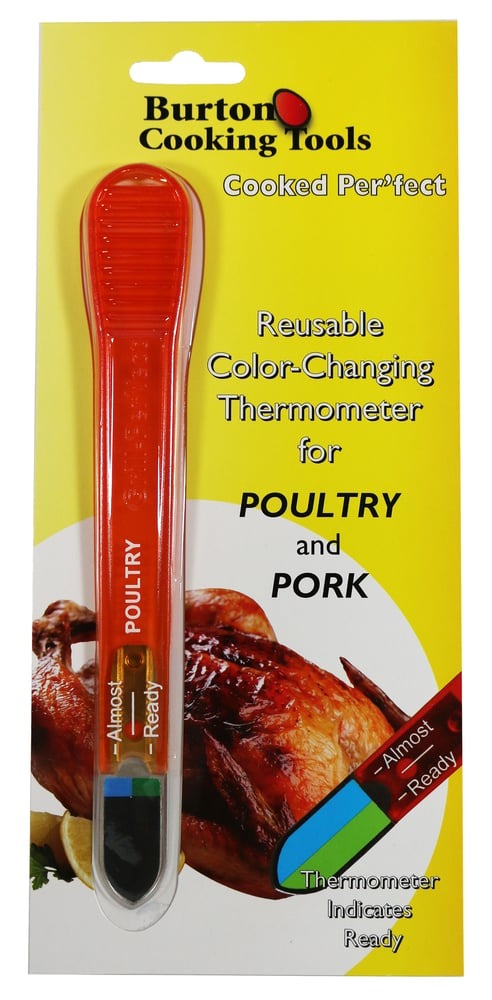
Cooking time doesn't tell you when the hearts are done. FoodSafety.gov's safe minimum internal-temperature chart specifies 165°F (74°C) for poultry giblets. Use a food thermometer, since color and appearance are not reliable.
The CDC advises against washing raw chicken because splashing can spread germs. Keep raw poultry apart from ready-to-eat foods and refrigerate leftovers promptly.