
What Is Imitation Crab Made Of? Ingredients, Surimi, and Nutrition
Imitation crab is cooked, crab-flavored seafood made from surimi, a processed fish paste often based on Alaska pollock. The paste is mixed with water, starches, seasonings, flavorings, and coloring.
Some recipes add egg or real crab. Sushi and salads are two ways to serve it. Recipes and protein content differ by brand, so read the label if allergens, gluten, or protein matter to you.
What is imitation crab made of?
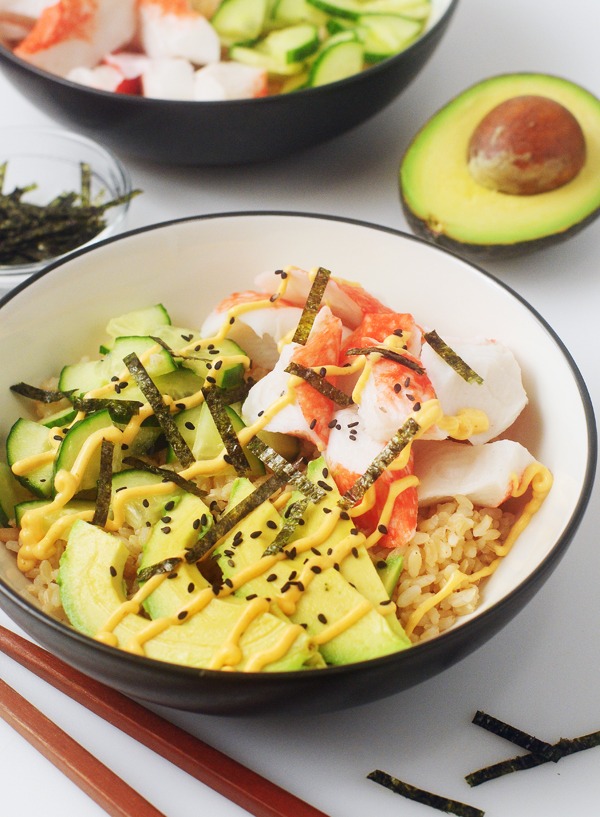
The pink-and-white strips served in a California roll usually start with white fish. The fish is processed into surimi, a smooth protein paste that manufacturers season, bind, shape, and cook to resemble crab meat.
Alaska pollock is a common base. Some products use whiting or other white fish; water, starch, salt, sweeteners, flavorings, and coloring create the mildly sweet flavor and springy texture.
What each ingredient does:
- Fish protein: The base. It holds the shape once cooked.
- Water and starch: Set moisture and texture. Formulas use pea, potato, tapioca, or wheat starch.
- Salt and sweeteners: Season the paste.
- Egg white or other binders: Firm up some recipes.
- Flavorings and optional crab ingredients: Give the crab taste. Some products contain crab extract or actual crab meat.
- Coloring: Gives many products the reddish surface of crab legs.
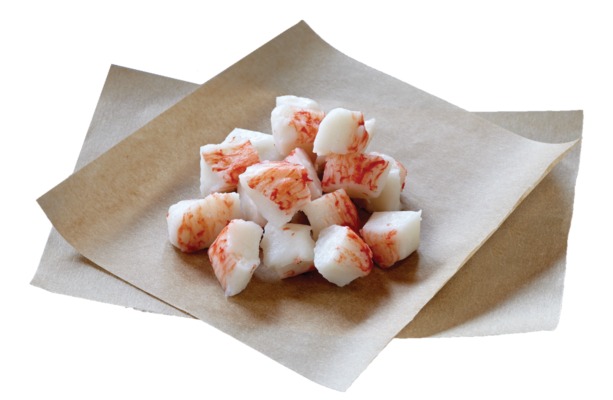
Surimi names the processed fish material, not a fish species. Packages and menus may use fake crab, krab, crab sticks, kani, or kanikama for related products. Conventional fish-based imitation crab is neither vegetarian nor vegan.
How fish paste becomes crab sticks
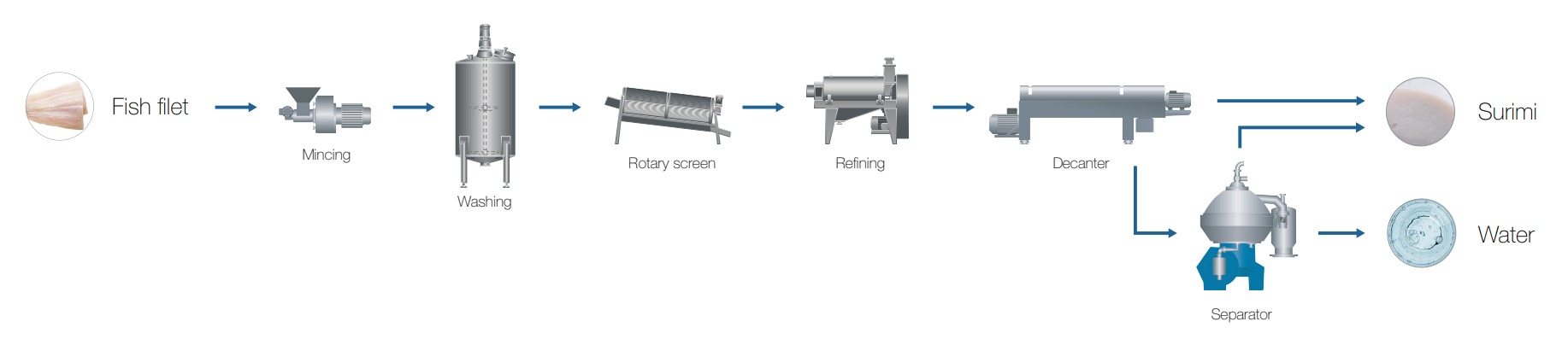
Making surimi starts with separating and refining fish muscle. Washing removes some water-soluble components and concentrates the proteins that give the paste its structure. The fish is then minced and mixed into a workable material.
Manufacturers add starches, seasonings, and other ingredients to adjust flavor and consistency. Heat makes the fish proteins unfold and interact, forming a connected gel that holds its shape. A 2024 review in the Journal of Texture Studies describes this network formation and how ingredients and processing conditions affect surimi texture. Surimi, tuna, and salmon have different ingredient and nutrition profiles, and the fish nutrition comparison covers the other species.
The cooked material is formed into sticks, flakes, or chunks.
Why one imitation-crab label looks different from another
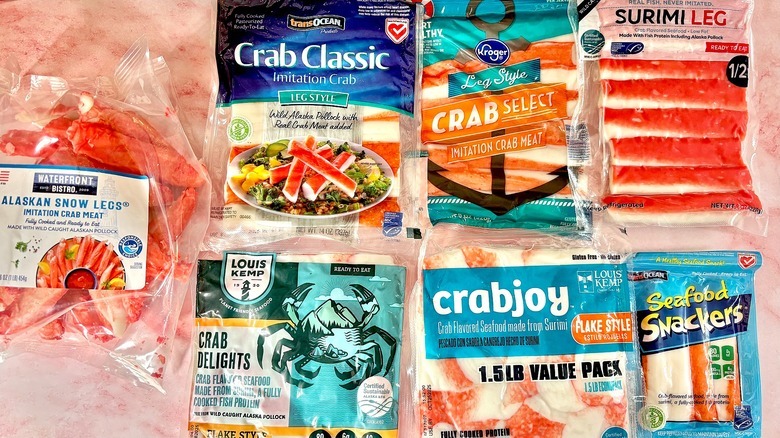
Imitation crab has no single formula. Three manufacturer examples show how fish sources, binders, and allergens differ.
| Product | Fish and starches | Crab ingredients | Declared allergens and gluten information |
|---|---|---|---|
| Trans-Ocean Simply Surimi, Flake Style | Alaska pollock; pea starch | No crab ingredient listed in this formulation | Contains fish; manufacturer describes it as certified gluten-free |
| Trans-Ocean Crab Classic, Flake Style | Alaska pollock; egg whites, pea starch, potato starch, and modified tapioca starch | Golden king crab meat (listed among ingredients at 2% or less); crab-derived flavor extracts | Declares fish, crustacean shellfish, and egg; manufacturer describes it as certified gluten-free |
| Aquamar Surimi Flake, retail | Alaska pollock and/or whiting; potato, tapioca, and wheat starch | Crab extract | Declares fish, wheat, soy, crustacean shellfish (swimming crab), and eggs |
These are published formulations. An individual package can carry a changed recipe.
Color varies too. Trans-Ocean Simply Surimi lists lycopene from tomato, while Aquamar's retail Surimi Flake lists carmine and canthaxanthin.
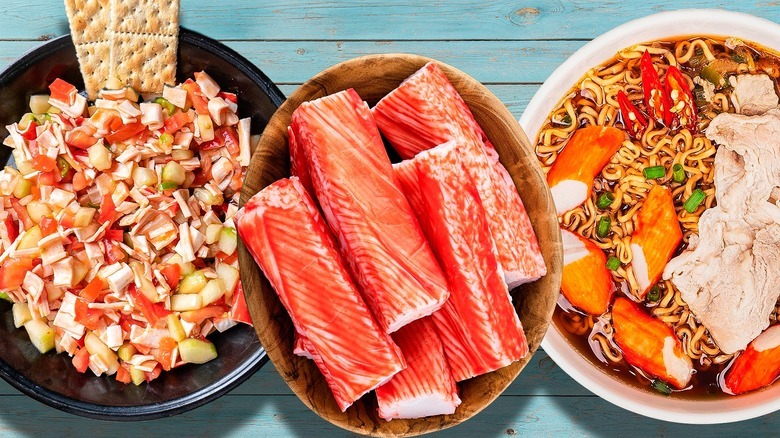
A gluten-free shopper found wheat in two kinds of fake crab:
My grocery store recently changed their sushi supplier, and now they use fake crab with wheat in it. :( only found out after eating a big ole Hawaiian roll. Later, I went out for sushi, and had to 'upgrade' to real crab, because their fake crab ALSO has wheat in it! :(
Does imitation crab contain real crab, fish, wheat, or other allergens?
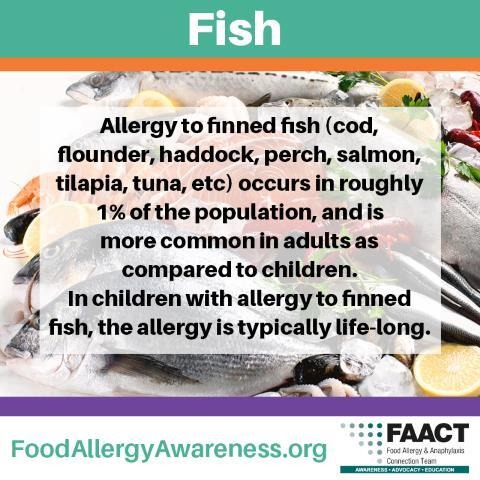
Conventional imitation crab contains fish. Some formulations add real crab meat or crab-derived flavoring, and others declare fish without a crustacean ingredient. Wheat, eggs, and soy can show up too.
The FDA treats fish and crustacean shellfish as separate major allergen categories. That is why the Simply Surimi example declares fish, while the Aquamar retail example declares fish along with wheat, soy, crustacean shellfish, and eggs.
Can imitation crab be gluten-free?
Yes. Simply Surimi carries a manufacturer's certified gluten-free claim. Aquamar's cited retail version includes wheat starch and declares wheat.
The FDA gluten-free labeling guidance allows a gluten-free claim on foods made with certain processed wheat-derived ingredients, including qualifying wheat starch, as long as unavoidable gluten stays below 20 parts per million. Ordinary wheat flour that has not been processed to remove gluten is a different case.
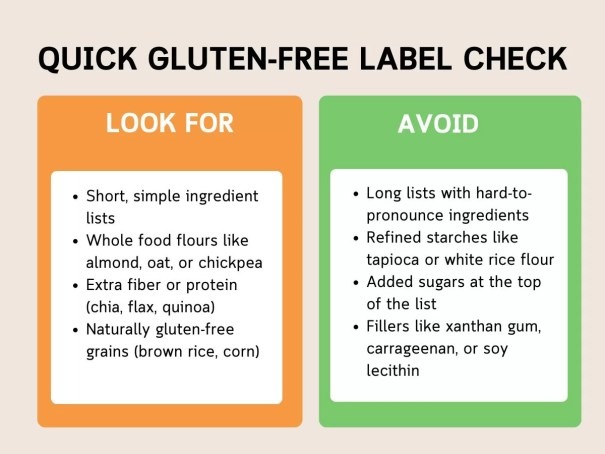
Check two things on a package:
- Major allergens: Read the full ingredient list and any Contains statement for fish, crustacean shellfish, wheat, egg, and soy. A separate Contains statement is not required when the ingredients name the allergen source properly.
- Gluten: Look for a gluten-free claim that suits your needs, especially when the starch source is unfamiliar.
An ingredient list does not rule out cross-contact. If you have a severe allergy, you need reliable information about the specific product and how it was handled. Without it, skip the food.
Imitation crab vs. real crab: what changes nutritionally?
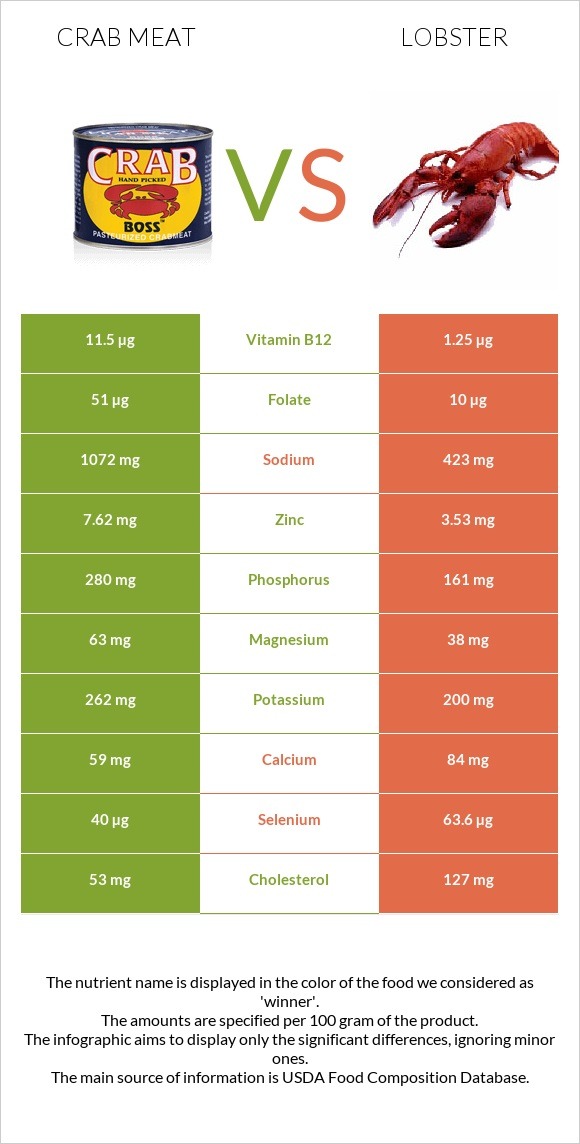
Equal weights of imitation and real crab can have similar calories while differing sharply in protein and carbohydrates. The table uses 3 ounces (85 grams) of each food and labels the reference samples separately from a named retail product.
| Nutrient per 85 g | Reference imitation crab | Cooked Alaska king crab | Aquamar retail Surimi Flake |
|---|---|---|---|
| Calories | 81 | 82 | 110 |
| Protein | 6.5 g | 16.5 g | 5 g |
| Carbohydrates | 12.8 g | 0 g | 9 g |
| Total fat | 0.4 g | 1.3 g | 2 g |
| Sodium | 450 mg | 910 mg | 470 mg |
| Total sugars | Not specified | Not specified | 5 g, all added |
The first two columns come from Healthline's imitation-crab nutrition comparison. Aquamar's column comes from the manufacturer's own Nutrition Facts label.
Cooked king crab has more than twice the protein of the reference imitation sample at the same weight. It also has the higher sodium figure in this comparison.
The same reference table lists vitamin B12 at 21% of Daily Value for imitation crab and 408% for king crab, and zinc at 3% and 59%, respectively.
What does “crab” mean on a sushi menu?
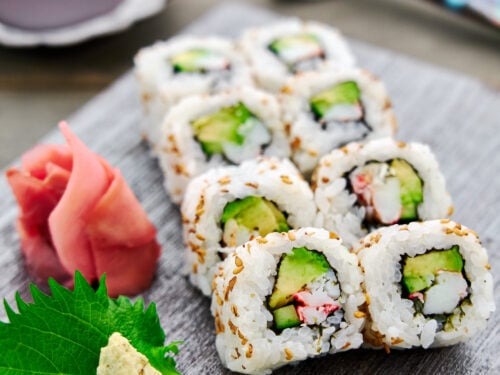
A sushi menu might say crab, kani, kanikama, krab, or crab stick. The word alone does not tell you whether the roll contains prepared surimi, actual crab meat, or a specific crab-flavored product.
A diner paid extra for real crab and still thought the roll was imitation:
I was in Pacifica at a pretty good sushi restaurant, with no complaints about the food itself. The only issue is, i paid an extra 2 dollars for my roll to have real crab meat as the menu depicted, and asking the waiter, only for it to arrive and I could tell it was still imitation. I didn’t want to make a fuss during the special date and just didn’t tip high. But I always think about that when I try new locations now :(
When the exact filling matters, ask: Is the crab in this roll real crab meat or surimi, and can you check the ingredients and allergen information for the product you use?
Where imitation crab works in cooking
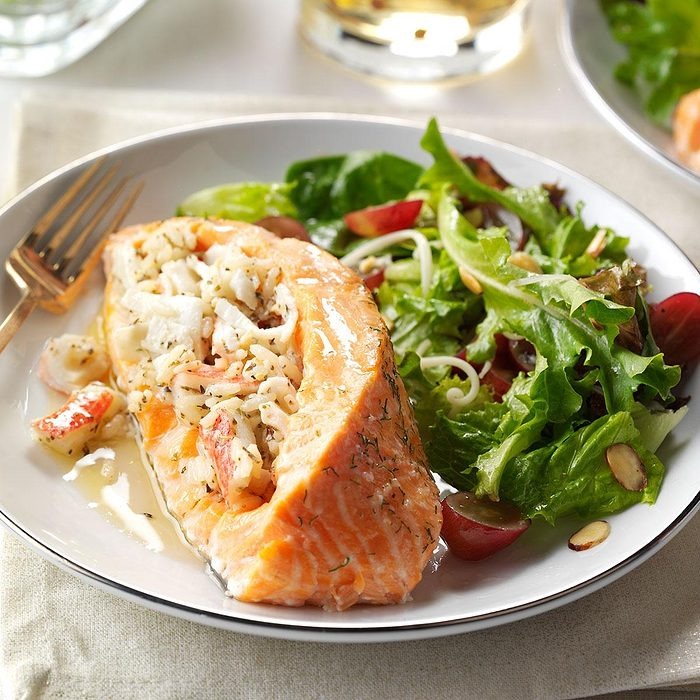
Imitation crab suits dishes that call for a mild seafood flavor. Common uses include California rolls, seafood salad, crab rangoon, dips, pasta, and crab-style cakes.
Trans-Ocean describes how its Crab Classic forms are used:
- Flakes: Mix into seafood salads or dips.
- Chunks: Use in hot dishes or seafood cocktails.
- Leg-style pieces: Suit rolls and other dishes that need a long piece.
A home cook asked what to do with it:
My husband accidentally bought imitation crab, he thought he was buying the real thing. It’s not my favorite, don’t like the texture, but the taste is good. Other than just eating as is, I have no idea what to do with it. For those that love this stuff, how do you eat/prepare this stuff? Any recipes suggestions are welcome!
Update: Thanks to all for the inspiration! A lot of great ideas here!
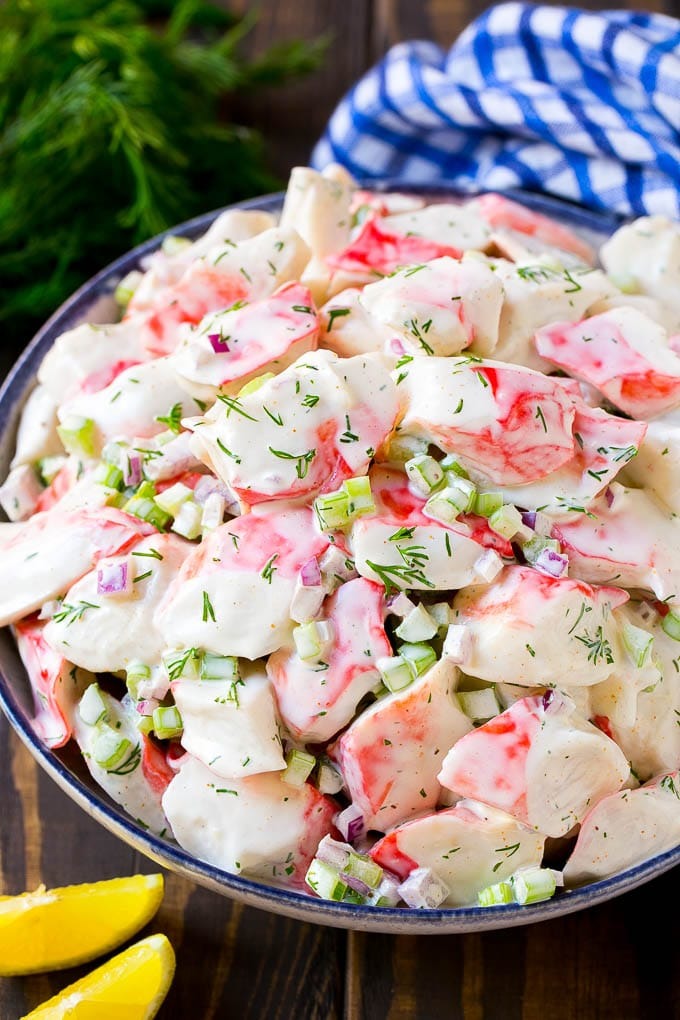
In a mixed salad or dip, the seasoned flavor and even texture are an advantage. A dish built around distinct pieces of crab meat works better with real crab's natural texture.
Is imitation crab okay to eat, including during pregnancy?
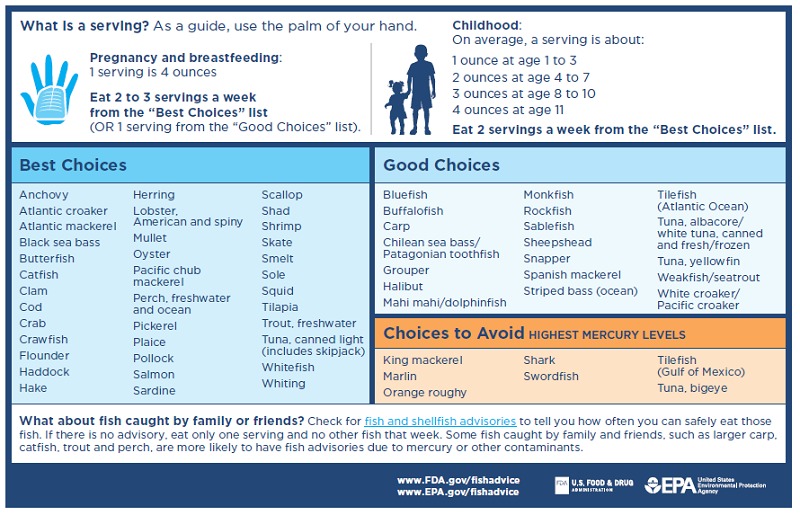
The FDA and EPA list pollock, whiting, and crab as Best Choices for mercury, including in advice for people who are or may become pregnant. That rating does not assess how a particular prepared dish was handled. Ready-to-eat imitation crab still needs refrigeration, so follow the storage and use-by directions on the package.