
Is Octopus Good for You? Nutrition, Calories, and What Cooking Changes
If you can safely eat mollusks, plain, thoroughly cooked octopus is a nutritious, protein-rich seafood. Octopus isn't inherently fattening. The amount you eat, how it's prepared, and any health restrictions determine how it fits into your meal.
Octopus Nutrition: Raw, Cooked, and 3-Ounce Values
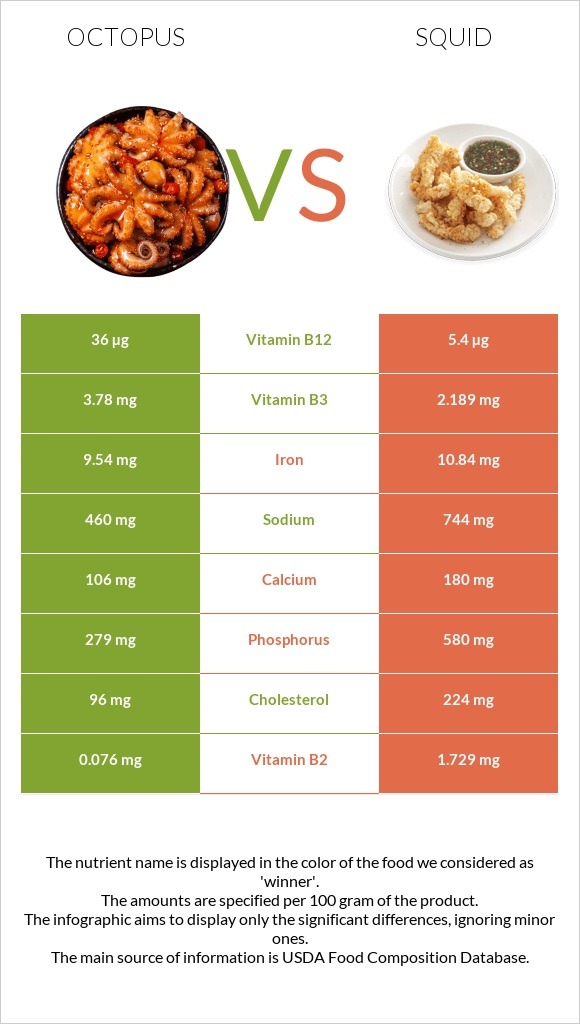
Octopus provides plenty of protein with relatively little fat. The numbers change depending on whether you look at raw or cooked octopus, because each has its own record.
That explains the apparent disagreement between 82 and 164 calories per 100 grams: the figures refer to different forms of octopus.
These figures come from historical USDA Standard Reference records for common octopus, including the USDA Standard Reference seafood report.
| Nutrient per 100 g | Raw octopus | Cooked octopus, moist heat |
|---|---|---|
| Calories | 82 kcal | 164 kcal |
| Protein | 14.91 g | 29.8 g |
| Total fat | 1.04 g | 2.08 g |
| Carbohydrates | 2.2 g | 4.4 g |
| Sodium | 230 mg | 460 mg |
The cooked column describes 100 grams after cooking. Boiling removes moisture, so the nutrients concentrate in the remaining weight. The two columns are equal-weight reference portions, not measurements of the same piece before and after cooking.
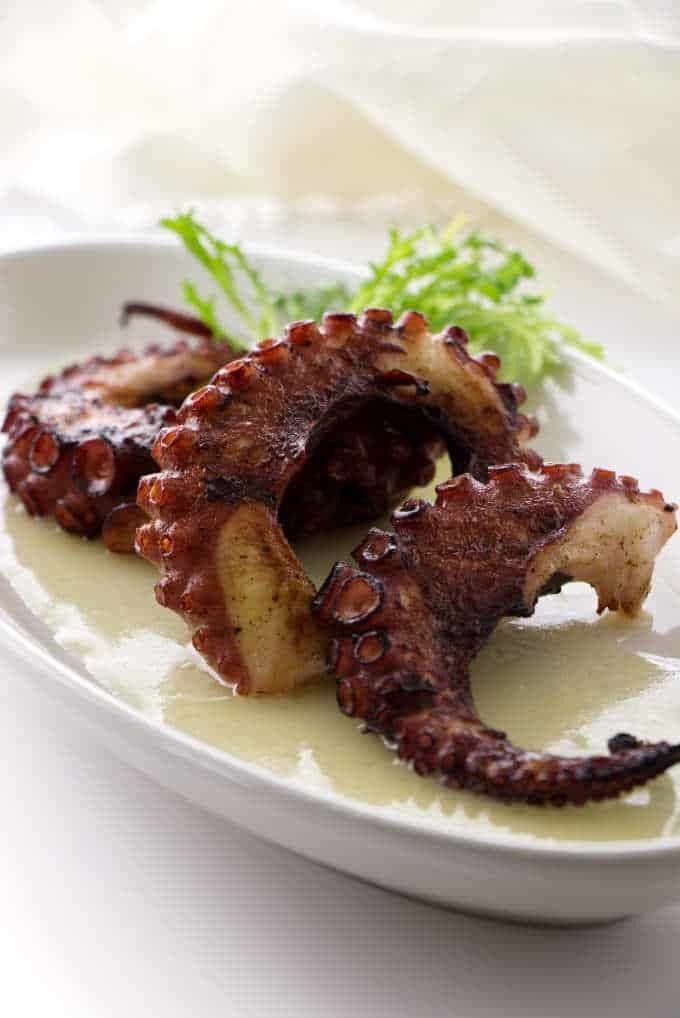
What about a 3-ounce serving?
For 85 grams (about 3 ounces) of plain octopus cooked with moist heat, multiplying the cooked values by 0.85 gives approximately:
- 139 calories
- 25.3 g protein
- 1.77 g fat
- 3.74 g carbohydrates
- 391 mg sodium before any seasoning
These 85-gram values are rounded from the cooked 100-gram reference. When you read any nutrition entry, check the edible weight and whether it's raw or cooked.
The USDA's historical SR Legacy records separate raw octopus from octopus cooked by “moist heat.” Keep that label in mind with a grilled or fried menu item.
Is Octopus Fattening? Consider the Whole Dish
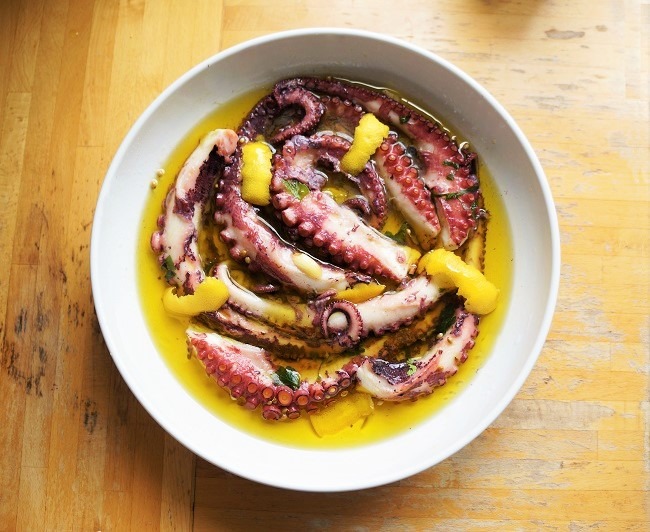
Whether an octopus meal adds to weight gain depends on your total intake, including portion size and everything served with it. Octopus, tuna, and salmon differ in nutrients and serving context. For a separate seafood example, see the tuna-versus-salmon comparison.
The plain cooked serving is a useful reference for the ingredient itself. A restaurant plate often adds olive oil, butter, breading, dressing, sauce, or potatoes, and each one adds to the total.
| Preparation | What changes | How to interpret it |
|---|---|---|
| Plain boiled octopus | Few added ingredients when served plain | Closest to the moist-heat reference |
| Grilled with oil or dressing | Added fats, seasoning, and sometimes marinade | Includes ingredients outside the plain-octopus numbers |
| Battered or fried | Coating and frying oil | Needs the full ingredient list for an accurate total |
A boiled octopus appetizer and a fried octopus plate with potatoes can hold the same amount of octopus and still be very different meals. A calorie total needs the actual amounts of oil, batter, sauce, and sides.
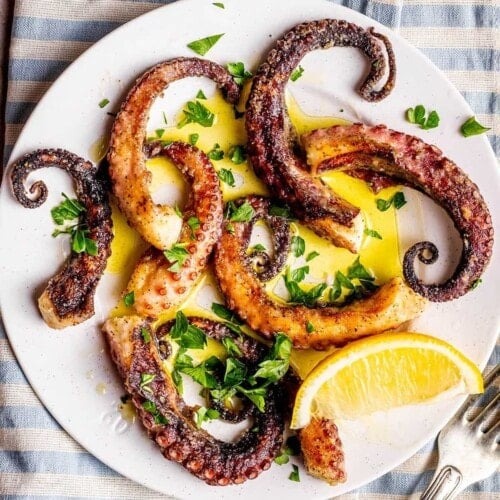
On packaged food, the Nutrition Facts serving size tells you the quantity used to calculate the listed nutrients. For a restaurant meal, use the menu's nutrition information if it has any, or account for the additions separately.
Protein, Vitamins, and Minerals in Octopus
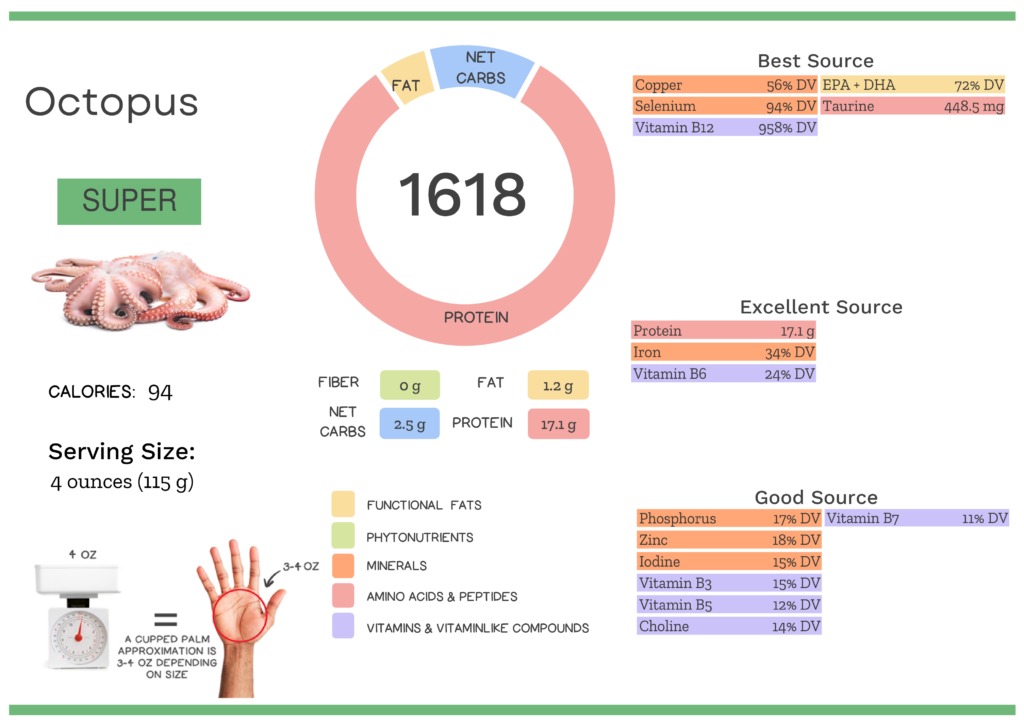
Protein is octopus's biggest nutritional strength: the cooked reference has 29.8 grams per 100 grams of edible seafood. Octopus also supplies vitamin B12, selenium, iron, and zinc.
Vitamin B12 supports nerve and blood-cell function. The USDA cooked reference lists 36 micrograms of vitamin B12 and 89.6 micrograms of selenium per 100 grams.
If a headline credits taurine or another seafood compound with fighting a disease, check what was studied: octopus eaten by people, an isolated compound in a laboratory, or seafood in a broader diet. A nutrient being present doesn't show that octopus prevents cancer, depression, or cardiovascular disease.
Sodium and Cholesterol: What Changes the Choice
The cooked moist-heat reference has 460 mg sodium and 96 mg cholesterol per 100 grams. Salty marinades and dressings add to the sodium. Check the food label or the restaurant's nutrient information if sodium matters to you.
The American Heart Association's guidance published March 31, 2026 focuses on overall eating patterns. It no longer treats dietary cholesterol as a primary cardiovascular risk-reduction target for most people. Individual medical restrictions can still rule out a particular dish.
Octopus Safety: Allergies, Mercury, and Food Handling
Shellfish allergy, chemical contaminants, and unsafe handling each raise a separate question.
Shellfish allergy and US food labels
Octopus is a mollusk. People with shellfish allergies react differently, and tolerating one type of shellfish doesn't mean another is safe; cooking doesn't make an allergenic food safe for someone who reacts to it.
US major-allergen declaration rules cover crustacean shellfish. Molluscan shellfish such as octopus fall outside that statutory category, as explained in FDA allergen-labeling guidance. If you have an allergy, read the ingredient list and ask about octopus ingredients or cross-contact. A missing “Contains” warning doesn't mean the product is safe for you.
Ask a healthcare professional to assess your allergy.
Mercury and other contaminants
Studies of octopus have measured heavy metals in different tissues and different places. Results for muscle or digestive glands in one study population don't apply to every octopus sold in US stores.
The FDA/EPA seafood advice chart lists squid among its “Best Choices” for the populations it addresses. Octopus has no separate category there, so you can't borrow squid's. Ordinary cooking doesn't reliably remove mercury.
For pregnancy or other high-stakes mercury decisions, use species-specific advice and talk to a medical professional.
Storage, cooking, and cross-contamination
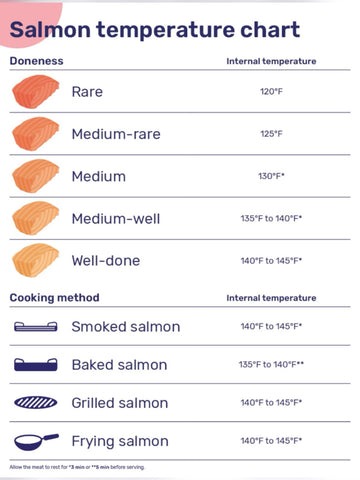
The FDA seafood safety guidance recommends cooking most seafood to an internal temperature of 145°F and refrigerating it at 40°F or below.
It also advises keeping raw seafood away from ready-to-eat food. The temperature is a general recommendation and doesn't set one cooking time for every size of octopus.
Raw or undercooked seafood is a particular concern for pregnant people, young children, older adults, and people with weakened immune systems.
Does freezing make octopus safe to eat raw?No. Freezing does not kill every harmful germ. Previously frozen octopus still needs proper handling and safe preparation.
Boiled, Grilled, Fried, or Precooked: Why Results Differ
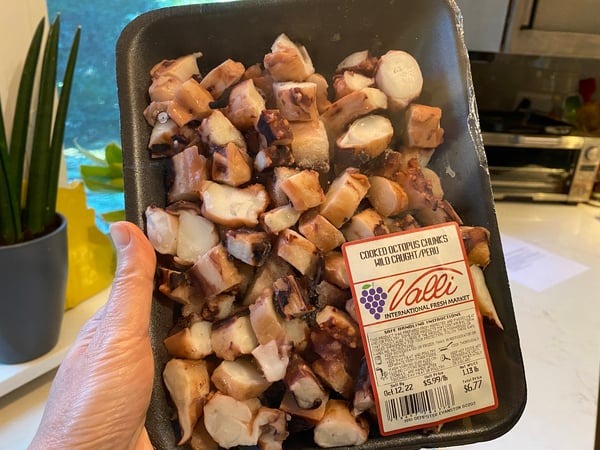
Start by identifying what you're buying: raw, previously frozen raw, or fully cooked. Each needs different handling. A package of precooked tentacles may need only a finishing step, while raw octopus has to be cooked.
Moist-heat cooking changes texture and moisture content. Grilling gives a different finish, usually with oil or seasoning, and batter and frying add more ingredients. Size and processing history also change how a method works.
Texture is where the difference shows up, at home and in restaurants. One diner got octopus so tough that cutting and chewing became an ordeal:
I ordered some octopus at a restaurant for dinner last night and they came out super rubbery. Nearly impossible to cut with a steak knife and even harder to chew through. Am I able to cook it a second time and hopefully reach the desired texture? I would hate for the whole dish to go to waste but it's nearly inedible in it's current state.
The post doesn't report a fix. A separate 2019 common-octopus boiling study measured processing-related changes, but its industrial cooking conditions don't give a reliable home cooking time.
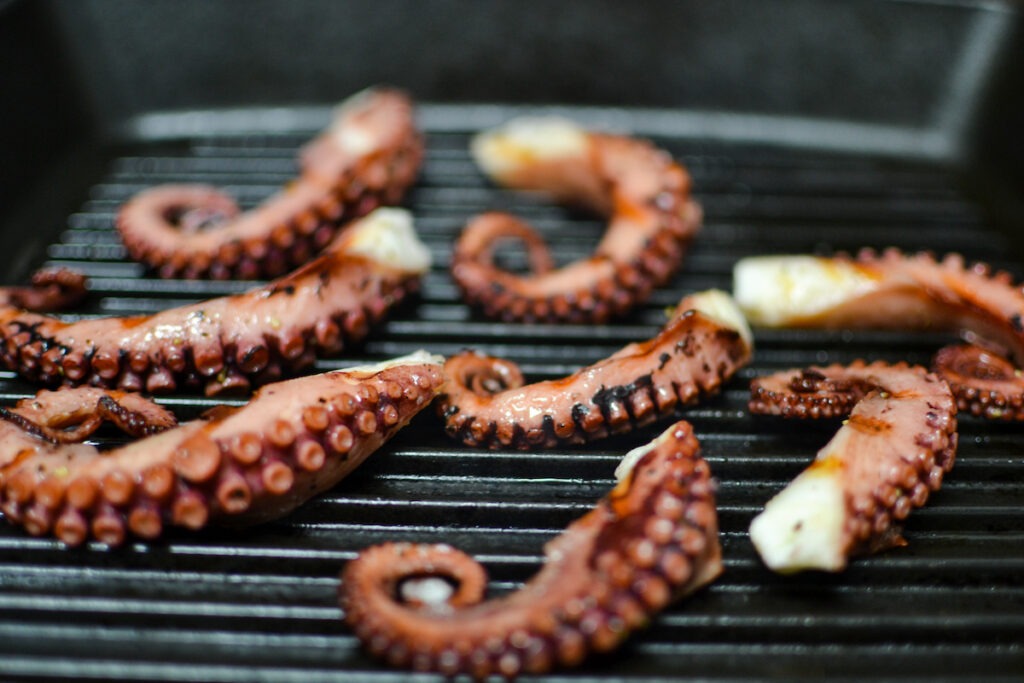
The same ingredient can also turn soggy or lose its texture when the method doesn't suit it.
How to Choose an Octopus Dish
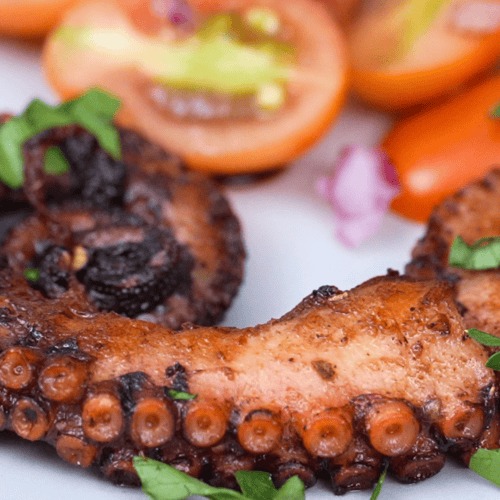
Pick based on why you're ordering it:
- For protein: Plain cooked octopus gives you a clear nutrient reference, especially when you know the edible serving weight.
- For calories: Look at the whole plate. Breading, sauces, and sides can change the result even when the octopus portion looks the same.
- With a health restriction: A shellfish allergy or other seafood-related restriction outranks the protein benefit.