How Many Calories Are in Eggnog? By Serving Size and Type
Serving size changes the picture: a 2025 Consumer Reports review of 30 eggnog products found roughly 170 to 210 calories per half cup (4 US fl oz) in regular dairy varieties. That equals 340 to 420 calories per full cup of the same product.
How many calories are in regular eggnog?
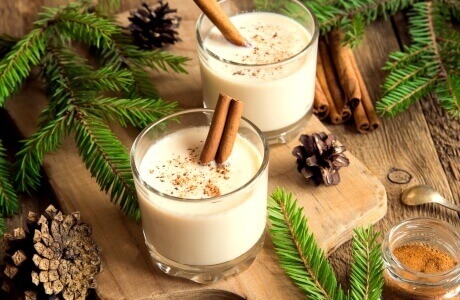
Consumer Reports used the same half-cup unit for the regular dairy products shown in the comparison table.
| Eggnog reference | ½ cup (4 fl oz) | 1 cup (8 fl oz) |
|---|---|---|
| Consumer Reports range, 2025 | 170 to 210 cal | 340 to 420 cal |
| Crystal Creamery regular eggnog | 170 cal | 340 cal |
| Darigold Classic Eggnog | 170 cal | 340 cal |
| Commercial eggnog (Healthline, 2019) | 200 cal | 400 cal |
A Reddit reader reacted to the full-cup total this way:
450 calories for one cup. Needless to say, I budget my entire day around it.
Half a cup, a full cup, or the whole carton
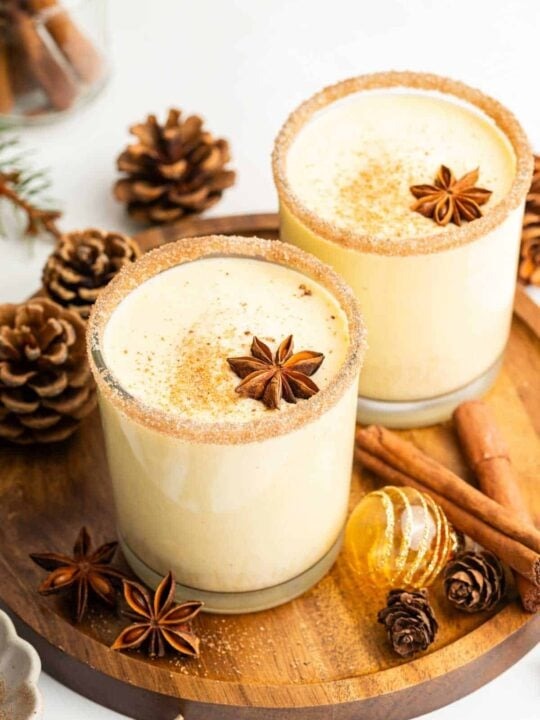
Divide what you pour by the serving size on the label, then multiply by the calories. A half cup is 4 fl oz and a cup is 8.
The FDA serving-size guidance says a serving size reflects what people typically drink, not what you should drink. Your glass often holds more than one.
Take Crystal Creamery's regular eggnog at 170 calories per 4 fl oz:
| Amount poured | 4-fl-oz servings | Calories |
|---|---|---|
| 4 fl oz | 1 | 170 |
| 6 fl oz | 1.5 | 255 |
| 8 fl oz | 2 | 340 |
A carton can hold several servings. Say a bottle lists 190 calories per serving and 3 servings per container. Drink it all and you take in 570. Some Nutrition Facts panels print the per-container total for you.
Regular, light, plant-based, and diluted eggnog
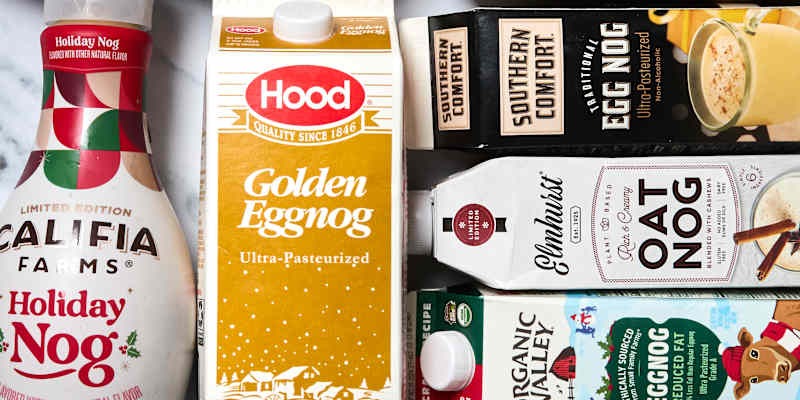
Light eggnog has fewer calories and about the same added sugar. Consumer Reports found many light products near 140 calories per half cup, against 170 to 210 for regular dairy. If you also drink milky coffee, the coffee carbohydrate breakdown shows how milk and sugar add up there.
Hood's manufacturer listings give a side-by-side comparison per half cup:
| Product, 4 fl oz | Calories | Total fat | Saturated fat | Added sugar |
|---|---|---|---|---|
| Hood Golden Eggnog | 180 | 9 g | 5 g | 16 g |
| Hood Light Eggnog | 140 | 4 g | 2 g | 17 g |
| Crystal Creamery regular eggnog | 170 | 8 g | 4.5 g | 13 g |
Hood Light has 40 fewer calories and 5 g less fat per half cup, with 1 g more added sugar. Plant-based nogs follow their own recipes, so compare the same 4 fl oz on the label.
Darigold Classic also lists 170 calories per half cup, the same as Crystal Creamery, with 9 g total fat and 11 g added sugar.
A full glass with less eggnog
Pour 4 fl oz of eggnog, then top the glass up with 4 fl oz of almond milk. You get a full 8-fl-oz glass. The eggnog adds 170 calories at Crystal's value, and the almond milk adds whatever its label lists.
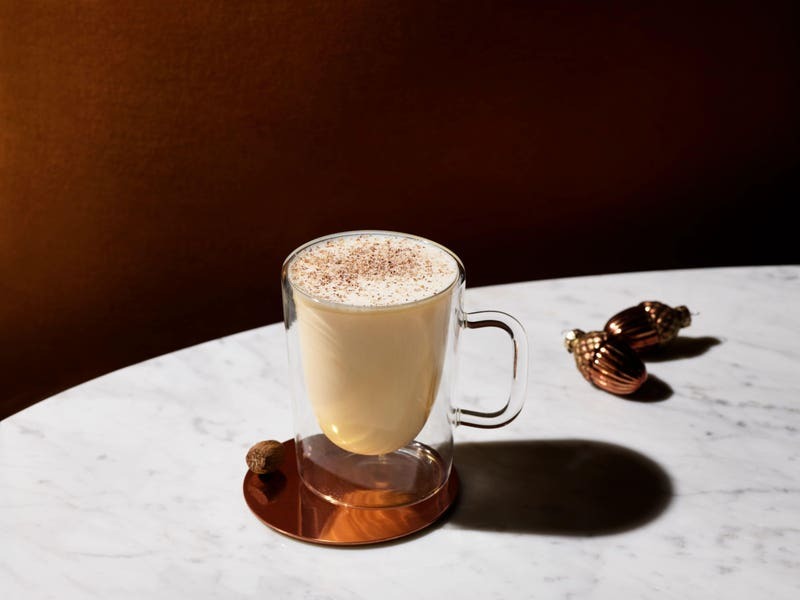
Eggnog also works as the basis for a frozen dessert. A commenter described using a Ninja Creami:
Lots of people say “just enjoy it! Once a year blah blah!” But personally I could easily down a cup or two in a sitting and that’s 800-1000 calories, over half my daily allowance.
But I love it so…!
What I’m doing this year is using it in my ninja creamis instead. One cup nog, a half cup fat free milk, and a bit of stevia. What I get is the exact flavor profile I am looking for, and eating it rather than drinking it makes it last longer. I also only eat half in a sitting so rather than drink a cup for around 400 I’ll eat half a container for around 250.If you don’t have a ninja creami I’d bet my lunch money there are recipes online to make egg nog ice cream without any fancy equipment.
Also my fave is Homestead Creamery; $9 for a quart (in the glass bottle) but it’s soooooo good. And at least they do bottle returns.
Homemade eggnog needs a batch calculation
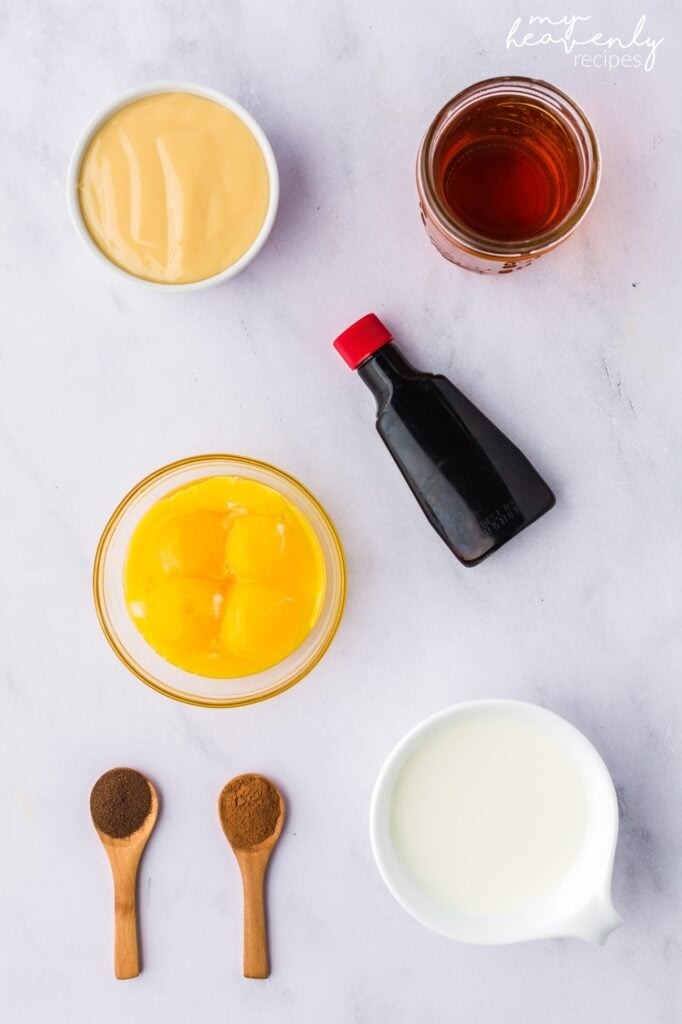
Homemade calories depend on what goes in: milk, cream, egg yolks, sugar and any alcohol; add up the whole batch first, then divide it by the volume of the finished drink.
| Ingredient | Amount actually used | Calories for that amount |
|---|---|---|
| Milk | ___ | ___ |
| Cream | ___ | ___ |
| Egg yolks or pasteurized egg product | ___ | ___ |
| Sugar or another sweetener | ___ | ___ |
| Other ingredients, including optional alcohol | ___ | ___ |
| Total batch | Measured finished yield: ___ fl oz | Sum: ___ calories |
Look up each ingredient's calories on its label or in USDA FoodData Central, using the entry that matches your ingredient. Then add them up.
Portion calories = total batch calories × (poured volume ÷ measured finished batch volume).
Say the batch measures 40 fl oz. A 4-fl-oz glass then holds one-tenth of the total. A smaller yield packs more calories into each ounce, and straining out ingredients changes the total. Adding milk or alcohol changes the total and the volume too.
Food safety with homemade eggnog
Raw or unpasteurized eggs can carry Salmonella. The FDA's food-safety guidance points to pasteurized eggs or safe preparation and refrigeration. Alcohol in eggnog does not reliably sterilize raw eggs.
Which calorie number should you trust for your carton?
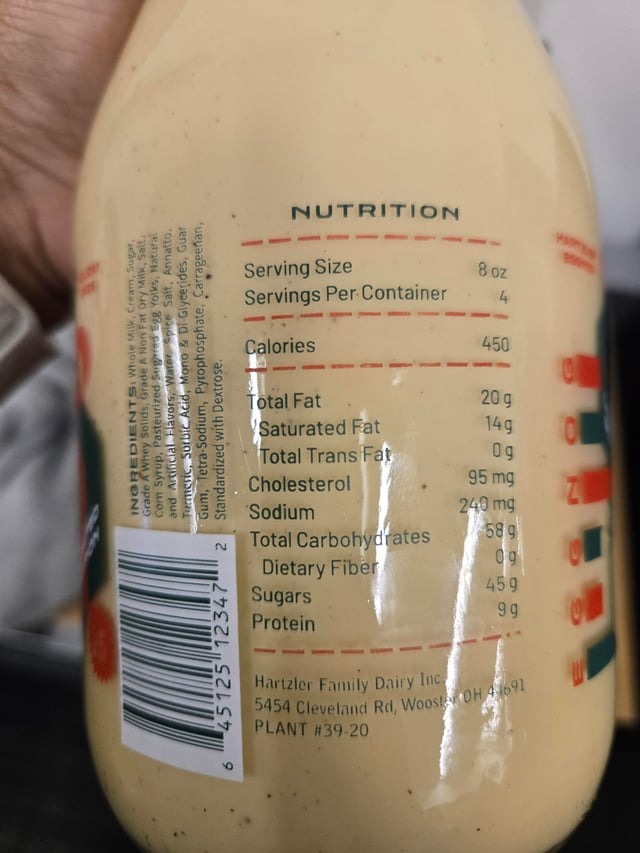
Use the Nutrition Facts panel on your carton. It gives the exact calories for that product and serving size. If you no longer have the carton, the manufacturer's listing for the same product is the next best source.