
Couscous vs. Quinoa: Nutrition, Cooking, and Which to Choose
Quinoa is the stronger fit when gluten avoidance or fiber is the priority: it has 2.8 g per 100 g cooked, compared with 1.4 g in couscous. Regular couscous works when wheat is fine and you want a mild side ready in about 5 minutes. With celiac disease, buy quinoa labeled gluten-free.
Couscous and quinoa fill the same spot on a dinner plate but act differently in the pot; wheat tolerance and the portion size in the nutrition comparison are the practical dividing lines.
What are couscous and quinoa?
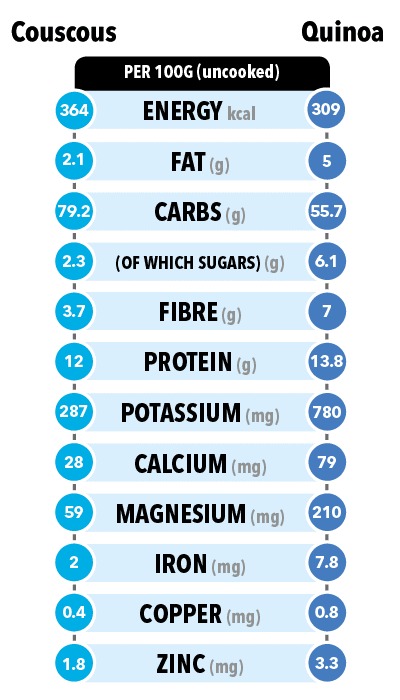
Regular couscous is tiny pasta made from wheat semolina, usually durum wheat. Quinoa is an edible seed cooked and served like a grain.
Pearl couscous has larger pasta pieces, a chewier bite and a different cooking method. Whole-wheat couscous still contains wheat, though its nutrients differ from refined couscous. Some gluten-free products are sold as couscous but use other ingredients, so the name alone doesn't tell you what's inside.
Couscous vs. quinoa nutrition: the cooked-weight comparison
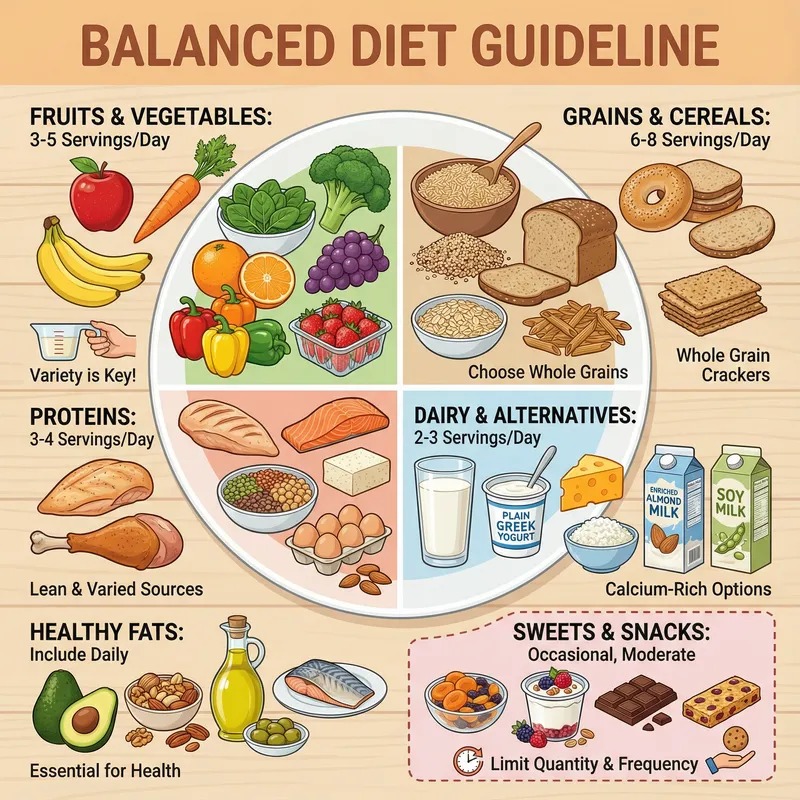
At the same weight, plain cooked quinoa has about twice the fiber of plain cooked regular couscous. It also has a little more protein, and the calorie difference is small.
| Nutrient per 100 g cooked | Couscous | Quinoa | Quinoa difference |
|---|---|---|---|
| Calories | 112 kcal | 120 kcal | +8 kcal |
| Protein | 3.8 g | 4.4 g | +0.6 g |
| Carbohydrates | 23.2 g | 21.3 g | -1.9 g |
| Fiber | 1.4 g | 2.8 g | +1.4 g |
| Total fat | 0.16 g | 1.92 g | +1.76 g |
These are rounded USDA-linked reference values for plain, cooked foods. A flavored box, a different variety or a restaurant dish can differ. By equal weight, quinoa wins on fiber, while the protein gap is narrow.
Why a cooked cup changes the numbers
In the reference data, a cooked cup of couscous weighs about 157 grams and a cooked cup of quinoa about 185 grams. The quinoa cup holds more food by weight.
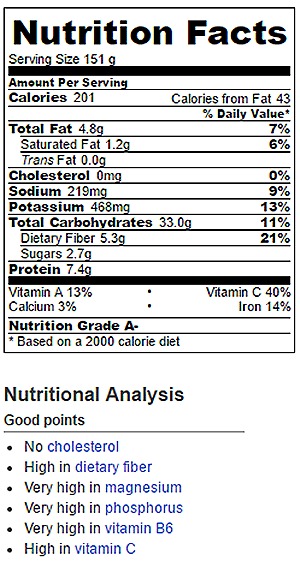
- One cooked cup of couscous: approximately 176 calories, 6.0 grams protein and 2.2 grams fiber.
- One cooked cup of quinoa: approximately 222 calories, 8.1 grams protein and 5.2 grams fiber.
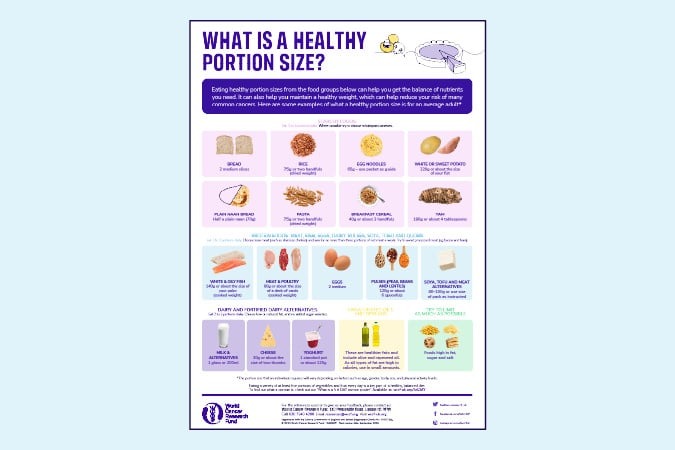
For a fair nutrient-density comparison, use the 100-gram table. For your own bowl, multiply the per-100-gram values by its cooked weight divided by 100. A 150-gram serving is 1.5 times the listed nutrients. Dry weights are a separate comparison because cooking adds water.
The FDA's serving-size explanation says label serving sizes reflect amounts customarily consumed, not how much you should eat.
Does quinoa count as a complete protein?
Quinoa provides all nine essential amino acids. Harvard's Nutrition Source reports about eight grams of protein in a cooked cup, in line with the values above. Per 100 grams cooked it has 4.4 grams, so the protein is complete but the amount is modest.
Gluten and wheat: the dietary difference that matters
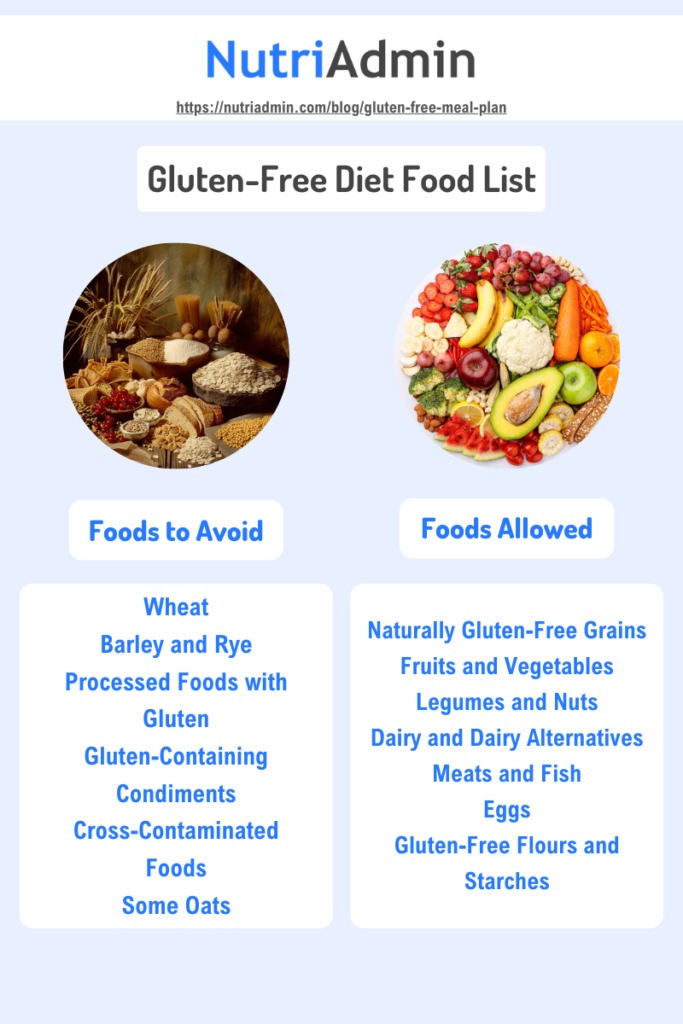
Conventional wheat couscous contains gluten. Quinoa is naturally gluten-free, so it works when you need to avoid wheat or gluten.
With celiac disease, the package and the kitchen matter as much as the grain. Quinoa can pick up gluten through processing or shared equipment, and a prepared dish can be cross-contaminated. Wheat allergy, celiac disease and choosing to avoid gluten are different situations, so match the product to your restriction.
Under the FDA's gluten-free labeling rule, a voluntary gluten-free claim must meet ingredient restrictions and a limit of less than 20 parts per million of unavoidable gluten.
When avoidance is medically necessary, read the ingredients and gluten-free information on the package, and prevent cross-contact while you cook. Specialty gluten-free couscous alternatives are judged on their own ingredients and labeling; ordinary semolina couscous remains a wheat food. The durum-semolina guide covers the wheat product used to make couscous.
Taste and texture: which food suits your dish?
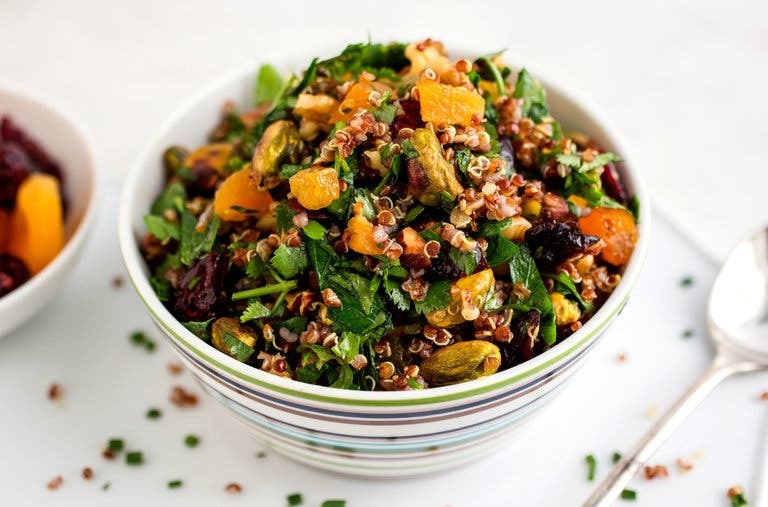
Regular couscous is fine-textured and mild. Made by its usual quick method, it gives a soft, fluffy base for saucy vegetables or beans. Quinoa cooks into separate tiny seeds with a different mouthfeel. Pearl couscous gives larger, chewier pasta pieces.
In a cold salad, the base changes how the vegetables and dressing come together. A bowl of individual quinoa seeds feels different from one made with fine couscous, even with identical toppings. For a warm side carrying sauce, regular couscous gives the gentler texture.
Some people dislike quinoa's flavor even when it's cooked as intended. If wheat is fine for you, liking the feel of pasta is reason enough to choose couscous.
How to cook regular couscous, pearl couscous, and quinoa
Regular quick couscous softens during a covered rest. Pearl couscous and quinoa are simmered. Follow the directions on your package, because products differ in liquid and heat.
| Food and method | Dry food | Liquid | Cooking and finish |
|---|---|---|---|
| Bob's Red Mill golden couscous | 1 cup | 1¼ cups | Stir into boiling liquid, cover, remove from heat, stand about 5 minutes, then fluff |
| Bob's Red Mill traditional pearl couscous | 1 cup | 1½ cups | Simmer covered until tender, about 15 minutes; drain any remaining water |
| Oregon State University stovetop quinoa | 1 cup | 2 cups water | Simmer about 12 minutes, then stand 5 to 10 minutes |
Couscous either steeps off the heat or simmers, which is why two couscous recipes can disagree.
Bob's Red Mill lists separate instructions for its Golden Couscous and Traditional Pearl Couscous. The Golden Couscous instructions use a brief covered rest, which helps when two boxes sit side by side on the shelf.
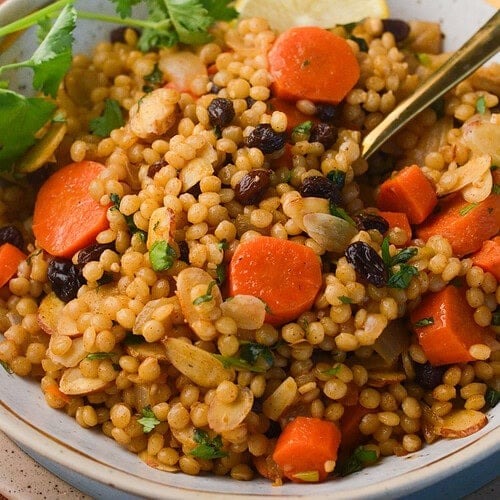
A cook in r/AskCulinary bought an unfamiliar couscous and struggled with both the printed water ratio and the familiar covered-steep technique. The poster eventually found a method that worked for that couscous.
I got a whole lot of couscous from a grosser, and I’ve spent about a quarter of it trying to figure out how to cook it. On the bag, it says double the amount of water to the amount of couscous, which made it a sloppy, yet cake-y mess. It also sounded ridiculous. I’ve tried reducing the amount of water as the packet that I usually use says equal amounts of water to couscous, but that makes it a solid puck.
I usually boil the water with bouillon, take it off the heat, add the couscous, let it sit with a lid. Then fluff it with a bit of butter or oil, and it’s done. The fluffing part is out of the question with this couscous - it’s just a puck.
So, Reddit? What’s the foolproof way of cooking couscous?
ETA: after all of the redditors suggestions, I have now found a method for this couscous (which I will not be buying again, lol). Thank you all for your comments and help!
Gently roast the couscous (frying just made it clump together unfortunately), remove it, then boil water (2X amount of couscous), add bouillon and a bit of olive oil. Add couscous, put on lid for a few minutes, remove lid, stir and let it cook without lid. Fluff and voila!
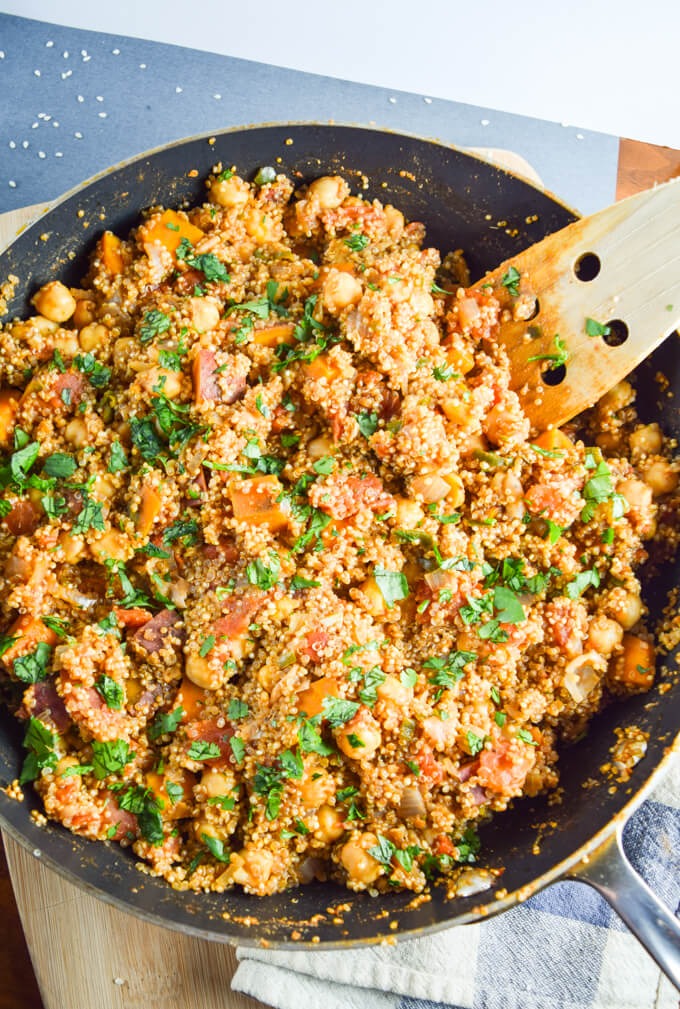
The Oregon State University stovetop method has quinoa stand after simmering. Some quinoa is sold prewashed, and the package says whether to rinse it first.
Can you substitute quinoa for couscous?
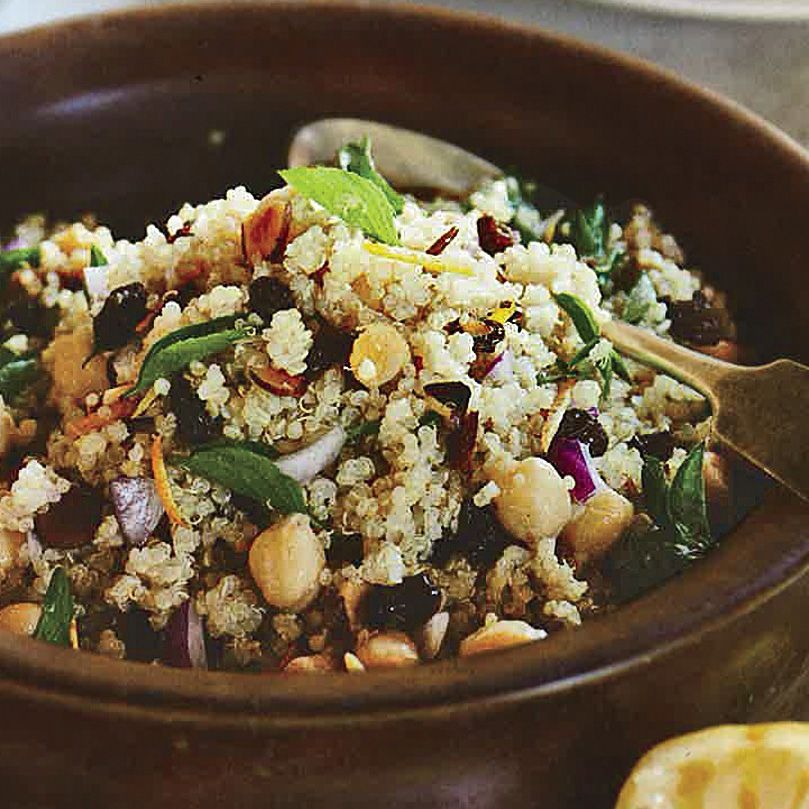
Cooked separately and added to a finished meal, quinoa and couscous fill similar roles. If a recipe cooks the dry grain in the same pot as everything else, swapping changes the liquid balance, cooking time and texture.
| Dish | Choice | What changes |
|---|---|---|
| Side prepared in its own pot | Either, cooked by its own method | Texture and time |
| Cold vegetable salad | Cooked quinoa or couscous | Bite and dressing balance |
| One-pot bake with dry couscous | Adapted recipe | Liquid and timing |
| Meal without wheat | Quinoa | Wheat couscous is out |
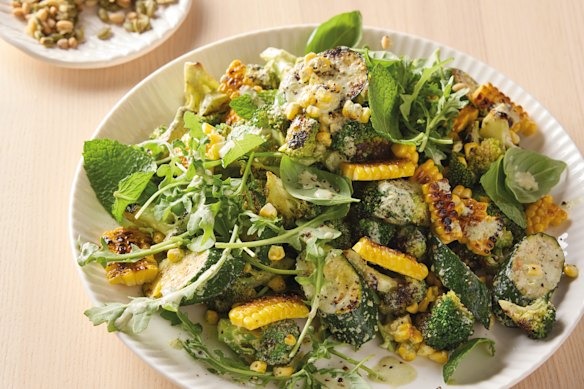
A grilled-vegetable salad works with either separately cooked base. A covered chicken bake that expects dry couscous to absorb liquid while everything else cooks needs more care.
An r/Cooking contributor accidentally mixed dry quinoa with couscous.
I feel so dumb but I mixed quinoa and couscous together thinking they were both couscous. What would happen if I try cooking them together. I looked up how to cook both on their own and they seem pretty similar except for how much water/broth you use. I am not picky about using either for the recipe I am making. Help!
For a one-pot recipe, find a version written for the grain you're swapping in.
Common mistakes: mushy quinoa, clumped couscous, and bitter flavor
Most problems show up as one of three symptoms: mushy texture, a solid couscous clump or an unpleasant flavor.
An r/AskCulinary contributor kept getting porridge-like quinoa instead of distinct grains.
I can’t cook quinoa. It turns out like porridge every time. The packages tell me to wait till the water is gone but when that happens, it’s mush. I’ve wasted maybe 6 cups of quinoa trying different recipes. I’m hungry and tired, please help!
This cook waited for every drop of water to disappear and got mush. A commenter suggested draining quinoa when it's tender if water remains.
| What you notice | Cause | What to check |
|---|---|---|
| Porridge-like quinoa | Too much liquid or too long on the heat | Test for tenderness early and match your cooking time to the method (Oregon State: about 12 minutes) |
| Couscous forms a firm puck | The liquid balance or method doesn't suit that couscous | Identify the couscous type and use its own method |
| Bitter or soapy quinoa | Saponins on the seed surface | Check the package for rinsing instructions or a prewashed label |
Saponins are compounds on quinoa's outer surface, and processing and rinsing reduce them.
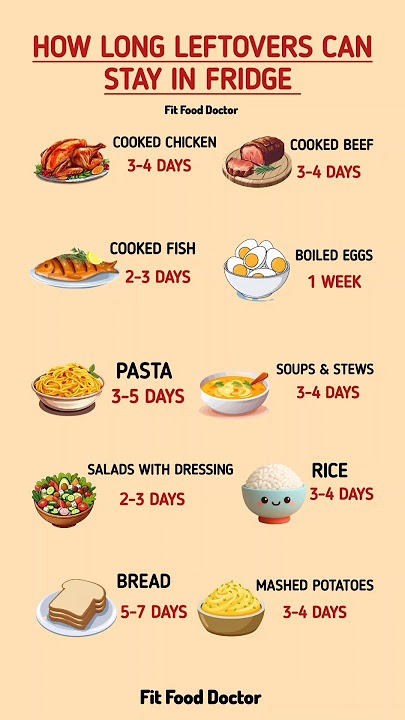
USDA food-safety guidance says to refrigerate cooked leftovers within two hours, or within one hour when the air temperature is above 90°F (32°C). Eat them within three to four days.
Which should you choose for your next meal?
Need dinner fast and wheat is fine? Regular couscous is ready after a five-minute rest. Need gluten-free or extra fiber? Quinoa takes about 12 minutes of simmering plus 5 to 10 minutes of standing.