
Nut Nutrition Compared: Calories, Protein, Fiber, and Portions
A fair nut comparison starts with equal weights—about 1 ounce (28 grams) per serving. Pistachios and almonds give you the most protein and fiber together (6 g and 3 g).
Peanuts have the most protein (7 g), and walnuts are the pick for plant omega-3 (ALA). Macadamias and pecans carry the most calories, about 200 per ounce. Brazil nuts are the exception, because their selenium content is exceptionally high.
How do common nuts compare per ounce?
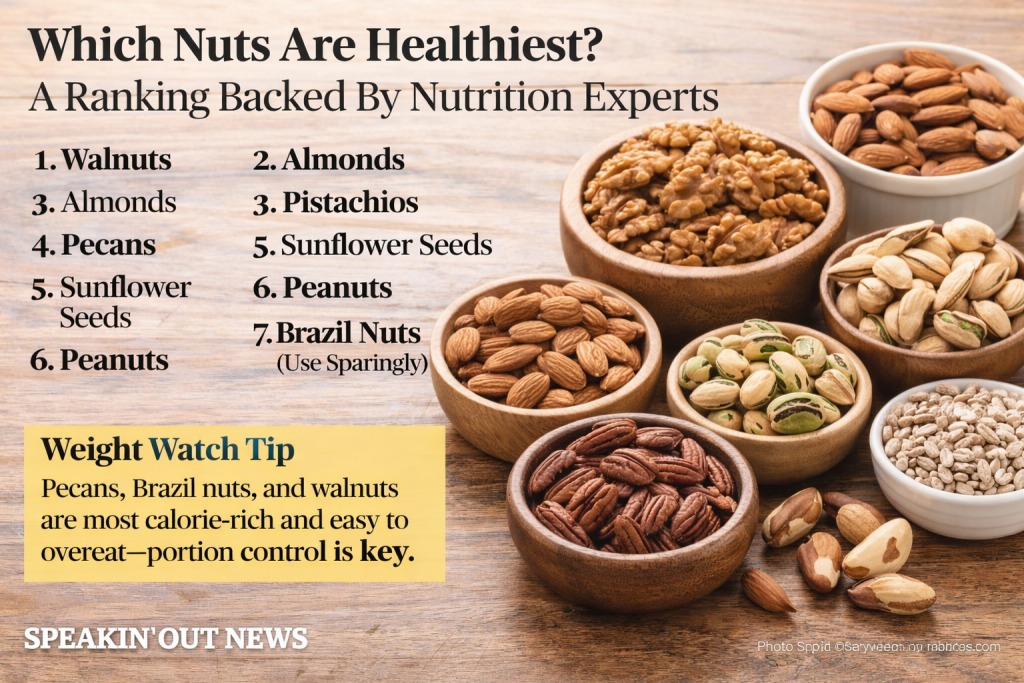
An ounce of nuts typically supplies about 160 to 200 calories, depending on variety and preparation. The more useful differences lie in protein, fiber, and the kinds of fat.
Compare them at the same weight: 1 ounce, about 28 grams of shelled nuts. The figures below come from Healthline's nut nutrition profiles, updated April 28, 2026.
| Nut | Form | Calories | Fat | Protein | Fiber |
|---|---|---|---|---|---|
| Almonds | Roasted | 170 kcal | 15 g | 6 g | 3 g |
| Pistachios | Not stated | 159 kcal | 13 g | 6 g | 3 g |
| Walnuts | Not stated | 185 kcal | 18.5 g | 4 g | 2 g |
| Cashews | Raw | 157 kcal | 12 g | 5 g | 1 g |
| Pecans | Roasted | 201 kcal | 21 g | 2.7 g | 2.6 g |
| Macadamias | Not stated | 204 kcal | 21.5 g | 2 g | 2.4 g |
| Brazil nuts | Not stated | 187 kcal | 19 g | 4 g | 2 g |
| Hazelnuts | Not stated | 178 kcal | 17 g | 4 g | 2.7 g |
| Peanuts | Raw | 162 kcal | 13.5 g | 7 g | 2.4 g |
Per 1 oz (28 g).
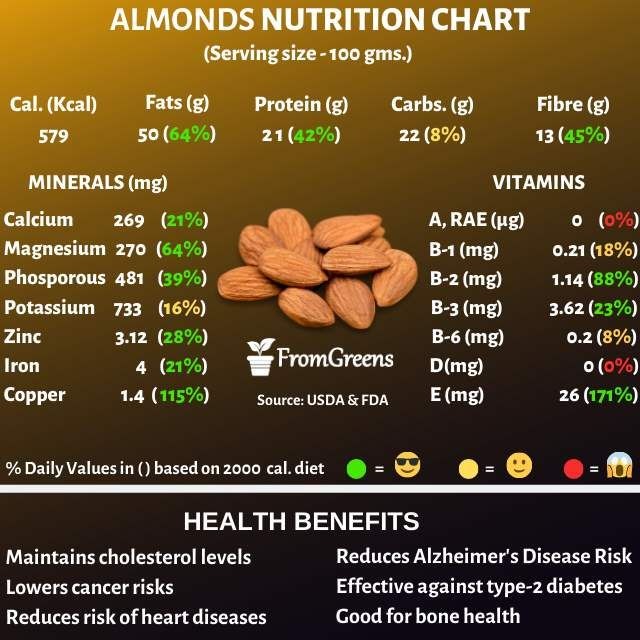
Pistachios give you 6 g of protein for 159 calories. Macadamias give you 2 g for 204. If protein is the goal, that gap decides it. If you want something rich and calorie-dense, macadamias can still win.
Chestnuts are the exception. Mayo Clinic lists roasted chestnuts at about 70 calories and 0.6 g fat per ounce. They are starchier and lower in fat than snack nuts such as almonds, pecans, and walnuts.
What makes each nut nutritionally different?
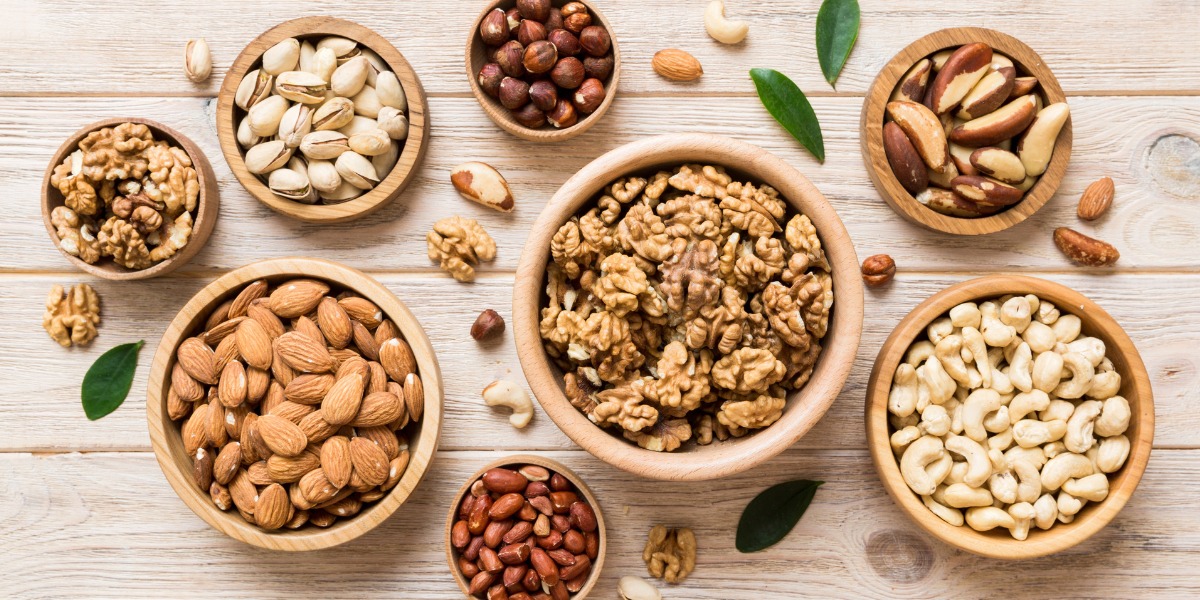
Calories are only part of the picture. Almonds, walnuts, pistachios, and macadamias each bring a different mix of fats, vitamins, minerals, protein, and fiber; the table covers protein and fiber. These micronutrients give you other reasons to pick a variety (amounts are per serving in the sources):
- Almonds: about 6.8 mg of vitamin E and 79 mg of magnesium (roasted).
- Pistachios: about 0.4 mg of vitamin B6 and 139 mg of phosphorus.
- Walnuts: a notable source of alpha-linolenic acid (ALA), a plant omega-3 fat. ALA is distinct from the marine omega-3 fats EPA and DHA.
- Cashews: about 82 mg of magnesium (raw).
- Hazelnuts: about 4.2 mg of vitamin E.
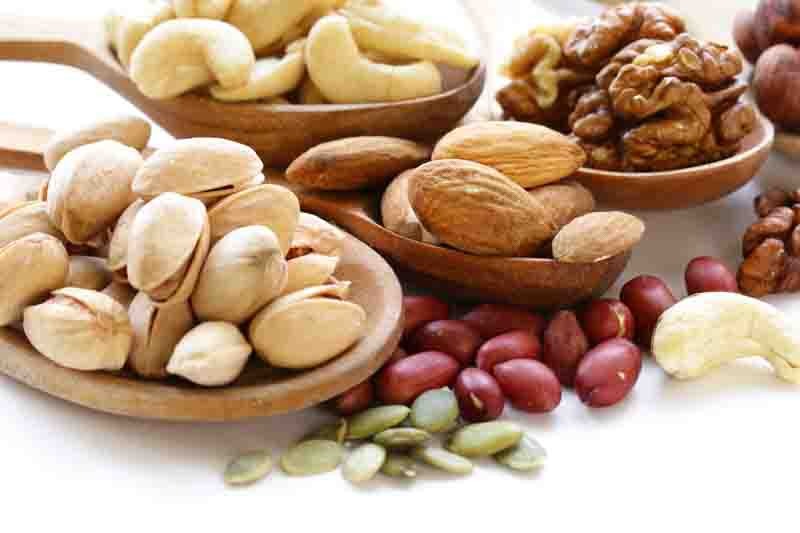
Most snack nuts are rich in unsaturated fat. Their fatty-acid profiles differ, so a nut that stands out for one nutrient can be low in another.
Peanuts belong in the comparison because people buy and eat them alongside tree nuts. Botanically, they are legumes, which matters for food allergies.
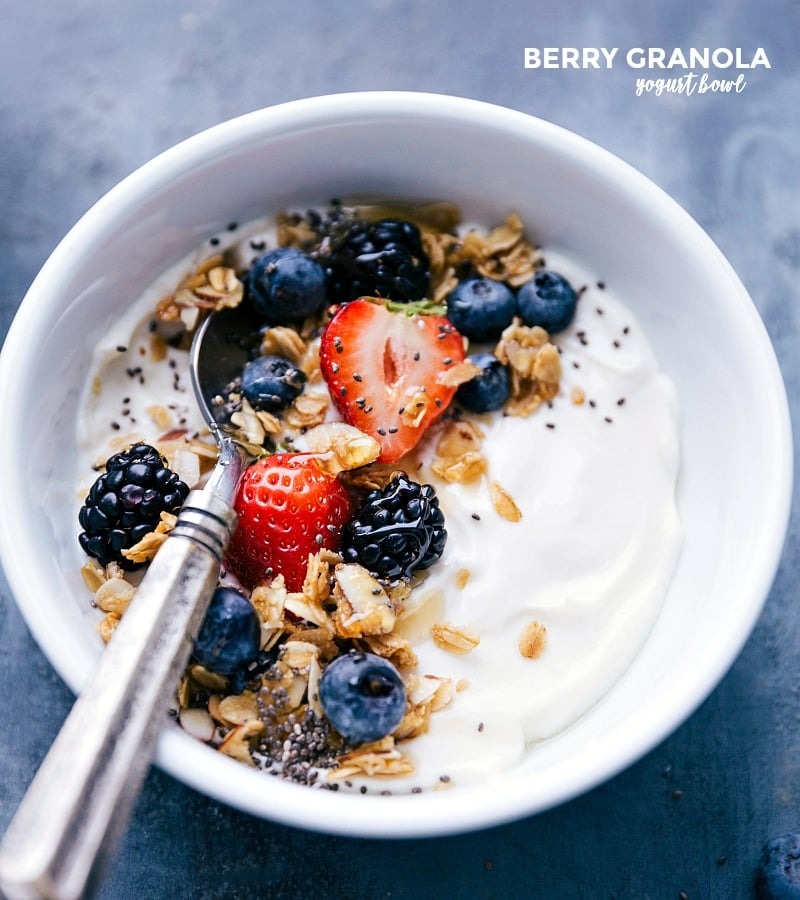
For a yogurt topping, almonds bring vitamin E and pistachios bring protein and fiber. Macadamias win on flavor, even with less protein.
Why are nuts so high in calories?
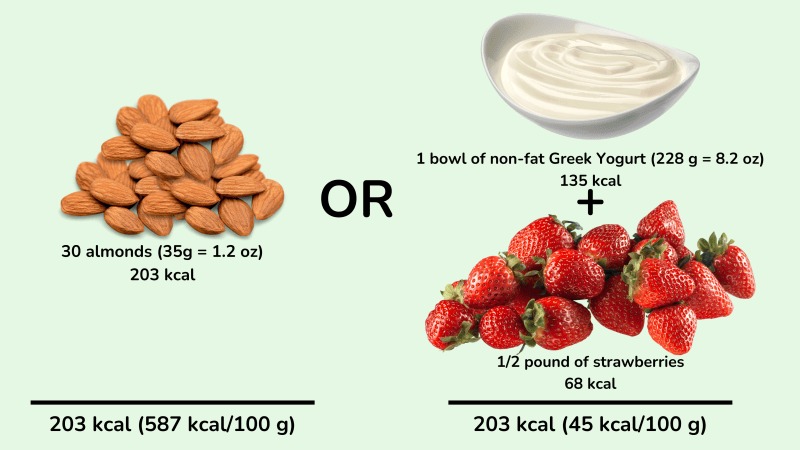
Nuts pack a lot of energy into a small amount because they are high in fat, much of it unsaturated. Some of that fat stays enclosed in plant cell walls during digestion, and chewing, grinding, and heating change how much gets released. A review of 21 studies on nut energy availability found that measured energy for the nuts studied was often below formula-based predictions. In a 2016 controlled study of 18 adults, researchers measured 146 calories from 28 g of walnuts against 185 calories predicted by a conventional formula. That result applies to those walnuts under those conditions. Package labels still use the standard formula.
How much is a serving of nuts in real life?
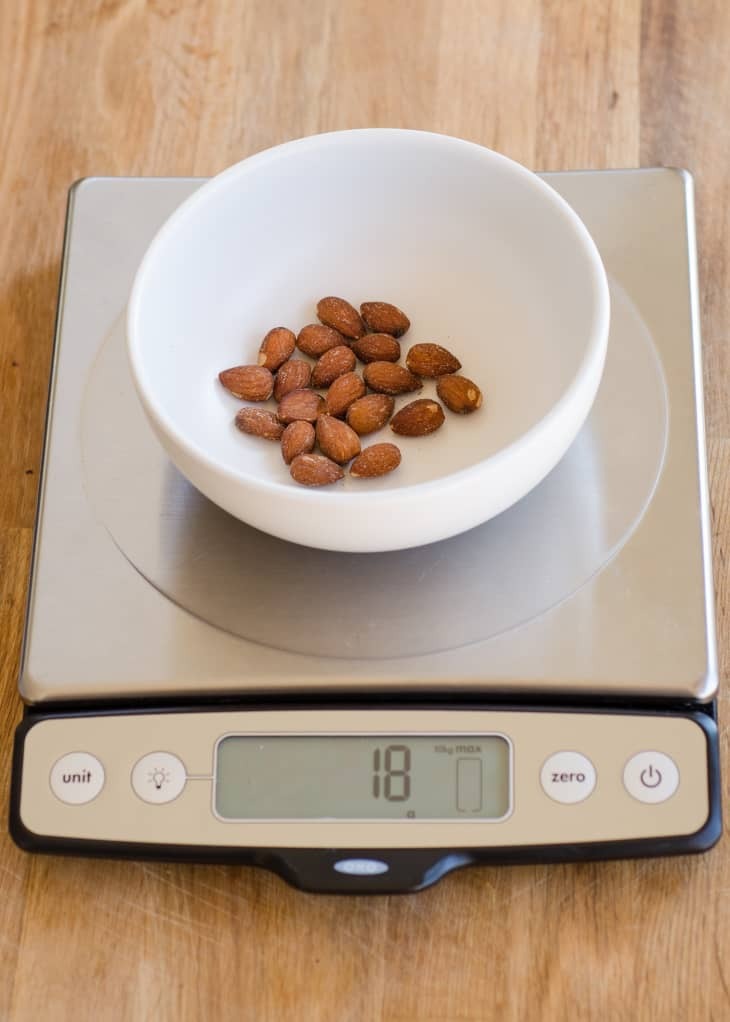
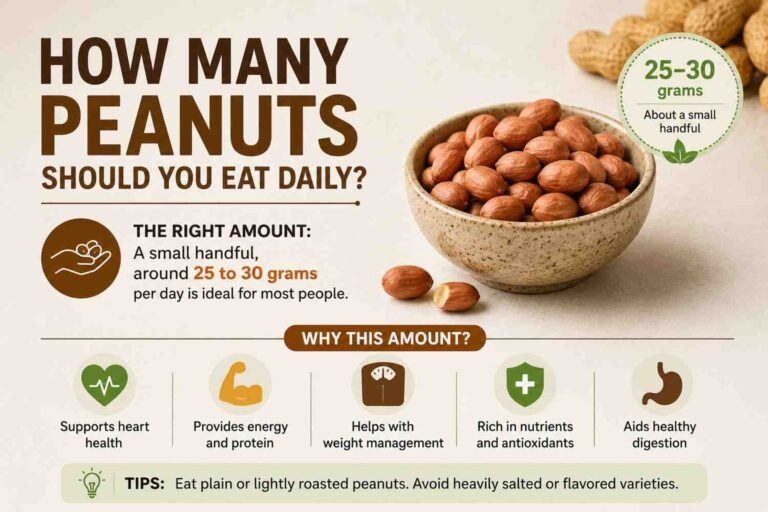
A small handful is a rough guide, not a measurement: both hand size and nut size change the actual portion. The macadamia nutrition and evidence guide explains macadamias, unsaturated fats, and serving sizes in more detail.
Harvard Health puts an ounce of almonds at about 18 to 22 nuts.
A kitchen scale makes it concrete. Weigh 28 g of shelled almonds or pistachios once, then pour the portion into a bowl you use often. Next time, you will know what an ounce looks like in that bowl.
For a smaller topping, half an ounce is about 14 g. Mayo Clinic lists dry-roasted almonds at 170 calories per ounce, so 14 g works out to about 85 calories.
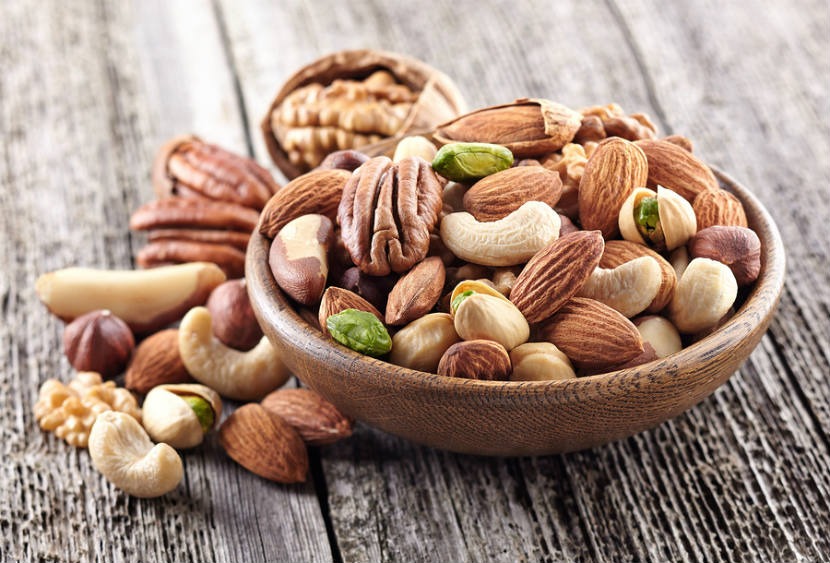
Pistachios show why shells matter. A bowl of pistachios in their shells takes up more space than the kernels alone, and the nutrition figures apply to the nuts you actually eat.
Eating straight from the container is where portions go wrong. An r/CICO contributor started with a handful of mixed nuts and ended up eating nearly the entire can:
PSA about not portioning your servings. Honestly, I have issues with self control so I typically can't allow myself to just snack on high calorie foods until I'm full. This morning, I grabbed a handful of mixed nuts and mindlessly walked to my home office with the can open and the lid in the kitchen.
BIG MISTAKE. Before I knew it, I ate almost the entire 8.25 oz can. When I calculated the entire can, it came out to 1,360 calories. It wasn't full and I left about 1 portion in there. So yeah.... I probably ate like 800 calories.
SIGH!
Pour a measured portion into a bowl before you start eating, and put the container away.
Are nuts fattening? What the weight studies show
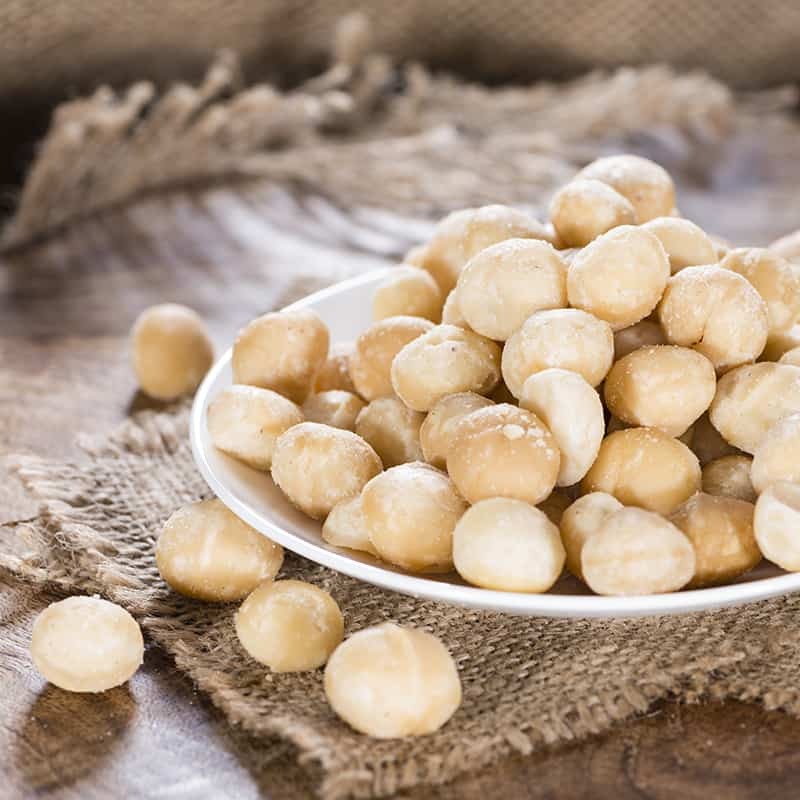
Nuts are calorie-dense, but in controlled studies adding them to the diet changed body weight very little. The amount you eat and how nuts fit into the rest of your diet still matter.
A meta-analysis of 55 randomized studies found no overall increase in body weight, body mass index, or waist circumference in the nut-enriched interventions.
Another systematic review and meta-analysis covered 86 randomized controlled trials with 5,873 participants. The pooled body-weight difference was about 0.09 kg, with a 95% confidence interval from −0.09 to 0.27 kg. That range includes zero.
These are group-level findings from set dietary interventions. Swapping nuts in for another snack is different from adding a big extra portion on top of what you already eat.
An r/loseit contributor got an unwelcome surprise when logging a favorite snack:
Hi! I’d just like to say I always knew nuts were calorie heavy. However, I never noticed how much fat is in them.
I love macadamia nuts, but haven’t had them in awhile because they usually don’t fit into my calorie goals for the day.
This morning I had a serving, which ended up being around 8 nuts. 210 calories and 21 g of fat for 8 nuts?! My app gave me a notice that said “your fat goal is 50g in a day.”
This made me wonder: other than when you’re doing a lot of activity, like maybe on a long hike, are nuts even considered part of a healthy diet?
That 50 g limit is a setting in the poster's app, not a rule about nuts. What counts is how the snack fits into your day.
Raw, roasted, salted, and coated: what changes on the label?
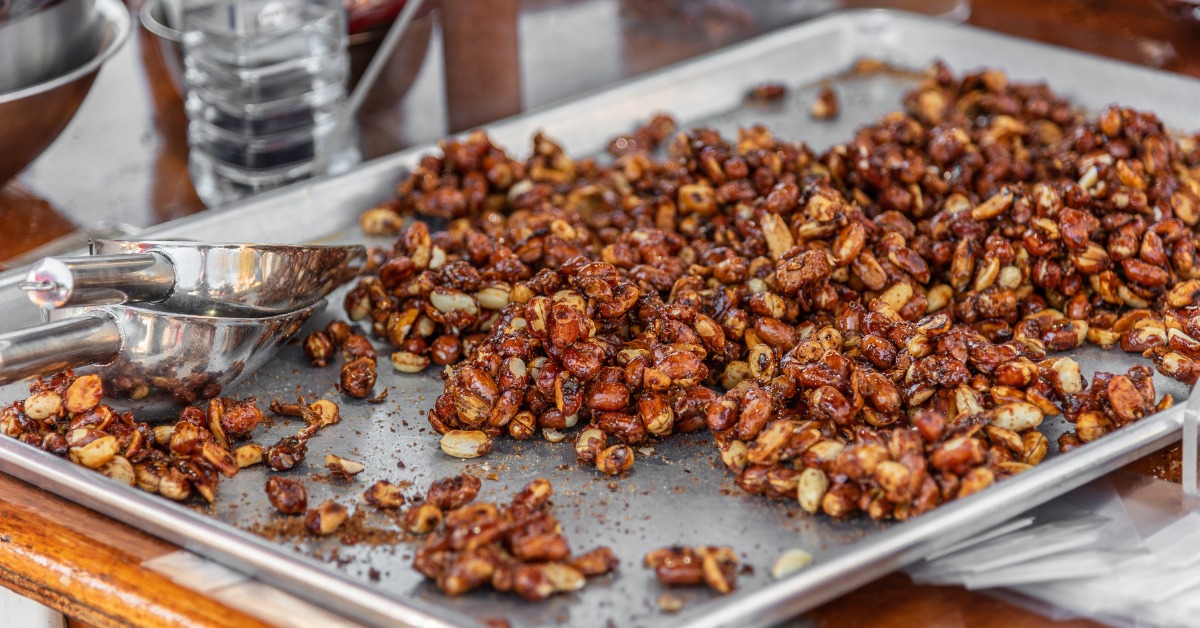
Check the label of the exact product you buy. Plain-nut figures give you a baseline, but oil-roasted, salted, sweetened, and chocolate-coated versions each have their own numbers.
Even plain nuts vary between raw and dry-roasted forms. Mayo Clinic lists these unsalted values per ounce:
| Nut | Raw | Dry-roasted |
|---|---|---|
| Almonds | 164 kcal | 170 kcal |
| Hazelnuts | 178 kcal | 183 kcal |
| Macadamias | 204 kcal | 204 kcal |
Salted nuts need a second check: sodium per serving on the Nutrition Facts label, even when calories look similar. Nut butter has its own serving size and ingredient list.
The FDA's serving-size guidance says a label serving reflects what people typically eat. How much you should eat depends on you.
For a packaged snack, read three things together:
- Ingredients: Look for coatings, sweeteners, added oils, and salt.
- Serving size: This is the amount the listed nutrients and calories cover.
- Servings per container: Multiply calories per serving by the number of servings, unless the label already shows a package total.
A shopper in r/1200isplenty bought chocolate-covered nuts thinking they would fit a diet-friendly snack:
Yeah so I was once again punched in the face by the shocking amount of calories in nuts. I bought some chocolate covered almonds and other nuts for a snack when I was hanging with friends thinking it was a good choice considering I'm on a low cal diet to lose weight. It wasn't that much, the bag said 166g but it was over 900cal when I checked the facts.
One small bag of nuts had 900cals.
I couldve had pancakes with maple syrup for less calories.
So yeah, just a reminder that choosing the healthy alternative is not always the best choice if you want to keep your calories low.
A 166-g package is about 5.9 times a 28-g reference portion.
When does a nut need an extra safety check?
Food allergies and Brazil-nut selenium can change your choice before taste or nutrients come into it.
Tree nuts are major food allergens, and cross-contact can happen when products are made or handled alongside other foods.
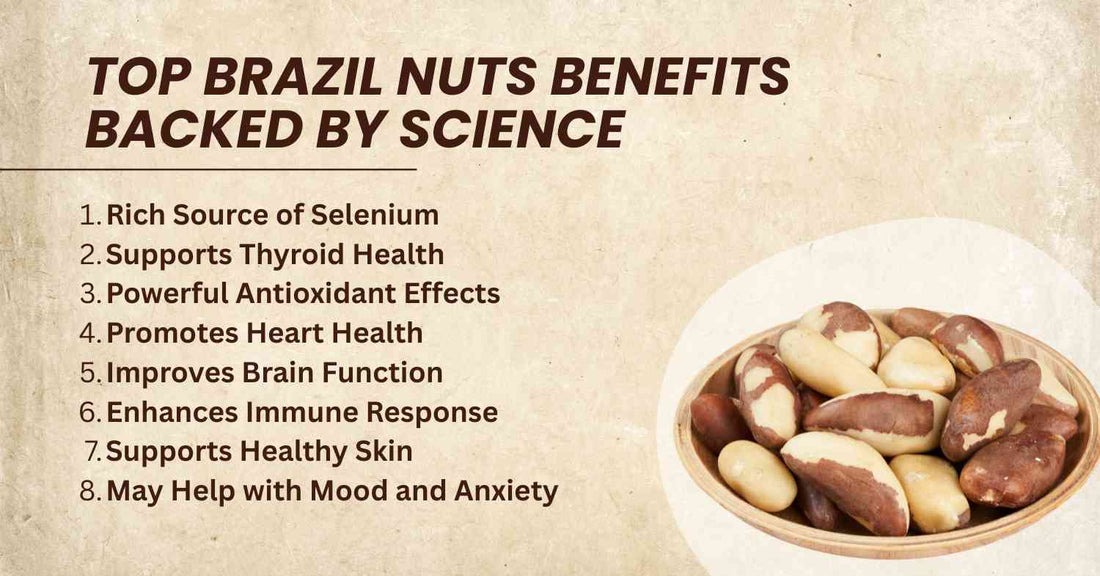
Brazil nuts need separate attention because their selenium content can be exceptionally high.
The NIH Office of Dietary Supplements' selenium fact sheet reports about 68 to 91 micrograms of selenium in a single Brazil nut, with wide variation. The US adult tolerable upper intake level is 400 micrograms per day from all sources, including foods and supplements.
Healthline's entry lists about 544 micrograms of selenium in an ounce of Brazil nuts, above that upper limit. So an ounce is not a safe default serving for Brazil nuts.
If you have a food allergy, follow your restrictions and read the declared ingredients. In the US, “may contain” cross-contact warnings are voluntary, and a missing warning does not make a product safe for your allergy.
If you are unsure, contact the manufacturer or ask your allergist. For Brazil nuts, count selenium from the rest of your diet and any supplements. Selenium per nut varies a lot, so no single daily nut count fits everyone.
Which nuts make sense for your snack or meal?
| If your priority is… | Consider | Why |
|---|---|---|
| Protein plus fiber | Almonds or pistachios | About 6 g protein and 3 g fiber per ounce |
| Plant omega-3 ALA | Walnuts | A notable source of this plant fatty acid |
| Calories in a small amount | Macadamias or pecans | Higher calories per ounce |
| Most protein | Peanuts | About 7 g protein per raw ounce |
| A small topping | Any nut you like | Flavor and texture decide; keep the quantity small |
For a long walk or other activity where compact energy is useful, high calorie density is an advantage. A small topping serves a different purpose.
An r/loseit contributor compared the calories in a large lunch with those in two small snacks:
Just started my calorie deficit and tracking my calories a week ago and I had the biggest learning lesson recently.
My staple work lunch lately has been rice, marinated chicken, and as much spinach and cherry tomatoes that I can fit into my lunch container (sometimes a little feta for fun) and that all adds up to about 430 calories. It’s pretty delicious and it keeps me full for a while.
One day a week I get off work early and I just have lunch when I get home. But I always pack snacks to keep my energy up (I work with kids). This week I grabbed an Uncrustable and a small bag of almonds. When I logged it, it was 480 calories! I was so surprise, those two little snacks equaled MORE than my big lunch meal. It felt like such a waste, I even went on an extra walk so I gain more calories to spend.
It made me really think about all the random snacking I used to do and why I never really saw progress before.
Two small snacks came to 480 calories. Volume tells you very little about energy.