
Nuts and Seeds: A Practical Guide to Choosing and Using Them
Choose nuts and seeds according to the nutrition question you want answered, the edible amount you will eat, and the form you will use. Compare foods on a consistent basis, then follow the relevant ingredient or preparation guide. Allergies, unusually high selenium exposure from Brazil nuts, and medically restricted diets can change which choices are appropriate.
Which Nut or Seed Fits Your Question?
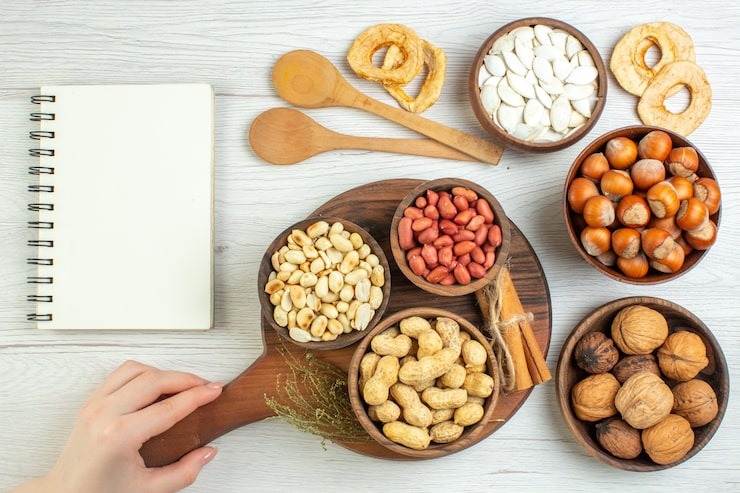
Almonds, walnuts, macadamias, flaxseed, and sunflower seeds can all fit into everyday meals. Your next step depends on what you want to learn. A person comparing protein needs different information from someone adding ground flaxseed to oatmeal or checking a claim about almonds and sleep.
Use the question that matches yours to open a focused guide. The broader comparison covers several nuts; the other destinations concentrate on one ingredient, preparation issue, or evidence claim.
| Your question | Start with | Detailed guide |
|---|---|---|
| How do several nuts compare? | Edible amounts, calories, fat and protein | Nut nutrition comparison |
| What do macadamias provide? | Serving size and fat profile | Macadamia nutrition |
| What is in a serving of walnuts? | Walnut nutrients and serving weight | Walnut nutrition |
| Should I use whole or ground flaxseed? | Food form and preparation | Flaxseed preparation |
| How many calories are in sunflower seeds? | Kernels versus in-shell weight | Sunflower seed calories |
| Do almonds affect sleep? | Evidence for a specific proposed benefit | Almonds and sleep evidence |
Peanuts are botanical legumes, although they're commonly sold and eaten alongside nuts. US allergy labeling treats peanuts separately from tree nuts.
Compare the Edible Portion You Eat
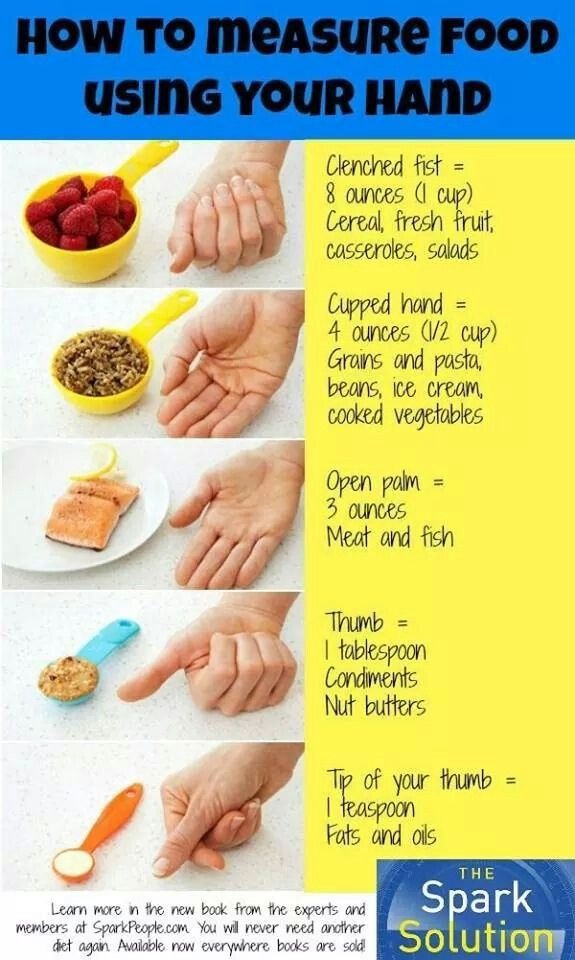
A serving becomes useful for comparison when you know how much edible food it represents. A handful varies with the food and the hand. Shells, ground ingredients, and spooned nut butter introduce further differences.
The American Heart Association uses approximately 1 ounce (28 grams), or a small handful, as a reference for whole nuts and 2 tablespoons for nut butter. These are reference quantities for understanding portions; an individual's daily amount depends on their overall eating pattern.
| Food form | Measurement to use | Where comparisons go wrong |
|---|---|---|
| Shelled whole nuts | Edible nuts in grams | Handfuls have no fixed weight |
| In-shell nuts or seeds | Weight of edible kernels | Shells add weight without adding food eaten |
| Nut butter | Label tablespoons and grams | A thick spread may contain several labeled servings |
| Ground seeds | Product grams | Equal spoonfuls can weigh differently |
| Flavored or coated nuts | Edible product weight and its label | Salt, sugar or oils may be added |
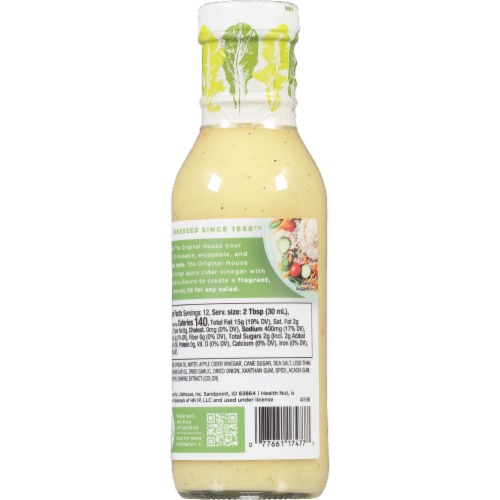
The Nutrition Facts label reports nutrients for its stated serving size. The Percent Daily Value (%DV) shows the share of a daily reference amount supplied by that serving. The FDA's general reading guide treats 5% DV or less as low and 20% DV or more as high; these are label-interpretation benchmarks, not personalized intake limits.
On a food-tracking forum, one reader described a surprisingly substantial calorie entry for a small serving of macadamias:
Hi! I’d just like to say I always knew nuts were calorie heavy. However, I never noticed how much fat is in them. I love macadamia nuts, but haven’t had them in awhile because they usually don’t fit into my calorie goals for the day. This morning I had a serving, which ended up being around 8 nuts. 210 calories and 21 g of fat for 8 nuts?! My app gave me a notice that said “your fat goal is 50g in a day.” This made me wonder: other than when you’re doing a lot of activity, like maybe on a long hike, are nuts even considered part of a healthy diet?
The 210-calorie and 21-gram figures belong to that person's food log. The general lesson is that calorie density and nutrient composition describe different properties of a food.
For a package in front of you, the useful calculation is straightforward:
- Find the edible weight. Remove the shell from the amount being counted, if relevant.
- Read the serving in grams. Use the amount named on that product's Nutrition Facts label.
- Scale the numbers. If your edible amount weighs twice the label serving, it contains twice the labeled quantities.
Match the Nutrient to the Question
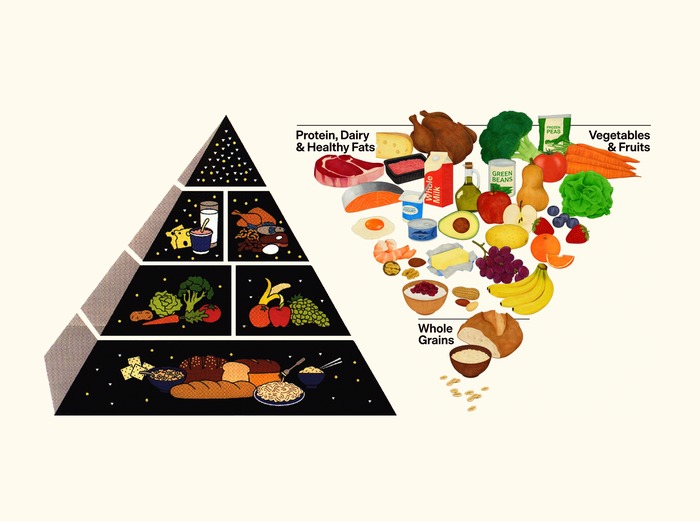
The right comparison depends on whether you're interested in protein, fiber, a particular type of fat, or ingredients added during processing. One general score can conceal differences that matter for a specific meal or dietary goal.
| What you're comparing | Relevant information | Consistent basis |
|---|---|---|
| Protein contribution | Grams of protein | Equal edible weight |
| Protein relative to energy | Protein and calories | Equal calorie amounts |
| Fiber contribution | Grams of dietary fiber | Equal edible weight |
| Plant omega-3 sources | Alpha-linolenic acid (ALA) | Specified food and form |
| Packaged snack ingredients | Sodium, added sugars and oils | The actual product label |
Protein per ounce, per 100 grams, and per equal calories can produce different comparisons because their denominators answer different questions. A person deciding how much protein a snack adds to lunch may prefer an equal-weight comparison; someone comparing protein within a calorie budget needs the equal-calorie view.
Flaxseed, chia seeds, and walnuts provide plant omega-3 fatty acid ALA. EPA and DHA are different fatty acids, so an ALA value is reported as ALA. Total fat also needs interpretation: saturated and unsaturated fats describe different components, while fiber and added sodium concern separate attributes.
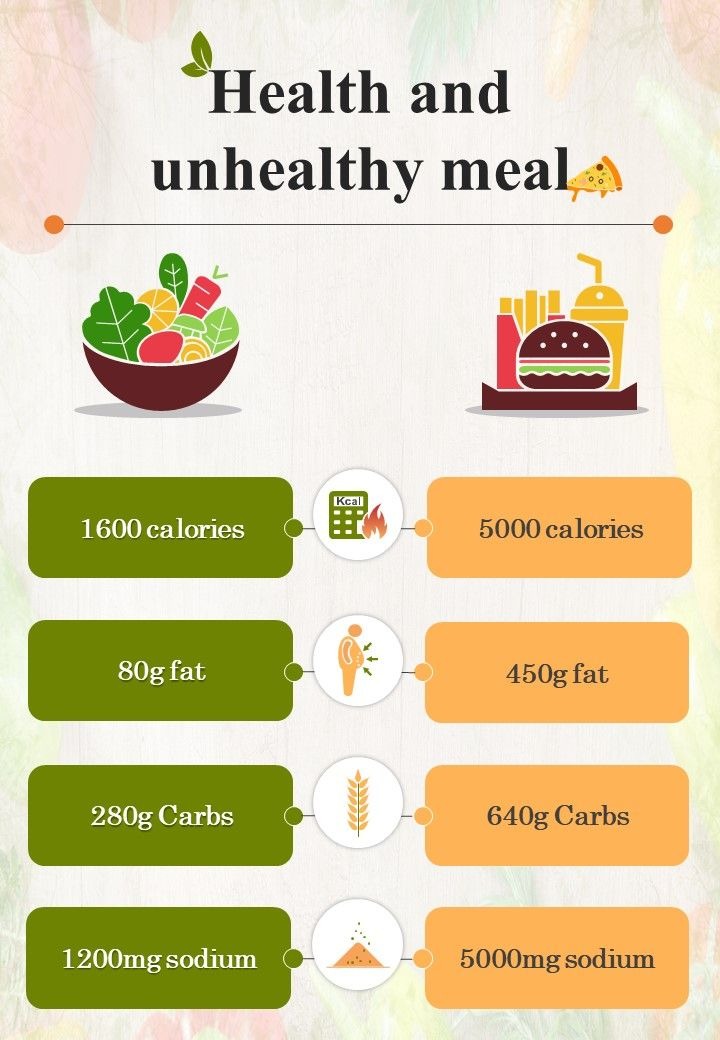
Research on nuts and cardiovascular markers provides context for discussing nutrient patterns. In a meta-analysis of 113 randomized trials involving 8,060 adults, Nishi and colleagues reported pooled mean differences between nut-consuming and non-nut control diets of −0.14 mmol/L in total cholesterol and −0.12 mmol/L in LDL cholesterol. The measured outcomes were blood-lipid markers in the studied populations; clinical-event protection would require different evidence.
For a detailed food comparison, USDA FoodData Central distinguishes Foundation Foods, FNDDS, branded-food records, and historical nutrient data. Each record has a particular food description and data basis. The specific food condition and source record are what make a numerical comparison reproducible.
What Changes With Grinding, Roasting, Soaking, or Nut Butter?
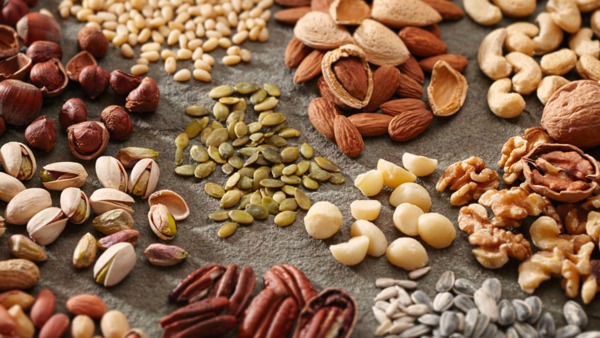
Preparing nuts and seeds changes their physical form and sometimes the ingredients present. Food structure can also affect measured energy availability. The size and direction of an effect depend on the food and treatment examined.
Ground flaxseed is easier to digest because whole flaxseed may pass through the intestine undigested, limiting access to some of its nutrients. Either form can be stirred into oatmeal. A reader using both flax and chia described the tension between buying ground ingredients and preparing them in small batches:
I add Flax and Chia seeds to my morning oatmeal which I eat 5-6 days per week for breakfast for extra health benefits. Someone at work told me a while back that flax seeds are better nutritionally ground up so I have been using Bobs Red Mill Ground flax the past several months (which I put in containers into the fridge after opening the bag to help it keep). ... It would be more convenient for me to buy the ground up flax seeds and chia seeds, but I suspect nutritionally it's probably better for me to grind up my own as I need them and only grind them for a few days worth at at time? That it's likely cheaper for me to grind them up myself as well. Thoughts?
The question turns on convenience and the storage of different seed forms.
In a 2016 controlled crossover experiment involving 18 healthy adults, Gebauer and colleagues measured different metabolizable-energy values for four almond preparations:
| Almond form | Measured metabolizable energy in the study |
|---|---|
| Whole natural almonds | 4.42 kcal/g |
| Whole roasted almonds | 4.86 kcal/g |
| Chopped almonds | 5.04 kcal/g |
| Almond butter | 6.53 kcal/g |
The experiment shows that processing affected measured energy availability under its conditions. Ordinary package labels remain the appropriate figures for consumer food logging.
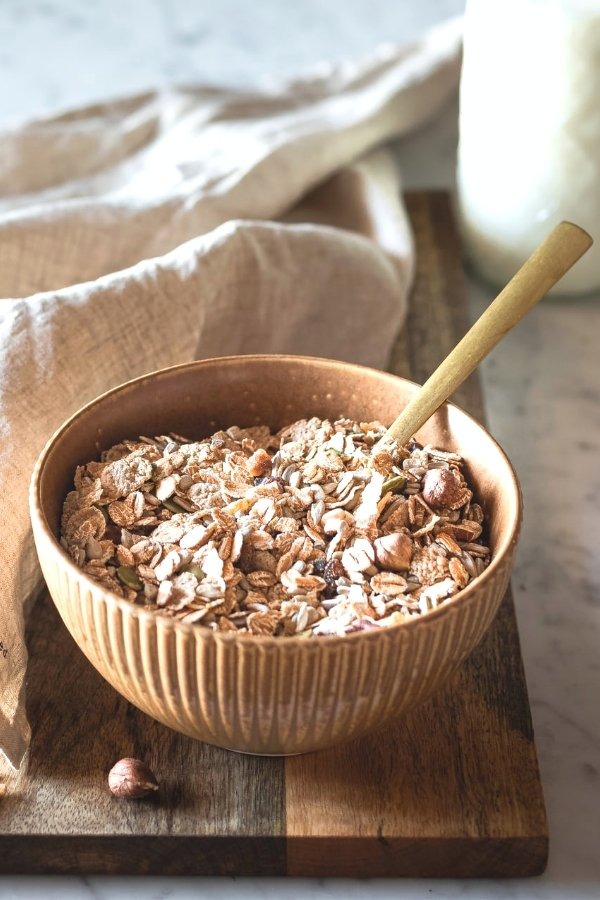
Soaking has a different evidence base. Researchers soaked selected almonds, hazelnuts, peanuts, and walnuts for four or twelve hours in water or salt solution. Reported phytate changes ranged from a 12% decrease to a 10% increase, with no improvement in phytate-to-mineral ratios in those tested conditions.
In another randomized crossover study involving 76 participants, soaking almonds brought no overall improvement in acceptability or gastrointestinal tolerance.
Water absorbed during soaking increases the weight of a hydrated ingredient. A 100-gram portion of soaked food therefore need not contain the same dry material as 100 grams of the original dry product. When reading a nutrient record for a specific preparation, identify whether its values refer to dry, soaked, roasted, whole, ground, or butter form before interpreting the amount.
When Allergies or Medical Restrictions Change the Choice
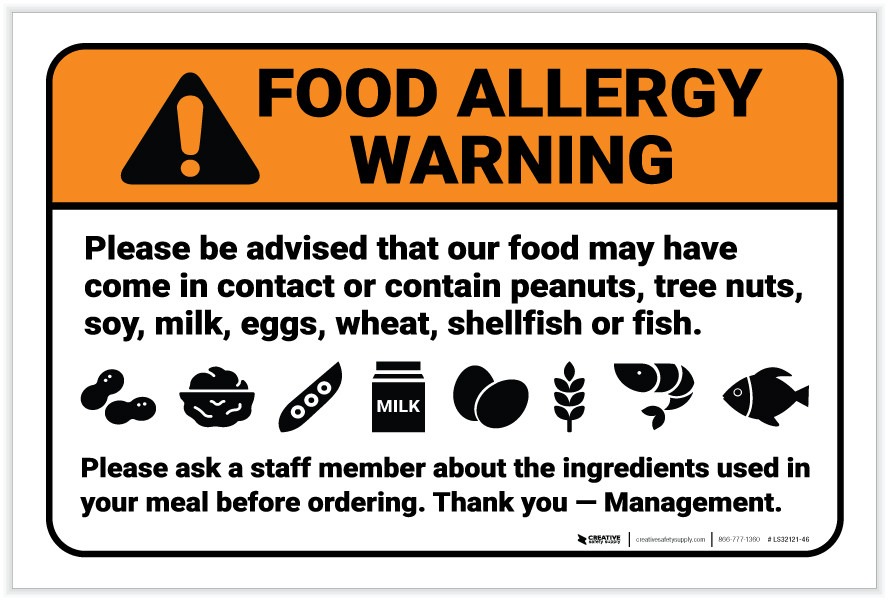
Food allergies and a few nutrient-specific exceptions can determine whether an otherwise reasonable nut or seed choice is appropriate. The US FDA treats peanuts, tree nuts, and sesame as separate major allergen categories.
Major allergens used as ingredients must be declared on applicable US packaged-food labels. Advisory warnings about possible cross-contact, such as “may contain,” are voluntary. The absence of such a statement does not establish safety for someone with a food allergy. Before choosing an affected packaged product, examine its ingredient and allergen declarations and seek appropriate professional guidance for a diagnosed allergy; do not self-test a suspected allergen.
US labeling context. The FDA issued final guidance on major food-allergen labeling in January 2025.
Brazil nuts warrant special attention because selenium concentration can be exceptionally high and varies with origin and growing conditions. The NIH Office of Dietary Supplements reports approximately 544 micrograms of selenium per ounce (roughly six to eight nuts), with estimated values of 68 to 91 micrograms per nut. Selenium varies among individual nuts, so these estimates cannot specify a particular nut's dose.
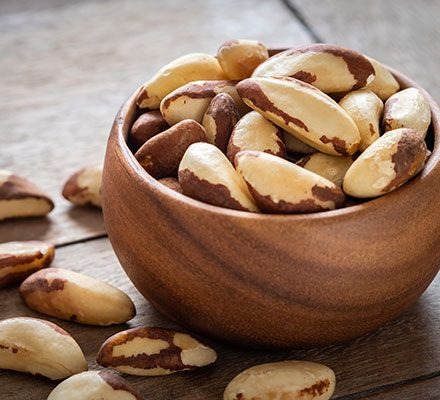
The US Recommended Dietary Allowance for selenium in nonpregnant, nonlactating adults is 55 micrograms per day; pregnancy and lactation have different RDAs. The US adult tolerable upper intake level is 400 micrograms per day. That upper limit is a safety boundary, and the ordinary one-ounce nut-serving reference is unsuitable as an automatic daily suggestion for Brazil nuts.
Kidney-related restrictions depend on individual circumstances. According to the National Kidney Foundation, most people with chronic kidney disease or a kidney transplant do not automatically need to restrict nuts and seeds for potassium or phosphorus. Laboratory results, disease stage, and dialysis treatment can change the guidance, so a prescribed kidney diet takes priority over a general food comparison.
When Price, Ingredients, and Storage Matter
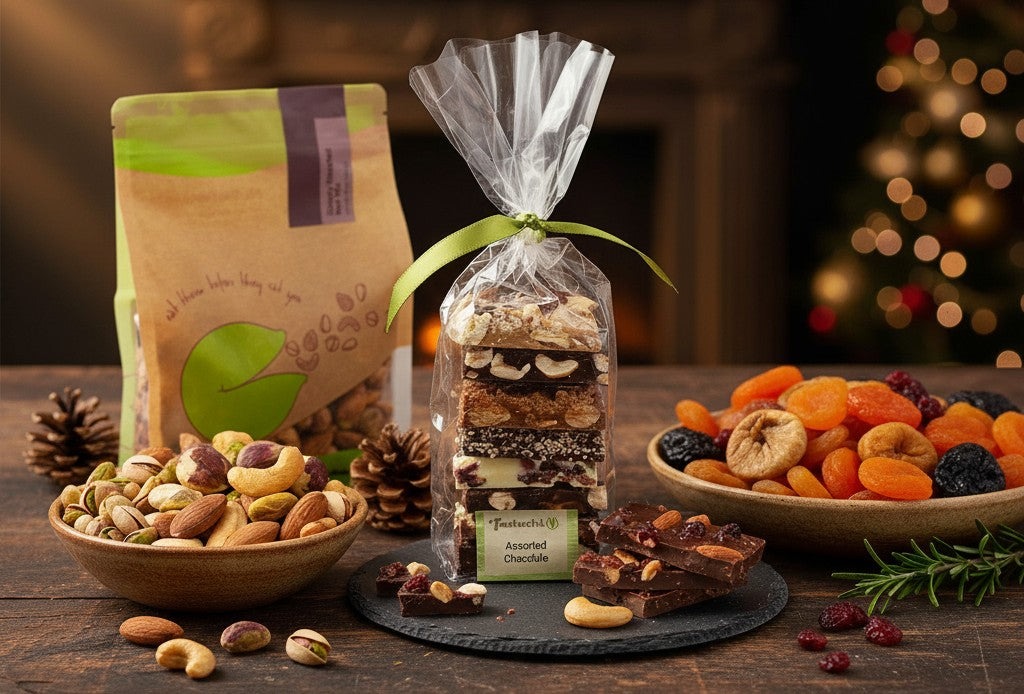
A product that looks inexpensive on the shelf may be costly per usable serving if part of its weight is shell or its form doesn't suit the meal. Whole nuts, chopped nuts, and ground seeds are useful for different preparations, while seasoned and sweetened varieties can have additional ingredients.
Cost can also determine whether nuts feature regularly in someone's meals. One plant-based shopper expressed the grocery-budget trade-off this way:
It's ridiculously expensive. I'm on a plant-based diet and the price of nuts drives the amount of my grocery bills high compared to staples such as whole grains, legumes, potatoes, fruits and veggies. I'm thinking now of avoiding nuts even though it is touted as a healthy fat.
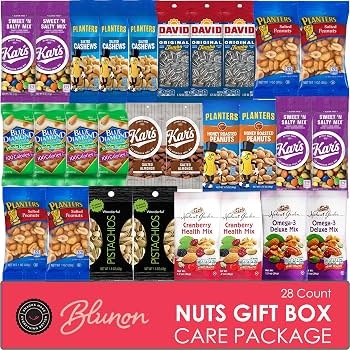
Storage belongs in the purchase decision as well. Nuts contain fats that can develop rancid flavors, and the American Heart Association discusses freshness and refrigeration. The amount you expect to use, the package instructions, and the way the product is stored all affect the practical value of buying in bulk.
- Calculate usable cost. Compare package prices per unit of edible product, accounting for shells or portions you will discard.
- Match the recipe. Sliced or ground nuts may work in oatmeal but cannot replace intact nuts in every dish.
- Inspect additions. Compare sodium, added sugars, and oils when choosing plain or flavored versions.
- Plan storage. Buy an amount you expect to use while the food remains in good condition, and follow the package's storage directions.
Find the Detailed Guide for Your Food or Question

The first table links directly to the six focused guides, including the broader nut-by-nut comparison and the separate explanations of flaxseed preparation, sunflower seed calories, and almonds and sleep. For everyday food choices, select the question, compare a consistent edible amount and food form, and open its matching guide. If an allergy, Brazil-nut selenium exposure, or a medically restricted diet changes suitability, let that constraint govern the choice first.
Explore this topic
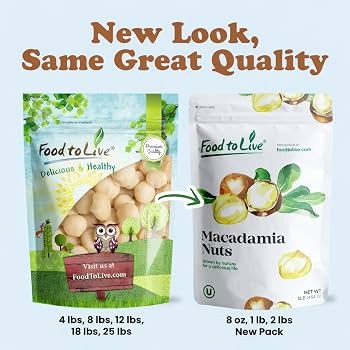
Macadamia Nut Benefits: What Nutrition and Human Studies Show
See macadamia nutrition per ounce, what human cholesterol studies found, and how portions, coatings, storage and allergies affect your choice.
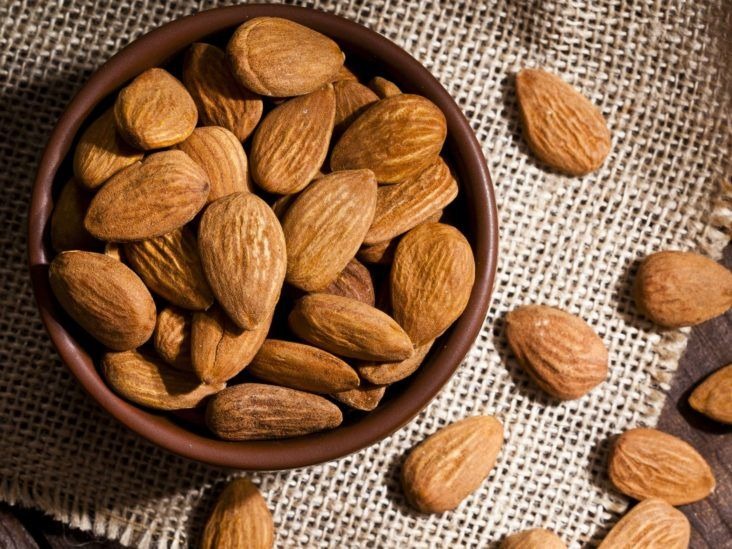
Do Almonds Help You Sleep? What the Human Studies Show
Do almonds help you sleep? Compare the 2026 and 2023 trials, see what doses and schedules were tested, and decide whether an evening snack suits you.
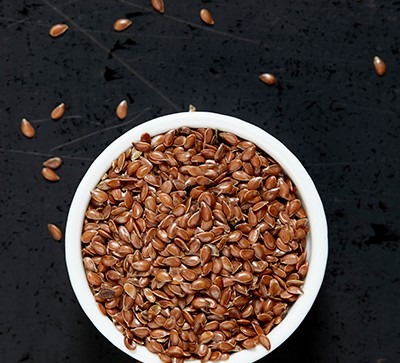
How to Eat Flax Seeds: Whole vs. Ground, Uses, and Nutrition
Learn which flaxseed form to choose, how to grind it, and easy ways to use it in food, with serving comparisons, baking tips, and storage and safety advice.
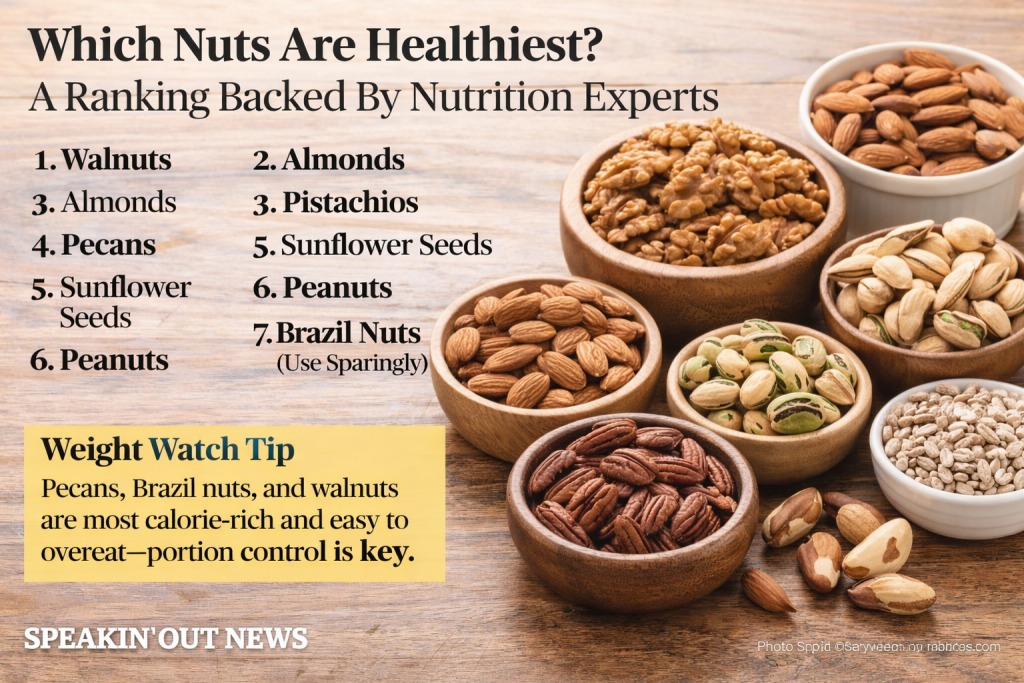
Nut Nutrition Compared: Calories, Protein, Fiber, and Portions
Compare nine nuts by calories, fat, protein and fiber per ounce. Learn practical serving sizes, what preparation changes, and when safety limits matter.
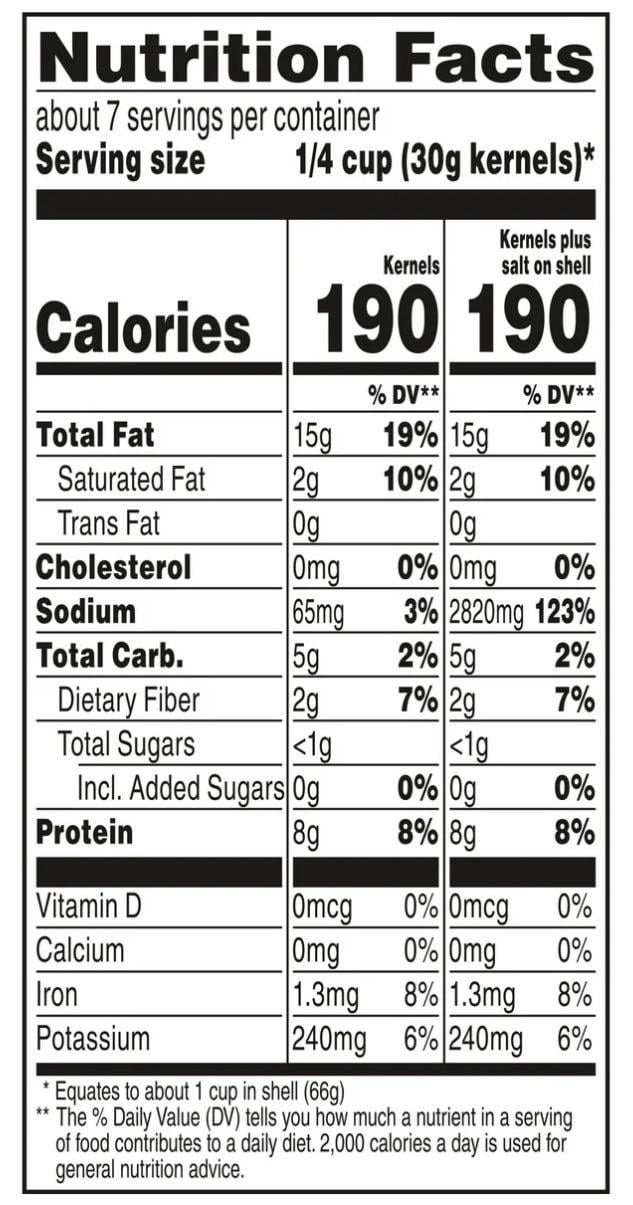
Sunflower Seed Calories: In-Shell vs. Kernels, With Serving Sizes
See sunflower seed calories per ounce and cup, with or without shells. Compare edible-kernel portions, decode serving labels, and calculate your snack.
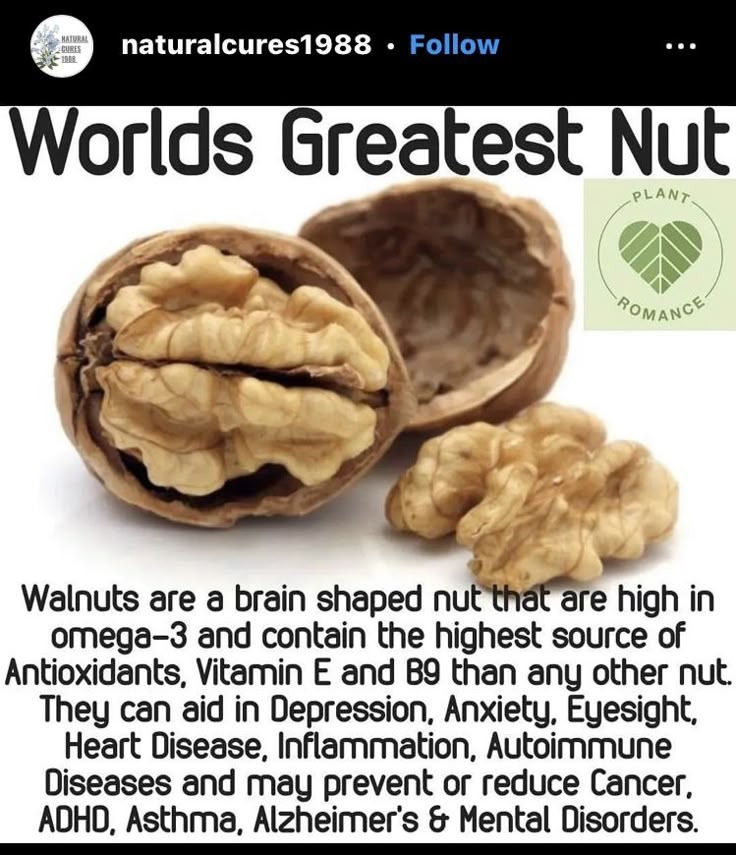
Walnut Nutrition: Calories, Protein, Fats, and Serving Sizes
See walnut calories, protein and fats per ounce or 100 g, compare serving weights, and understand why a controlled study reported 146 calories.