
How to Eat Flax Seeds: Whole vs. Ground, Uses, and Nutrition
Ground flaxseed is the better everyday choice for getting flaxseed's nutrients, whether you buy it milled or grind it yourself. Choose whole seeds when you want crunch. If you're pregnant, breastfeeding, or taking medication, check with a clinician before making flaxseed a regular habit. Otherwise, stir a small measured amount of ground flaxseed into a food you already eat.
Whole flaxseed and flaxseed meal sit side by side on the shelf, but they behave differently in the kitchen. The choice affects what your body can digest, how a recipe holds together, and whether you need a grinder before breakfast.
Whole, Ground, or Oil: Which Flaxseed Form Should You Eat?
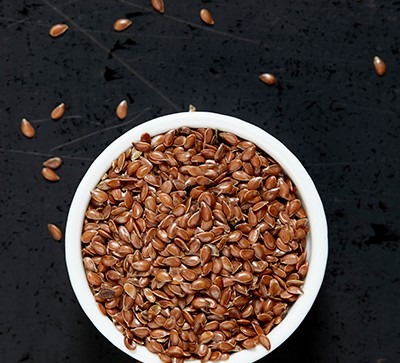
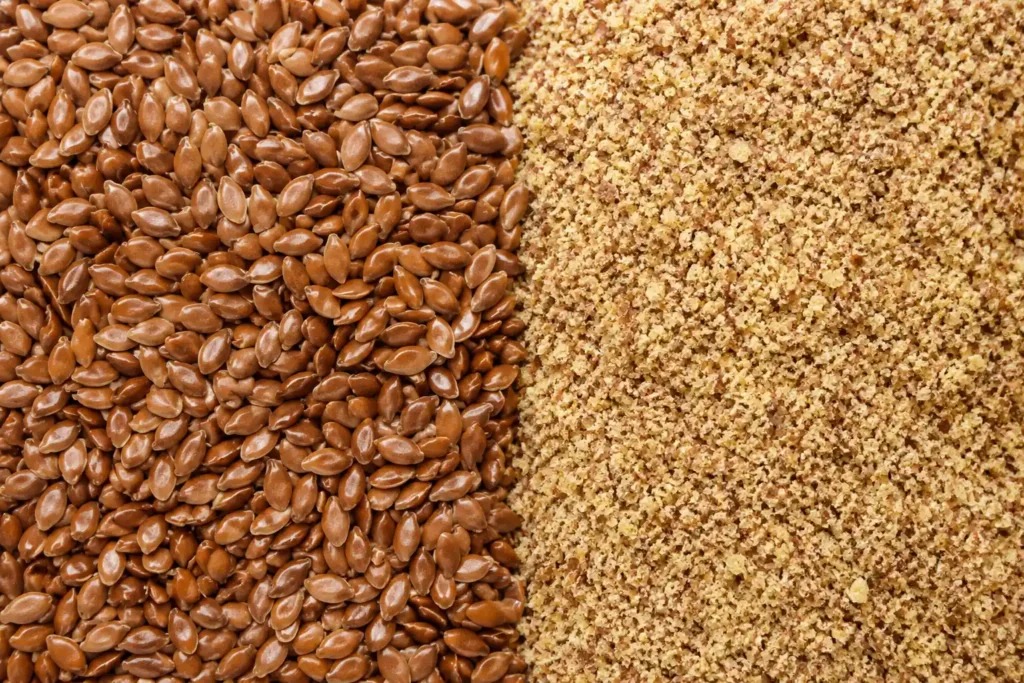
Ground flaxseed is easier to digest because milling breaks open the seeds. Whole flaxseeds have a firm outer coat, and some seeds pass through your digestive tract without being broken down, according to Mayo Clinic.
Package names vary. Milled flaxseed, ground flaxseed, and flaxseed meal all refer to crushed seed. The grind and added ingredients differ by product.
| Form | What it offers | Best use | What to check |
|---|---|---|---|
| Whole flaxseed | Intact seeds with dietary fiber, fats, and other seed components | Crunch and visible texture in food | Whether the recipe requires ground seed |
| Ground or milled flaxseed | Crushed seeds with more accessible nutrients | Oatmeal, yogurt, smoothies, batters, and other meals | Ingredient list and grind |
| Flaxseed oil | Extracted fat containing plant omega-3 ALA | Uncooked dressings, sauces, and smoothies | Avoid high-heat frying; check culinary directions |
Flaxseed oil contains the extracted fat but supplies none of the seed's dietary fiber. If you want flax for fiber, you need the seed itself.
Brown and golden seeds are both edible; seed color is not a reason to expect a health benefit from one over the other.
A blender helped an r/PlantBasedDiet cook use whole seeds for protein bites without buying preground meal:
Thanks much for this post. I had a recipe for protein bites that I ahopped for yesterday. I didn't read recipe carefully, so bought whole seeds rather than ground. My car is in the shop, so I thought I was going to have to take an Uber to the grocery store several miles away to get what I needed (the dish us for tonight, and we live in the boonie).
But then I thought, I have a coffee grinder somewhere, what if...? Then in searching on that, and reading about getting flax oils in my grinder, I read this, and thought, an ordinary blender, really? Got mine out, dumped a cup of flax seeds in it (the recipe called for half, the rest are now in the fridge to be used in next few days), put the blender on puree for about 20 seconds, et voila, flax flour.
No damage to the blender that I can see, easy to clean, taste I'll know about soon, nutrition--honestly I'm not sure how much I care. So THANKS!
How to Grind Flax Seeds Without Wasting a Batch

Flaxseeds are small enough to collect beneath the blades of some blenders, so the machine runs without touching them. A dry spice or coffee grinder is one option. A blender also works if you add enough seeds to reach the blades.
Follow your grinder's manual and stop to check whether the seeds have become an even meal.
Another r/PlantBasedDiet user went through two coffee grinders before trying a blender:
I tried to grind my flax seeds with my old, 90s era 7 speed blender. I didn't think it would work (the seeds sat below the blades). My mom lent me her old mr. coffee coffee grinder (which you can still buy today). Eventually it broke. Despite being an electrical engineering student, I had no clue how to fix it. I got an identical new one.
Then, I did an dumb thing, and in an attempt to make How Not To Die Black Black Bean Burgers, I broke the motors of a new coffee grinder with walnuts. I know I am an idiot, no need to tell me.
I hate needless consumption and plastic. I also didn't want to spend $30 bucks on a manual "flax mill," that, while would likely last me many years, would be a pain in the ass to use, and also, why the hell does this thing cost 30 dollars?
## Solution
I tried the blender again. I put 5 tablespoons of whole flax seeds, enough to be above the blades. Turned it on high speed for 10 seconds. It ground some, but not all. I took the blender out of the base, shook it around. And put it in for another 10 or so seconds. Rinse and repeat. Most of the seeds got ground. The blender blades didn't get too hot, so the good stuff doesn't get destroyed. Win Win. Place your ground flax seeds in the fridge. Try not to grind more than a weeks worth or so.
Tl;dr use any old blender (and I really mean any old blender) to grind your flax seeds. Shake 'em around if they don't all blend up. Don't waste your money on wasteful and expensive gadgets.
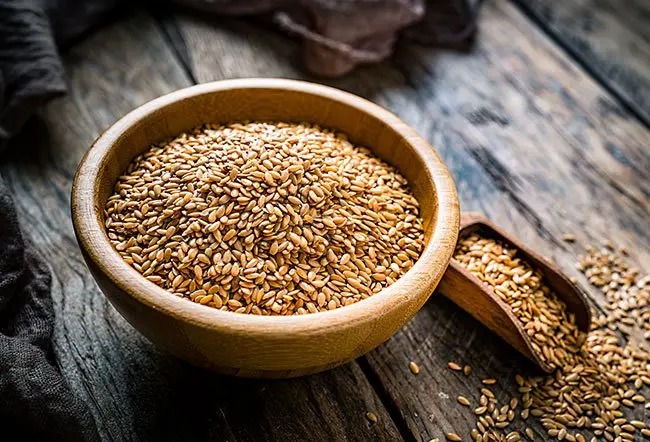
Stop the motor before you move the container or adjust its contents, and never reach into a powered appliance. Use a grinder made for small dry ingredients or buy milled meal if the seeds stay mostly whole.
Easy Ways to Add Ground Flaxseed to Meals
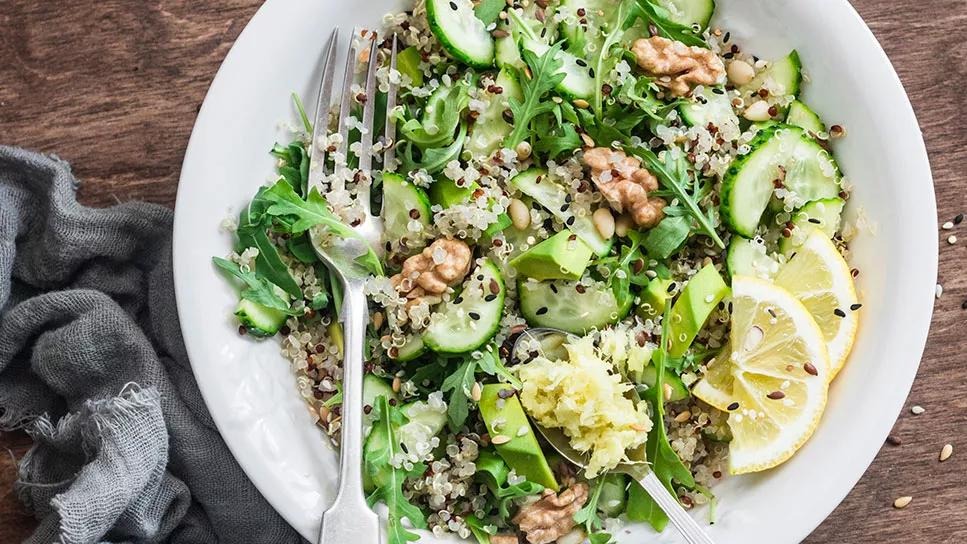
Ground flaxseed absorbs liquid and thickens a moist mixture, so start with a moist food.
- Stir a tablespoon into hot or cold cereal, or into an eight-ounce container of yogurt, as Mayo Clinic suggests.
- Mix a teaspoon into mayonnaise or mustard for a sandwich.
- MedlinePlus also suggests smoothies, pancakes, soups, salads, pasta, and breadcrumb substitutions.
How Much Flaxseed to Use and What a Serving Contains
A tablespoon measures volume, but nutrition values depend on weight. Whole and ground seeds fill a spoon differently, so the gap matters.
Mayo Clinic gives one tablespoon of ground flaxseed as about 7 grams, with about 37 calories and 2 grams of dietary fiber.
For a per-weight reference, the USDA food-composition entry gives these amounts:
| Nutrient | Flaxseed per 100 g |
|---|---|
| Energy | 534 kcal |
| Protein | 18.29 g |
| Total fat | 42.16 g |
| Total carbohydrate | 28.88 g |
| Dietary fiber | 27.30 g |
| Magnesium | 392 mg |
Source: USDA FoodData Central, FDC 169414.
These are reference values per 100 grams. Packaged products differ, so use the label for the bag you're serving.
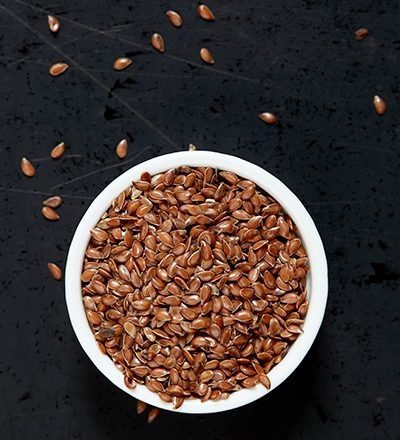
Another source puts a tablespoon of whole flaxseed at about 10 grams and 55 calories, while Mayo's ground-seed example weighs 7 grams. The masses differ, so measure your serving in grams to compare fairly. Grinding the same weight of seed doesn't remove its calories. For flax versus nuts, see the nut nutrition table.
No daily flaxseed amount fits every adult. If you're unused to fiber, start with a small portion.
Flax Eggs in Baking: What They Can and Can't Replace
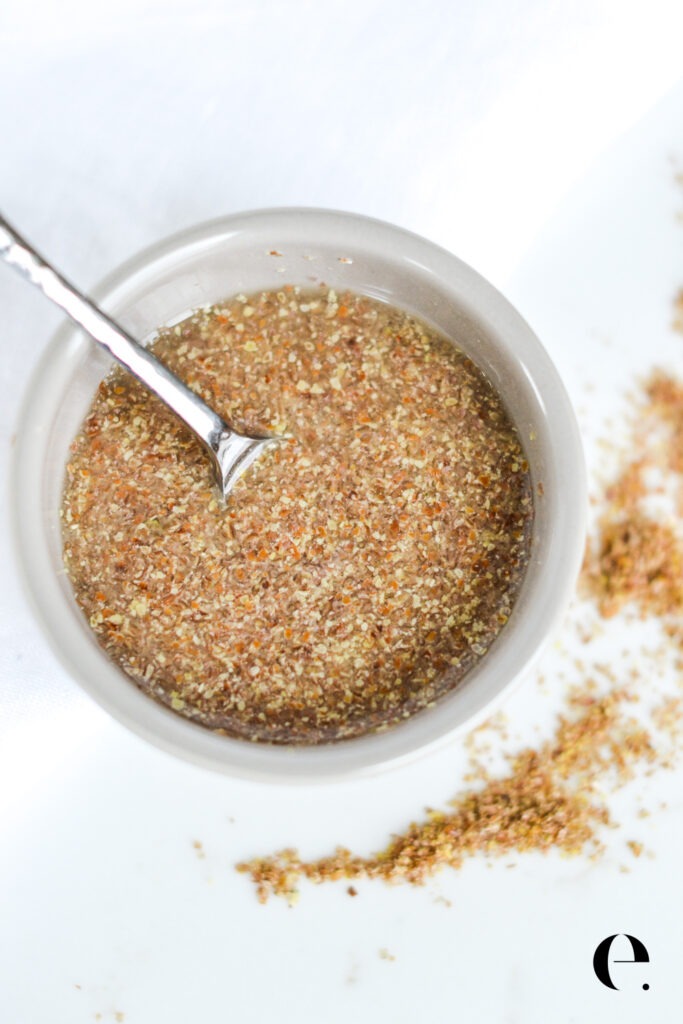
Ground flaxseed absorbs water and forms a thick, gel-like mixture. That makes it a useful binder in some vegan baking recipes.
An egg also adds structure and aeration to a baked product. Baking powder and other leavening ingredients do their own job of making a batter rise.
King Arthur Baking's flax-egg example uses one tablespoon of ground flax meal and three tablespoons (42 g) of water, left to thicken for about 5 to 10 minutes. That ratio belongs to its recipe, so use a tested formula for what you're baking.
| What happens | What to examine | Reason |
|---|---|---|
| Batter turns too thick | Flax-to-liquid balance | Hydrated meal binds water |
| Cake barely rises | Leavening and mixing instructions | A binder doesn't supply all the lift |
| Cake rises, then falls | Recipe structure and handling | Delicate batters may depend on egg aeration |
| Muffin or cake crumbles | Binder and moisture balance | The whole formula decides how well it holds together |
A r/VeganBaking poster's first flax-egg cake didn't rise. The body of the post read:
I'm so disappointedd,but at least it tastes good lol
Later, the same baker came back with a different explanation:
yeahh i think that was the problem after all, i used baking powder that had been opened a few months ago which was a big mistake lol
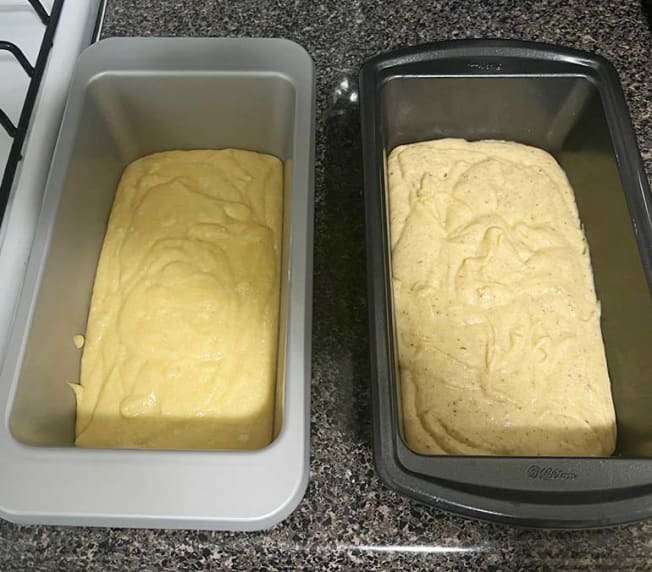
The baking powder explanation was never tested. When a flax-egg recipe fails, check the leavening and the structure the eggs were meant to provide as two separate questions. A light cake built on whipped eggs poses a different challenge than a dense muffin.
How to Store Whole Seeds, Ground Meal, and Oil
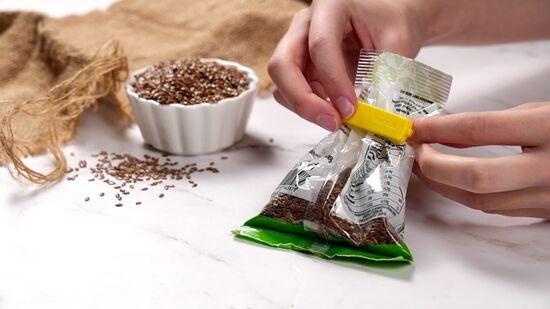
Ground flaxseed exposes more of the seed's oils to air and light, and oxidation affects quality. Storage matters most for milled products.
Whole seed and ground meal can carry different instructions, so follow the dates and storage directions on your own package. Keep the product sealed and away from heat and bright light. Store ground meal in an airtight container in the refrigerator, and refrigerate opened flaxseed oil. If it smells off, throw it out.
Grinding fresh adds a chore. A r/WholeFoodsPlantBased user asked whether it's worth it:
Hi, I remember trying to grind flaxseed myself years ago in my mortar and pestle and it being nearly impossible for me. So before I invest in a grinder and the extra time each morning, and before I get to the end of my current bag of ground flaxseed, how much difference does it really make to grind it yourself freshly each day?
Ready-milled meal is easier to keep on hand than setting up a grinder each morning.
What the Nutrition and Health Evidence Says
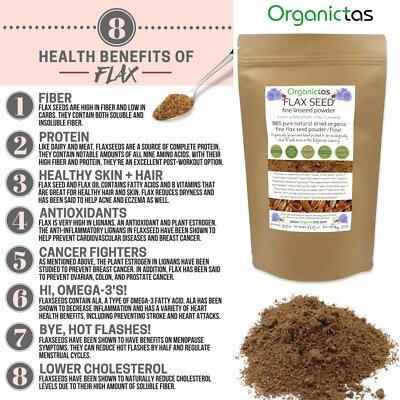
Flaxseed provides dietary fiber, alpha-linolenic acid (ALA), and plant lignans.
ALA differs from the marine omega-3 fats EPA and DHA. According to the NIH Office of Dietary Supplements, your body converts only a limited amount of ALA to these longer-chain forms. Lignans have been studied for biological effects, but eating ordinary flaxseed is not an established cancer-prevention or hormone treatment.
Clinical trials have tested seed and oil in selected groups of people.
A 2025 meta-analysis of 16 trials with 1,136 participants with diabetes found some improvements in weight-related measures and triglycerides. It showed no clear change in LDL cholesterol or blood pressure, and results varied widely between trials.
A separate 2026 meta-analysis covered flaxseed oil in 36 randomized trials with 1,959 adults. Triglycerides were about 8.04 mg/dL lower across the pooled results, while LDL and total cholesterol showed no clear change.
Those results come from specific participants and preparations. Before you trust a benefit claim, check whether the trial used whole seed, meal, oil, or an isolated component, and which outcome it measured. A spoonful of breakfast meal hasn't been shown to match an oil intervention.
When to Be Careful With Flaxseed
Adding a lot of fiber at once can cause digestive discomfort. NIH's National Center for Complementary and Integrative Health lists fullness, bloating, and diarrhea among reported effects, particularly with larger amounts or supplements.
Flaxseed's fiber binds water, so drink enough fluid. Tolerance varies, especially if you're unused to fiber-rich foods.
Medication needs extra care. Mayo Clinic advises against taking flaxseed at the same time as oral medicines, and NIH notes theoretical interactions with anticoagulant and antiplatelet drugs.
Safety evidence during pregnancy and breastfeeding is limited, especially for concentrated flaxseed oil and supplements.
NIH NCCIH cautions against eating raw or unripe flaxseeds because they may contain toxic compounds. Exposure to cyanogenic compounds depends on serving size and processing. Packaged edible ground flaxseed works in cold foods such as yogurt when its instructions allow that. If a label requires cooking, cook it, because grinding alone does not remove the concern.
For the underlying safety guidance, see NIH NCCIH's flaxseed and flaxseed oil overview.
Start with a small measured spoonful in a familiar food, rather than changing several parts of your diet at once.