
Macadamia Nut Benefits: What Nutrition and Human Studies Show
Macadamias provide mostly monounsaturated fat. In measured portions, they're a nutritious alternative to foods high in saturated fat. Studies have not shown that they cause weight loss or prevent heart disease. Check the serving weight and the ingredient list, and skip them if you have a tree-nut allergy.
What's in macadamia nuts? Calories, fats, and nutrients
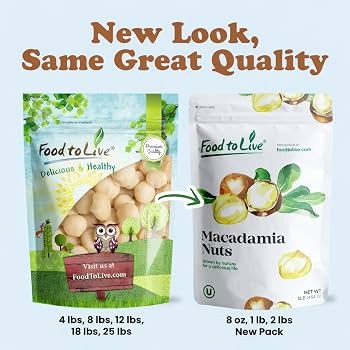
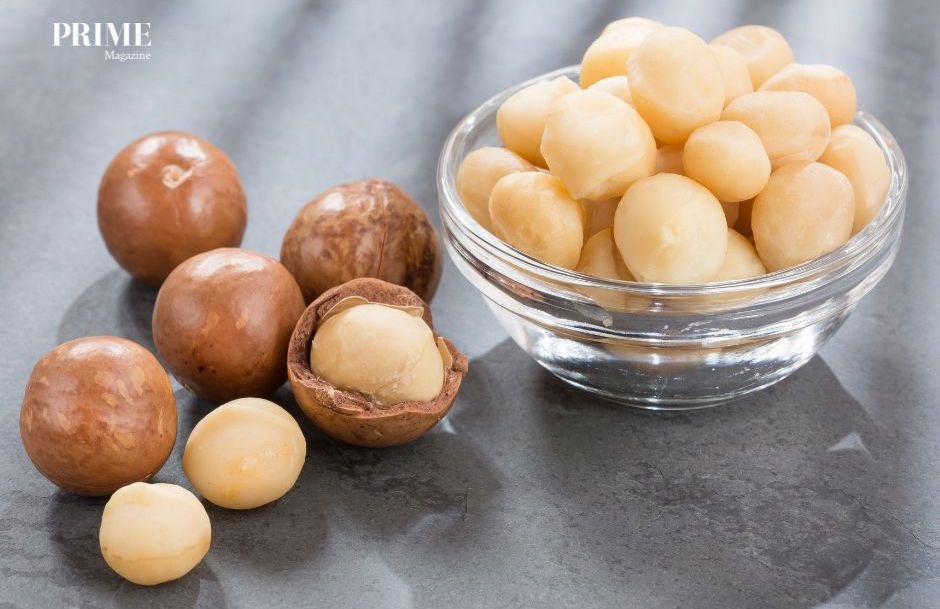
Beyond their high monounsaturated fat content, macadamias provide saturated fat, protein, fiber, and several minerals; dietary-fat studies have examined the relationship between monounsaturated fats and cholesterol.
The table uses USDA SR Legacy entry FDC 170178 for raw macadamias, as reproduced in an FDC 170178 raw-nut data listing. The one-ounce column is calculated from the 100 g values and rounded. It is not a separate product analysis.
| Nutrient | Per 100 g raw nuts | Per 1 oz (28.35 g) |
|---|---|---|
| Calories | 718 kcal | 204 kcal |
| Total fat | 75.8 g | 21.5 g |
| Monounsaturated fat | 58.9 g | 16.7 g |
| Saturated fat | 12.1 g | 3.4 g |
| Protein | 7.9 g | 2.2 g |
| Fiber | 8.6 g | 2.4 g |
| Manganese | 4.131 mg | 1.17 mg |
| Thiamin (vitamin B1) | 1.195 mg | 0.34 mg |
| Copper | 0.756 mg | 0.21 mg |
Most of the calories come from fat, with smaller shares from protein and fiber.
Why some calorie databases disagree
USDA Foundation entry FDC 2515378 lists a lower figure for raw macadamias: about 669 kcal per 100 g using specific energy factors, and about 712 kcal using general factors. It also reports 64.9 g fat, 7.8 g protein, and 7.6 g fiber per 100 g.
Those values belong to that entry, so don't pair them with the SR Legacy numbers in the main table. Combining the Foundation calorie figure with the SR Legacy fat values would create a misleading hybrid. Differences in samples and calorie calculations explain why two valid raw-nut entries disagree.
Do macadamia nuts benefit cholesterol and heart health?
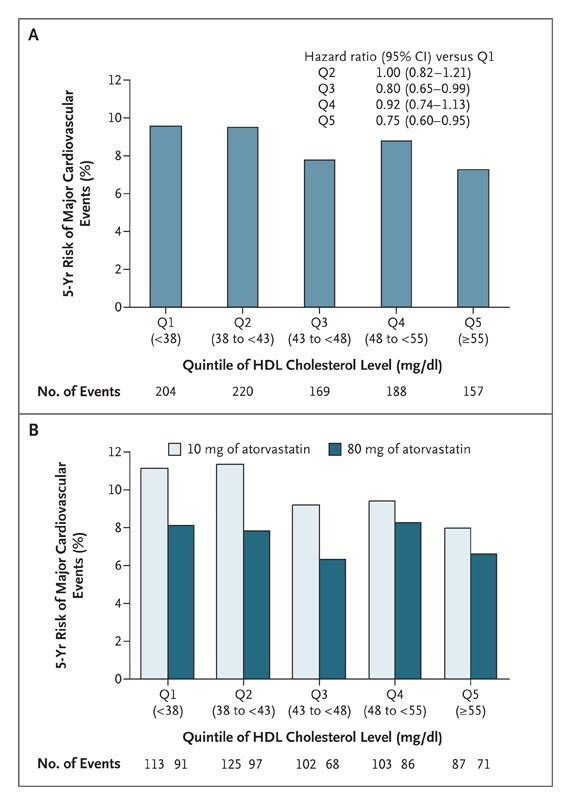
Some human studies show better cholesterol numbers on a macadamia diet, and others show no significant change. The strongest reading concerns a person's overall diet. When macadamias replace a food higher in saturated fat, the mix of fats in that meal changes. Adding the same portion on top of everything you already eat is a different situation.
What the FDA's qualified claim means
On July 24, 2017, the FDA completed its review of a petition on macadamia nuts and coronary heart disease risk. Its qualified health-claim decision allows limited label wording.
The claim covers eating 1.5 ounces of macadamia nuts daily as part of a diet low in saturated fat and cholesterol, without raising saturated-fat or total calorie intake. The FDA describes the supporting evidence as supportive but inconclusive.
The 1.5 ounces comes from this label claim and applies only under those diet conditions. The claim concerns possible reduction in coronary heart disease risk, and the evidence does not show an individual treatment benefit.
Two trials, different results
| Study and outcome | Participants and dietary comparison | Duration | Observed result |
|---|---|---|---|
| Griel et al., 2008: blood cholesterol | 25 adults with mildly elevated cholesterol; macadamia-rich diet providing about 42.5 g nuts per 2,100 kcal versus an average American diet | Two five-week diet periods | Total and LDL cholesterol were lower on the macadamia-rich diet, p < 0.05 |
| Randomized crossover, 2023: LDL cholesterol | 35 adults with abdominal obesity; preweighed macadamias providing about 15% of daily calories, with instructions to replace roughly equivalent calories | Eight weeks | LDL change −4.7 mg/dL; 95% CI −14.3 to +4.8 mg/dL, not statistically significant |
| Randomized crossover, 2023: total cholesterol | The same 35 adults and macadamia intervention | Eight weeks | Total cholesterol change −4.3 mg/dL; 95% CI −14.8 to +6.1 mg/dL, not statistically significant |
In the 2008 controlled-feeding study, participants ate set diets, a level of control the 2023 trial did not have.
The 2023 randomized crossover trial tested adults eating their usual diet. They were told to replace roughly equivalent calories with the nuts, which does not guarantee exact substitution. Its LDL confidence interval crosses zero, so the change was not statistically significant.
Both trials measured blood markers over weeks. Neither measured whether macadamias prevented heart attacks or reduced mortality.
What about weight, blood sugar, fullness, and other promised benefits?
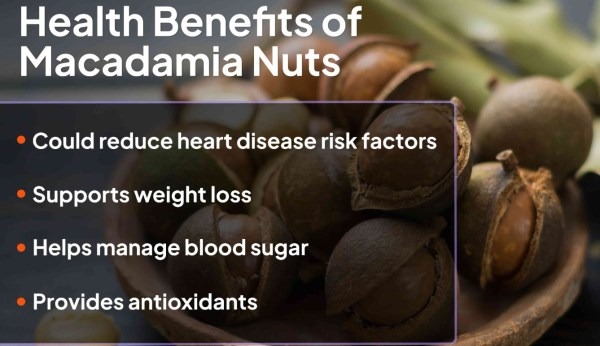
Macadamias provide calories and nutrients, but evidence that they change weight or blood sugar on their own is limited.
The 2023 trial, in adults with abdominal obesity, found no statistically significant change in weight, body composition, or the measured glycemic outcomes.
People with diabetes were excluded, so the findings cannot speak to diabetes treatment or longer-term effects.
Some people find nuts filling, but the evidence does not show consistent appetite suppression from macadamias.
Claims about cancer prevention, cognition, longevity, inflammation, or a faster metabolism go beyond what these macadamia trials measured.
How much is a serving? The calorie surprise of a handful
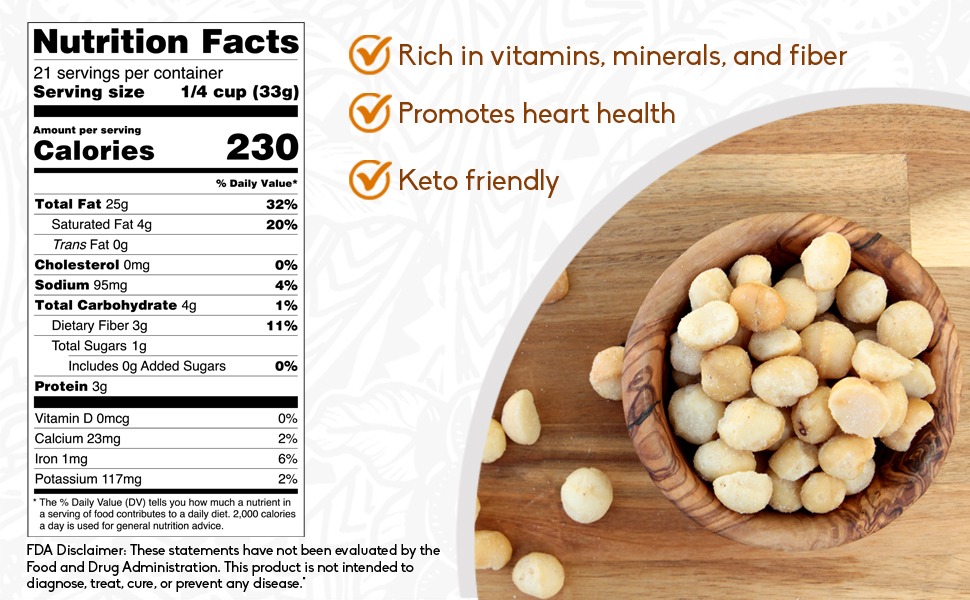
A one-ounce serving of raw macadamias weighs 28.35 g and has 204 calories by the SR Legacy entry above. The American Heart Association uses an ounce, often described as a small handful, as a general reference for a nut serving.
Kernels vary in size, so counting nuts is no substitute for weighing them.
| Portion reference | Weight | Approximate calories | Approximate total fat |
|---|---|---|---|
| General one-ounce reference | 28.35 g | 204 kcal | 21.5 g |
| 1.5-ounce equivalent | About 42.5 g | 305 kcal | 32.2 g |
| Eight nuts reported by one Reddit poster | Weight unknown | 210 kcal reported | 21 g reported |
The first two rows are calculated from the same raw-nut entry. The third is one poster's tracking-app entry.
When eight nuts seem surprisingly expensive in calories
Hi! I’d just like to say I always knew nuts were calorie heavy. However, I never noticed how much fat is in them.
I love macadamia nuts, but haven’t had them in awhile because they usually don’t fit into my calorie goals for the day.
This morning I had a serving, which ended up being around 8 nuts. 210 calories and 21 g of fat for 8 nuts?! My app gave me a notice that said “your fat goal is 50g in a day.”
This made me wonder: other than when you’re doing a lot of activity, like maybe on a long hike, are nuts even considered part of a healthy diet?
The poster's app set a 50 g daily fat target, and the eight-nut figure is their own entry.
A food scale settles the serving question without a kernel count. A measured portion works as a snack, and a smaller amount adds crunch to a dish for fewer calories.
Raw, roasted, salted or honey-coated: which macadamias are you getting?
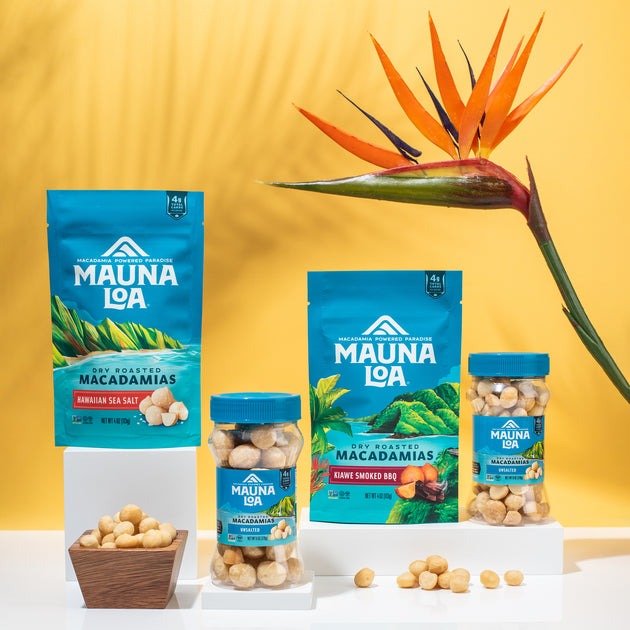
A raw macadamia nutrition table describes the nut itself. Store-bought products can add salt, sweet coatings, or other ingredients, so compare the finished food on its own.
| Product type | What can differ | What to compare | Main trade-off |
|---|---|---|---|
| Raw or plain | Fewest added ingredients | Ingredient list and serving weight | Plain nut flavor and texture |
| Dry-roasted, unsalted | Processing and flavor | Ingredient list and nutrition panel | Toasted flavor, no added salt |
| Salted | Sodium content | Sodium per comparable weight | Savory seasoning, added sodium |
| Honey-roasted or sugar-coated | Added sugars and coating ingredients | Added sugars, ingredients, and serving weight | Sweetness and a different nutrient profile |
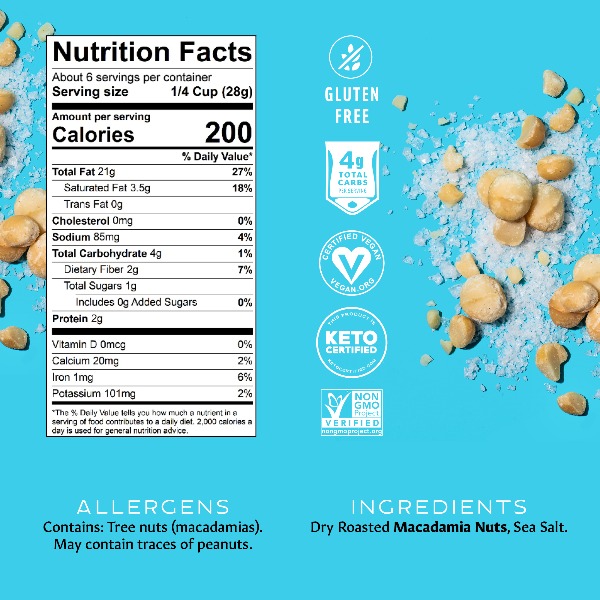
Compare ingredient lists, added sugars, and sodium at equal gram weights, since serving sizes printed on different packages may not match.
What if macadamia nuts smell off? Freshness and storage
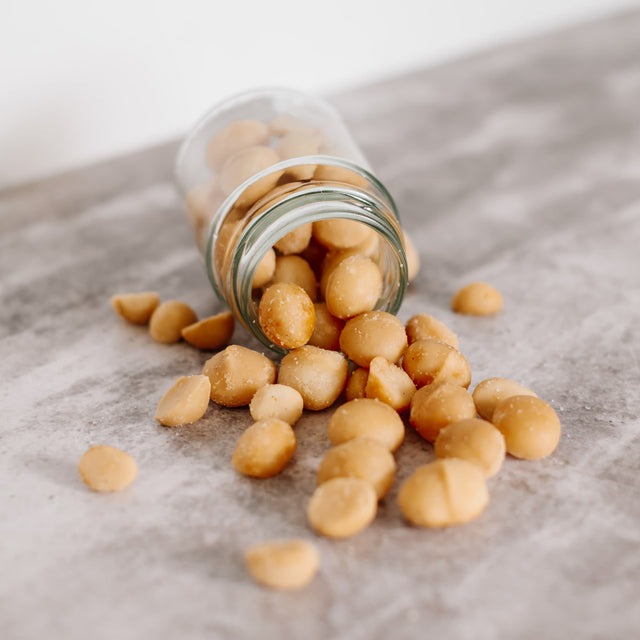
Macadamia nuts can turn rancid. The American Heart Association describes unpleasant odors and bitter flavors as signs. A date on the package is poor reassurance if the contents smell wrong, so set aside a bag that already smells off. The AHA recommends refrigerating nuts for storage.
When macadamia nuts are not a suitable choice: allergies and household safety
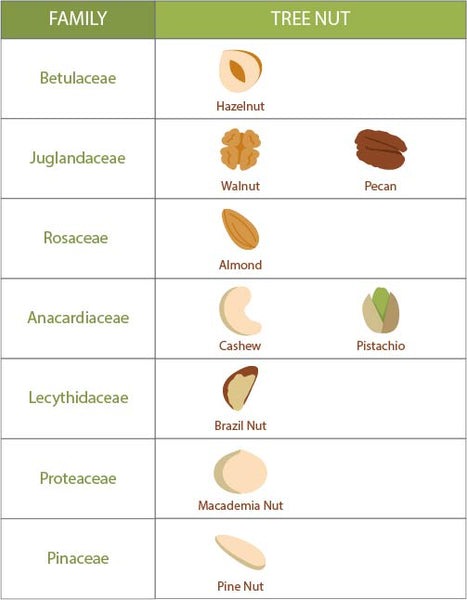
Macadamias are tree nuts. If you have a known or suspected tree-nut allergy, that settles the question before calories or cholesterol come into it.
US food-allergen labeling rules cover tree nuts, and the FDA provides guidance on identifying the specific nuts involved. A cookie, trail mix, or coated snack may contain macadamias alongside other ingredients, so look for the nut's name on the label even when the front of the package does not show it.
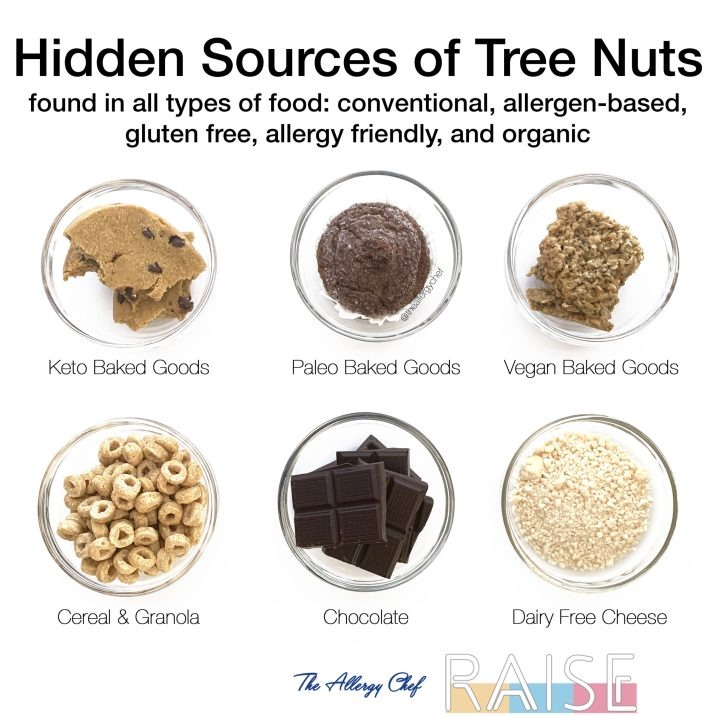
If you have an allergy, use product labeling and guidance from a health professional to decide what is safe. Trying an uncertain food as a home allergy test is unsafe. An allergy to one tree nut does not automatically predict how you will react to every other tree nut.
Dog owners have a separate concern. The ASPCA identifies macadamia nuts as toxic to dogs and describes possible vomiting, weakness, and tremors after exposure. Keep the nuts out of a dog's reach, and get veterinary advice promptly if you suspect your dog ate some.
Are macadamia nuts better than almonds, walnuts, or other nuts?
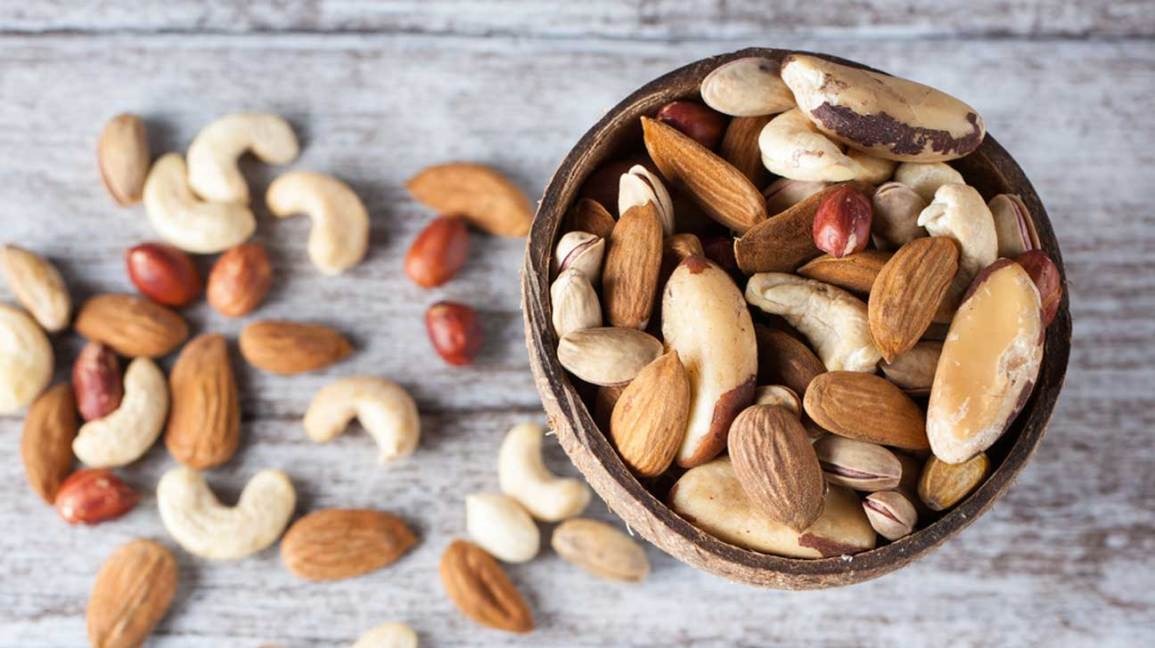
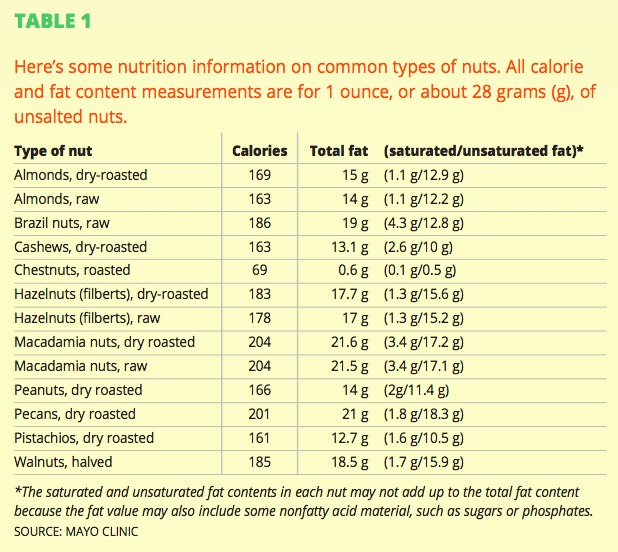
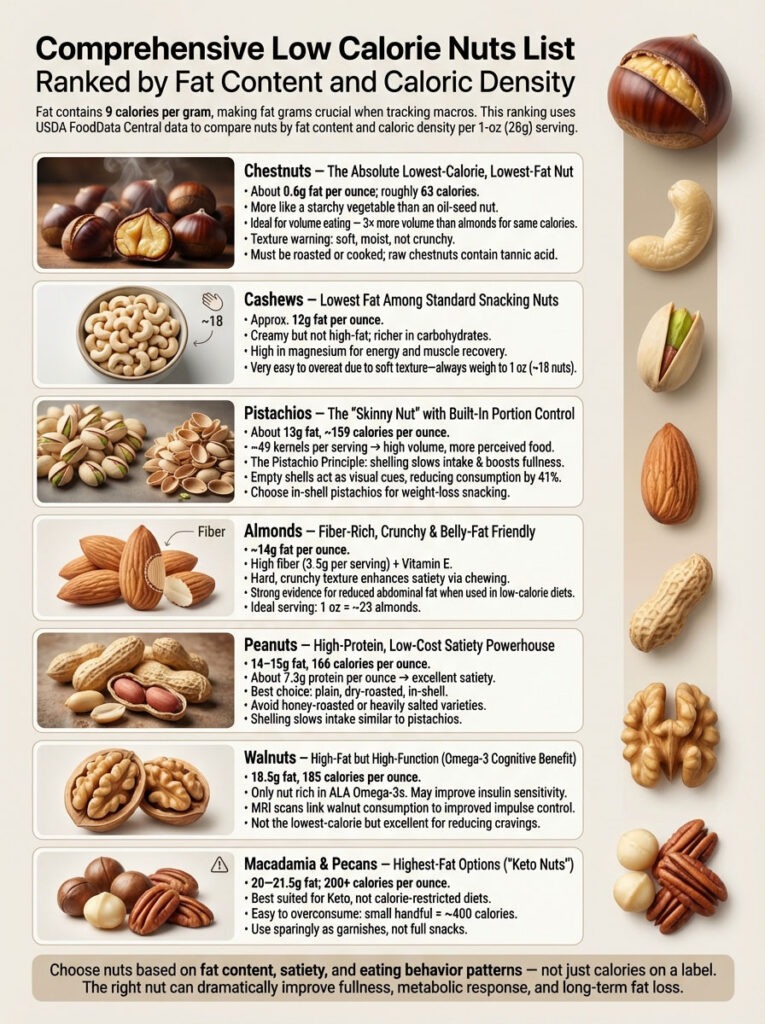
Choose by the nutrient you want, the recipe, any allergies, and the amount you plan to eat. For macadamias next to walnuts, almonds, and pistachios, use the per-ounce nut comparison.
The American Heart Association identifies walnuts as especially high in omega-3 fatty acids. Macadamias are notable for their high monounsaturated fat content.
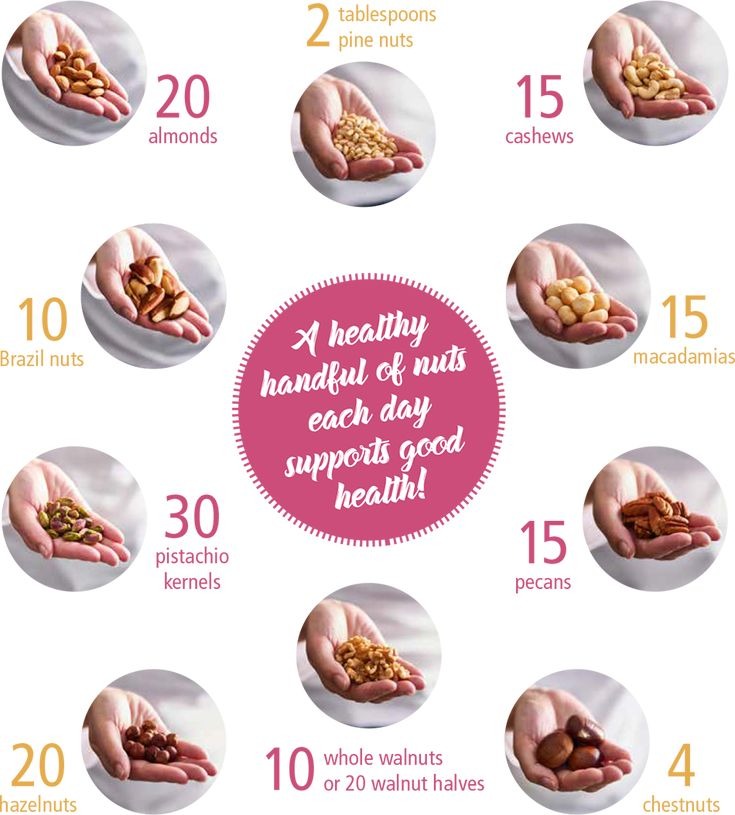
To narrow the choice, start with your main purpose:
- For a snack rich in monounsaturated fat: Macadamias fit when the portion and total calories suit your eating pattern.
- For an omega-3 priority: Compare walnuts, using a source that lists their fatty acids.
- For cooking or baking: Choose the nut whose taste and texture suit the dish, and check ingredients and allergies.