
Bamboo Shoots Nutrition: Calories, Nutrients, and Safe Preparation
The preparation changes the numbers: USDA data list 12 calories per 100 g for plain boiled, drained bamboo shoots and 19 for canned, drained shoots. Fresh shoots must be prepared safely before you eat them. For packaged shoots, go by the Nutrition Facts label and the handling instructions on it.
Bamboo shoots nutrition facts: raw, boiled, and canned compared
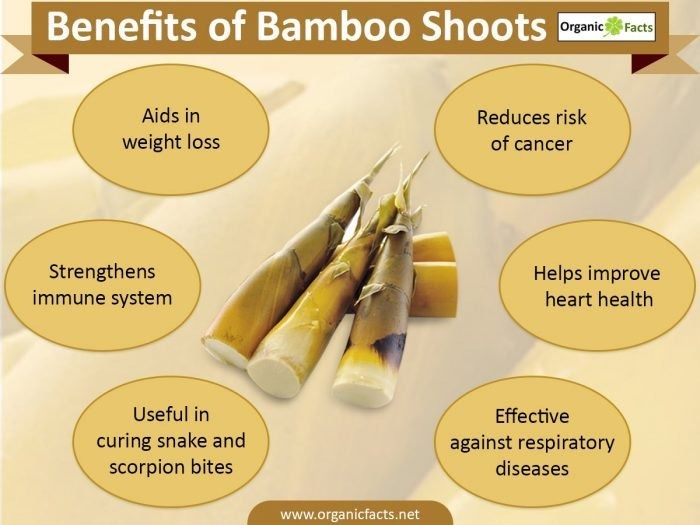
Bamboo shoots are the edible young growth of certain bamboo species; plain, they give you carbohydrates, fiber, a little protein and almost no fat. Preparation changes the numbers. Compare raw, boiled, and canned entries at equal weights.
| Nutrient per 100 g | Raw shoots | Plain boiled, drained, no salt | Canned, drained |
|---|---|---|---|
| Calories | 27 kcal | 12 kcal | 19 kcal |
| Protein | 2.60 g | 1.53 g | ≈1.72 g |
| Total carbohydrate | 5.20 g | 1.92 g | ≈3.22 g |
| Fat | 0.30 g | 0.22 g | 0.40 g |
| Dietary fiber | 2.20 g | 1.00 g | 1.40 g |
| Sodium | 4 mg | 4 mg | ≈7 mg |
| Potassium | 533 mg | 533 mg | 80 mg |
The figures come from USDA-derived SR Legacy records listed through FoodData Central and related food databases: ID 169210 (raw), 169211 (boiled without salt) and 169212 (canned). The underlying data is in USDA's FoodData Central datasets. A seasoned brand or finished dish will differ.
Net carbohydrate for canned, drained shoots is 1.82 g (3.22 g total carbohydrate minus 1.40 g fiber). The table lists total carbohydrate.
A 120 g portion of plain boiled, drained shoots has about 14.4 calories, 1.84 g protein and 1.2 g fiber, before anything else goes in the pan.
Protein is low. Bamboo shoots add texture and variety to a meal, not protein.
The raw column shows composition only. Raw shoots need the safety steps below. Another raw vegetable with its own hazards is covered in the raw-pumpkin safety guide.
Are fresh bamboo shoots safe to eat?
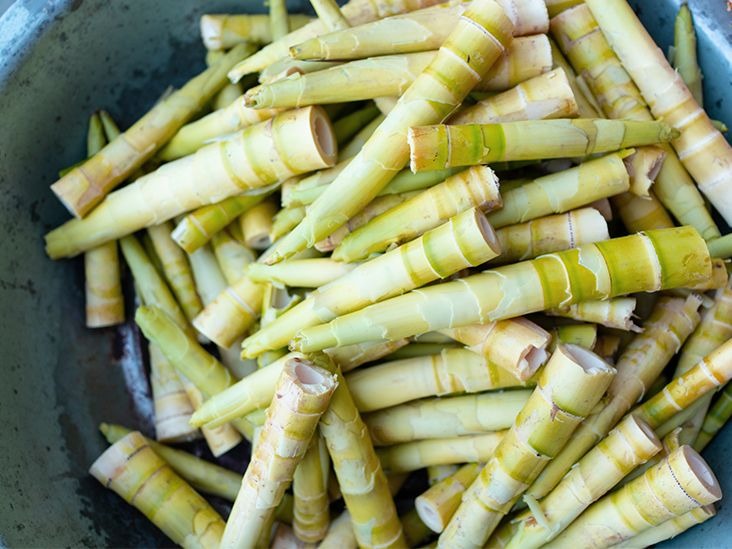
Fresh bamboo shoots contain cyanogenic glycosides, natural compounds that release hydrogen cyanide, a toxic substance, when they break down.
Food Standards Australia New Zealand (FSANZ) notes that only certain bamboo species are used as food. Its Food Standards Australia New Zealand guidance says to split fresh shoots, remove the outer leaves and fibrous base, slice them thinly, boil them in lightly salted water for 8 to 10 minutes and discard the cooking water.
The Canadian Food Inspection Agency cites research in which boiling for 20 minutes at 98°C removed nearly 70% of cyanide. Other treatment conditions gave other reductions. The two agencies test different conditions, so neither time works as a rule for every species.
Store-bought canned shoots and an unidentified shoot in a yard are different decisions.
Hey folks, can someone help identify what cultivar or species of bamboo this is? I have attached photos of the full-grown stalks (hope to knock them down soon!) and the leaves, along with the shoots I harvested today. These shoots are a week old or less (we are trying to uproot and kill this invasive, so we are out there fairly regularly digging things up and chopping things down). I was thinking of eating the shoots however (partner and I were discussing using them in a fried rice dish), but some bamboo is readily edible, but other bamboo species has a lot of toxic chemicals, which means we need to boil them for a long time, consistently changing out the water, and if I have to do all that then we just won't bother. I'm having a hard time narrowing in on the answer on what to do with these shoots. Any advice, or should I toss the lot and just not try?
To give more info, we did not plant this bamboo, the previous residents did, along with other invasive plants. We moved in this year, and we are doing the best we can to uproot the invasives. In the meantime....can I eat this?

The source decides what to do next:
- Commercially canned shoots: Use a properly processed product with identifiable packaging and follow its instructions.
- Fresh shoots from a known edible source: Get preparation guidance for that species and source.
- Unidentified backyard shoots: Don't eat them, and don't improvise a preparation method.
Dried commercial products need extra preparation. Follow the package.
Why bamboo-shoot calorie counts differ so much
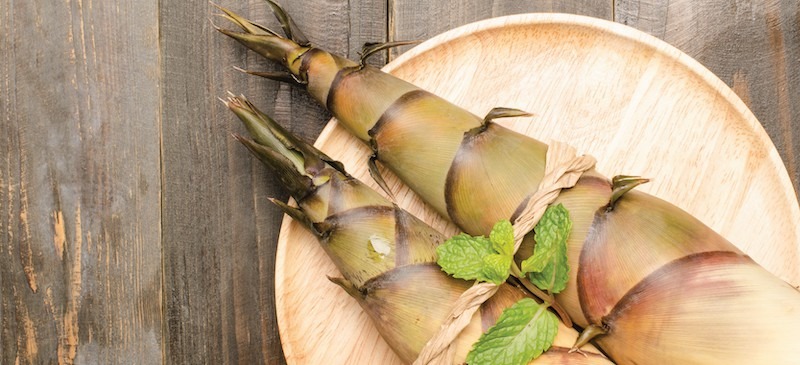
A search for cooked bamboo-shoot calories turns up numbers that look contradictory. The cause is usually the food description attached to each number.
| Food record | Calories per 100 g | Important distinction |
|---|---|---|
| Boiled, drained, without salt | 12 kcal | 0.22 g fat |
| Generic cooked preparation | ≈41 kcal | About 2.9 g fat |
| Boiled with salt | 11 kcal | About 240 mg sodium |
The 41-kcal entry comes from the USDA Food and Nutrient Database for Dietary Studies (FNDDS), whose standardized formulation includes canned, drained bamboo shoots and a small amount of unspecified added table fat or oil. The 12-kcal plain-boiled entry comes from the separate USDA SR Legacy dataset.
At the same 155 g, the plain boiled, unsalted entry gives about 18.6 calories. When two calorie figures disagree, compare the stated preparation and ingredients, especially salt and fat.
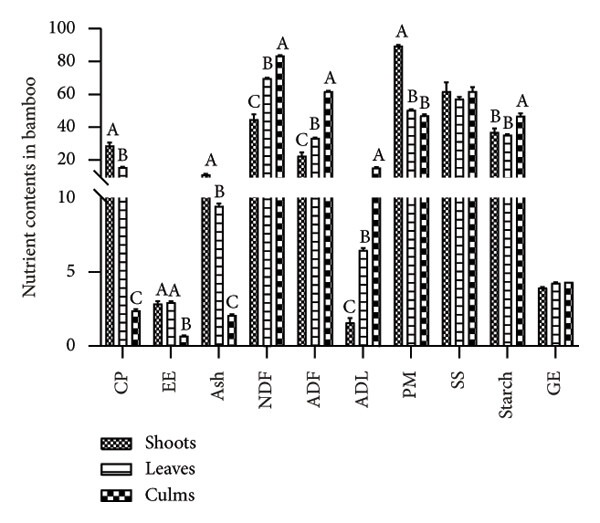
Water loss, cooking ingredients and retained seasoning change a finished dish. Added oil adds calories, and brine and salty condiments change sodium content substantially.
Fresh, canned, or menma: which bamboo shoots fit your dish?
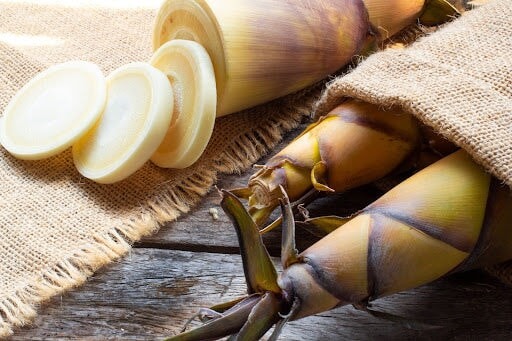
Fresh shoots, plain canned shoots and seasoned bamboo condiments do different jobs in the kitchen. Convenience and flavor matter as much as the calories in a database.
| Form | Main practical appeal | What changes the choice |
|---|---|---|
| Fresh shoots | Flavor that some cooks prefer to canned | Need proper preparation and a reliably identified source |
| Commercially canned shoots | Convenient for soups and stir-fries | Texture, brine and seasoning vary by product |
| Menma or seasoned bamboo | Flavored topping or condiment | Seasonings and preparation set it apart from plain shoots |
For soup or stir-fry, plain canned shoots are the easy choice. For ramen, menma gives you more flavor.
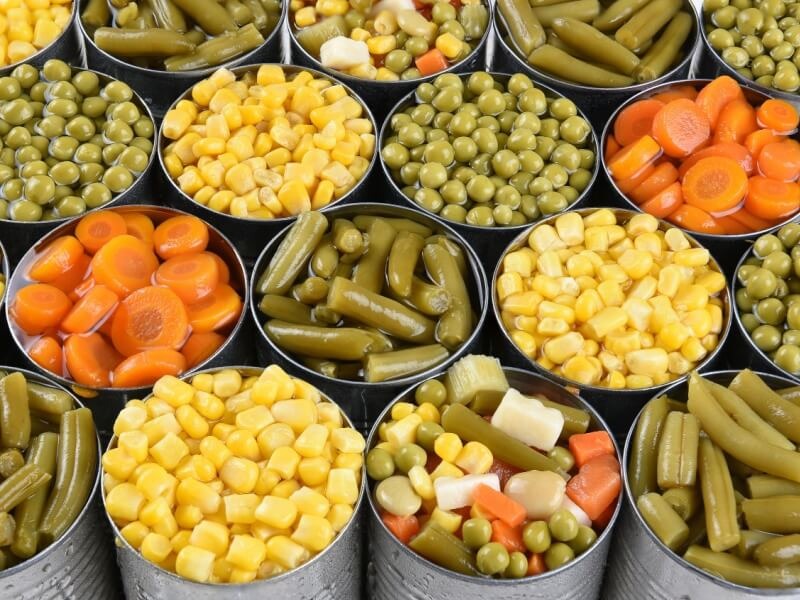
i can't speak for everyone but i personally haven't had a great experience using canned bamboo shoots. for a long time i thought i just didn't like them but after trying fresh bamboo shoots, i changed my mind. for some reason, canned ones have a bitter metallic taste which i have not yet figured out how to get rid of. for the record, i have never faced the same issue with any other kind of canned food (other vegetables, fruits, beans etc) so i don't know why it is that canning bamboo shoots would change the flavour so drastically. i know that using canned ones might be more convenient and affordable if fresh bamboo shoots are not locally available in your area, but yeah, the fresh ones definitely have a much better taste. another alternative that might be somewhat more accessible and easy to find is 'menma' which is a japanese condiment made with fermented/pickled bamboo shoots, think of it sort of like the bamboo shoots version of kimchi. it isn't a replacement for the fresh ones, (just like you can't really substitute fresh cabbage with kimchi in any recipe, they're not exactly interchangeable) and menma is more of a flavourful condiment than a fresh vegetable but it's pretty good and if you can get it you should try it out
Menma is a seasoned condiment, and its sodium can differ a lot from a plain canned vegetable.
What cooks report about canned bamboo shoots
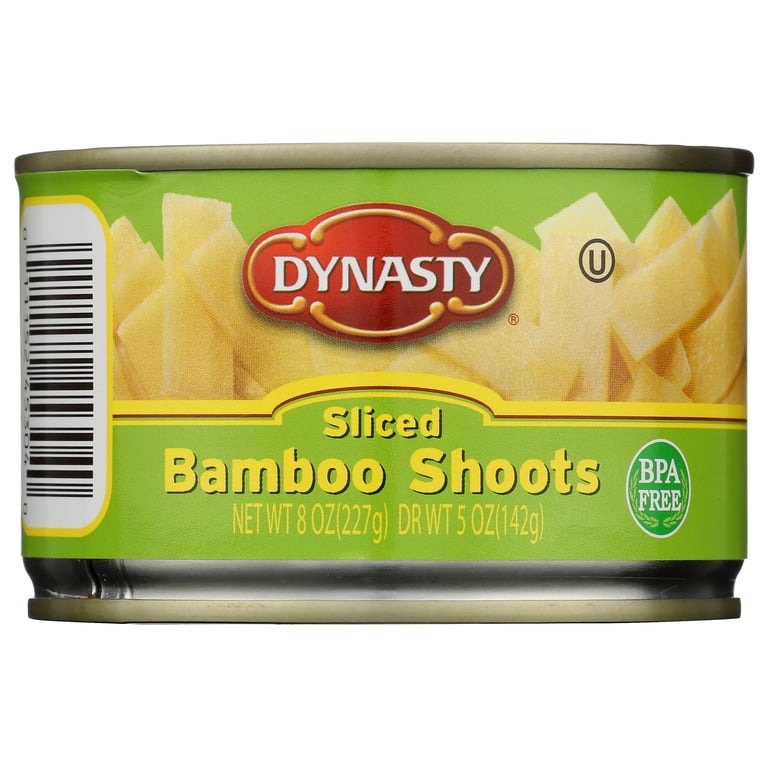
Canned bamboo shoots can bring a flavor or texture you didn't expect. Cooks report bitterness, soft texture and strong odors.
I had almost all of the ingredients, kaffir lime zest, leaves, shrimp paste and the rest except for thai bird chili which I substituted with local chilies. I followed Hot Thai Kitchens recipe.
Couldn't find any of the vegetables except bamboo shoots in cans, I thought the smell was only a temporary thing so I chucked them in. Should have opted for zucchini.
Lo and behold the flavor is amazing but every bite is accompanied with an aroma of piss.
I had washed them and tasted them beforehand, they tasted bland and mushy. I figured boiling them should be out of the question.
I'm so angry is there anyway to reduce the smell?
What are bamboo shoots like in Thailand? I'm guessing this was a problem specific to my country. There is no way for a product to be this smelly after the canning process.
Some cooks say rinsing, soaking and marinating did not fix the bitterness, and an unpleasant product stays unpleasant in the finished dish.
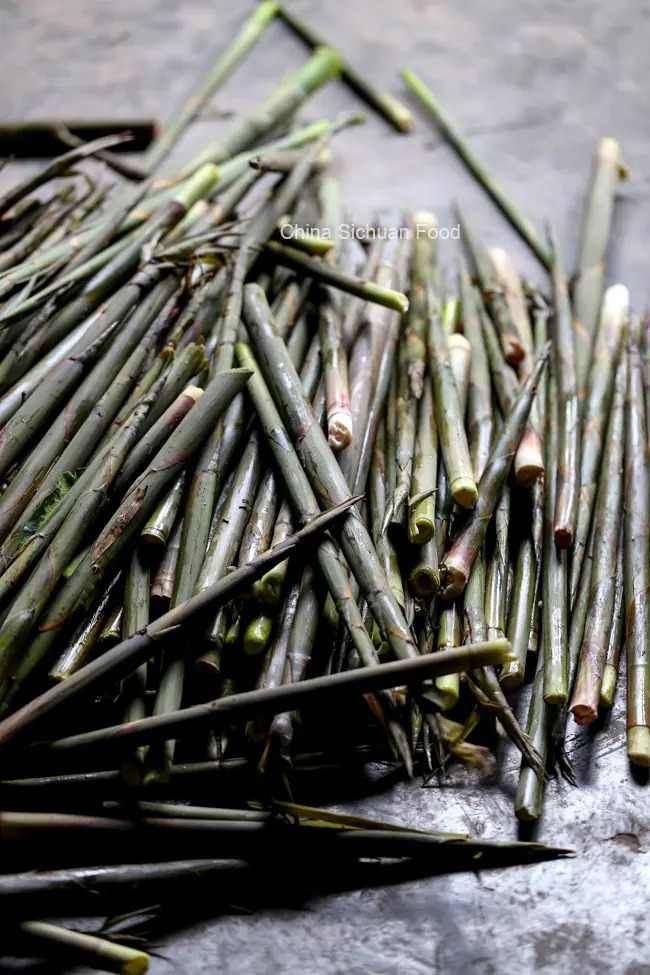
Smell and taste are not reliable tests for cyanogenic compounds or microbiological safety.
With a processed product used as the package directs, check the flavor and texture against the dish before committing a whole batch. If the package looks questionable, or the flavor makes it unusable, discard it instead of trying to fix it.
What research says about bamboo-shoot health benefits
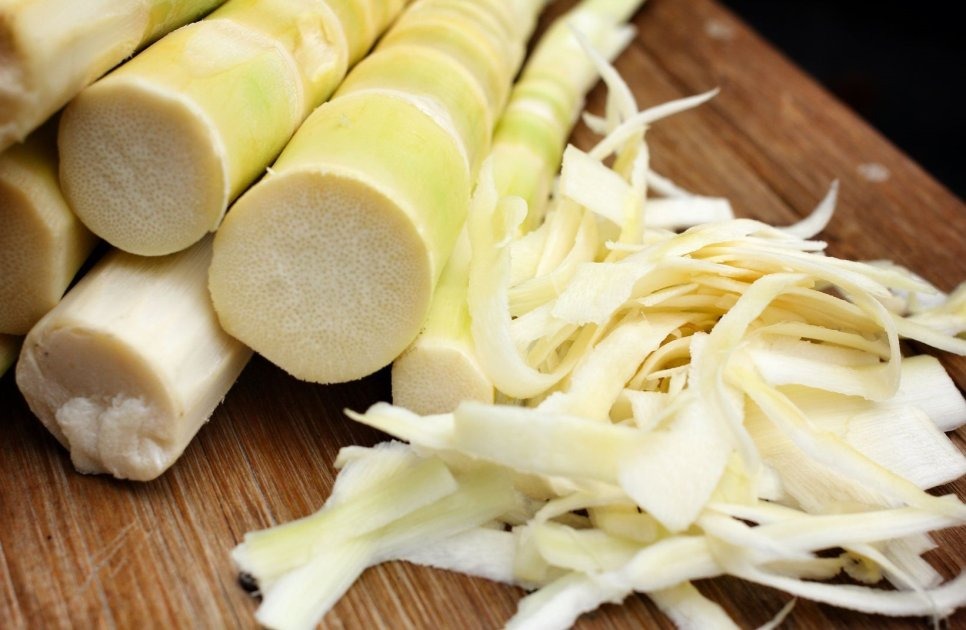
Bamboo shoots contain fiber, but evidence that they treat health conditions is limited. In Park and Jhon’s 2009 study, eight healthy women aged 21 to 23 ate three diets for six days each: one without fiber, one with 25 g of cellulose and one with 360 g of bamboo shoots daily. Compared with the fiber-free diet, the bamboo diet lowered total cholesterol, LDL cholesterol and the atherogenic index, and increased stool volume and bowel movements. Glucose did not differ among the periods. With eight participants, six-day periods and a 360 g daily intake, the study leaves benefits at ordinary servings and clinical treatment unestablished.
How to check the nutrition of the bamboo shoots you eat
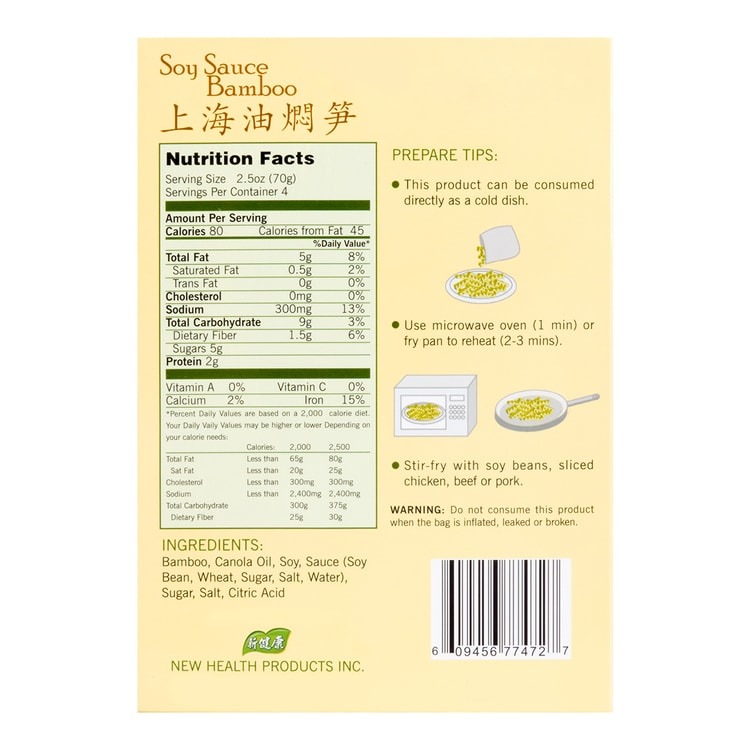
For a specific canned or packaged product, the US Nutrition Facts panel reflects the manufacturer's formulation and declared serving. That makes it more directly useful than a generic database entry for an unseasoned food.
The FDA explains that a labeled serving size is a standardized reference quantity. It does not prescribe how much you should eat, and the percent Daily Value relates to the stated serving.
Check four things on the product:
- Food form and ingredients: Plain shoots, a brined product or a seasoned preparation.
- Serving information: Serving size in grams and number of servings in the container.
- Nutrients that matter: Calories, fat, sodium and dietary fiber for the labeled serving.
- Amount being eaten: Drained shoots, or a seasoned mixture that includes other ingredients.
For a plain ingredient without a product-specific label, use the FoodData Central entry whose preparation matches the food you are weighing.
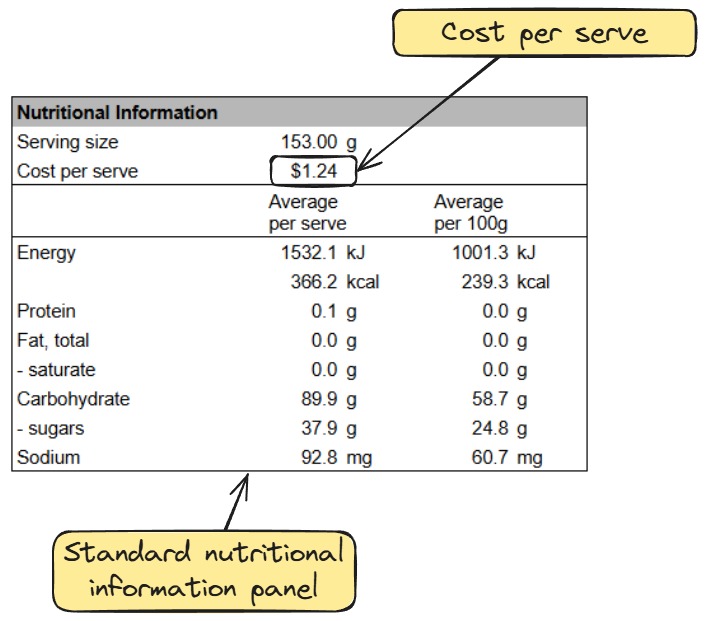
To scale a per-100-g entry to a portion, use this calculation:
Nutrient in portion = (nutrient per 100 g × portion weight in g) ÷ 100
Use the edible weight the entry describes.