
Enoki Mushroom Benefits: Nutrition, Evidence, and Food Safety
Enoki mushrooms bring fiber, B vitamins, and variety to meals, not proven disease-fighting effects at ordinary serving sizes. Buy packages you can identify, check them against FDA recalls, and cook the mushrooms all the way through. If a package is recalled, follow the FDA notice. Discard mushrooms in doubtful condition or with an unknown handling history, because cooking won't save them.
What are enoki mushrooms, and are they good for you?
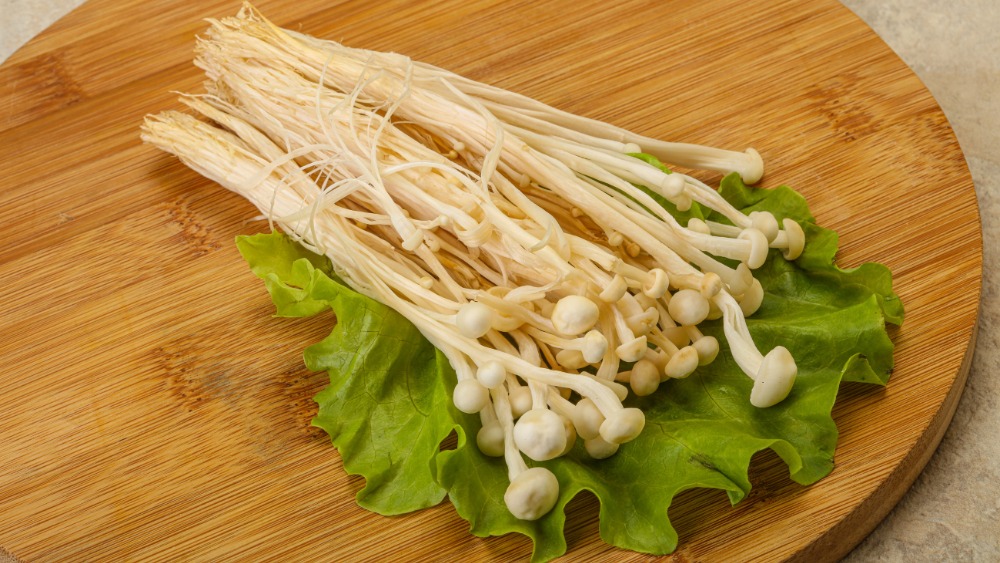
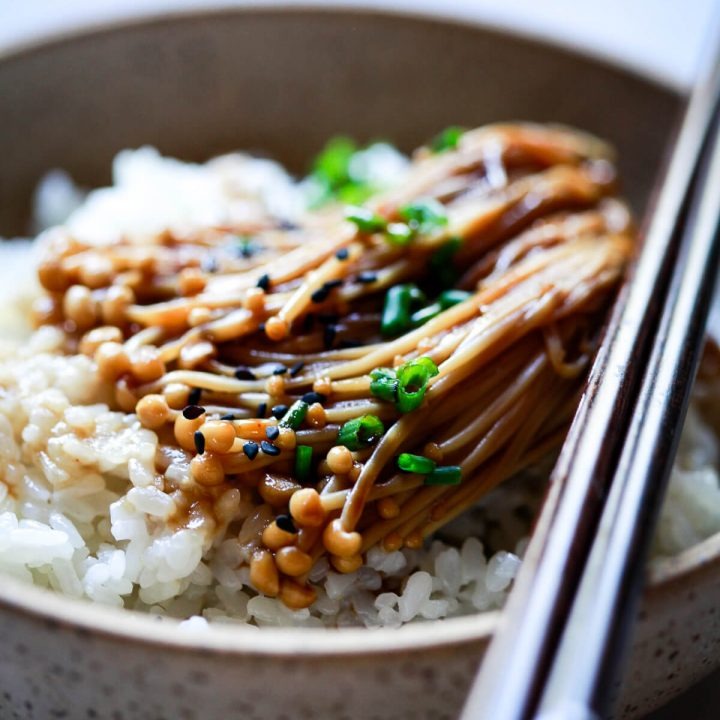
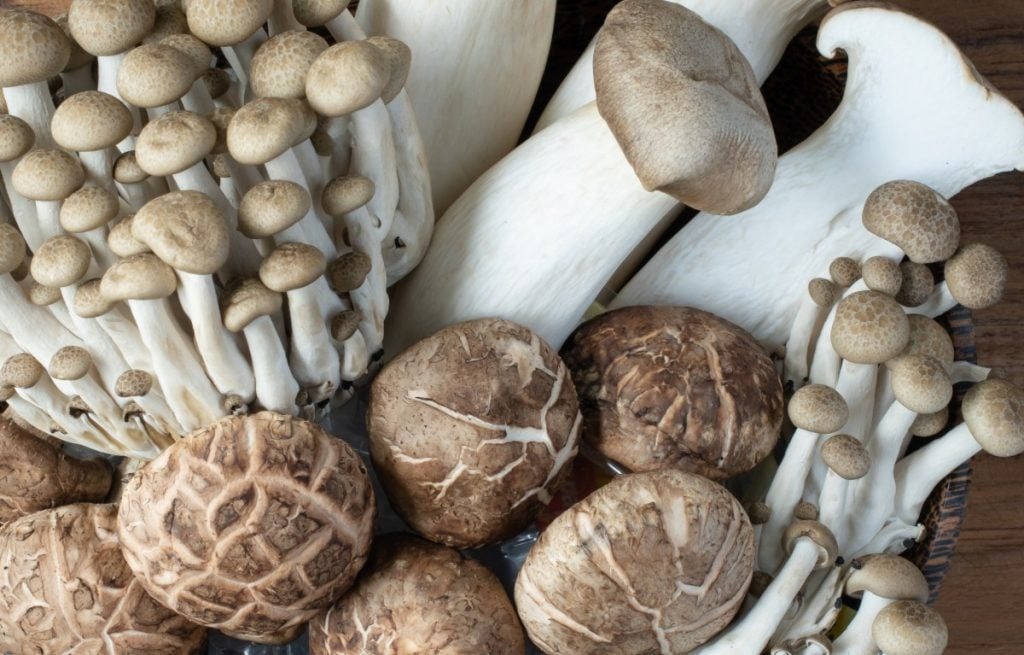
Enoki grow in tight clusters of slender white mushrooms, with tiny caps and long stems that become springy and chewy when cooked. They are also called enokitake or golden needle mushrooms. Cooks use them in ramen, hotpot, soups, and stir-fries, where the mild flavor sits well next to stronger ingredients. Commercial East Asian enoki are often identified as Flammulina filiformis, though older food sources use Flammulina velutipes.
Enoki mushroom nutrition per 100 grams and per smaller portion
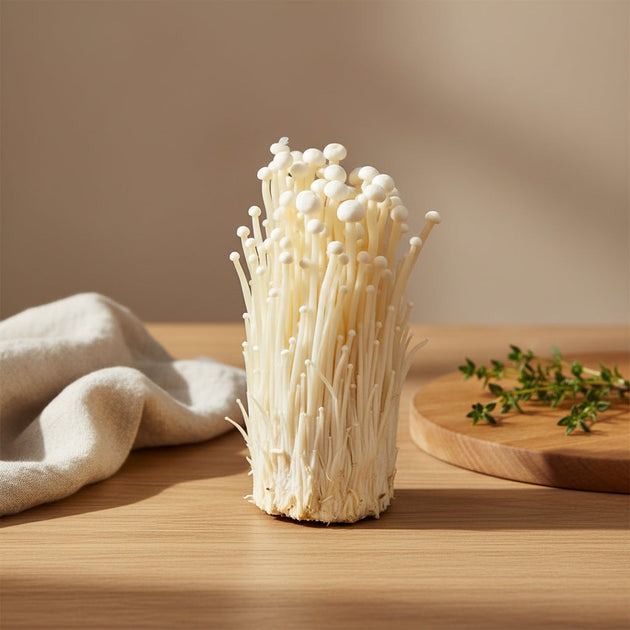
Raw enoki have about 37 calories and 2.7 grams of fiber per 100 grams, plus potassium and several B vitamins. They add substance to a meal without much fat. Protein is modest.
The values below come from USDA FoodData Central record 169382 for raw enoki. The 65 g column is calculated from the same record and rounded. It is an example quantity, not a recommended serving.
| Nutrient | Per 100 g raw | Per 65 g raw, calculated |
|---|---|---|
| Calories | 37 kcal | 24 kcal |
| Carbohydrate | 7.81 g | 5.08 g |
| Protein | 2.66 g | 1.73 g |
| Total fat | 0.29 g | 0.19 g |
| Fiber | 2.7 g | 1.76 g |
| Potassium | 359 mg | 233 mg |
| Niacin (vitamin B3) | 7.032 mg | 4.57 mg |
| Pantothenic acid (B5) | 1.35 mg | 0.88 mg |
| Thiamin (B1) | 0.225 mg | 0.15 mg |
| Riboflavin (B2) | 0.200 mg | 0.13 mg |
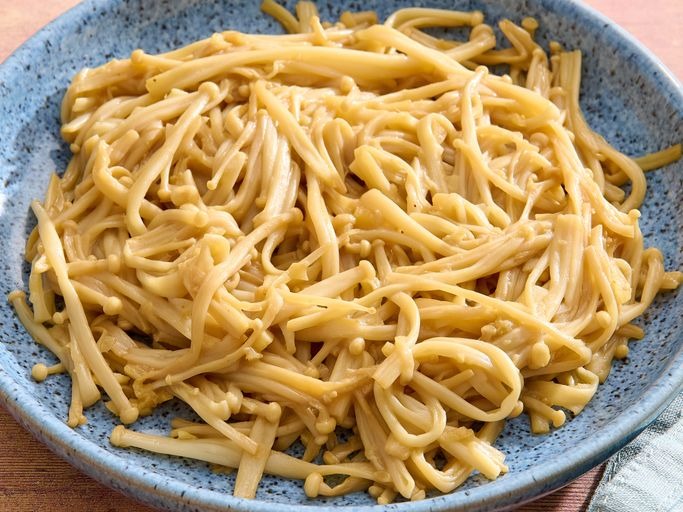
Cooking changes a mushroom's weight as moisture shifts, and oil, sauce, and noodles change the finished meal; to compare fairly, use the raw weight and count the other ingredients separately.
What research says about enoki mushroom health benefits
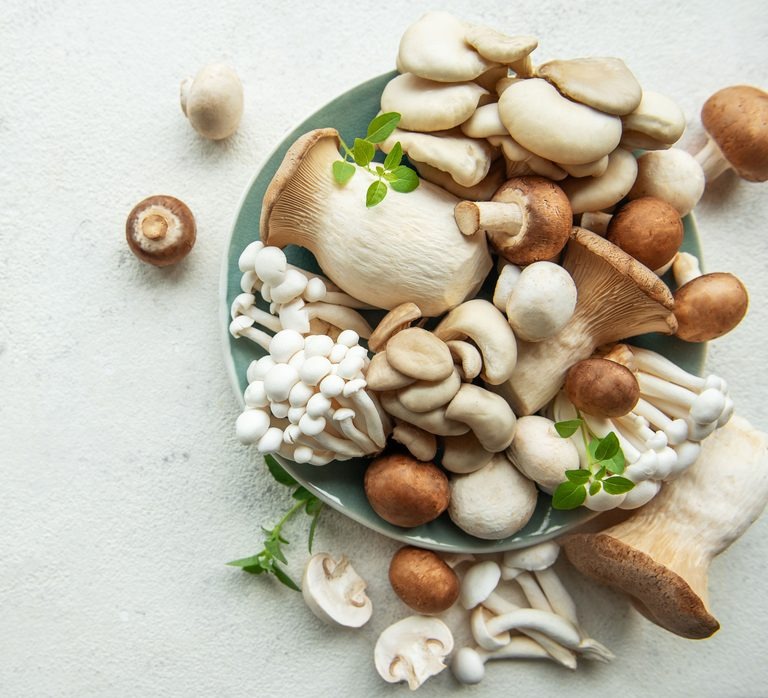
Researchers have studied enoki compounds for effects on blood lipids, cancer cells, and other biological processes. The studies used different things: the ordinary food, a powder, or an extract, tested on people, animals, or cells.
Cholesterol and heart health
In 2014, Yeh and colleagues fed male hamsters high-fat diets containing 1%, 2%, or 3% enoki mushroom powder or extract for eight weeks. Some cholesterol and triglyceride measures improved in the treated animals compared with the high-fat controls. The experiment says nothing about whether cooked enoki in your dinner lowers your LDL cholesterol.
Cancer, brain function, and immunity
Studies in the enoki literature tested mushroom-derived extracts against cancer cells in the lab. Other early cell and animal experiments looked at compounds linked to antioxidant, brain-related, or immune activity. Nothing in this research shows that a bowl of cooked enoki prevents cancer, sharpens memory, or strengthens immunity.
| Claim | Evidence available | What it shows |
|---|---|---|
| Fiber and micronutrients | Measured raw-food composition | Nutrient amounts per stated weight |
| Lower cholesterol | Eight-week hamster study, powder or extract | Changes in animal blood lipids |
| Fights cancer | Enoki extracts tested on cells | Lab activity in those cells |
| Memory or immune benefits | Early cell and animal studies | Mechanisms under study, no clinical result |
| Antioxidant protection | Compounds and lab antioxidant activity | Biochemical activity, no shown drop in human disease |
For any enoki health headline, check the preparation, the study population, and the measured outcome.
Enoki food safety
The FDA and CDC advise cooking enoki thoroughly and never eating them raw, because enoki have been linked to Listeria monocytogenes outbreaks. The bacterium causes listeriosis, which can be especially serious during pregnancy, in adults 65 or older, and in people with weakened immune systems.
Cooks often add long, thin enoki stems to ramen as a last-minute garnish. Steam rising from the bowl doesn't mean the raw mushrooms on top got cooked.
A 2024 study placed deliberately inoculated specialty mushrooms in ramen broth at different starting temperatures. Broth starting at 60 to 70°C cut the studied bacteria less than broth starting at 90 to 100°C. Survivors turned up in every temperature group, even after 60 minutes. The study can't give you a cooking time for a bowl at home.
What the US outbreak history shows
The CDC's final report on a 2020 enoki-linked outbreak recorded 36 illnesses across 17 states, 31 hospitalizations, and four deaths. Six cases were pregnancy-associated, with two fetal losses. These totals don't tell you the chance of illness from a particular package.
Handling enoki in the kitchen
For mushrooms that are not under recall, follow the FDA's enoki food-safety guidance:
- Cook thoroughly. Cook enoki as an ingredient in the dish. Never serve them raw or as an uncooked garnish.
- Prevent cross-contamination. Keep raw enoki and their juices away from ready-to-eat foods that get no further cooking.
- Clean contact surfaces. Wash hands, cutting boards, utensils, and counters after handling raw mushrooms.
A 2024 cultivation experiment found that Listeria could survive and grow in enoki production systems without visibly stopping normal mushroom growth. A normal-looking cluster still needs safe handling. Bamboo shoots have their own preparation rules, covered in the safe-preparation guide to bamboo shoots.
Buying, storing, and deciding when to discard enoki
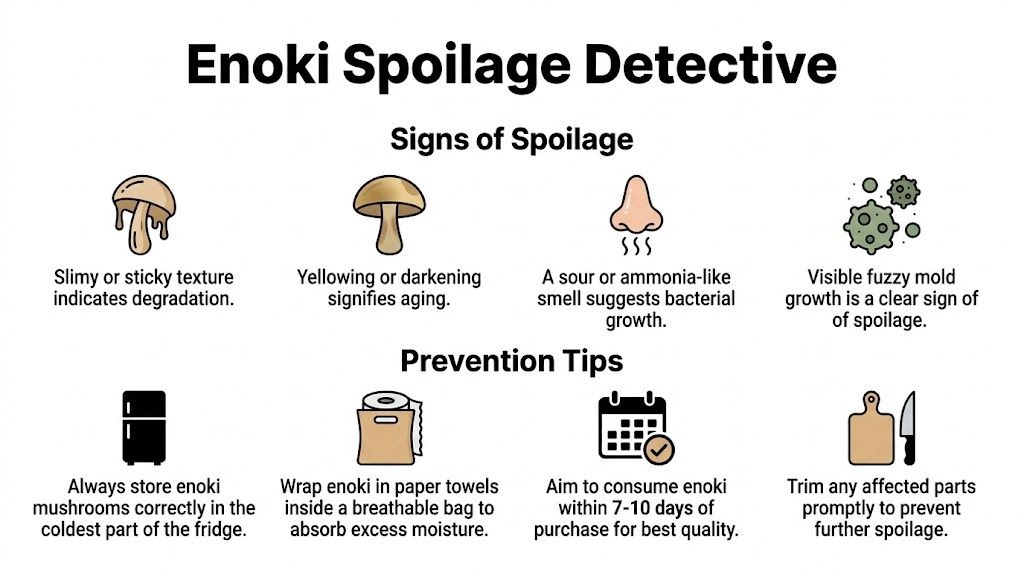
Store fresh enoki in the refrigerator and follow the storage instructions on the package. Smell, texture, and appearance can flag a problem, but none proves the mushrooms are free of pathogens. Storage history matters too, especially once a package is open or the base has been trimmed away. Refrigeration doesn't remove the Listeria risk.
I just finished making a dish with enoki mushrooms cooked inside— I have no photos, but they appeared fresh, were firm, not slimy or squishy, and white. there may have been a small amount of condensation in the package.
I mistakenly did not smell them up close before starting to use them. at the last minute of preparing my dish, I got a whiff of a pungent chemical smell, like bleach or ammonia— not knowing what this might be from and since they were already irrevocably layered in, I decided to bake the whole thing anyway.
the chemical smell became stronger at first upon cooking, then disappeared completely after they were baked. google results seem to indicate I need to toss the whole dish. is it possibly safe to eat or should I take no chances?
the roots i chopped them off from smell faintly sweet and chemical still, but not nearly as strong after airing out the last hour.
The meal ended up in the trash. A smell that fades in the oven tells you nothing about its cause or whether the dish is safe.
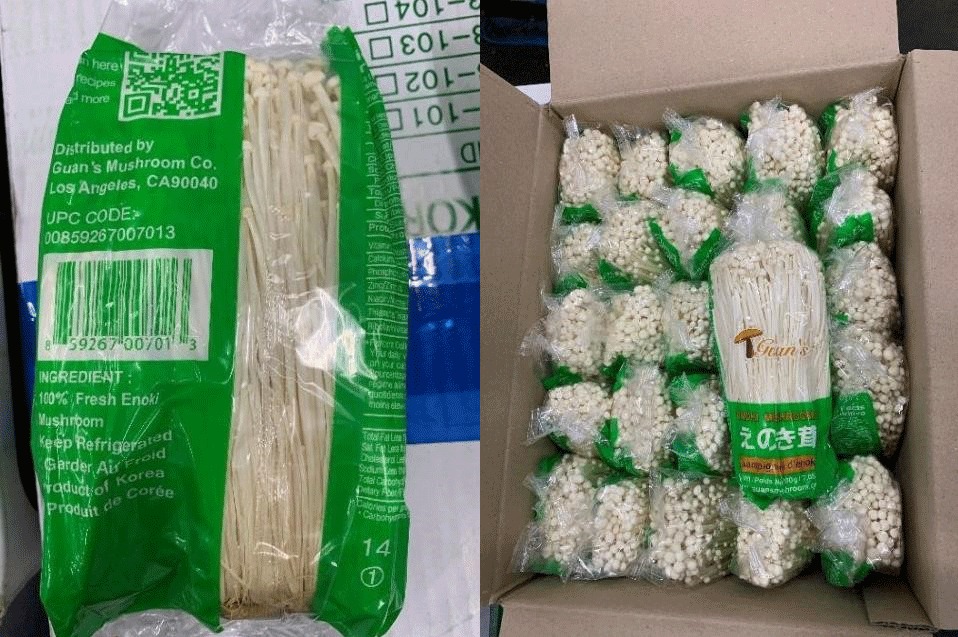
| What you notice | What it tells you | Decision |
|---|---|---|
| Unexplained chemical or off odor, slime, or deteriorating texture | Something is wrong with the ingredient | Reject the mushrooms or the dish |
| Enoki changing shape or continuing to grow in the refrigerator | An unusual physical change; microbial safety unknown | Growth is not a safety sign |
| Trimmed leftovers kept after opening | Handling and storage conditions matter | Go by the known storage history; there is no universal safe number of days |
| Mushrooms sold without identifying packaging | Identity and traceability are uncertain | Can't be checked against a recall notice |
Using enoki in soups, ramen, and stir-fries
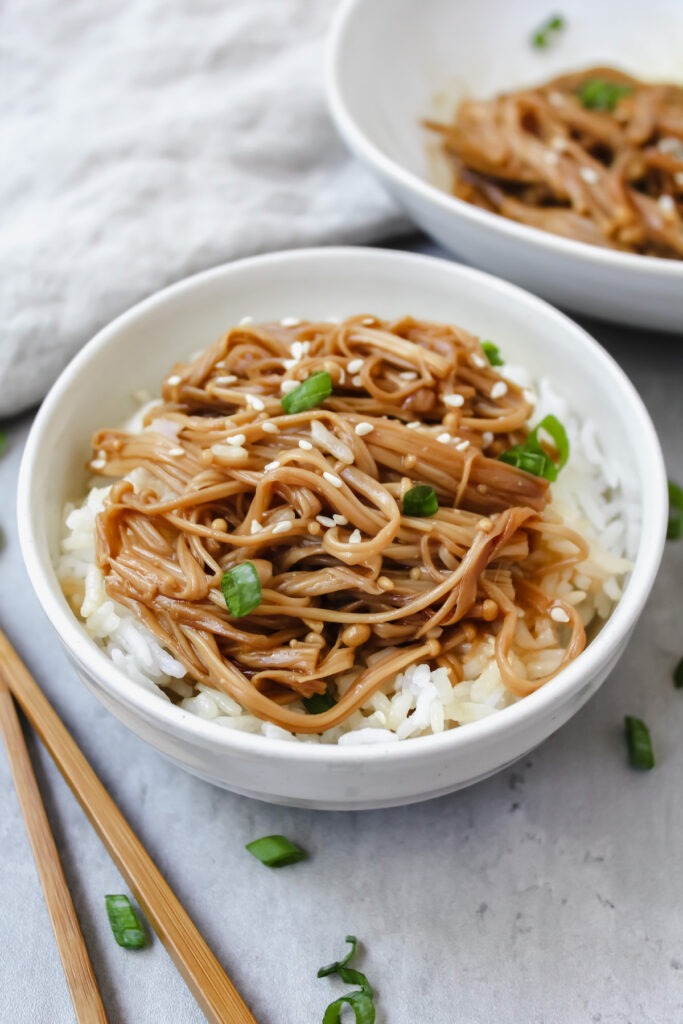
Enoki stems stay long and chewy, so large clusters with the stems still attached can be awkward to bite through.
I tried just panfrying them to serve with a sauce. When I tried them they had a little snap in the beginning but were impossible to bite through and chew. I had to swallow the entire individual stem(?) like a noodle and it was just a choking hazard. Maybe I overcooked them? How can I tell when they're done?
Trim off the dense attached base, separate the bunch into smaller clusters, and shorten the stems when that suits the dish. Smaller pieces spread through soup or stir-fry more evenly and are easier to serve.
How to check whether a US enoki package is recalled
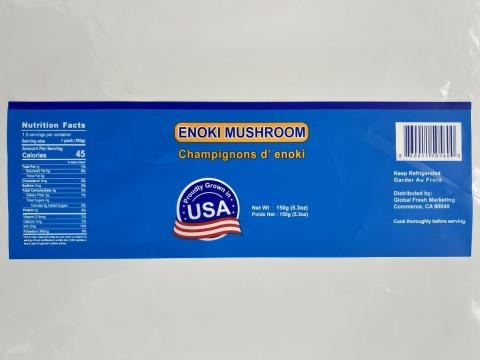
FDA recalls name specific brands, packages, and lots, so the details printed on your package are what let you match it to a notice.
In May 2026, an FDA notice described IQ Produce's 150 g enoki, lot UI775, covering 528 shipping cases. A separate notice identified HH Fresh Trading's 150 g TW Enoki Mushrooms, code 4711498860002, covering 120 shipping cases, with distribution reported in Texas and Florida.
These notices show how specific a recall is. Neither tells you the status of products bought later.
Check the package against an official notice
Start with the FDA recalls and safety alerts page and look for any notice that matches the product. The public list of recall announcements is not exhaustive. FDA also publishes Enforcement Reports and archived notices.
- Read the package. Note the brand, distributor, weight, UPC, lot or production code, and any other identifying information on the label.
- Compare the notice. Check the product name, packaging, codes, dates, and any distribution details FDA gives.
- Settle mismatches. A similar photo or generic name doesn't identify a recalled lot, and a product missing from one announcement list isn't cleared.
- Follow the instructions. If the product is recalled, don't eat it and don't try to make it safe by cooking. Follow the notice's return, disposal, or other consumer directions.
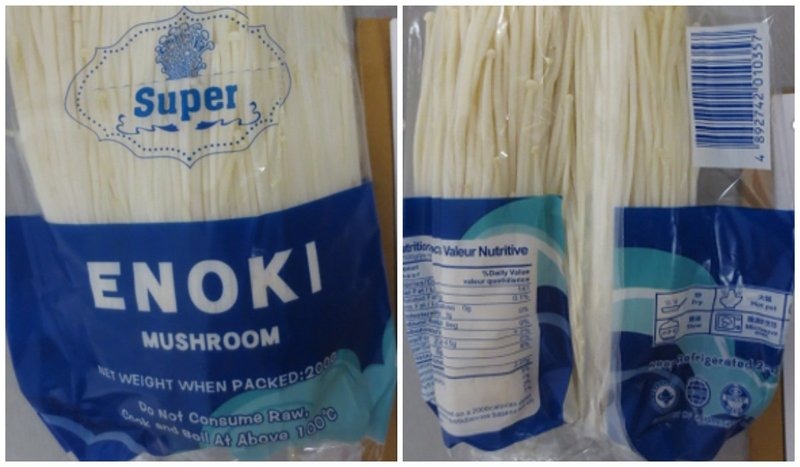
Unlabeled mushrooms often carry too little information to match against a recall. If you can't settle a product's identity or safety, a reassuring appearance is not enough reason to eat it.