
Is Jicama Healthy for You? Nutrition, Benefits, and How to Eat It
Jicama is a crisp, fiber-rich vegetable for people who tolerate fermentable fiber. A 100-g portion of raw, edible jicama has about 38 calories, 4.9 g of fiber and 20.2 mg of vitamin C. Eat the washed, peeled root as sticks or in slaw. If you want a creamy potato substitute, or fermentable fiber upsets your stomach, pick another vegetable.
What nutrients does jicama provide?
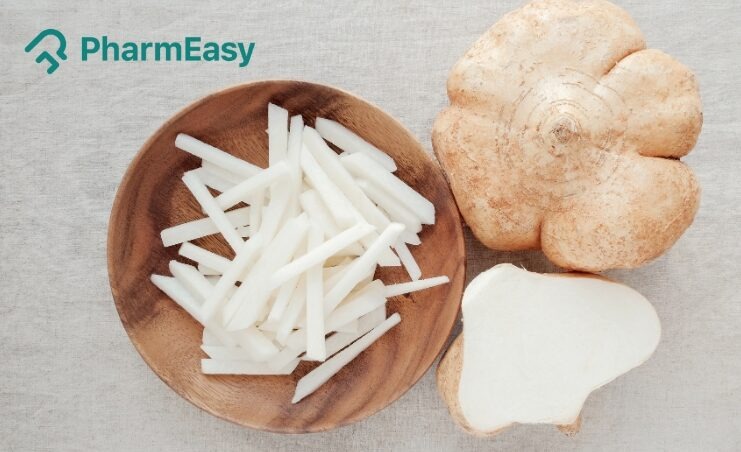
Despite its high water content, jicama supplies fiber and vitamin C. The white flesh is crisp and juicy, and a big handful adds few calories to a meal.
The figures below come from the USDA FoodData Central record “Yambean (jicama), raw,” FDC ID 170073. They cover the raw edible portion after peeling.
| Nutrient | Per 100 g | Per 130 g |
|---|---|---|
| Calories | 38 kcal | 49.4 kcal |
| Total carbohydrates | 8.82 g | 11.47 g |
| Dietary fiber | 4.90 g | 6.37 g |
| Total sugars | 1.80 g | 2.34 g |
| Protein | 0.72 g | 0.94 g |
| Total fat | 0.09 g | 0.12 g |
| Vitamin C | 20.2 mg | 26.26 mg |
| Potassium | 150 mg | 195 mg |
| Water | 90.07 g | 117.09 g |
The 130-g column multiplies the USDA's 100-g values by 1.3. Cleveland Clinic treats about 130 g as one cup, though a real cup weighs differently depending on how the jicama is cut and packed. Cooking and added ingredients change the totals too.
Using the FDA's adult Daily Values, 130 g gives about 23% of the 28-g fiber Daily Value and 29% of the 90-mg vitamin C Daily Value. Its 195 mg of potassium covers about 4% of the 4,700-mg Daily Value.
Of the 8.82 g of total carbohydrate in 100 g of raw jicama, 4.90 g is dietary fiber and 1.80 g is naturally occurring sugar.
Jicama has very little protein or fat. It adds volume and fiber to a snack, so pair it with other foods for protein and fat.
For food tracking, weigh the peeled portion in grams and match it to a raw jicama entry. For another vegetable to compare, see the green-bean nutrition table.
What do its fiber and vitamin C mean for health?
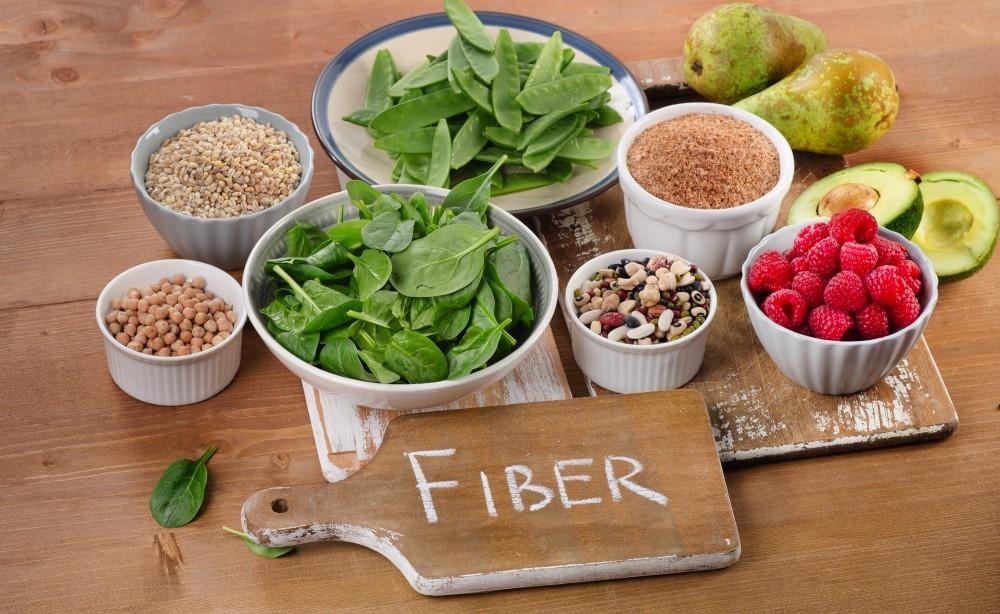
Fiber supports normal digestive function, and vitamin C supports normal body functions, including antioxidant activity.
Jicama also contains inulin, a fermentable fiber that gut microorganisms can use, which is why it is called a prebiotic food.
A systematic review by Nagy and colleagues covered 50 human studies with 2,525 participants. The studies used chicory-derived inulin-type fructans at 3 to 20 g a day and reported more Bifidobacterium, a group of gut bacteria. The findings are in the Nagy et al. review on PubMed.
The review used chicory fiber, not jicama, so it doesn't show what an ordinary serving of jicama does for digestion or disease.
The American Diabetes Association lists jicama among non-starchy vegetables, a category used in general meal planning.
Who might need to be careful with jicama's fiber?
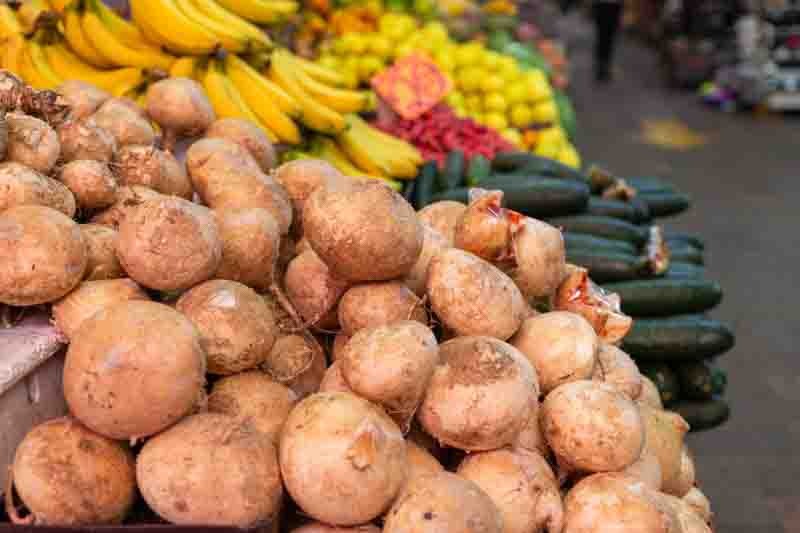
Jicama's fermentable fiber can cause gas or bloating, especially if you are sensitive to inulin or have irritable bowel syndrome.
In its guidance on fiber and IBS, Monash University calls inulin highly fermentable and a likely trigger for gas-related symptoms. That guidance is mostly about fiber supplements, so it doesn't say how much whole jicama you can tolerate.
If you follow a medically prescribed diet, let that plan decide whether jicama fits.
Which parts of jicama can you safely eat, and how do you peel it?
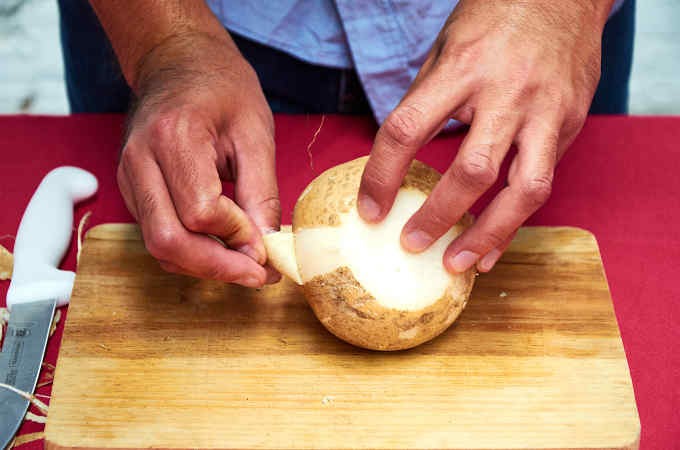
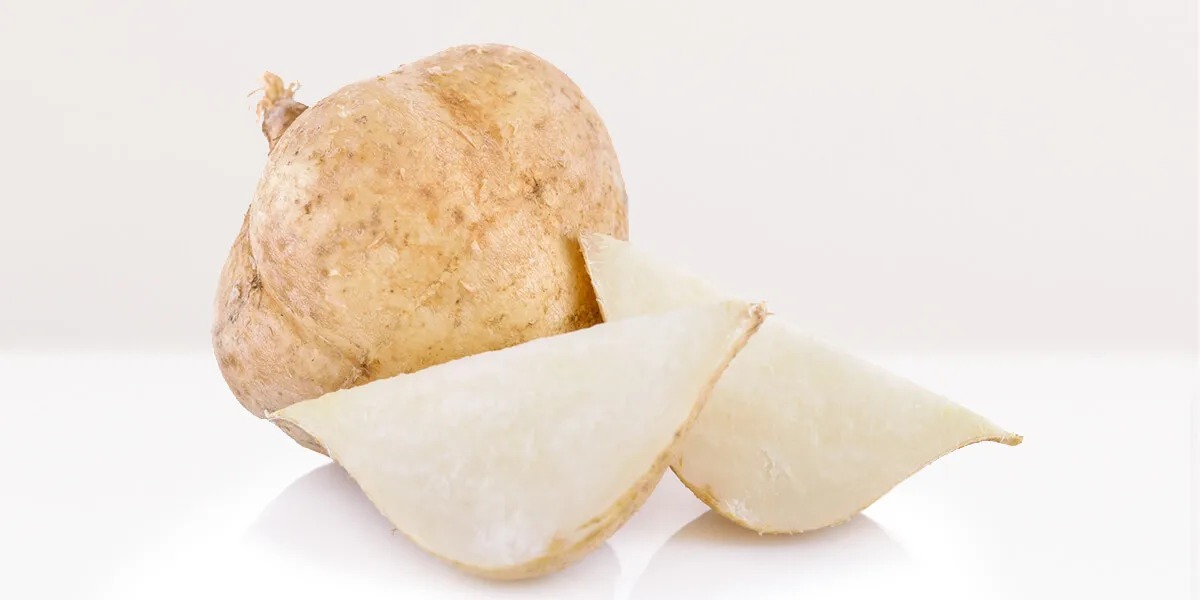
You eat the white storage root. Jicama (Pachyrhizus erosus), also called yam bean or Mexican turnip, is a legume-family plant, but the root is cooked and eaten as a vegetable. The other plant parts can contain toxic compounds, including rotenone.
Eat the white root flesh after removing the brown skin and fibrous layer; do not eat jicama seeds, pods, leaves, flowers, stems or vines.
A 2025 laboratory study found no rotenone in the fresh root peel and flesh extracts it tested (detection limit 0.02 mg/mL). That doesn't settle whether the peel is safe to eat, and peeling is standard kitchen practice.
The skin is tough, especially on a first attempt. A shopper in r/fruit ran into exactly that:
First time trying one! Google suggested peeling and cutting. There is a thick wax shell so my peeler was no good. It was very difficult to cut into. What else can I try? And how do you like to enjoy this fruit?
Use a sharp knife on a firm cutting board if a vegetable peeler fails.
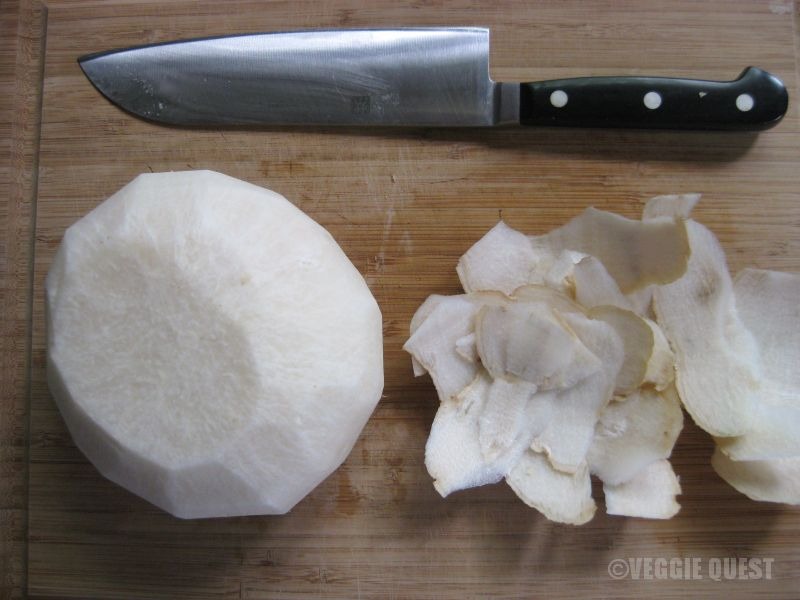
- Wash the whole root. Rinse it under running water before cutting, even though you will discard the skin.
- Steady it. Trim both ends on a stable cutting board so the root sits flat and won't roll.
- Remove the skin. Use a peeler or sharp knife to cut away the brown skin and the fibrous layer under it, leaving the white flesh.
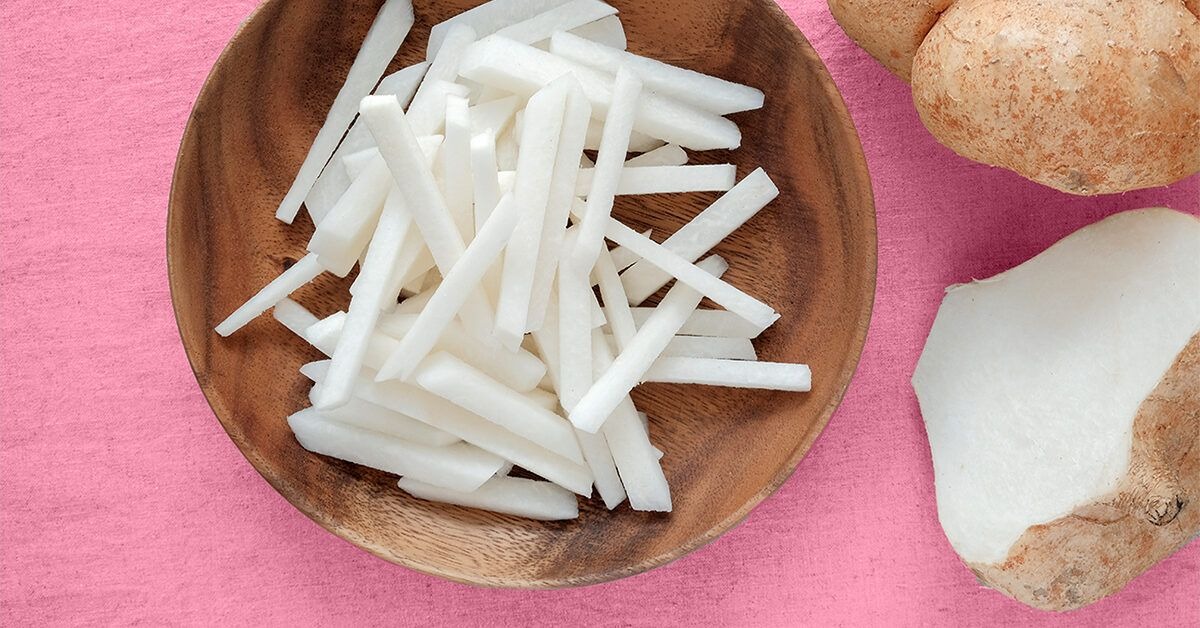
- Cut the flesh. Make sticks, cubes or thin strips to suit your dish.
How do you choose and store a good jicama?
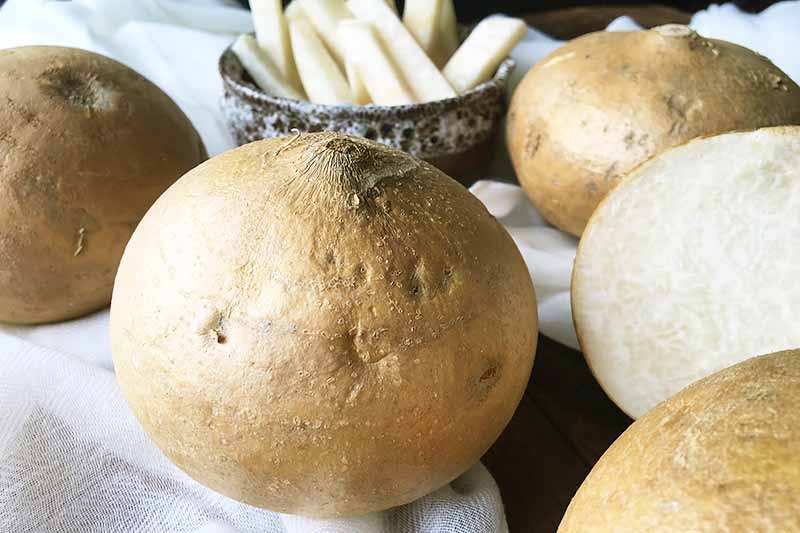
A University of Georgia preservation guide says jicama roots over 4 lb can turn more fibrous and starchy, with less of the crisp sweetness of smaller roots.
Storage depends on whether the root is whole, cut or peeled. The National Center for Home Food Preservation and Cleveland Clinic give different methods, shown below.
| Form | Storage approach | Published guidance |
|---|---|---|
| Whole root | Keep dry and cool | Ideal range: 55 to 59°F (12.5 to 15°C) |
| Cut root, tightly wrapped | Protect the cut surface and refrigerate | NCHFP: up to one week |
| Peeled pieces in water | Submerge in water in an airtight container and refrigerate | Cleveland Clinic: up to three days |
Whole roots can suffer chilling injury at very low temperatures.
One poster in r/isthissafetoeat cut open what they thought was jicama and found a dry, yellow interior:
I cut into the jicama yesterday, and it looked dry. I thought it was underripe so I sealed it in foil overnight. I cut and peeled it today and it looks dry and still yellow. It very slightly smells like weed and just like jicama or grass/dirt. there's no squishy or soft spots. I broke a piece of it and it snapped fine. took a bit more work to snap it in half. Is this okay to eat, and why does it look like this??
I bought this at Publix four days ago and it showed no signs of spoilage. The skin is very waxy and looks fine as usual. I usually get a lotiony-bleach residue feeling when I cut jicama but I didn't get that this time.
Commenters thought it was rutabaga. Nobody confirmed that, or whether it was safe to eat.
- At the store: Choose a firm root with no mold, damage or odd discoloration.
- After cutting: Check the flesh. If it looks spoiled or smells unfamiliar, throw the root out.
- For leftovers: Cover cut pieces, refrigerate them promptly and toss anything that spoils.
How to eat jicama and what happens when you cook it like potatoes
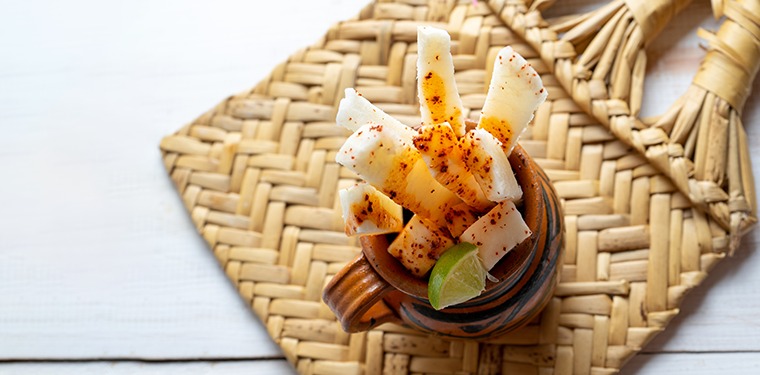
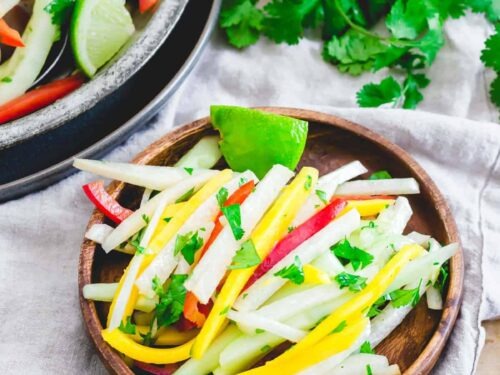
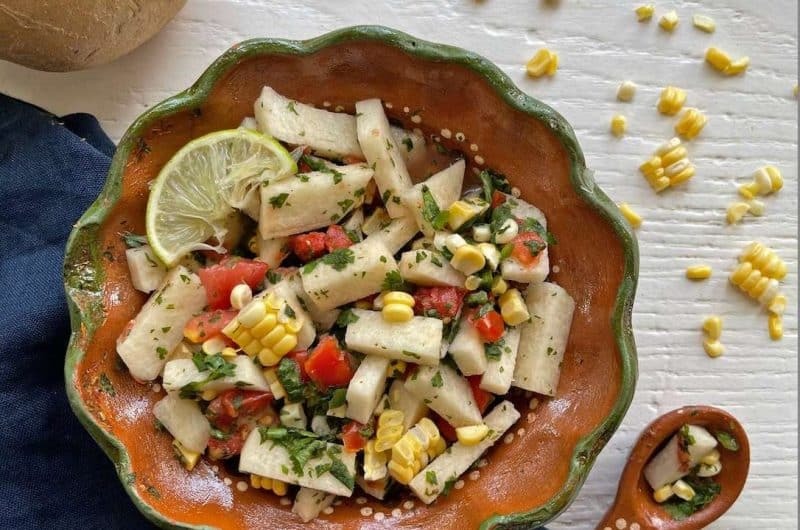
Reach for jicama when you want crunch. The white flesh is juicy, mildly sweet and firm, with a bite like a water chestnut or a crisp apple.
| Preparation | What to expect | Useful when |
|---|---|---|
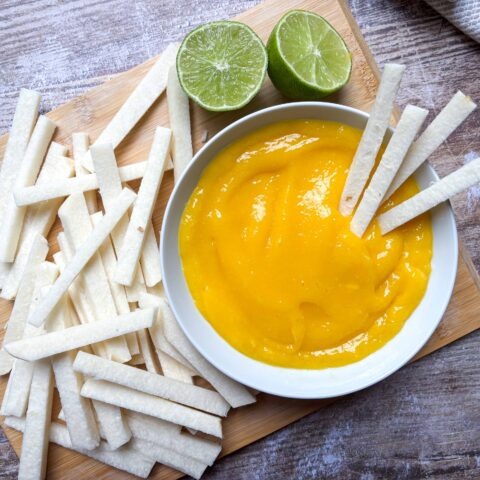
| Raw sticks with lime and chili | Fresh, crisp, mildly sweet | You want a snack or appetizer |
| Thin strips in slaw | Crunch that holds up among other vegetables | A salad needs texture |
| Quick stir-fry | Firm bite, may soften slightly | A cooked dish needs crisp vegetables |
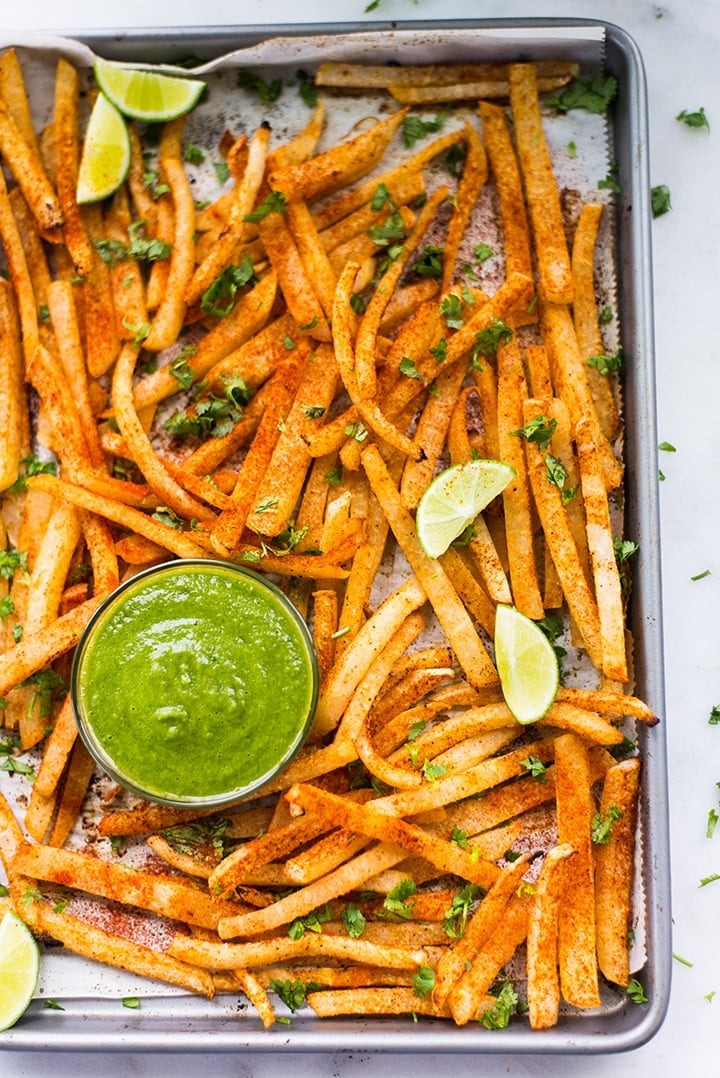
| Baked fries or mash | Stays firm | You want to experiment and don't expect potato-like softness |
You can boil, bake or stir-fry jicama, but the University of Georgia's preservation guidance says gentle cooking leaves it crisp. Don't expect smooth, starchy mashed potatoes.
An r/keto contributor tried replacing Thanksgiving potatoes with jicama and described the disappointing texture:
This weekend I wanted to see if I could make a passable keto friendly mashed potatoes for Thanksgiving. Mashed potatoes at Thanksgiving has always been my thing. I would like to find something to replace them with that would also be family friendly.
I bought a rutabaga and a jicama. I split each in half and made french fries and mashed potatoes with each half.
Here are the results:
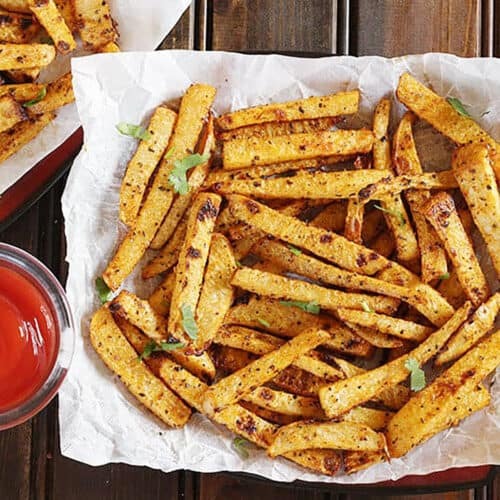
Jicama french fries: I tried boiling the fries a while and then baked them for 40 minutes or so. They freaking SUCK! Terrible. Don't bother on this front. All the websites about "Jicama fries" are bullshit. They were still crunchy after all that time and the flavor was not even close.
Jicama mashed potatoes: I diced the jicama and boiled for 30+ minutes. The pieces did not soften at all. I threw them in a food processor with butter, salt, pepper, cream, and sour cream. It made a liquidy chunky crunchy mess and did not taste good at all. It went straight in the trash with the fries.
Those times come from one person's experiment, and some methods can soften jicama. A creamy, potato-like result is still not something to count on.
Is jicama worth trying?
The crisp texture makes jicama a poor substitute for potatoes in dishes that rely on a soft, starchy mash.