
What Is a Mulberry? Types, Taste, Nutrition, and Uses
Mulberries are edible fruits from trees in the genus Morus. Ripe, sound mulberries need the same gentle handling as other delicate fresh fruit. If you cannot identify the tree, leave the fruit alone until a local expert confirms it. White, red, and black name different species and do not tell you the color of a ripe berry.
What Is a Mulberry, and Can You Eat It?
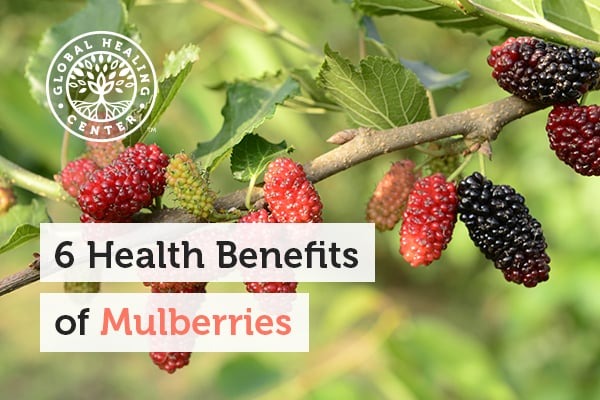
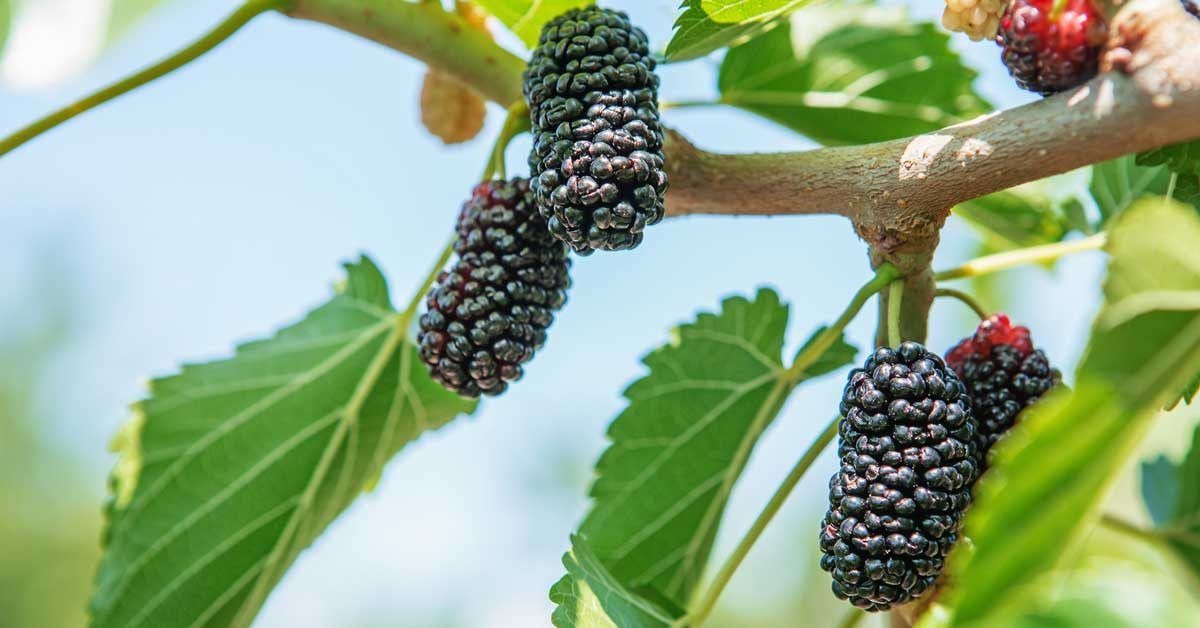
A mulberry is the soft, often elongated fruit of a mulberry tree, a member of the genus Morus in the Moraceae family. The fruit resembles a cluster of small, juicy segments. Botanically, it is a multiple fruit formed from a group of flowers.
Seen without its tree, a mulberry resembles an elongated blackberry. Mulberries grow on trees; blackberries grow on brambles with long canes.
Ripe mulberries are edible. People eat them fresh, cook them, and make preserves.
One homeowner spent years assuming the tree in the yard was poisonous:
Before I start figuring out recipes cuz there's a ridiculous amount of them. I've been living at this house for 10 years and always thought this was just some terrible fruiting tree that was poisonous. I'm just starting to get into gardening and urban agriculture as a whole. But when I saw these I joined on me I should probably look up what they are. Also I have two small toddlers and I want to confirm that if they accidentally put one in their mouth I don't want the Russian to the hospital.
If you are unsure what the tree is, ask a local botanist or a university extension specialist; a photo or an image-search match doesn't confirm that a plant is edible.
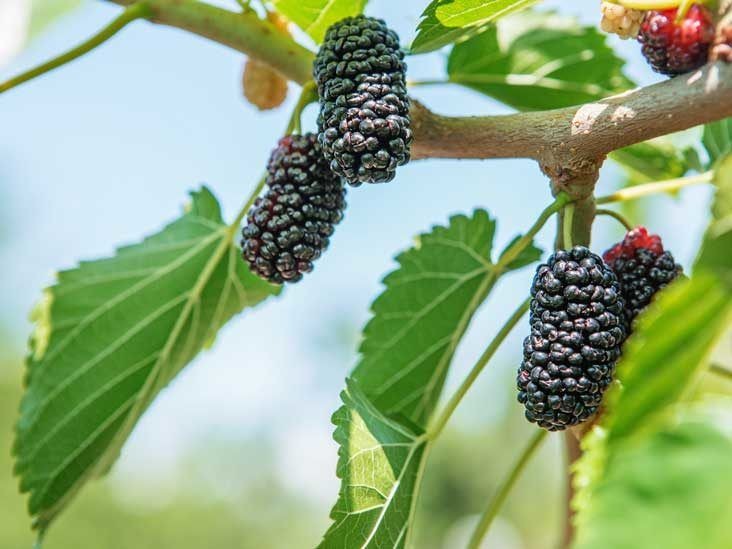
The Agricultural Marketing Resource Center names three important mulberry species: white mulberry, red mulberry, and black mulberry.
White, Red, and Black Mulberries: What the Names Mean
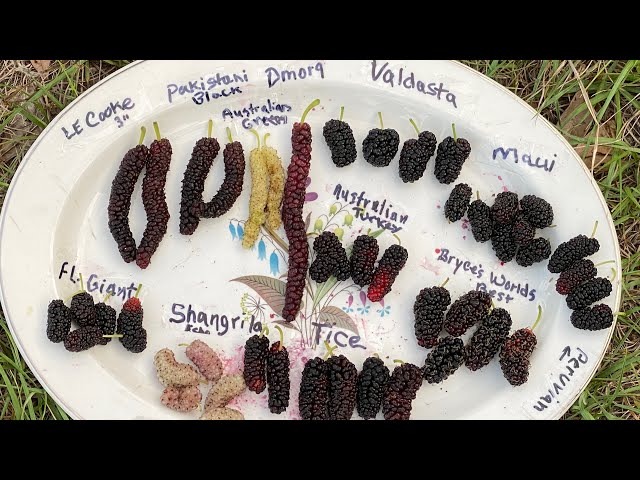
White, red, and black are names of different Morus species. They don't match the color of the ripe fruit. A white mulberry tree, for example, can produce berries that look almost black.
| Species | Common name | Fruit and identification notes |
|---|---|---|
| Morus alba | White mulberry | Fruit ripens white, pink, red, deep purple, or nearly black. Some pale berries are fully mature. |
| Morus rubra | Red mulberry | Ripe berries usually turn dark purple to almost black. The species is native to eastern North America. |
| Morus nigra | Black mulberry | A distinct species. Dark fruit alone doesn't tell you a tree is a black mulberry. |
Leaf shape and texture help, though individual trees vary and white and red mulberries can hybridize. Utah State University Extension says white mulberry leaves are hairless underneath, while red mulberry leaves are hairy underneath. For anthocyanins and polyphenol comparisons, see the berry polyphenol overview.
What Do Mulberries Taste Like, and When Are They Ripe?
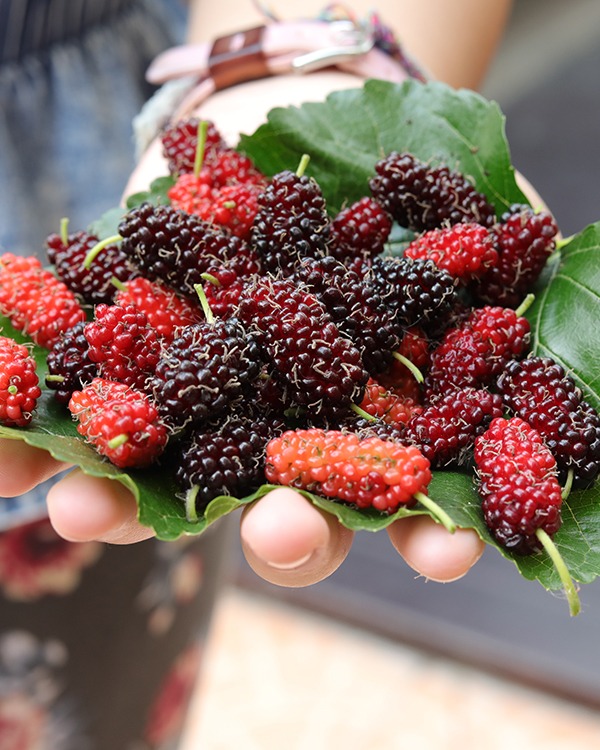
Ripe mulberries are sweet and juicy, and some have a tart edge. Others taste mild. Flavor changes from tree to tree, even when the fruit looks the same.
Not every berry on a tree ripens at once. Ripe fruit softens and comes off with a gentle tug. Ripe color varies between trees, so go by texture and by how easily the berry releases.
One forager wasn't impressed:
They're fully ripe but they taste like nothing. Explains why the birds left them there. I wonder if there's anything I can do to make next year's taste better, like putting fertilizer around the tree?
Ripe berries can still taste bland. Another tree may give you sweeter fruit.
Mulberry Nutrition: Calories, Fiber, and Vitamin C
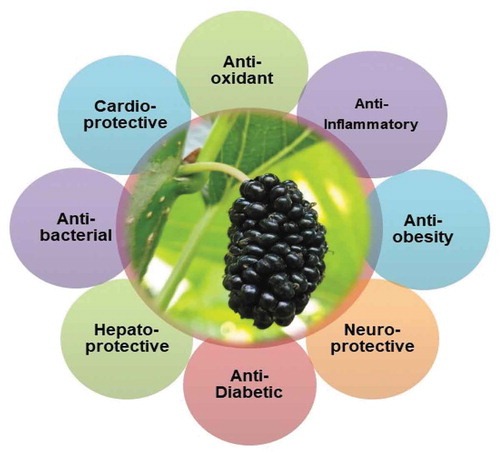
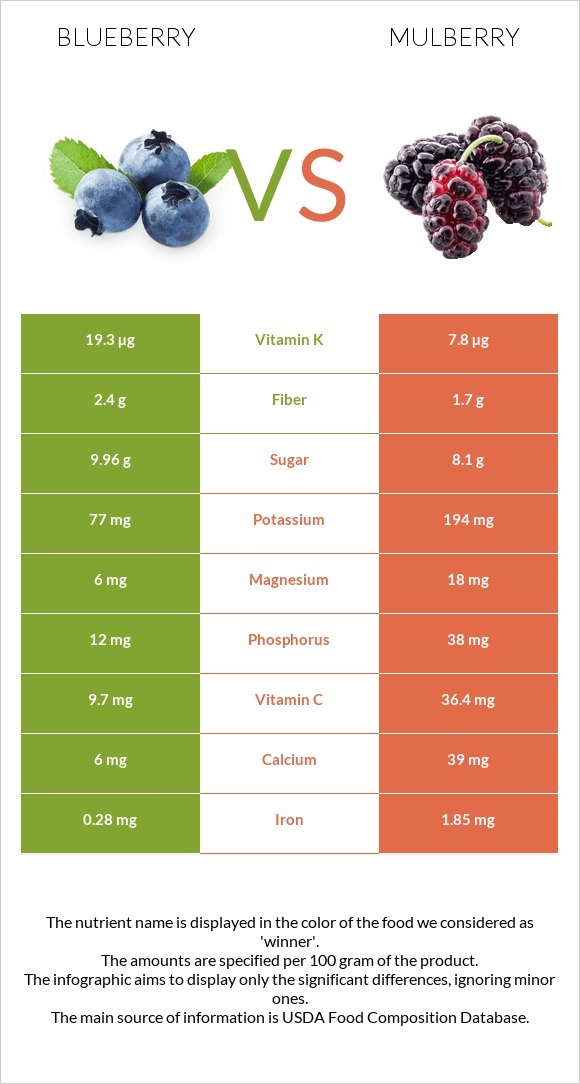
Raw mulberries provide carbohydrates, natural sugars, fiber, vitamin C, and smaller amounts of several minerals. The figures below come from USDA reference data for raw mulberries, FoodData Central food ID 169913.
| Nutrient | Per 100 g raw | Per 140 g reference cup, approximately |
|---|---|---|
| Calories | 43 kcal | 60 kcal |
| Carbohydrates | 9.8 g | 13.7 g |
| Total sugars | 8.1 g | 11.3 g |
| Fiber | 1.7 g | 2.4 g |
| Protein | 1.44 g | 2.0 g |
| Total fat | 0.39 g | 0.5 g |
| Vitamin C | 36.4 mg | 51 mg |
| Iron | 1.85 mg | 2.6 mg |
| Potassium | 194 mg | 272 mg |
The 140 g column scales the 100 g data proportionally and rounds the results. It is a reference amount, not a recommended portion. The underlying food entry is on USDA FoodData Central.
Vitamin C is the standout at 36.4 mg per 100 g. Protein and fat are low.
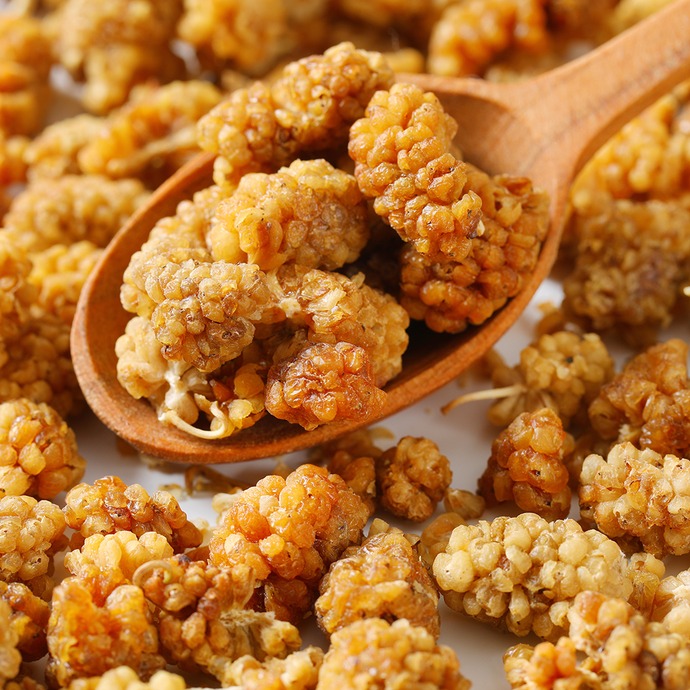
Dried mulberries show very different values per 100 g because much of the water is gone. Sweetened preserves and syrups contain added ingredients that change the numbers again. When you compare products, match the food form and serving weight to the figures you read.
How to Pick, Wash, and Store Mulberries Without a Mess
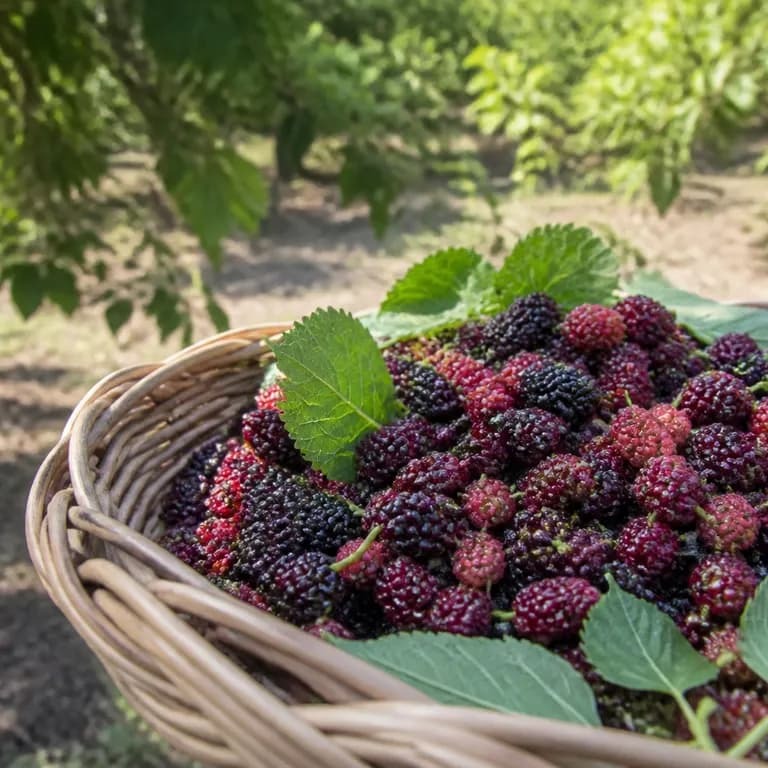
Mulberries bruise easily, and dark berries stain clothing, shoes, and household surfaces. Fallen fruit also leaves marks under the tree.
One commenter described what a mulberry-lined driveway did to a rental house:
My friend rented a house back when all our kids were still toddlers/elementary age (9 total between 3 of us who hung out every day in the summer to keep the kids busy). Its driveway was lined with mulberries and the pale taupe carpet the obviously not brilliant landlord insisted on installing turned bright purple in a path from living room entryway to the bathroom in one summer even though she used a carpet cleaner weekly and constantly stopped the kids from running in with shoes on.
I love trees, but mulberries are the worst.
The Royal Horticultural Society describes spreading a sheet beneath a fruiting tree and collecting the berries on it.
If the tree isn't yours, find out whether it has been treated with pesticides before you eat the fruit.
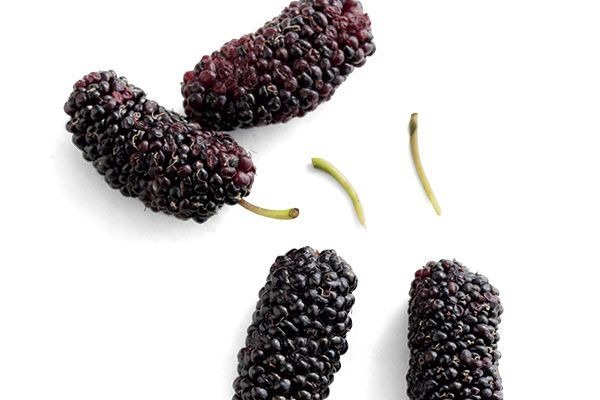
- Gather gently. Pick ripe, sound berries you can reach safely. Use a clean container and don't crush the fruit.
- Inspect the harvest. Discard rotten, moldy, or badly damaged berries.
- Rinse with running water. Follow the FDA's fresh-produce guidance. Don't use soap, detergent, or commercial produce wash.
- Keep perishable fruit cold. Refrigerate promptly, or freeze fruit you plan to use later.
Rinsing lowers contamination. It does not sterilize the fruit.
How to Eat Mulberries: Fresh, Frozen, Cooked, or Preserved
Eat fresh mulberries as they are, stir them into yogurt, bake them, or cook them into sauces. The texture is delicate, so decide how you'll use the harvest before you pick a lot.
| Use | Best suited to | What to expect |
|---|---|---|
| Fresh | Sound, ripe fruit for immediate eating | Keeps its fresh texture and flavor. |
| Frozen | Fruit saved for later smoothies or cooked dishes | Lets you use the harvest after the day it is picked. |
| Cooked | Sauces, desserts, and baking | Flavor and composition depend on preparation and added ingredients. |
| Shelf-stable jelly | A planned home-preservation project | Use a tested formula exactly as written. |
For home canning, the National Center for Home Food Preservation publishes tested mulberry jelly methods using powdered or liquid pectin. The NCHFP powdered-pectin mulberry jelly directions specify ingredients and processing conditions, including elevation-related adjustments. A changed recipe or an improvised canned mulberry jam needs its own validated preservation procedure before you treat it as shelf-stable.
Are Mulberries Good for You? What the Research Covers
Mulberries supply nutrients and plant compounds, including anthocyanins and other polyphenols. Human studies include a measured fruit extract taken with carbohydrate-rich meals in healthy adults, a review of 12 randomized trials of mulberry interventions, and a fruit-extract pilot involving adults with type 2 diabetes. These studies differ in formulation, dose, population, and outcome, so they do not show that ordinary servings of raw berries treat disease. Sound ripe mulberries are an ordinary food choice.