Pickled Cucumber Nutrition: Calories, Sodium, Sugar, and What the Jar Says
Unsweetened dill pickles are the lower-calorie, lower-added-sugar choice; for sodium, the deciding figure is the amount per serving you actually eat. Sweet, dill and fermented jars differ, so check the label before you decide.
Calories and sodium in pickled cucumbers
A Cleveland Clinic comparison based on USDA data puts dill and sweet pickles side by side per 100 g:
| Nutrient per 100 g | Dill / kosher dill | Sweet pickles |
|---|---|---|
| Calories | 12 kcal | 90 kcal |
| Total carbohydrate | 2 g | 20 g |
| Total sugars | 1 g | 18 g |
| Sodium | 809 mg | 457 mg |
These are category values, so a specific brand's recipe and serving size will differ; sweet pickles carry far more sugar and carbohydrate.
Dill pickles carry more sodium. The lowest-calorie jar and the lowest-sodium jar are different jars. Soy sauce and other salty condiments work the same way, and the soy-sauce sodium label guide shows how to read them.
Why dill and sweet pickles differ
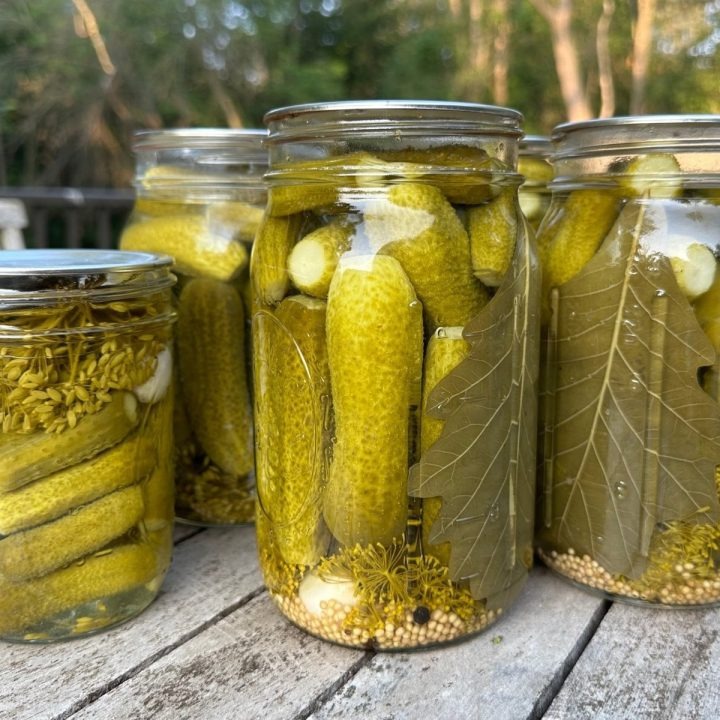
Dill and kosher dill are savory cucumber pickles seasoned with dill and garlic. Sweet and bread-and-butter styles are sweeter. The name tells you the flavor. The recipe sets the nutrition.
Buy the wrong style and you notice right away:
i love garlic and dill pickles but i accidentally bought sweet pickles and i dont like them at all :(, does anyone have any recs on how to make the flavour a little more palatable or like is re-pickling a thing??
Two jars can look alike. The ingredient list shows whether sugar was added. On a US Nutrition Facts panel, Total Sugars counts every sugar in the product, and Added Sugars counts the part put in during processing or preparation. Compare both lines if you want a less sweet pickle or less added sugar.
What a pickle jar's serving size tells you
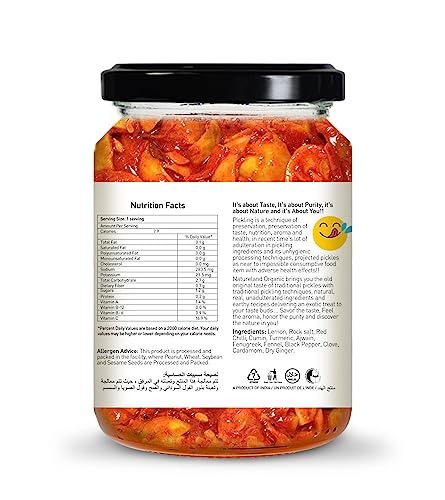
Nutrition Facts numbers cover one labeled serving. The servings per container line tells you how many servings the jar holds. When one jar lists spears and another lists a different quantity, use the serving weight in grams to compare them.
Per FDA Nutrition Facts guidance, 2,300 mg of sodium is the reference amount for 100% Daily Value, and the recommended daily intake is less than 2,300 mg. On a single serving's label, 5% DV or less is low and 20% DV or more is high.
A hypothetical pickle-label calculation
Imagine a jar labeled as follows.
| What you are reading | Illustrative amount | Meaning |
|---|---|---|
| Labeled serving | 30 g | Serving weight on the label |
| Sodium per serving | 180 mg | About 8% DV |
| Amount eaten | 90 g | 90 ÷ 30 = 3 servings |
| Sodium consumed | 540 mg | 3 × 180 mg, about 23% DV |
For your own jar, divide the grams you eat by the serving weight on its label, then multiply the result by the sodium milligrams per serving. To compare two jars with different serving weights, run the same math on the same number of grams of each.
Why a label can say “0 Calories”
Under US regulation 21 CFR §101.9(c)(1), a serving with fewer than 5 calories can be labeled 0 Calories. The zero is rounded, so multiplying it by the number of servings won't give you the exact calories in a whole jar.
One reader ran into that rule while checking someone else's calorie estimate:
The packaging says 0 calories and you said 5. I was a bit confused So I checked and rules stated under 5 calories they can say 0 TIL so thank you and sorry for doubting
Are pickled cucumbers fermented and do they contain live cultures?
Vinegar pickles get their acidity from added vinegar. Fermented pickles turn acidic as microbes work in brine, as the National Center for Home Food Preservation explains. Pasteurization after fermentation can inactivate those microbes, a distinction Stanford Medicine discusses.
For live cultures, check how the product was fermented, whether it was heat-processed, and whether the label claims live cultures. Refrigeration and the words kosher dill don't prove viable cultures or a probiotic benefit.
Follow a tested recipe if you ferment at home. Salt favors the intended fermentation, and cutting it arbitrarily can compromise safety.
Choosing a jar that matches your nutrition goal
| Your priority | What to compare | Consideration |
|---|---|---|
| Fewer calories or less added sugar | Calories, Total Sugars and Added Sugars | Start with unsweetened dill, then check sodium |
| Less sodium | Sodium milligrams for the same amount eaten | Pick the jar with the lowest figure |
| Live cultures | Fermentation, later processing and explicit culture claims | Heat processing can kill the cultures, so look for an explicit claim |
If you follow clinical dietary instructions, their limits come first.
One person noticed the scale jump after eating pickles with a second salty snack:
I’ve been on a pickles and hot Cheeto kick lately and I notice every time I eat it the next day I’m up like 2-3 lbs! It takes a few days for the extra weight to go away. I know sodium makes you retain water but goodness gracious 3 lbs of water? 😀 also before ppl get on me about eating Cheetos: I fit it into my calorie budget just fine and im aware of red 40. it’s the 1 thing I eat for my 80/20 that day and they bring me joy and sanity 💗