Is Curry Healthy? What Matters in the Whole Meal
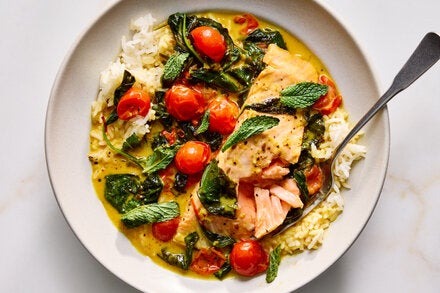
Curry can be a healthy meal, but the spice blend isn't what decides it. The vegetables, protein, oil or cream, salt, portion, and accompaniments make the difference. The spice blend alone doesn't settle it.
Curry Powder and Curry on Your Plate
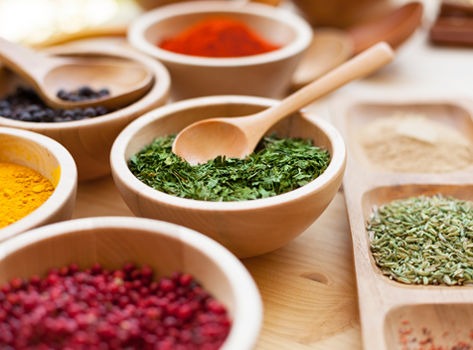
Turmeric, cumin, coriander, fenugreek, and chili are among the spices commonly blended into curry powder. A prepared curry is a dish with its own sauce, ingredients, and serving size, often with rice or bread. First distinguish the seasoning from the prepared meal: they do not share a single nutrition profile.
What Makes a Curry Balanced?
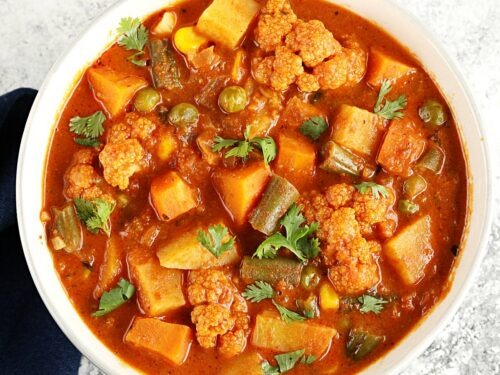
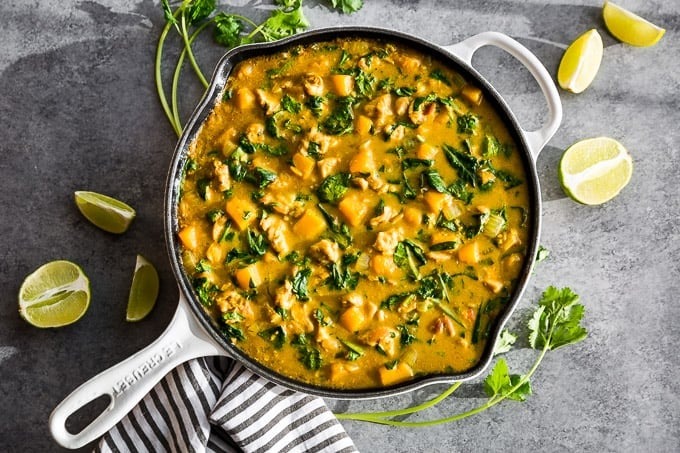
A chickpea, vegetable, and tomato curry and a paneer curry in a rich cream-based sauce differ in fiber, protein, and fat, even when the spices are the same.
The Dietary Guidelines for Americans, 2025–2030 emphasize nutrient-dense foods and the overall eating pattern. A curry built on vegetables, legumes, and protein foods fits that approach.
| Part of the curry | What it contributes or changes | What to check |
|---|---|---|
| Vegetables | Fiber, nutrients, and variety | How many, and how varied |
| Chickpeas or lentils | Plant protein and fiber | How much is in the serving |
| Meat, fish, tofu, or paneer | Protein, with differing fat profiles | Which type, and how it is cooked |
| Oil, butter, or ghee | Added fat and energy | Which type, and how much |
| Rice, naan, or other sides | Extra food and energy | How much you eat with the curry |
Say you're choosing between a chickpea-and-vegetable curry in a tomato sauce and a paneer curry in a creamy sauce. For more legumes and fiber, the first wins. Look at how much cream, paneer, and added fat the second uses if saturated fat is your concern.
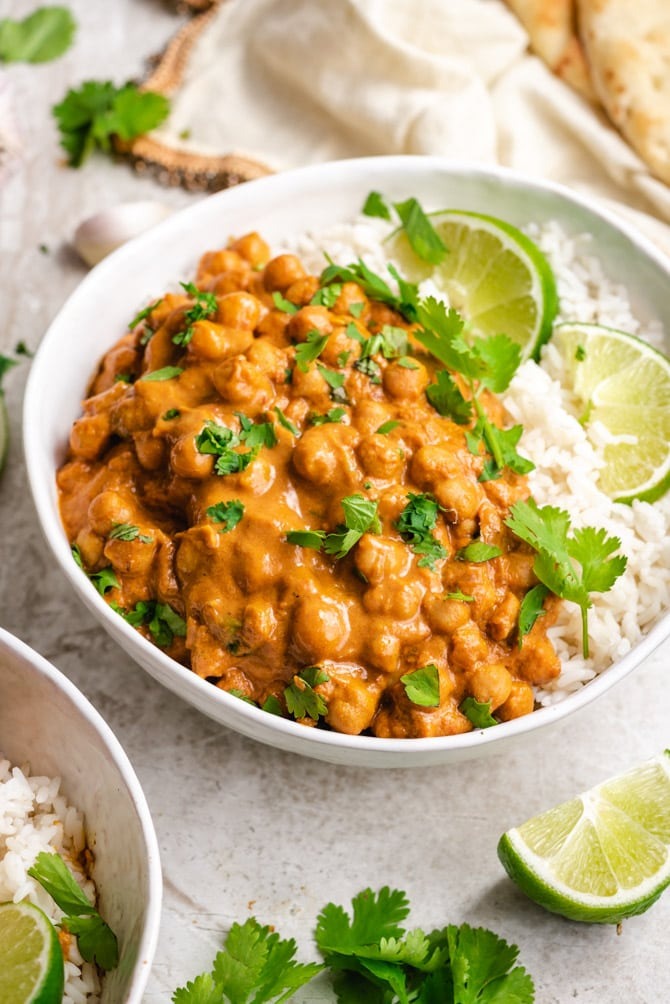
At home, list the main ingredients and their approximate amounts before you judge the meal. Curry served with both rice and bread is a different meal from the same portion served alone. To see how rice, sauce, and protein portions fit into a full day, use a fully portioned daily menu.
Coconut Milk, Cream, Oil, and Ghee: What Goes in the Sauce
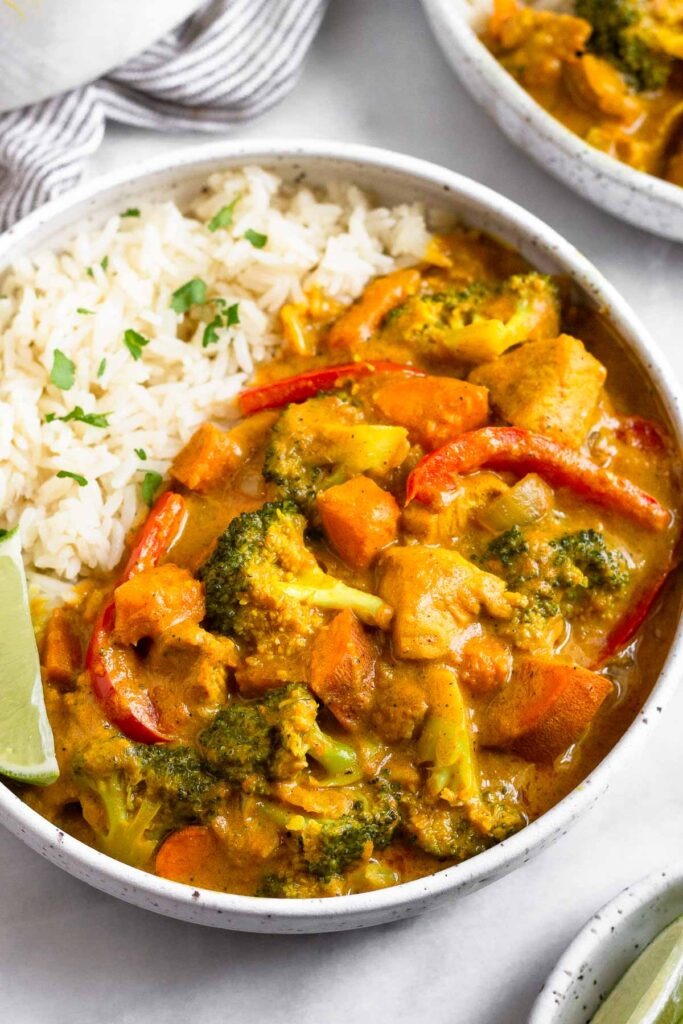
Tomato, yogurt, coconut milk, dairy cream, and cashew-based sauces differ in texture and fat; how much goes into the pan matters as much as the ingredient name. The American Heart Association favors cooking oils higher in unsaturated fats over fats high in saturated fat.
- Canned coconut milk: The standard cooking ingredient. Fat content varies by product.
- Carton coconut beverage: A thinner drink, not the same as canned coconut milk. It can separate during cooking.
- Coconut cream: Richer, and often chosen for a thicker sauce.
- Sweetened cream of coconut: A different product, made for drinks or desserts and often high in added sugar.
The names are easy to confuse. Read the ingredient list before swapping one coconut product for another, and expect reduced-fat coconut milk to change the sauce's thickness. Curry paste combines spices and aromatics, and some products add salt or fat.
Diabetes UK's curry example uses one teaspoon of oil per person.
A home cook chasing restaurant flavor found a different route to a satisfying sauce:
I've spent so much money in restaurants that I thought it would be more economical and fun to learn how to make curries myself. And I believe that I have finally figured out that it is not copious amounts of ghee, cream, and sugar that make restaurant-style and/or authentic Indian curries so delicious, but the process of "cooking until the oil separates."
Basically, you add your oil to the pan and add things like bay leaves, chilis, etc to infuse the oil. Then you add your onions. When they are golden, you add your salt and chosen spices or spice blend. When they are fragrant (but not burned!) you add your tomatoes. Cook that for a bit.
It should already be tasty, but you aren't going to develop the depth of flavor until you COOK THOSE VEGGIES DOWN until the 'oil separates.' It took me about an hour but I was left with these little pockets of oil which signals that all of the moisture has been evaporated (photo) and you're left with this thick paste of deliciousness. From there you can add your water, cream, peas, paneer, etc. to get it to a more curry-like consistency.
I served this to my friends and one of them who spent the first half of his life in India didn't believe me that I cooked it homemade myself. He thought I ordered it takeout and re-heated!
That cook got the flavor from time in the pan, not from piles of ghee, cream, or sugar.
How to Check Curry Portions and Nutrition Labels
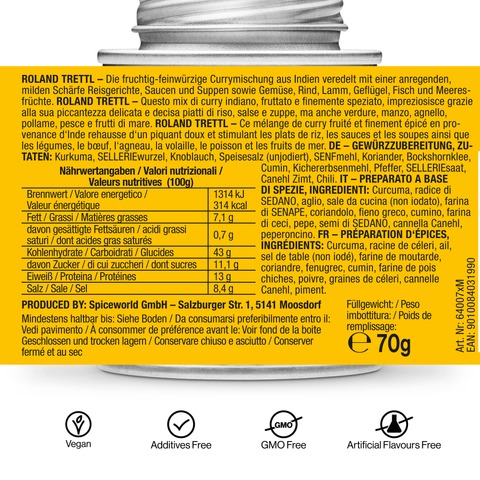
On a packaged curry or cooking sauce, the US Nutrition Facts label gives you numbers to work with. They apply to the labeled serving size, which reflects typical consumption. It isn't a personalized recommendation.
| Label field | What to look at | What it tells you |
|---|---|---|
| Serving size | The amount the numbers cover | The unit for comparing products |
| Servings per container | Whether you will eat one or several | Multiplies every other figure if you eat several |
| Calories | Energy per labeled serving | Scales with your actual portion |
| Sodium | Milligrams per serving | Counts toward your daily intake |
| Saturated fat | Grams and percentage of Daily Value | Helps you judge the fat |
| Added sugars | Amount in the prepared product | Matters mainly for some sauces and pastes |
Eat two labeled servings and every per-serving figure doubles.
The FDA's Nutrition Facts guide treats 5% Daily Value or less as low and 20% or more as high for a nutrient per serving.
Watch sodium in prepared sauces and meals. The American Heart Association recommends no more than 2,300 mg a day, with an optimal goal of no more than 1,500 mg for most adults. It reports that more than 70% of the sodium consumed in the United States comes from packaged, prepared, and restaurant food.
For a homemade curry, you need the ingredient quantities and the recipe's yield to run the same calculation. USDA FoodData Central has food-composition records you can use for it.
Checking Homemade, Packaged, and Restaurant Curry
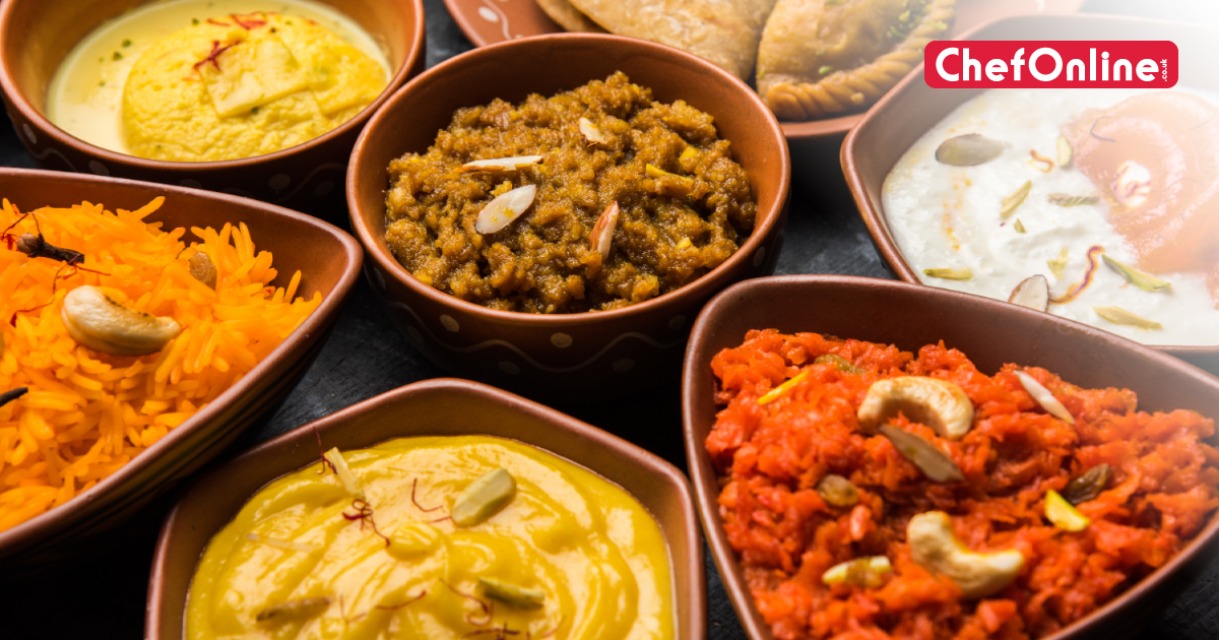
What you can check depends on where the curry comes from:
- Homemade: You have the ingredient quantities and the batch yield.
- Packaged: Use the label for the item you bought, then add anything you put in while cooking.
- Restaurant: Use the menu description to spot likely ingredients, and ask about the sauce or possible changes when it affects your choice.
One diner in r/IndianFood was choosing among paneer butter masala, shahi paneer, palak paneer, tadka dal, and cauliflower curry, and wanted something “not overly high in calories.” They could ask for less oil or ghee. A dal of lentils and aromatics fits a preference for legumes better than a paneer dish with butter or cashews in a creamy sauce. For more vegetables, the cauliflower curry is the pick. Whichever you order, the cooking fat, the portion, and the preparation decide the result.
If you cook in batches, USDA food-safety guidance says to refrigerate leftovers promptly and use them within three to four days, or freeze them for longer storage.
What Research Says About Curry Spices
A few small human studies have tested curry or spice mixes against short-term biological measures. They used different foods, different people, and different measurements.
One measure, flow-mediated dilation (FMD), assesses blood-vessel function. It is an intermediate physiological measurement, not a count of heart attacks or other clinical events.
| Study | Participants and exposure | Reported findings |
|---|---|---|
| Nakayama et al., 2014 | 14 healthy men; one meal with 180 g curry and 200 g cooked rice, about 500 kcal total | FMD rose from 5.2% to 6.6% after curry; control FMD fell from 5.8% to 5.1% |
| Petersen et al., 2020 | 13 men at cardiovascular risk; 0, 2 or 6 g mixed spices in a 1,076-kcal test meal | Selected FMD and triglyceride comparisons favored spice conditions; no glucose or insulin effect |
| Damani et al., 2026 | 43 adults at cardiometabolic risk; four-week spice-diet phases followed by a 1,192-kcal test meal | No between-condition differences in main FMD, triglyceride, glucose, or insulin trajectories; a secondary comparison found lower insulin AUC for the low-spice than moderate-spice condition |
The 2014 experiment tested a curry meal and found a short-term difference in vascular function in a very small group. The 2020 pilot and the 2026 controlled-feeding analysis used mixed spices in controlled meals, so they don't directly replicate that curry experiment.

These short-term markers from small, differing studies do not show that routinely eating curry prevents cardiovascular disease, diabetes, or other conditions.
Turmeric contains curcumin, which is also sold in concentrated supplements. The NIH National Center for Complementary and Integrative Health says the evidence is insufficient to draw definitive conclusions about turmeric or curcumin benefits for health purposes. Highly bioavailable curcumin supplements have been associated with liver injury. Using turmeric in cooking is a different matter.
When you read a claim about curry's medical benefits, check three things: whether the study tested food or supplements, people or laboratory models, and actual health outcomes or temporary biological markers.
Making Curry More Balanced Without Losing Flavor
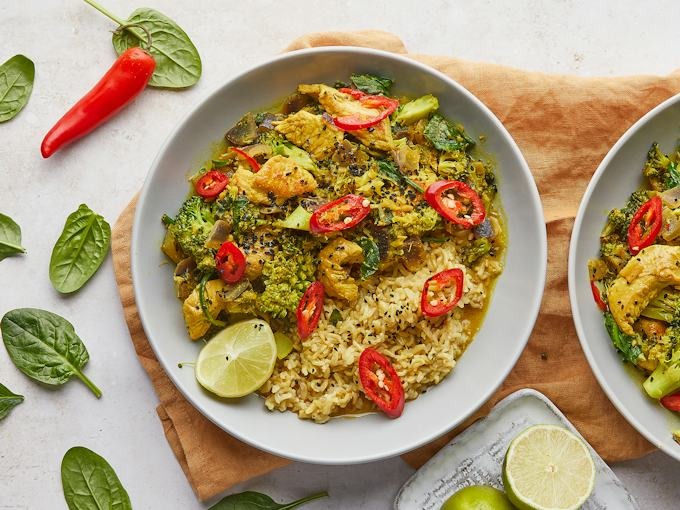
Onions, garlic, ginger, tomatoes, and spices give a curry aroma and depth, so you can adjust richer ingredients and keep the flavor. The British Heart Foundation describes using aromatics and working with spices as part of curry preparation.
Technique matters too. Some recipes cook the onion-and-tomato base down before adding the liquid, which changes its consistency and concentrates the flavor.
Another cook tried to recreate a restaurant chickpea curry and got the opposite result:
So this new Indian restaurant opened up nearby, and I had some phenomenal chickpea curry there, and immediately thought to try making it myself.
I‘ve made Thai and Japanese curries before, but never Indian. I wound up googling a recipe, and picked the second or third recipe (which was highly rated, for whatever that‘s worth) and proceeded to follow it, making only one minor alteration: I added a little bit of shredded carrot.
Now I know what you’re thinking: surely that’s a typo and I meant to write astonishingly bad curry. But nope, I said what I meant to: it was shocking bland. Utterly flavorless. Like warm water. I didn’t even know that was possible.
What’s especially galling is that it smelled so good when I was preparing it. All that fresh ginger and garlic and sautéed onion. That garam masala. Absolutely delicious. I just… don’t know what happened.
If a new recipe comes out flat, change one thing at a time: develop the aromatics before adding liquid, adjust the seasoning, or let the sauce reduce, then taste and judge the texture.