
Is Lentil Soup Fattening? Calories Depend on the Bowl
Lentil soup doesn't determine weight gain on its own; its calories depend on the recipe and the size of the bowl. For packaged soup, use the serving size on the Nutrition Facts label. For homemade soup, work from the finished pot and the amount you serve.
Is lentil soup fattening?
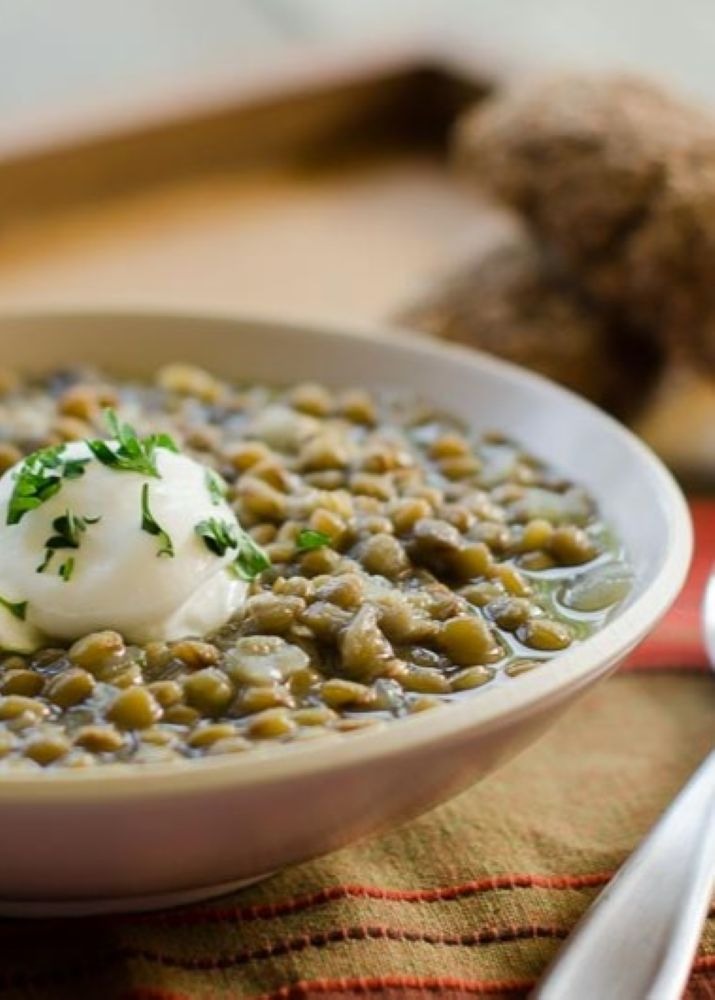
A bowl of lentil soup can be a filling lunch or a light starter. A pot of lentils, vegetables and plenty of broth is a different food from one made with cream, sausage or generous amounts of oil.
Lentils bring plant protein, fiber and carbohydrates. A measured homemade batch gives you a better calorie estimate than a figure borrowed from another recipe.
The CDC's guidance on maintaining a healthy weight covers adequate nutrition, calories and physical activity, plus sleep, age, medications and genetics.
How many calories are in a bowl of lentil soup?
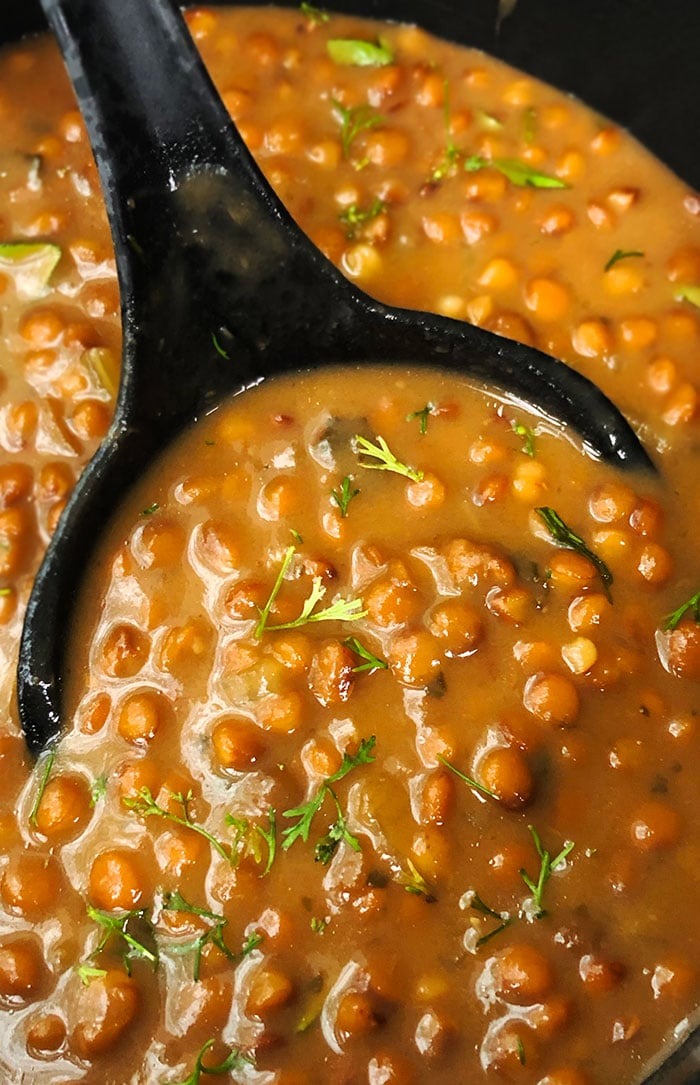
Published lentil soup recipes list different calorie figures because their ingredients and serving definitions differ. You can't compare a one-cup serving with a quarter of a finished recipe unless you know that quarter's volume or weight.
| Published recipe | Calories | Published serving | Ingredient context |
|---|---|---|---|
| University of Illinois Extension lentil soup | 88 kcal | 1 cup; 13 servings | Green lentils, vegetables, broth and 1 tablespoon olive oil across the pot |
| NHS vegetable and lentil soup | 146 kcal | One-quarter of the recipe | 50 g dry red lentils across the recipe, vegetables, stock and a little yogurt |
| Memorial Sloan Kettering lentil soup | 330 kcal | One of four recipe servings | Lentils, sweet potatoes, kale, broth and 2 tablespoons olive oil across the pot |
Serving units matter as much as the calorie figures. Memorial Sloan Kettering's 330 calories cover one serving as the recipe defines it, with no one-cup volume given.
Illinois Extension reports 3.5 grams of protein and 3.5 grams of fiber per cup. Memorial Sloan Kettering reports 14 grams of protein and 12 grams of fiber per recipe serving.
The University of Maryland Extension publishes a Mediterranean lentil soup with 300 calories per serving, labeled as one cup. Its ingredient list includes eight cups of water for four servings, and the finished yield is not measured, so you can't line its figure up against another recipe's one-cup portion. For gas after a big bowl, see the lentil-gas troubleshooting guide.
On packaged soup, the Nutrition Facts label gives the calories for its stated serving size. The FDA's guide to the Nutrition Facts label explains that serving sizes reflect amounts people typically consume, not recommended portions. If a container holds two labeled servings and you eat both, you eat twice the calories printed for one serving.
Which ingredients make lentil soup richer or lighter?
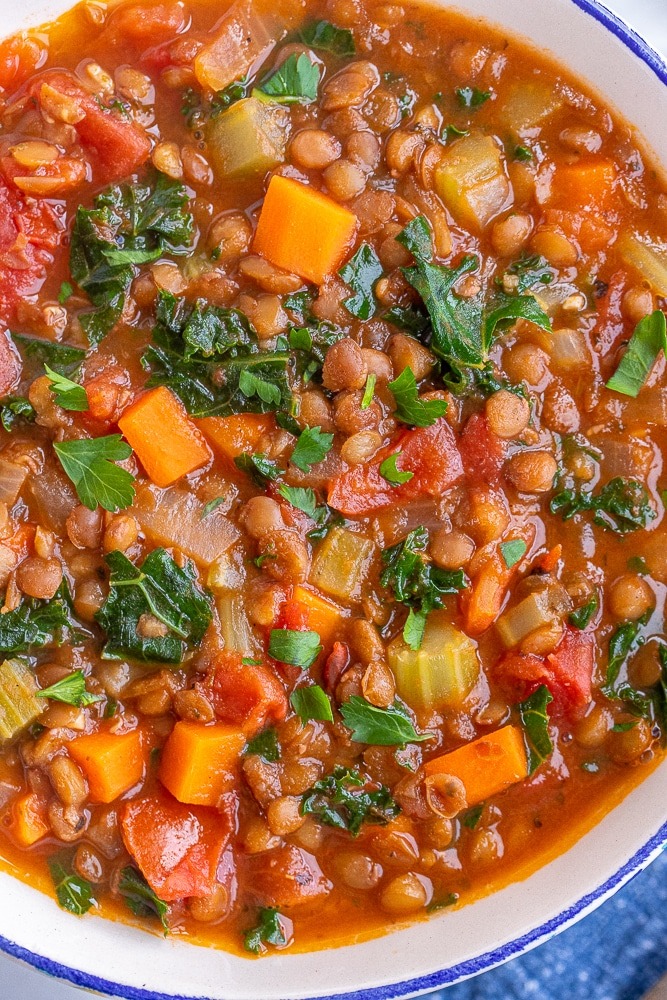
Two bowls can look equally thick and hold different calories. The ingredients, the cooking water and the final toppings each change the total in a different way.
| What changes | Effect on total calories | Effect on the soup or meal |
|---|---|---|
| Add cream, coconut milk, cooking oil or meat | Adds their calories | Changes richness, flavor and texture |
| Add plain water | Adds no calories | Increases volume and lowers calories per gram once the finished mass increases |
| Simmer until water evaporates | Calories stay about the same | Concentrates the soup in a smaller mass |
| Blend some cooked lentils and vegetables | Adds no calories | Makes the soup feel thicker |
| Add bread, croutons or an oil drizzle when serving | Adds calories to the meal | Goes beyond the original pot of soup |
One vegan home cook's red-lentil soup stayed brothy after a long simmer, and they wanted it thicker without cream:
I wanted that thick, cozy texture, but it was watery even after simmering for an hour.
Replies suggested mashing or blending some of the cooked ingredients to thicken the soup.
How to calculate calories in homemade lentil soup
You can estimate a homemade pot from the calories in all its ingredients and the weight of the edible soup after cooking. That also accounts for the water lentils absorb and the water lost during simmering.
One person tracking a lunch of brown rice, red beans and lentils entered ingredient weights before cooking, then weighed a cooked portion. The app's estimate came out higher than expected:
I weighed my portion out for today's lunch and its hard for me to believe that its that many calories [...]
A commenter pointed to a mismatch between dry recipe weight and cooked serving weight, and the original poster accepted the explanation. The same mismatch distorts a homemade soup estimate.
Calculate a batch in three steps
- Find the recipe's total calories. Add up everything you used, including cooking oil and other add-ins. Package labels and a matching USDA FoodData Central entry supply the numbers; match dry ingredients to dry-food data.
- Weigh the finished soup. Weigh the edible cooked soup in grams, without the pot. If you weigh it in its pot, subtract the empty pot's weight. Include the liquid that remains after cooking.
- Weigh your portion. Put your bowl on the scale and note the grams.
Calories per gram = total recipe calories ÷ finished soup weight (g)
Calories in your bowl = calories per gram × bowl weight (g)
A 400-gram bowl
Say your pot totals 1,200 kcal, the finished soup weighs 2,400 g and your bowl weighs 400 g:
1,200 kcal ÷ 2,400 g = 0.5 kcal/g; 0.5 kcal/g × 400 g = 200 kcal.
If you divide the whole pot into equal servings, dividing its total calories by the serving count works too. Weigh each one if your bowls are filled unevenly.
A recipe that calls for “half a bag of lentils” hides a gap: half of a 500 g bag is 250 g, while half of a 1 kg bag is 500 g.
Can lentil soup help you feel full?
Lentil meals can feel satisfying because they supply protein, fiber and food volume; two short-term studies show how this plays out.
In a 2007 crossover experiment, Flood and Rolls studied 60 adults who ate lunch with different soup preloads or without soup. A low-calorie-density soup served before lunch cut total calories eaten at that meal by about 20%, or 134 ± 25 calories. The test measured one lunch, not lentil soup as a long-term weight-loss treatment.
A 2019 study by Clark and colleagues tested lentil substitutions in experiments with 24 healthy adults each. Green-lentil chili led to a 17.5% increase in fullness over the observation period compared with rice chili, but there was no statistically significant reduction in later test-meal or 24-hour calorie intake. A separate muffin experiment also enrolled 24 participants.
When lentil soup may not suit you
Lentils cause gas for some people because bacteria in the large intestine ferment certain carbohydrates, according to the National Institute of Diabetes and Digestive and Kidney Diseases.
Eating only soup leaves too little dietary variety.
If you have condition-specific dietary requirements, follow professional guidance for your condition.