
Is Tomato Soup Healthy? Nutrition, Ingredients, and Portions
Tomato soup can fit a balanced diet, but sodium and added sugar deserve attention. A whole condensed can has about 1,200 mg of sodium and 20 g of added sugar, so check the label before you pour. Cream-heavy recipes add saturated fat, and soup alone is a light meal.
What's in a Bowl of Tomato Soup?
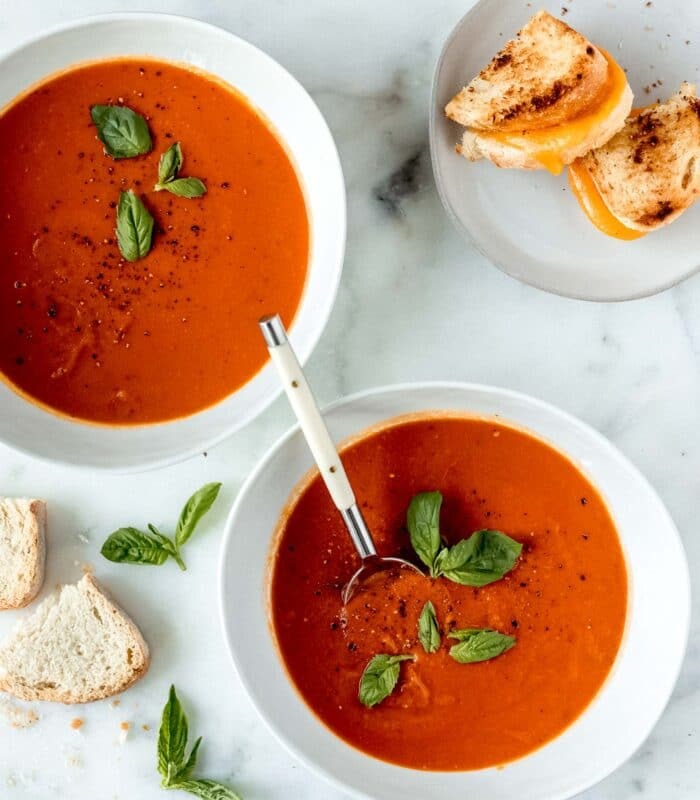
Two similar-looking bowls of tomato soup can contain very different amounts of sodium, sugar, fat, and protein; broth, milk, cream, and seasonings all change what ends up in your bowl.
A raw tomato tells you little about the soup. One large tomato (182 g) has about 33 calories, but soup adds broth, milk, and seasoning, so it needs its own numbers.
| Tomato soup and reference portion | Calories | Sodium | Added sugars | Fiber | Protein |
|---|---|---|---|---|---|
| Campbell's Condensed Tomato Soup, ½ cup condensed | 90 | 480 mg | 8 g | 2 g | 2 g |
| Mayo Clinic Zesty Tomato Soup, about 1½ cups prepared | 178 | 220 mg | 0 g | 3 g | 9 g |
| Johns Hopkins/AHA Tomato Basil Soup, one of six recipe portions | 79 | 212 mg | 0 g | 2 g | 5 g |
The table covers one Campbell's product and two recipes. Their portions differ, so it shows the range, not a ranking. Johns Hopkins doesn't give the cup volume of its portion.
Campbell's ½-cup condensed serving also has 580 mg of potassium and 9 mg of vitamin C.
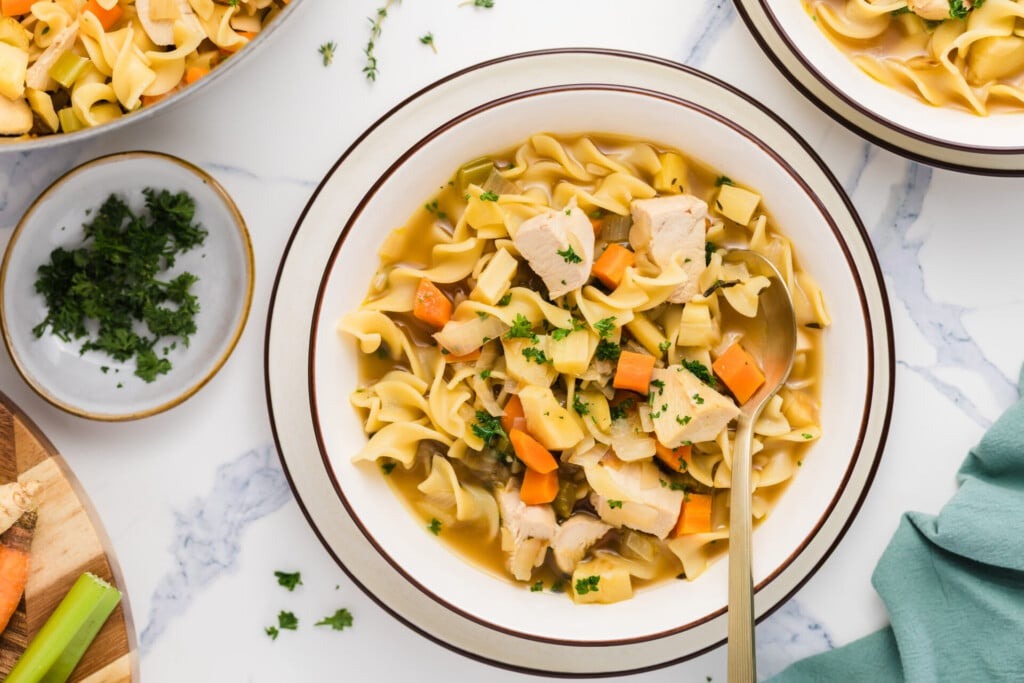
The Mayo Clinic recipe uses a lower-sodium condensed soup, fat-free milk, a fresh tomato, herbs, croutons, and Parmesan. The Johns Hopkins recipe starts with no-salt-added diced tomatoes and also uses fat-free milk. Campbell's original condensed soup is made differently.
Before you use a nutrient number to judge your bowl, check whether the soup is condensed, ready-to-eat, homemade, or from a restaurant.
How to Read a Canned Tomato Soup Label
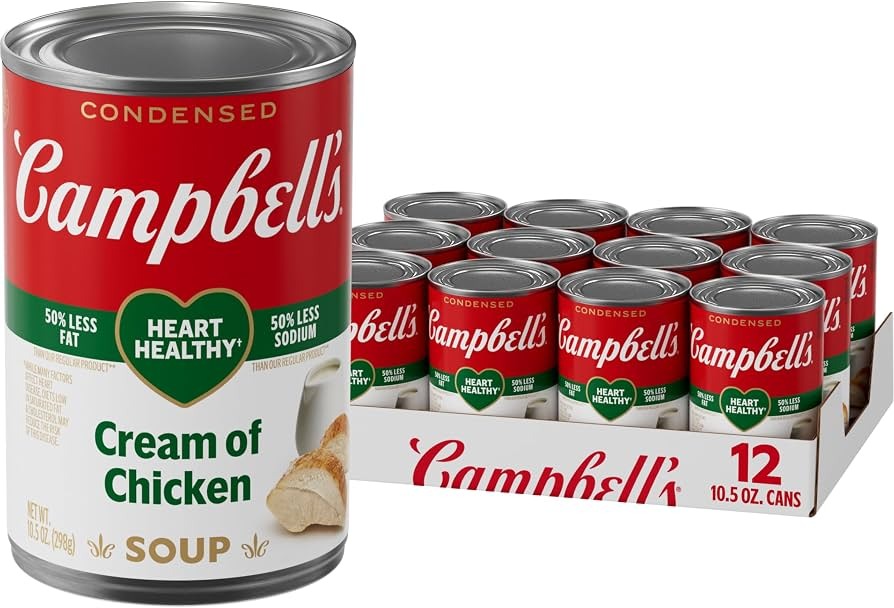
The serving printed on a can may be much smaller than what you plan to eat.
Take Campbell's original Condensed Tomato Soup. Its Nutrition Facts use a serving of ½ cup (120 mL) of condensed soup, with about 2.5 servings in the container.
| Nutrient | ½ cup condensed | Approximate whole can |
|---|---|---|
| Calories | 90 | 225 |
| Sodium | 480 mg | 1,200 mg |
| Added sugars | 8 g | 20 g |
| Protein | 2 g | 5 g |
| Fiber | 2 g | 5 g |
The whole-can totals are approximate because the can holds about 2.5 servings. They count the soup before you add water, milk, or toppings, and apply only if you eat the whole can.
Sodium adds up fast. One condensed serving has 480 mg, or 21% of the FDA's sodium Daily Value. The whole can has about 1,200 mg, roughly 52% of the 2,300 mg Daily Value.
The FDA's Nutrition Facts guidance treats 5% Daily Value or less as a low amount of a nutrient and 20% or more as a high amount.
Added sugar needs its own check. Campbell's soup has 12 g of total sugars per condensed serving, including 8 g of added sugars. Don't read the total as the added figure. Across the whole can, 20 g of added sugar is about 40% of the FDA's 50 g Daily Value, before you add anything.
Adding water makes more soup but doesn't lower the sodium or added sugar from the can. Milk adds nutrients of its own, so the total depends on the type and amount you use.
When you compare packaged soups, read four things in order: serving size, servings per container, sodium, and added sugars. Multiply by the servings you plan to eat, then compare equal portions across products.
Homemade vs. Canned: Which Is Better?
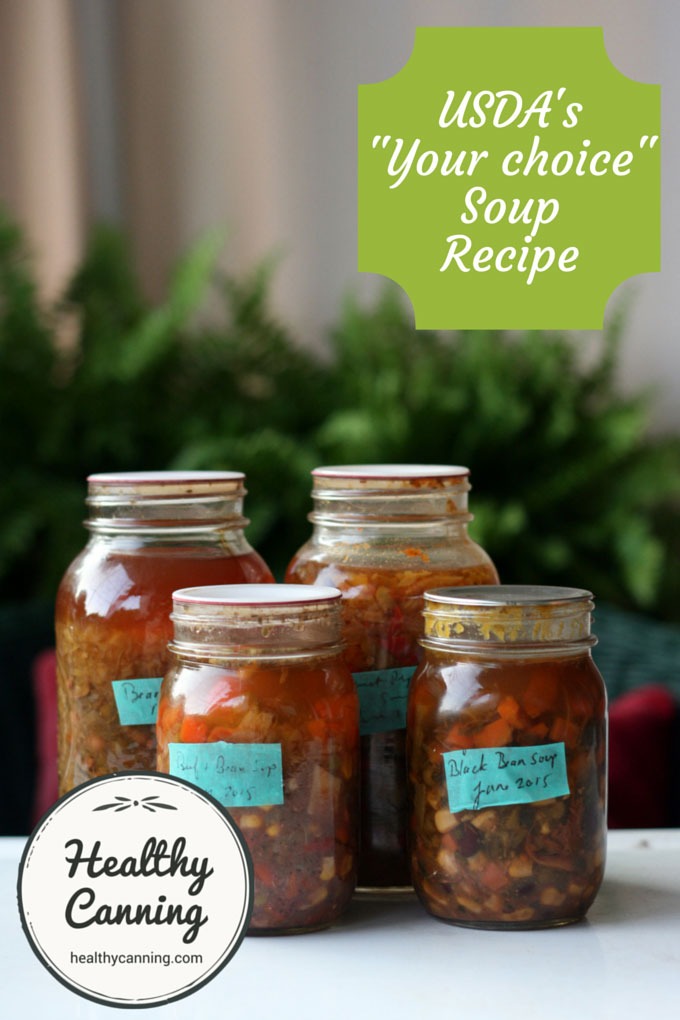
Homemade tomato soup gives you control over the ingredients. Canned soup gives you convenience and a Nutrition Facts label.
At home you choose the salt, the broth, milk or cream, and the toppings. Homemade soup isn't automatically lower in sodium, sugar, or saturated fat, though. A lot of cream, butter, cheese, or salty broth changes the result considerably.
Packaged soup is easier to compare because the label defines the serving. The downside is that it can include ingredients or amounts you wouldn't have picked.
| What matters to you | Packaged soup | Homemade soup |
|---|---|---|
| Convenience | Minimal preparation for many varieties | Requires shopping, cooking, and portioning |
| Ingredient control | Choose among available formulations | Select the broth, salt, dairy, and toppings yourself |
| Knowing the nutrition | Nutrition Facts provide a measured reference serving | Nutrient estimates depend on the full recipe and actual yield |
For homemade soup, add up the ingredients for the whole batch, then divide by the number of portions. A recipe that serves two gives very different numbers from one that serves six.
A familiar ingredient with an unexpected result
A home cook accidentally used canned tomato soup rather than tomato puree in a tortellini sauce.
It's so sweet. So, so sweet. I'm dying.
Campbell's original condensed tomato soup lists tomato puree, wheat flour, and sugar among its ingredients, so it doesn't swap in for plain puree in a sauce.
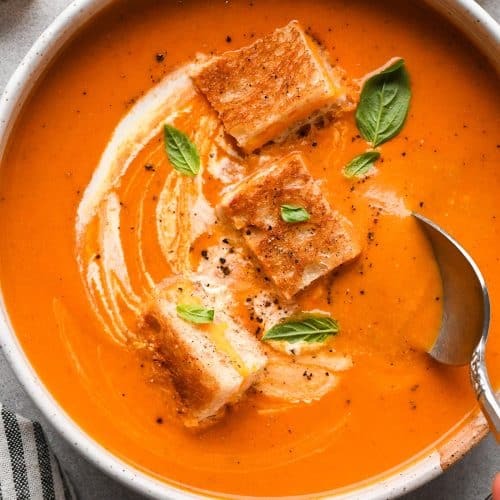
Even a home-prepared bowl can begin with a can, as both recipes above show.
Does Tomato Soup Have Lycopene Benefits?
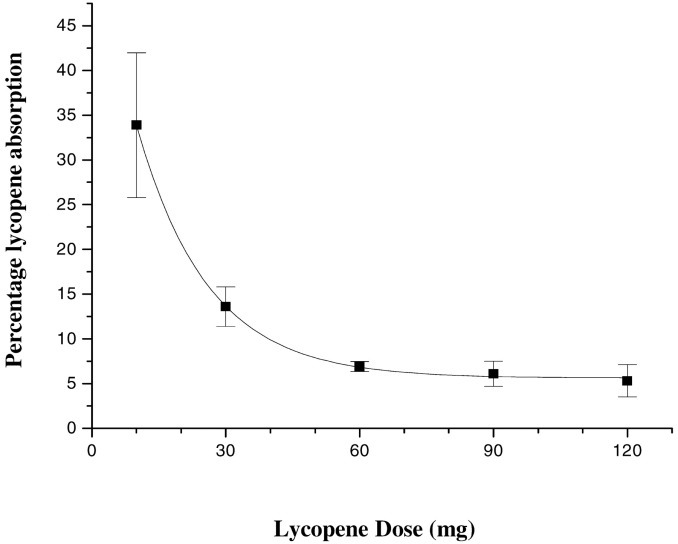
Tomatoes contain lycopene, a red carotenoid pigment. Cooking and processing affect how much of it your body absorbs, which is why researchers study prepared tomato products.
In one study, 36 healthy adults ate different processed tomato products for four weeks, after a lycopene-free period. One group had a cup of tomato soup containing 12 mg of lycopene each day. Blood lycopene levels rose during the interventions.
A separate randomized crossover study of 12 adults compared two 150 g servings of tomato sauce processed with different heat. Absorption was greater from the sauce richer in cis-lycopene, so processing conditions change how much you absorb.
The broader health claims rest on weaker evidence. A 2020 umbrella review of tomato and lycopene research covered 17 review articles and 20 health outcomes. Most evidence assessed with GRADE was rated low or very low certainty.
A later meta-analysis of prospective cohort studies linked higher lycopene exposure to lower risk of some cancer outcomes. Those observational findings don't show that tomato soup prevents cancer or heart disease.
Next time you see a health headline, check whether the researchers measured lycopene absorption, a blood marker, an observational association, or an actual disease event.
Is Tomato Soup Enough for a Meal?
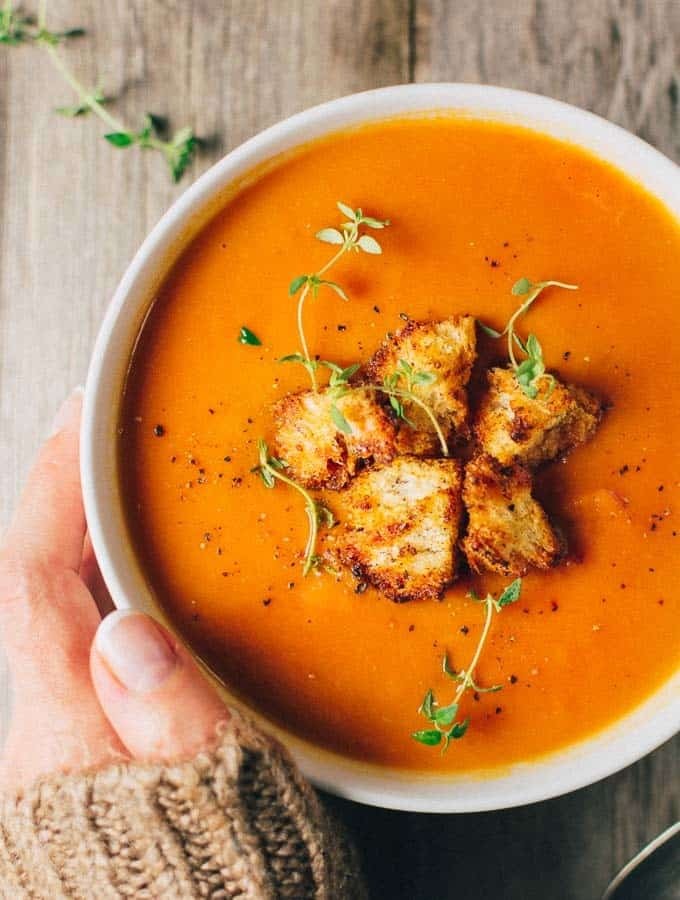
Tomato soup works as a light course. Campbell's ½-cup condensed serving has 2 g of protein and 2 g of fiber, and the Mayo Clinic serving has 9 g of protein and 3 g of fiber. If soup is your whole meal, pair it with something more substantial. For a comparison, see the lentil-soup calorie breakdown.
When Tomato Soup Isn't a Good Fit
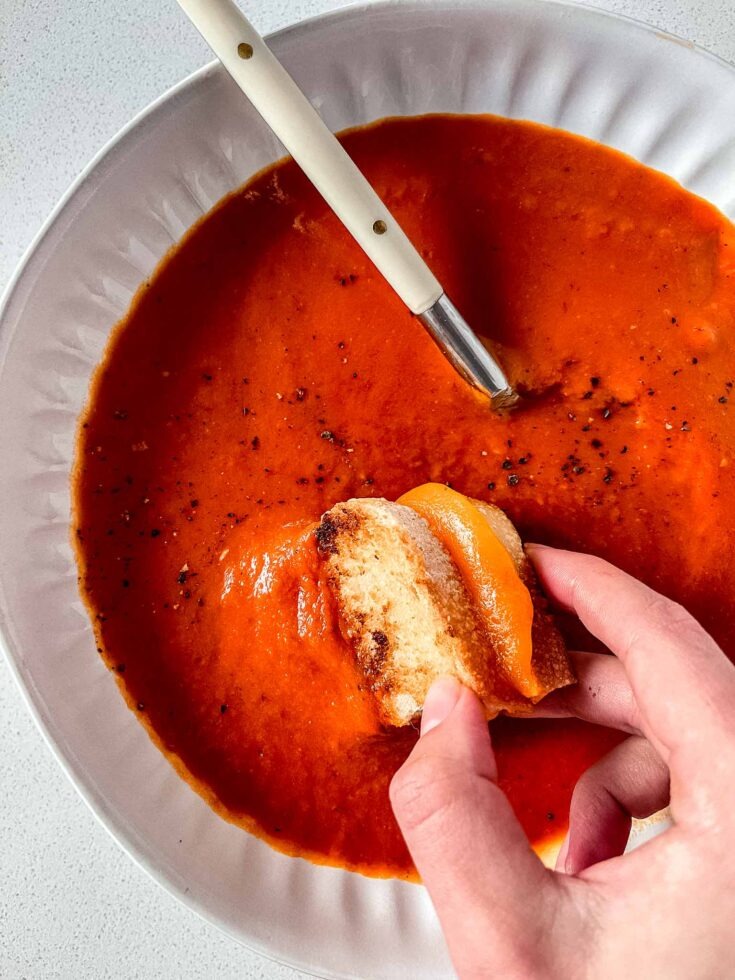
Tomato acidity, certain ingredients, and the overall nutrient profile can make a nutritious soup a poor choice for some people.
The National Institute of Diabetes and Digestive and Kidney Diseases lists acidic foods such as tomatoes among possible symptom triggers for some people with gastroesophageal reflux disease (GERD).
A different homemade tomato soup tasted acidic and caused stomach discomfort even after the cook added cream and tried other fixes.
Nobody has complained of my current recipe, except for me, the cook!
That's one cook's experience. Tomatoes aren't a reflux trigger for everyone.
The recipe matters too. A creamy soup made with a lot of cream or butter can carry more saturated fat than a simpler version. Campbell's original condensed tomato soup lists 0 g of saturated fat per condensed serving, so the ingredients make the difference.
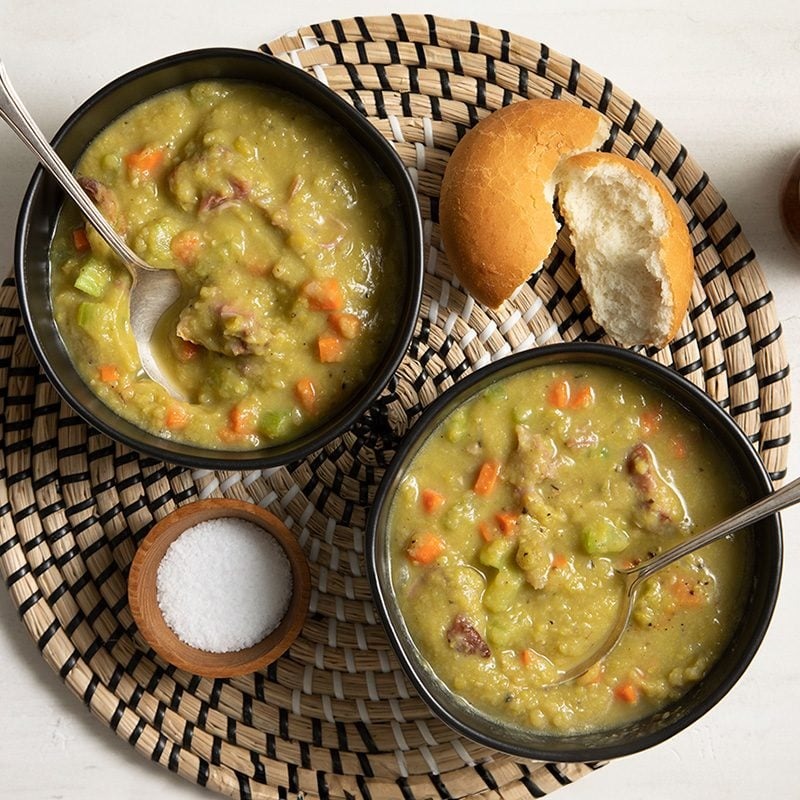
Its ingredient information also says it contains wheat, which matters if you need to avoid wheat.
If a soup keeps aggravating your symptoms or contains something you must avoid, that outweighs any general claim about tomato nutrition. If digestive symptoms persist, talk to a doctor.
Small Changes That Make a Bowl Work Better for You

Different problems need different fixes.
- If sodium is the concern: Start with a no-salt-added tomato base. The Johns Hopkins/AHA recipe uses three 14.5-ounce cans of no-salt-added tomatoes, fat-free milk, basil, garlic powder, pepper, and a measured amount of salt or a suitable substitute.
- If the soup feels too rich: Change the amount or type of milk or cream. It affects texture, calories, and saturated fat.
- If the flavor seems flat: Adjust the seasonings and proportions. More salt makes the soup saltier without adding the missing flavor.
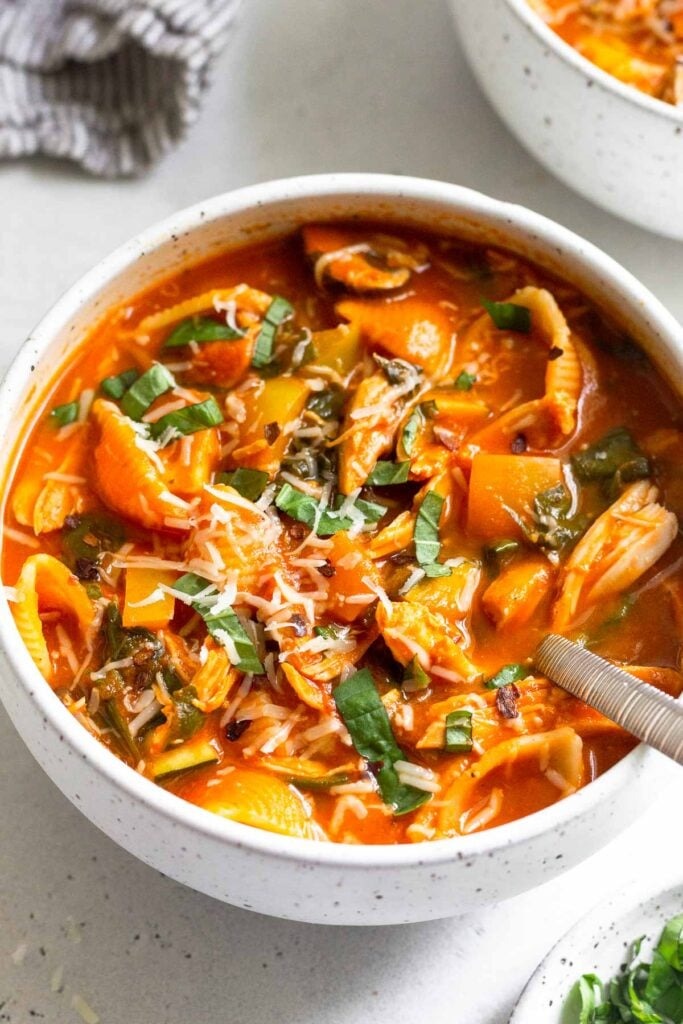
The Johns Hopkins recipe adds ½ teaspoon of baking soda across six servings to cut the tomato acidity. Baking soda contains sodium and is also used medically as an antacid.
Change one ingredient at a time so you can tell what improved your soup.