
Fava Bean Nutrition: Broad Beans, Portions, and Preparation
Cooked fava, or broad, beans provide plant protein, fiber, and folate. Medical restrictions can change whether they're safe for you.
Mature favas boiled without salt have about 110 calories, 7.6 grams of protein, and 5.4 grams of fiber per 100 grams. If you have G6PD deficiency, skip favas. Breastfeeding parents should skip them too when the infant has G6PD deficiency.
Safety exception: Fava beans can trigger serious hemolysis in people with G6PD deficiency. People taking certain MAOI medicines should follow the dietary restrictions for their particular drug.
Fava Bean Nutrition Facts: What Is in a Cooked Portion?
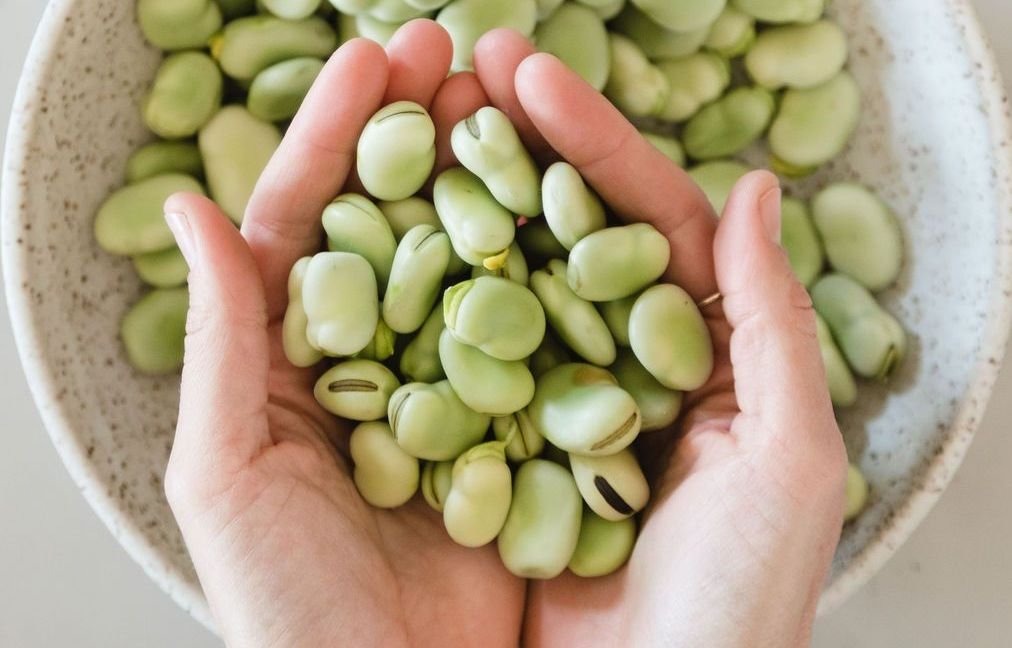
Fava beans, broad beans, and faba beans are names for the same seeds, from Vicia faba. The numbers below describe mature seeds, boiled without added salt and weighed as edible cooked beans.
USDA data gives these values. The 170 g column uses the same data, scaled up, so you can compare portions without mixing dry and cooked weights.
| Nutrient | Per 100 g cooked | Per 170 g cooked |
|---|---|---|
| Calories | 110 kcal | 187 kcal |
| Protein | 7.6 g | 12.9 g |
| Total carbohydrate | 19.65 g | 33.4 g |
| Dietary fiber | 5.4 g | 9.2 g |
| Total fat | 0.4 g | 0.68 g |
| Folate | 104 µg | 177 µg |
| Iron | 1.5 mg | 2.55 mg |
| Potassium | 268 mg | 456 mg |
| Sodium | 5 mg | 8.5 mg |
The 170 g portion is about a cup of cooked beans. For a 150 g portion, multiply the per-100 g figures by 1.5. Fiber is already counted in total carbohydrate, so don't add it a second time.
These figures describe plain beans, not every variety or packaged dish. Oil, sauces, salt, and other ingredients change the nutrition of the finished meal. The mature-boiled data is available through USDA FoodData Central.
Why Fresh, Dried, Boiled and Canned Fava Beans Show Different Numbers
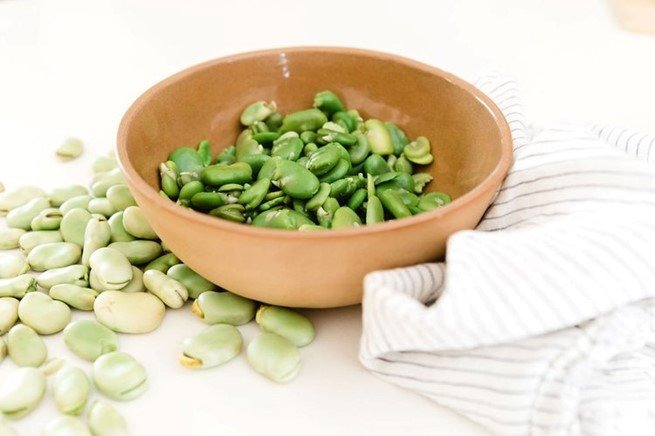
A dry bag of favas has 341 calories per 100 grams, while a bowl of boiled favas has 110. Dry seeds hold far less water, boiling changes the weight and concentration of nutrients, and immature seeds differ from mature ones.
Dhull and colleagues compared these USDA-derived values in a scientific review:
| Bean condition | Calories per 100 g | Protein per 100 g |
|---|---|---|
| Immature seeds, raw | 72 kcal | 5.6 g |
| Immature seeds, cooked with salt | 62 kcal | 4.8 g |
| Mature seeds, dry | 341 kcal | 26.12 g |
| Mature seeds, boiled without salt | 110 kcal | 7.6 g |
The dry entry measures 100 g before the beans absorb cooking water. The boiled entry measures 100 g afterward. That change in basis explains much of the jump in calories and protein.
BBC Good Food lists an 80 g boiled broad-bean serving with 38 calories and 4.1 g protein. Its source data isn't confirmed to match the USDA mature-boiled entry, so keep the two sets of figures separate.
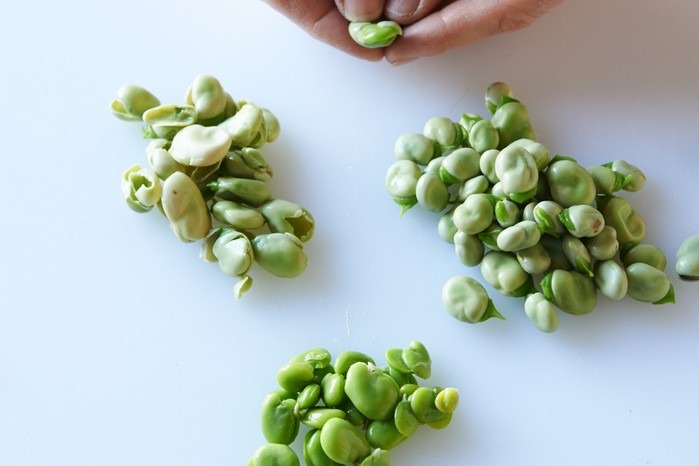
Fresh pods hold individual seeds. Removing a pod is different from peeling the thin coat around a seed; whole, split, and peeled dried products also cook to different textures. Canned products raise another question: the label may describe the declared contents, a drained portion, or a recipe with added ingredients.
One first-time cook put small split favas in a pressure cooker, hoping to roast them. After 12 minutes, the beans had lost their shape:
I ended up with a super creamy bean paste that would fit well in in soups or sauces.
The cook found a use for the result. Split beans break down easily, which suits soups and sauces. A recipe that needs intact beans calls for a different product.
The vegetarian iron food guide looks at favas as a plant source of iron and what to eat alongside them.
Protein, Fiber, Folate and Minerals: What the Nutrients Mean
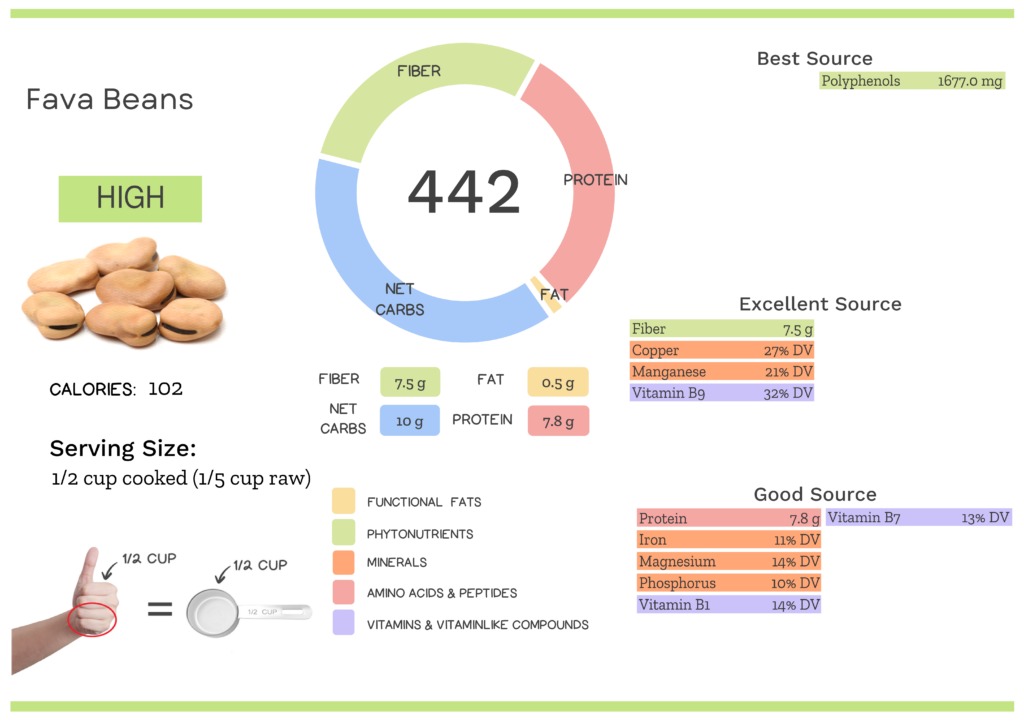
Favas supply protein and fiber along with several vitamins and minerals.
Protein and fiber in a meal
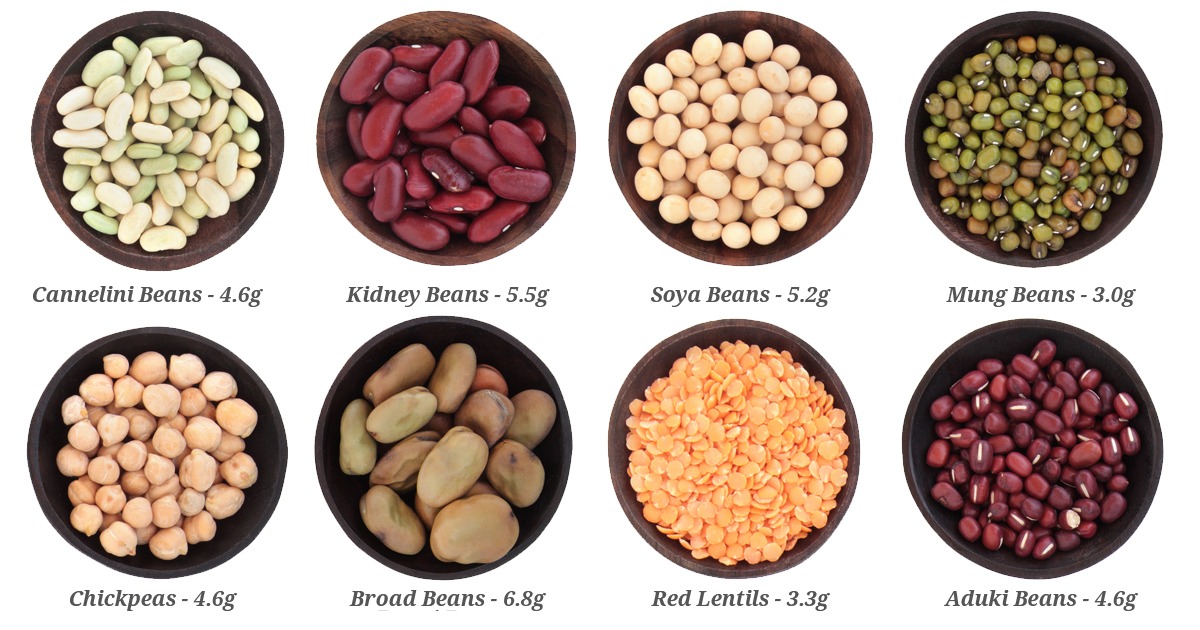
In the mature-boiled data, 100 g gives you 7.6 g protein and 5.4 g fiber. In a plant-based meal, that adds to what grains, vegetables, and other protein sources provide. When you compare fava beans, soybeans, and black beans, use cooked weight; see black bean protein by serving size.
The FDA Daily Value for fiber is 28 g, so 5.4 g per 100 g covers about 19% of it.
Food folate and folic acid
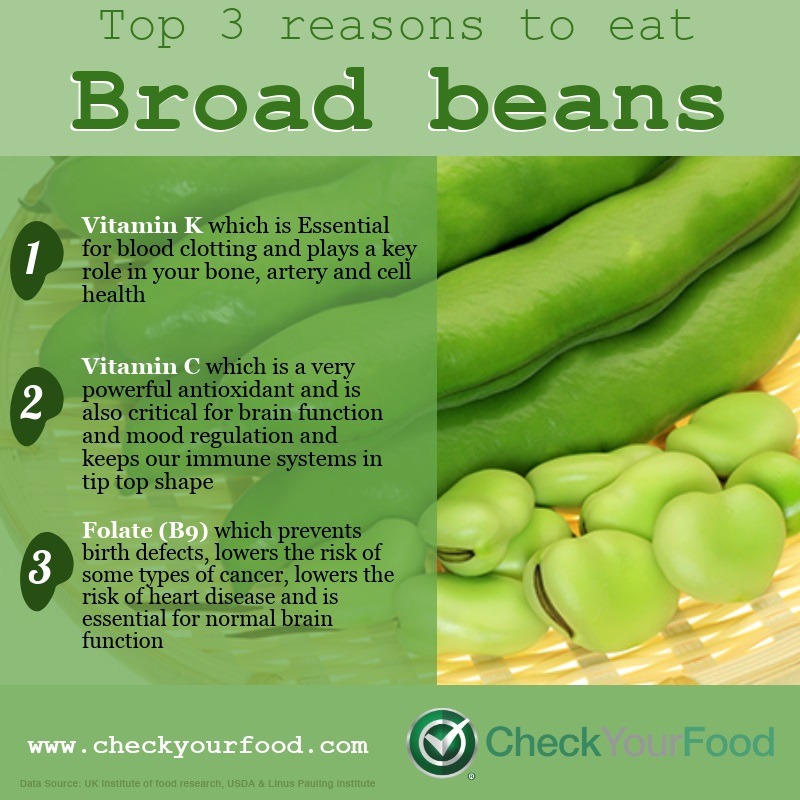
The same 100 g contains 104 µg of naturally occurring folate, about 26% of the FDA's 400 µg dietary folate equivalent Daily Value on the comparable food-folate basis.
If you could become pregnant, the CDC recommends 400 µg of folic acid per day from fortified foods, supplements, or both. Food folate in beans is useful nutrition, but it doesn't replace that recommendation. The CDC's folic acid guidance explains the difference.
Iron and other minerals
Per 100 g, the mature-boiled data also shows 1.5 mg iron and 268 mg potassium. Copper and manganese are present in smaller amounts: 0.26 mg and 0.42 mg, respectively.
If you have a diagnosed deficiency, have your intake and absorption checked individually.
What the Evidence Says About Fava Bean Health Benefits
Fava beans have a clear nutritional profile. Claims about cholesterol, weight loss, or disease treatment need evidence that measures that outcome in the right population.
| Claim | Evidence available | What it means for you |
|---|---|---|
| Provides protein and fiber | Measured food composition | Yes, based on USDA data for cooked beans |
| Supplies dietary folate | Measured nutrient content | Useful food folate; folic acid guidance is separate |
| Helps a heart-healthy dietary pattern | Trials of whole dietary pulses | Shown for pulses in general, not for favas alone |
| Produces weight loss | No fava-specific results | No fava-specific data on weight loss |
| Prevents anemia or osteoporosis | Nutrient presence, without the claimed clinical outcome | Don't rely on beans to prevent either |
| Treats Parkinson's disease | Small clinical investigation involving dietary L-DOPA | Don't replace Parkinson's medication with favas |
The strongest human evidence for eating beans concerns whole dietary pulses as a class. A 2026 systematic review by Back and colleagues included 38 randomized trials, 52 comparisons, and 2,095 participants. Median intervention length was six weeks, with median pulse intake of 130 g a day.
Across those interventions, the mean difference in LDL cholesterol was −0.14 mmol/L, with a 95% confidence interval from −0.19 to −0.08 mmol/L. That average comes from pulse interventions, so it doesn't predict the LDL change from a serving of fava beans.
Claims about blood pressure, immunity, weight management, or bone strength need outcome data, not just the presence of a nutrient.
Parkinson's disease is a special case
Favas contain compounds related to L-DOPA, or levodopa, which is used to treat Parkinson's. In a 1992 study of six patients with Parkinson's disease, three developed severe dyskinesias, or involuntary movements, after eating cooked broad beans. If you're treated for Parkinson's, talk to your clinician before changing your diet.
Who Should Avoid Fava Beans? The G6PD Exception
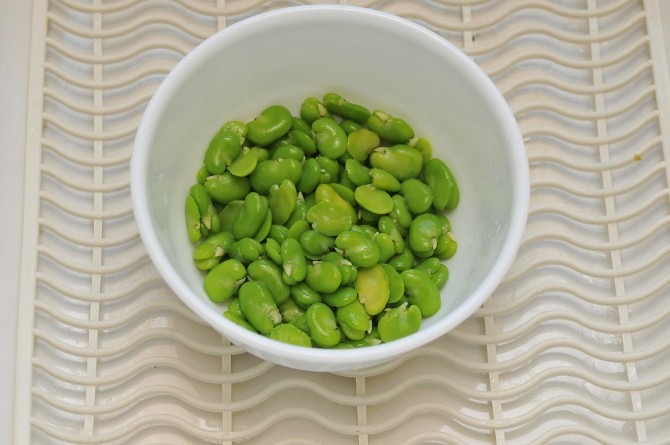
If you have known glucose-6-phosphate dehydrogenase (G6PD) deficiency, fava beans can trigger hemolytic anemia, a reaction called favism.
G6PD deficiency is an inherited condition that affects how red blood cells handle oxidative stress. The fava compounds vicine and convicine can form oxidative products that break down red cells in people with the condition. This works differently from a food allergy.
Clinical guidance says people with known G6PD deficiency should avoid fava beans. Labels and menus may say broad beans, faba beans, or fava beans, including in mixed prepared foods. Don't count on cooking to make favas safe.
Dark urine, yellowing of the eyes or skin, unusual weakness, shortness of breath, or a rapid heartbeat after possible exposure can signal hemolysis. If you have known or suspected G6PD deficiency, get urgent medical care. MedlinePlus Genetics explains the condition and its clinical features.
LactMed records serious hemolytic cases in some breastfed infants with G6PD deficiency after the mother ate fava beans. If you're breastfeeding an infant with known G6PD deficiency, avoid fava beans. The infant's clinician can advise on suspected exposure or symptoms.
Some MAOI medicines carry separate food restrictions
Certain monoamine oxidase inhibitors (MAOIs) can interact with tyramine in food and cause a dangerous rise in blood pressure. US prescribing information for tranylcypromine and phenelzine lists broad-bean pods among foods to avoid during treatment and for two weeks after stopping. The Parnate prescribing information specifies this restriction.
Follow the food restrictions for your specific drug, and ask your prescriber or pharmacist about unclear ingredients. The cited labeling names pods.
Choosing and Preparing Fava Beans Without Texture Surprises
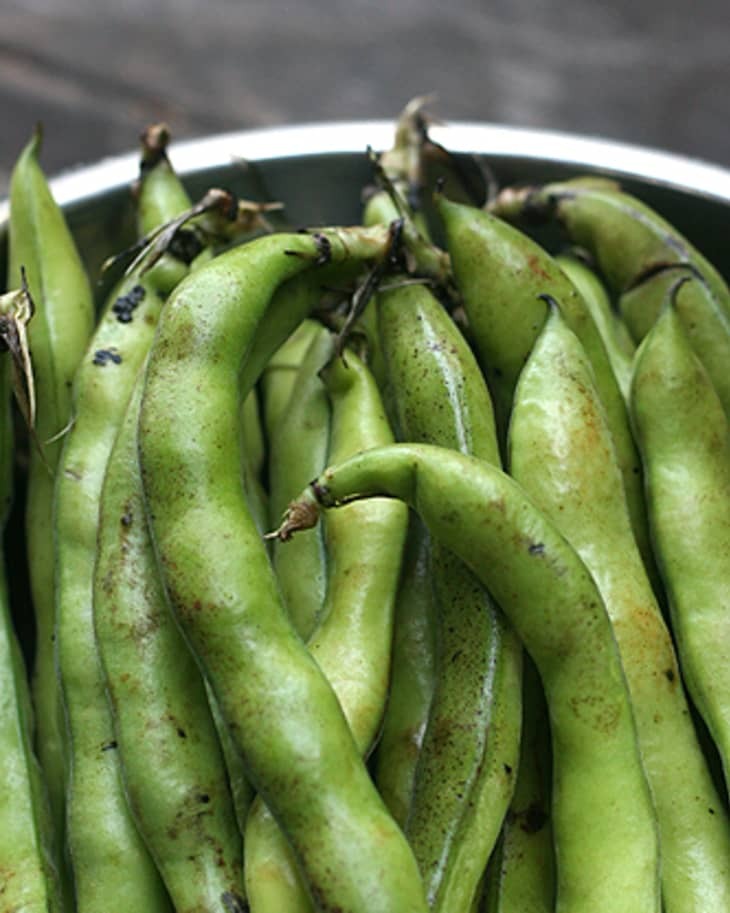
Pick the form by the texture and effort your dish needs. A creamy soup, a bowl of intact beans, and a crunchy snack each call for a different product.
- Fresh immature beans: Remove the seeds from their pods, then decide whether to peel the thin coat on each seed for your dish.
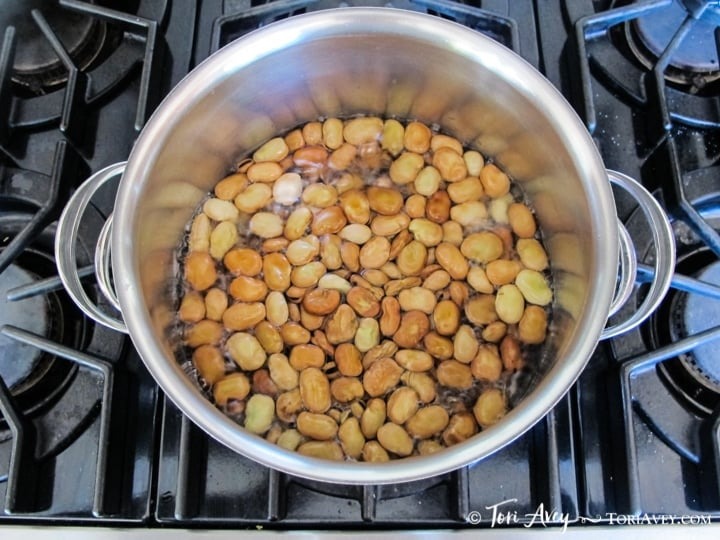
- Whole mature dried beans: Prepare them as the package directs. Intact seeds can hold their shape, though cooking behavior varies.
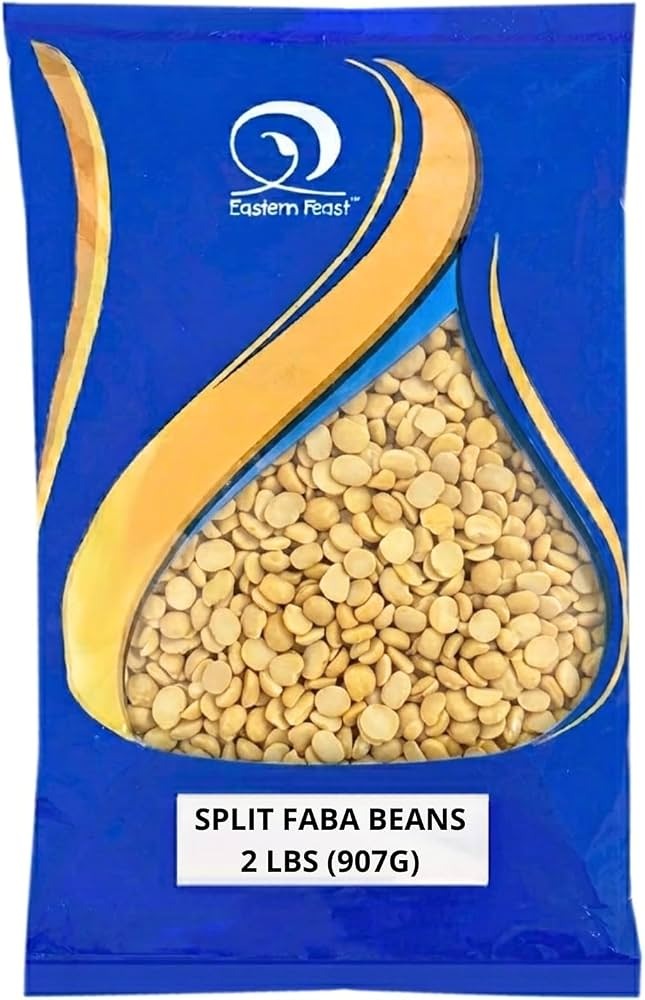
- Split or peeled dried beans: Good when you want a softer, broken-down texture, such as in soups and sauces.
- Canned or ready-to-eat beans: Convenient for a prepared meal. Check the seasonings, the drained or serving weight, and how firm the beans are.
- Roasted packaged snacks: Treat these as formulated foods, since they often include oil, salt, or flavorings. Their labels describe the snack itself.
A home cook replaced the canned cannellini beans in a stew recipe with dried favas, soaked them overnight, then spent hours trying to soften them. After the fourth hour, the cook gave up:
After four hours, they still weren’t, and I gave up in frustration. I ran up to the store, bought some canned cannellini beans [...]
Swapping dried favas into a recipe written for canned beans can wreck your timing. Why this batch stayed firm is unknown.
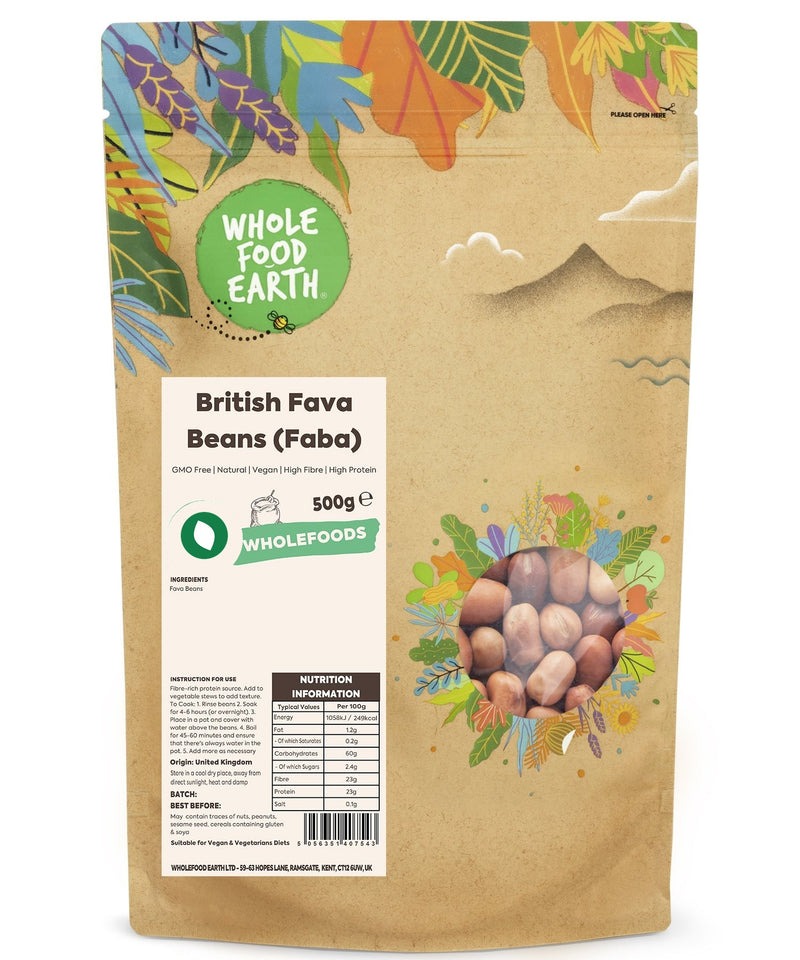
How to Compare Fava Bean Labels and Other Legumes Fairly
When two labels or nutrition tables disagree, compare the ingredient list, prepared state, edible serving weight, and nutrient amount on the same gram basis. Green beans, soybeans, black beans, and baked beans are different foods or recipes, so compare them at the same prepared weight. A claim of 20 g protein in a 45 g serving means protein is about 44% of its weight, so check whether the ingredients include concentrated protein.